One of the things I’m planning to write about quite a bit on here is government – what its role ought to be, how its interventions in the free market might be justified, and so on. When it comes to questions like whether the government should be providing universal healthcare coverage, or whether it should be providing more funding for science and technology research, or whether it should be taxing pollution, I tend to fall squarely in the “absolutely 100% yes” camp; I think that ultimately, there are some areas where private markets just aren’t sufficient on their own. Having said that, though, while I do think there are quite a few things that government can do better than the private sector, I don’t go quite as far as the “capitalism is a poison that ruins everything” crowd, nor do I share the tendency that some leftists seem to have to react to every social issue with a knee-jerk outcry of “government needs to do more!” So I feel like I should explain myself a bit before I spend 150,000 words (in my next post) expounding on all the great things government can do and all the areas where private markets fail, and just provide a kind of disclaimer in the form of this 150,000-word post laying out my case for why, despite government being great in many regards, it’s also possible to have too much of a good thing. Long story short, I don’t just think that giving the government too much power over the economy is a somewhat misguided idea that might occasionally produce some suboptimal policy outcomes – I think it’s the kind of idea that can potentially ruin nations and doom millions of people to poverty (or worse); so for that reason, I think our default approach should be to treat the free market as the go-to method for meeting our economic needs, and to only bring in government power as a corrective mechanism under the special conditions where it’s really necessary. The market economy, for all its flaws, is an incredibly powerful thing – and although we can’t rely on it to do everything, it’s worth recognizing that the things it does do, it does amazingly well. There’s a reason why so many economists regard it as one of our species’ most miraculous accomplishments – especially compared to the alternative of trying to run an entire economy through direct government control. In my opinion, then, it’s worth taking the time to lay out exactly what it is that makes the market mechanism such a big deal.
Now, I should say right at the outset here that although I’ll be talking a lot about all the benefits of free exchange and the market economy, I’ll mostly try to avoid using the word “capitalism” as a label for what I’m talking about (unless I’m quoting someone else), for the same reason that I tend to avoid terms like “socialism” – namely, that people of different political persuasions so often have such wildly different definitions for what these terms actually mean. For some people, “capitalism” is just another word for free exchange, and only carries positive connotations; but for others, it refers specifically to the kind of system that consolidates capital in the hands of a few powerful oligarchs at the expense of everyone else, and empowers them to expand that wealth even further until they’ve separated themselves into an elite class far removed from the concerns of the beleaguered working class. (Not such positive connotations there.) In Chris Dillow’s words: “Capitalism and markets […] are, in fact, two different things: capitalism is a system of ownership; markets a method of exchange.” To avoid confusion, then, I won’t even use the term “capitalism” if I can help it, and will instead just say right here (in case it’s not obvious) that what I want to argue for is the free exchange thing – i.e. the market economy – because that, in my view, is not only something that’s perfectly possible to have without all the extreme inequality and capital consolidation and class stratification and so on; it’s something that can help a society without such issues to flourish even more than it otherwise would. In fact, even if (let’s say) we had a private sector that consisted of nothing but democratic worker-owned cooperatives, and had a relatively equitable distribution of wealth across the population (concepts I want to discuss more in future posts), it would not only be possible to maintain a system of free exchange between those firms, their workers, and their customers – it would ultimately be far better for everyone involved than an alternative regime of top-down state control would be. Indeed, we have only to look around at the real-life examples of various countries around the world to see that all the most successful economies are those in which the government provides a strong social safety net to ensure relative equity across the population, but then also allows that population to freely engage in private commerce relatively unimpeded by excessive regulation and micromanagement.
Of course, this may all seem like a moot point to you from where you’re sitting now. Here in the First World, we tend to take it for granted that the government won’t ever try to impose its will over the economy to the same extent as countries like the Soviet Union or North Korea – so reading this post, you might be rolling your eyes a bit, wondering if it’s really necessary to point out that a market economy works better than a command economy when that’s pretty much the universally accepted wisdom at this point. Do we really need to spend 150,000 words cautioning against something that just isn’t a real looming threat here in the 21st-century developed world? Well, there are a couple of responses to this. First, although I do agree that the market economy likely isn’t going anywhere anytime soon here in the First World, the reason why this is the case is because our collective understanding of its importance has been so consistently reaffirmed over the years (along with our collective knowledge of what happens without it). In light of this, it seems to me that the goal of continuing to maintain this popular understanding is an important one – because as soon as it starts to fade away – i.e. as soon as people start forgetting why communism failed and why markets offer a better alternative – it’s all too easy for popular opinion to start drifting back toward the kinds of hard-left economic ideologies that have caused so much damage in the past. (For a case in point, see the recent online rise of “tankies” – hard leftists whose anti-capitalist sentiments are so strong that they’re willing to go so far as to support Stalinist-style authoritarianism in the name of their cause. To be sure, they’re still just a small fringe group at the moment; but even so, the fact that they’ve been gaining so much steam lately isn’t exactly a great sign in the broader scheme of things.)
More to the point, though, even if we First Worlders can mostly take it for granted that our market economy won’t face any kind of existential threat from authoritarian government in the near future, this is far from being universally true around the world. The fact is, there are countless people out there right now in numerous other countries who actually are living the reality of overassertive government making it impossible for them to thrive. So although we can talk all we want about how free exchange and the market economy are firmly-entrenched fixtures of the First World that aren’t going away anytime soon, we also have to remember that the First World isn’t the only world that exists. Most of the worst human suffering in the world is happening in less affluent countries – so if we really claim to care about alleviating human suffering and making the world a better place, we have to be mindful of what’s happening in those countries too, not just what’s happening in the richer ones. And in a lot of those countries, the market institutions that we take for granted here in the First World really aren’t firmly entrenched – not by a long shot. I already mentioned North Korea as the most dramatic modern example of an overbearing government strangling the economic life out of its people; but even at the less extreme end of the scale, there are countries all over the world which, while certainly not as bad as North Korea, are nonetheless plagued by all kinds of gratuitous government interference in their economies in less overt ways – with the unfortunate end result being a whole lot of unnecessary hardship for their populations. Charles Wheelan provides a glimpse into how even these more run-of-the-mill, everyday instances of government overreach can have a severe negative impact on such places:
By global standards, the United States has a relatively lightly regulated economy (though try making that argument at a Chamber of Commerce meeting). Indeed, one sad irony of the developing world is that governments fail in their most basic tasks, such as defining property rights and enforcing the law, while piling on other kinds of heavy-handed regulation. In theory, this kind of regulation could protect consumers from fraud, improve public health, or safeguard the environment. On the other hand, economists have asked whether this kind of regulation is less of a “helping hand” for society and more of a “grabbing hand” for corrupt bureaucrats whose opportunities to extort bribes rise along with the number of government permits and licenses required for any endeavor.
A group of economists studied the “helping hand” versus “grabbing hand” question by examining the procedures, costs, and expected delays associated with starting up a new business in seventy-five different countries. The range was extraordinary. Registering and licensing a business in Canada requires a mere two procedures compared to twenty in Bolivia. The time required to open a new business legally ranges from two days, again in Canada, to six months in Mozambique. The cost of jumping through these assorted government hoops ranges from 0.4 percent of per capita GDP in New Zealand to 260 percent of per capita GDP in Bolivia. The study found that in poor countries like Vietnam, Mozambique, Egypt, and Bolivia an entrepreneur has to give up an amount equal to one to two times his annual salary (not counting bribes and the opportunity cost of his time) just to get a new business licensed.
So are consumers safer and healthier in countries like Mozambique than they are in Canada or New Zealand? No. The authors find that compliance with international quality standards is lower in countries with more regulation. Nor does this government red tape appear to reduce pollution or raise health levels. Meanwhile, excessive regulation pushes entrepreneurs into the underground economy, where there is no regulation at all. It is hardest to open a new business in countries where corruption is highest, suggesting that excessive regulation is a potential source of income for the bureaucrats who enforce it.
Now, we should note that there are actually a couple different things going on in this story that are worth distinguishing between. On the one hand, a lot of the economic problems in these parts of the world might not necessarily be cases of governments overstepping their bounds per se – i.e. they might not actually be examples of government regulations themselves being bad – but instead might simply be the result of plain old corruption and ineptitude turning good regulations bad – i.e. bureaucrats doing a bad job of implementing policies which, if better implemented, might actually be good for the country. This is always a natural explanation to want to point to when things go wrong (not just in this context, but in any context, really) – so much so that it can often be tempting to act as if every problem must simply be a result of these kinds of personal failings on the part of political leaders, and to say that if only a particular country’s leaders weren’t so inept or corrupt, the country could succeed. (Not incidentally, this is also a claim often made by candidates running for political office, who blame all the country’s problems on the fact that the incumbents they’re running against simply don’t have the same amount of political backbone or integrity that they do, and that if they’re elected, they’ll be able to succeed where their predecessors failed due solely to their superior will to get the job done.) And sometimes, this kind of individual-level corruption and ineptitude really is the actual root of the problem; deeply flawed people do exist, and sometimes they happen to get elected to political office. But in many other cases, it’s not just a matter of flawed people doing a bad job of implementing what would otherwise be good policies; oftentimes, it’s the policies themselves that are the problem. If a particular country’s policies are bad enough, it won’t matter how pure-hearted and well-intentioned the people responsible for implementing them might be – the outcomes they produce will still be bad. And in fact, in situations where the political leaders are corrupt, it will often turn out that the bad policies (along with the institutional arrangements that accompany them) are the very things producing such perverse incentives and generating the corruption in the first place. In other words, the quality of the political leadership in such cases isn’t just some completely independent factor that might or might not counterbalance the quality of the political policies and institutions; it’s actually a product of those policies and institutions – and if the latter are designed in such a way as to incentivize abuses of power and economically harmful courses of action, then those are the outcomes they’ll produce.
II.
There’s no better illustration of this point than the historical example of the Soviet Union. The USSR and its leaders failed to accomplish their goal of establishing an efficient, effective command economy – but it wasn’t just because those leaders lacked the moral resolve to live up to their claimed ideology. It wasn’t because they weren’t really trying (contrary to the popular refrain that “true communism has never really been tried”). They were trying. It was simply impossible for them to succeed, given the inescapable flaws that are inherent to communism as a system of government. (Of course, the fact that many of them – Stalin in particular – also happened to be moral monsters didn’t exactly help; but there’s a reason why the USSR never became a communist paradise even after Stalin and his cronies had long been replaced by more normal leaders.) As compelling as communism might have seemed in theory, in practice it turned out to have fundamental faults that just couldn’t be overcome.
Economic growth Stalin style was simple: develop industry by government command and obtain the necessary resources for this by taxing agriculture at very high rates. The communist state did not have an effective tax system, so instead Stalin “collectivized” agriculture. This process entailed the abolition of private property rights to land and the herding of all people in the countryside into giant collective farms run by the Communist Party. This made it much easier for Stalin to grab agricultural output and use it to feed all the people who were building and manning the new factories. The consequences of this for the rural folk were calamitous. The collective farms completely lacked incentives for people to work hard, so production fell sharply. So much of what was produced was extracted that there was not enough to eat. People began to starve to death. In the end, probably six million people died of famine, while hundreds of thousands of others were murdered or banished to Siberia during the forcible collectivization.
Again, like so much else in economics, it all came down to incentives. People don’t naturally want to work; that’s why we have to pay them to do it. If they’re allowed to keep the fruits of their labor, then they’ll work despite not wanting to, because the upside outweighs the downside – and the more they’re allowed to keep, the more they’ll typically be willing to work. But if you take this incentive away from them – i.e. if you announce that everyone in your glorious communist state must be economic equals, and therefore everyone must be paid the same amount and those who work more won’t be paid more – then you leave them no positive incentive to put any effort into their work at all, since they’ll be paid the same amount regardless. The only way to get around this dilemma, then, is either to rescind your pledge that everyone be paid equally, and to pay the more productive workers more than the less productive ones, or to abandon the use of positive incentives altogether and switch to using negative ones instead – punishing underachieving workers with however much brutality is necessary to turn things around. Ultimately, the USSR would end up resorting to both methods; but even then, it wasn’t enough to fix what was fundamentally wrong with the system as a whole. Acemoglu and Robinson continue:
Stalin understood that in the Soviet economy, people had few incentives to work hard. A natural response would have been to introduce such incentives, and sometimes he did—for example, by directing food supplies to areas where productivity had fallen—to reward improvements. Moreover, as early as 1931 he gave up on the idea of creating “socialist men and women” who would work without monetary incentives. In a famous speech he criticized “equality mongering,” and thereafter not only did different jobs get paid different wages but also a bonus system was introduced. It is instructive to understand how this worked. Typically a firm under central planning had to meet an output target set under the plan, though such plans were often renegotiated and changed. From the 1930s, workers were paid bonuses if the output levels were attained. These could be quite high—for instance, as much as 37 percent of the wage for management or senior engineers. But paying such bonuses created all sorts of disincentives to technological change. For one thing, innovation, which took resources away from current production, risked the output targets not being met and the bonuses not being paid. For another, output targets were usually based on previous production levels. This created a huge incentive never to expand output, since this only meant having to produce more in the future, since future targets would be “ratcheted up.” Underachievement was always the best way to meet targets and get the bonus. The fact that bonuses were paid monthly also kept everyone focused on the present, while innovation is about making sacrifices today in order to have more tomorrow.
Even when bonuses and incentives were effective in changing behavior, they often created other problems. Central planning was just not good at replacing what the great eighteenth-century economist Adam Smith called the “invisible hand” of the market. When the plan was formulated in tons of steel sheet, the sheet was made too heavy. When it was formulated in terms of area of steel sheet, the sheet was made too thin. When the plan for chandeliers was made in tons, they were so heavy, they could hardly hang from ceilings.
By the 1940s, the leaders of the Soviet Union, even if not their admirers in the West, were well aware of these perverse incentives. The Soviet leaders acted as if they were due to technical problems, which could be fixed. For example, they moved away from paying bonuses based on output targets to allowing firms to set aside portions of profits to pay bonuses. But a “profit motive” was no more encouraging to innovation than one based on output targets. The system of prices used to calculate profits was almost completely unconnected to the value of new innovations or technology. Unlike in a market economy, prices in the Soviet Union were set by the government, and thus bore little relation to value. To more specifically create incentives for innovation, the Soviet Union introduced explicit innovation bonuses in 1946. As early as 1918, the principle had been recognized that an innovator should receive monetary rewards for his innovation, but the rewards set were small and unrelated to the value of the new technology. This changed only in 1956, when it was stipulated that the bonus should be proportional to the productivity of the innovation. However, since productivity was calculated in terms of economic benefits measured using the existing system of prices, this was again not much of an incentive to innovate. One could fill many pages with examples of the perverse incentives these schemes generated. For example, because the size of the innovation bonus fund was limited by the wage bill of a firm, this immediately reduced the incentive to produce or adopt any innovation that might have economized on labor.
Focusing on the different rules and bonus schemes tends to mask the inherent problems of the system. As long as political authority and power rested with the Communist Party, it was impossible to fundamentally change the basic incentives that people faced, bonuses or no bonuses. Since its inception, the Communist Party had used not just carrots but also sticks, big sticks, to get its way. Productivity in the economy was no different. A whole set of laws created criminal offenses for workers who were perceived to be shirking. In June 1940, for example, a law made absenteeism, defined as any twenty minutes unauthorized absence or even idling on the job, a criminal offense that could be punished by six months’ hard labor and a 25 percent cut in pay. All sorts of similar punishments were introduced, and were implemented with astonishing frequency. Between 1940 and 1955, 36 million people, about one-third of the adult population, were found guilty of such offenses. Of these, 15 million were sent to prison and 250,000 were shot. In any year, there would be 1 million adults in prison for labor violations; this is not to mention the 2.5 million people Stalin exiled to the gulags of Siberia. Still, it didn’t work. Though you can move someone to a factory, you cannot force people to think and have good ideas by threatening to shoot them. Coercion like this might have generated a high output of sugar in Barbados or Jamaica, but it could not compensate for the lack of incentives in a modern industrial economy.
The fact that truly effective incentives could not be introduced in the centrally planned economy was not due to technical mistakes in the design of the bonus schemes. It was intrinsic to the whole method by which extractive growth had been achieved. It had been done by government command, which could solve some basic economic problems. But stimulating sustained economic growth required that individuals use their talent and ideas, and this could never be done with a Soviet-style economic system. The rulers of the Soviet Union would have had to abandon extractive economic institutions, but such a move would have jeopardized their political power. Indeed, when Mikhail Gorbachev started to move away from extractive economic institutions after 1987, the power of the Communist Party crumbled, and with it, the Soviet Union.
The truth is, no amount of inspired leadership or purity of intention could have saved Soviet communism from deteriorating into the mess it ultimately became. At the end of the day, if you’ve built your entire economic system on the foundational premise that your citizens can’t and won’t be rewarded in accordance what they produce, you’ve made it so the only way to avoid going back on that premise is to punish them for what they don’t produce. You’ve taken away the carrot, and all you’re left with is the stick. And so your system must necessarily lead to oppression and use of force against the populace, simply because there’s no other way for it to persist. That’s not merely an unfortunate-but-avoidable result of poor implementation or corrupt leadership; it’s an inevitable result of the design of the system itself.
Now, at this point you might still be inclined to blame the failures of Soviet communism on some unique pathology of Soviet leadership – and if so, well, it would be hard to totally blame you for feeling that way, given how uniquely malevolent Stalin and his ilk were. But if you do think that, then you also have to reckon with the fact that similar experiments have been tried all over the world at various points throughout history – and not once have they ended in anything other than tragedy. (China’s Great Leap Forward is obviously the best-known case study, but the collection of all-too-similar examples spans the globe.) In fact, believe it or not, a kind of communism was even tried in here America at one point, back when it was first being colonized by the British. Sure enough, though, as Michael Huemer recounts, the participants in this experiment ran into the same exact incentive problem that the Soviets did – and unfortunately, they faced the same disastrous results as a consequence:
[A basic] account of human nature [i.e. one that properly accounts for people’s fundamental self-interest] makes useful predictions about certain social systems. Take the case of a social theory proposing that all citizens should work for the benefit of society, while receiving equal pay. A simple theoretical prediction is that, in such a system, productivity will decline. Individuals have a high degree of control over their own productivity, and greater productivity usually demands greater effort. Since most people are rationally selfish, they will not exert great effort to be productive unless they expect to receive personal benefits from doing so. So if all are paid equally, and if there are no other rewards or punishments attached to quality and quantity of work, then people will not be very productive.
This prediction is in fact correct. The twentieth century’s experiments with social systems in this vicinity are well-known, so I shall not dwell on them. An interesting but little-known illustration is provided by America’s first experiment with communism, which took place at Jamestown, the first permanent English settlement in America. When the colony was established in 1607, its founding charter stipulated that each colonist would be entitled to an equal share of the colony’s product, regardless of how much that individual personally produced. The result: the colonists did little work, and little food was produced. Of the 104 founding colonists, two-thirds died in the first year – partly due to unclean water but mostly due to starvation. More colonists arrived from England, so that in 1609 there were 500 colonists. Of those, only 60 survived the winter of 1609-10. In 1611, England sent a new governor, Sir Thomas Dale, who found the skeletal colonists bowling in the streets instead of working. Their main source of food was wild plants and animals, which they gathered secretly at night so as to evade the obligation to share with their neighbors. Dale later converted the colony to a system based on private property, granting every colonist a three-acre plot to tend for his own individual benefit. The result was a dramatic increase in production. According to Captain John Smith’s contemporaneous history,
When our people were fed out of the common store and labored jointly together, glad was he [who] could slip from his labor or slumber over his task, he care not how; nay, the most honest among them would hardly take so much true pains in a week as now for themselves they will do in a day … so that we reaped not so much corn from the labors of thirty, as now three or four do provide for themselves.
One lesson from this episode is that, simple as the [self-interest-based] account of human nature […] is, it can yield very useful predictions. If the company that created the Jamestown charter had known a little economics, hundreds of lives might have been spared. Another lesson is that the impact of human selfishness depends greatly on the social system in which people are embedded: in one kind of system, selfishness may have disastrous consequences, while in another, it promotes prosperity.
This point about human nature is an important one. There’s always a natural tendency, when imagining what a utopian economic system might look like, to imagine that if only you could devise a system that was aimed at accomplishing a truly perfect, noble goal – e.g. economic equality for everyone – then even if that system required people to make some personal sacrifices, the sheer nobility of the end goal would compel them to want to participate anyway, out of pure love for their country and their fellow citizens. And in fact, in some cases that kind of reliance on patriotism can actually work, at least to some extent. Ultimately, though, it only goes so far; if you’re counting on it to form the entire backbone of your economic system on its own, then you’re asking for trouble. Sooner or later, your people will find themselves in situations where times are hard and they have to choose between doing what’s good for the Motherland and doing what’s good for themselves and their families – and faced with that kind of choice, even the most patriotic citizens will have a hard time willingly hurting their own families for some abstract idea of the greater good, especially if they’re being asked to do so on a constant basis. Whether we like it or not, then, we have to deal with human nature as it actually exists, not as we wish it existed. If it were otherwise, then as commenter neofederalist points out, we wouldn’t even be having to think about how to create a utopian economic system in the first place – because we’d already be living in one:
[You might] say something along the lines of “If everyone were nice and altruistic, and resources aren’t scarce, then [communism] would be the way to go.” Which I agree with, except for the fact that neither of those premises are true. If individuals were fundamentally unselfish and did their best to help those in need, the system of government we chose wouldn’t matter at all; the unselfish rich people would freely give away their money to those who need it more, and things like corruption, price gouging, and market failures wouldn’t exist by definition.
Granted, it’s hard to be mad at the Soviets for seeing the ugly consequences of human selfishness and wanting to do better. As I discussed in my last post, we as a society should want to do better. But there’s a difference between aspiring to a perfectly selfless culture which, if achieved, might theoretically enable you to implement your utopian communist economic system, and assuming that the reverse is also true – that by attaining power and implementing your communist economic system, you’ve therefore also created a perfectly selfless culture. And in a lot of ways, the Soviet communists’ fundamental mistake was to conflate these two. They thought that if only they could execute their plans efficiently enough, they could get their people to go along with them in spite of the people’s own individual interests. But by decoupling those people’s interests from the hard work that was being asked of them, the Soviet leaders – like the Jamestown colonists before them, and like the Maoists in China who would eventually follow in their footsteps – only ensured that (absent overbearing force) such work would not be done at all. Francis Fukuyama drives this point home by contrasting the levels of productivity under communism with the levels of productivity outside it:
By breaking the link between individual effort and reward, collectivization undermined incentives to work, leading to mass famines in Russia and China, and severely reducing agricultural productivity. In the former USSR, the 4 percent of land that remained privately owned accounted for almost one-quarter of total agricultural output. In China, once collective farms were disbanded in 1978 under the leadership of the reformer Deng Xiaoping, agricultural output doubled in the space of just four years.
The lesson here, then, should hopefully be clear by now: If you want your people to thrive, you have to preserve their stake in their own productivity. You have to ensure that if they’re willing to put in the work to produce goods and services for their fellow citizens, they’ll actually be able to keep some reward for that work, instead of being forced to give up everything to the state. In short, you have to establish basic private property rights, and you have to guarantee that those property rights will be respected.
III.
This basic idea, that private property rights are valuable and have to be protected, is an old one – but it’s one that has stuck around for a reason. We just saw how profoundly its absence affected the Soviet Union specifically – and we’ll return to that subject in a moment – but before we do, I just want to take a quick digression to examine the general logic behind private property rights and how it applies more broadly. Stephen Holmes and Cass R. Sunstein break it down this way:
Aristotle objected to Plato’s enthusiasm for collective child-rearing on the grounds that if everyone is responsible for every child, and if particular individuals are not denominated “parents,” children will not receive decent care. The very same logic justifies the right to private property. If everyone owns everything then, in a sense, no one owns anything. One of the problems with this sad state of affairs is that in a system of collective ownership, the costs of dilapidation are spread thinly, and thus catastrophically, across society. Each individual in a position to maintain and repair property loses little by decay and gains next to nothing by maintenance. In a system without private ownership or coercive organization, the costs of maintenance are borne by each person, while the benefits of maintenance are widely shared. Hence individuals have scant incentive to engage in timely and arduous repairs. If rewards for upkeep and improvement cannot be captured by owners, houses and farms and factories are very unlikely to be kept up and improved. Acting with an eye to tomorrow, individuals deprived of enforceable property rights are likely to engage in uncoordinated inaction, or acts of negligence that produce massive collective harms. As Aristotle objected to Plato, private rights can be a spur to action that is socially beneficial and, from society’s point of view, highly responsible.
Any farmer toiling to repay a bank loan can explain that the right to private property is both an onerous burden and an incitement to effort. Not only do property rights compel owners to pay the costs of their own property’s dilapidation, but well-defined and unambiguously assigned property rights nourish responsibility by allowing individuals to capture the returns on their investments. They also help lengthen the time horizon of owners, who can thereby hope to benefit tomorrow from exertions made today.
These are pretty intuitive, easy-to-understand reasons for having well-defined private property rights. But unfortunately, this is a lesson that we as a species are forced to re-learn again and again; it seems the example of the Soviet Union wasn’t enough to permanently ingrain it in our collective consciousness. I started this post by talking about how many of the poorest countries in the world have been unable to achieve economic success due to their lack of market institutions; well, this issue of property rights is a big part of what I was talking about. In a lot of these countries, even the most basic protections for property rights are absent, leaving the citizenry with little to no reason to invest in improving their own condition. With the constant threat of having their property rights overridden by a capricious government, such an arrangement “undermines the incentive people have to hold off from consuming and invest in their futures instead, because they will be unsure about whether they’ll actually get to enjoy the returns of that investment,” as Sam Bowman writes. “In the developing world […] weak or nonexistent property rights preclude capital accumulation and growth.” And the natural consequence of this, predictably, is that those populations end up perpetually stuck in poverty. Here in the developed world, you’ll often hear leftists decry the commoditization of everything under capitalism – but for these people in the developing world, the problem is just the opposite; for them, there’s not enough commoditization going on. Hernando de Soto explains further:
Most of the poor already possess the assets they need to make a success of capitalism. Even in the poorest countries, the poor save. The value of savings among the poor is, in fact, immense—forty times all the foreign aid received throughout the world since 1945. In Egypt, for instance, the wealth that the poor have accumulated is worth fifty-five times as much as the sum of all direct foreign investment ever recorded there, including the Suez Canal and the Aswan Dam. In Haiti, the poorest nation in Latin America, the total assets of the poor are more than one hundred fifty times greater than all the foreign investment received since Haiti’s independence from France in 1804. If the United States were to hike its foreign-aid budget to the level recommended by the United Nations—0.7 percent of national income—it would take the richest country on earth more than 150 years to transfer to the world’s poor resources equal to those they already possess.
But they hold these resources in defective forms: houses built on land whose ownership rights are not adequately recorded, unincorporated businesses with undefined liability, industries located where financiers and investors cannot see them. Because the rights to these possessions are not adequately documented, these assets cannot readily be turned into capital, cannot be traded outside of narrow local circles where people know and trust each other, cannot be used as collateral for a loan, and cannot be used as a share against an investment.
In the West, by contrast, every parcel of land, every building, every piece of equipment, or store of inventories is represented in a property document that is the visible sign of a vast hidden process that connects all these assets to the rest of the economy. Thanks to this representational process, assets can lead an invisible, parallel life alongside their material existence. They can be used as collateral for credit. The single most important source of funds for new businesses in the United States is a mortgage on the entrepreneur’s house. These assets can also provide a link to the owner’s credit history, an accountable address for the collection of debts and taxes, the basis for the creation of reliable and universal public utilities, and a foundation for the creation of securities (like mortgage-backed bonds) that can then be rediscounted and sold in secondary markets. By this process the West injects life into assets and makes them generate capital.
Third World and former communist nations do not have this representational process. As a result, most of them are undercapitalized, in the same way that a firm is undercapitalized when it issues fewer securities than its income and assets would justify. The enterprises of the poor are very much like corporations that cannot issue shares or bonds to obtain new investment and finance. Without representations, their assets are dead capital.
The poor inhabitants of these nations—five-sixths of humanity—do have things, but they lack the process to represent their property and create capital. They have houses but not titles; crops but not deeds; businesses but not statutes of incorporation. It is the unavailability of these essential representations that explains why people who have adapted every other Western invention, from the paper clip to the nuclear reactor, have not been able to produce sufficient capital to make their domestic capitalism work.
Reiterating de Soto’s point, Wheelan describes one example of this phenomenon in Malawi that exemplifies the general issue:
Private property may seem like a province of the rich; in fact, it can have a crucial impact on the poor. The developed world is full of examples of informal property rights—homes or businesses built on land that is communal or owned by the government and ignored (such as the shantytowns on the outskirts of many large cities). Families and entrepreneurs make significant investments in their “properties.” But there is a crucial difference between those assets and their counterparts in the developed world: The owners have no legal title to the property. They cannot legally rent it, subdivide it, sell it, or pass it on to family. Perhaps most important, they cannot use it as collateral to raise capital.
Peruvian economist Hernando de Soto has argued convincingly that these kinds of informal property arrangements should not be ignored. He reckons that the total value of property held but not legally owned by poor people in the developing world is worth more than $9 trillion. That is a lot of collateral gone to waste, or “dead capital” as he calls it. To put that number in perspective, it is 93 times the amount of development assistance that the rich countries provided to the developing world over the past three decades.
The Economist tells a story of a Malawian couple who make a living slaughtering goats. Since business is good, they would like to expand. To do so, however, would require an investment of $250—or $50 more than the average annual income in Malawi. This couple “owns” a home worth more than that. Might they borrow against the value of their land and the bungalow they have built on it? No. The home is built on “customary” land that has no formal title. The couple has a contract signed by the local village chief, but it is not enforceable in a court of law. The Economist goes on to note:
About two-thirds of the land in Malawi is owned this way. People usually till the land their parents tilled. If there is a dispute about boundaries, the village chief adjudicates. If a family offends gravely against the rules of the tribe, the chief can take their land away and give it to someone else.
Those informal property rights are like barter—they work fine in a simple agrarian society, but are woefully inadequate for a more complex economy. It is bad enough that poor countries are poor; it is all the worse that their most valuable assets are rendered less productive than they might be.
Property rights have another less obvious benefit: They enable people to spend less time defending their possessions, which frees them up to do more productive things. Between 1996 and 2003, the Peruvian government issued property rights to 1.2 million urban squatter households, giving them formal ownership to what they had previously informally claimed as their own. Harvard Economist Erica Field determined that property rights enabled residents to work more hours in the formal labor market. She surmises that property rights give more flexibility to people who previously had to stay home, or had to operate improvised businesses out of their home, in order to protect their property. She also makes another important point: Most programs designed to help the poor reduce their work effort. (This is the Samaritan’s dilemma; if I ease your hardship, you have less incentive to help yourself.) Providing formal property rights does the opposite: It encourages work.
Again, we come back to the same lesson that we learned with the USSR – if you want people to be able to flourish in your economy, you have to actually let them have some foundation of private property upon which they can build wealth for themselves. Without that foundation, they not only lack the ability to improve their circumstances, they don’t even have any incentive to try. This has apparently been a hard lesson for many governments to internalize; but it’s a perfectly straightforward one – and its results speak for themselves.
IV.
So all right then – if the importance of property rights and economic incentives is so self-evident, then (to return to our topic of the Soviet Union) why did the communists still manage to mess things up so badly? After all, it’s not like they were just unable to recognize the reality of the situation; after their early failures, the Soviets were all too aware of the incentive problems they faced – hence why they ended up resorting to mass coercion and oppression in order to “motivate” their workforce. But even after deploying these tactics, their outcomes continued to disappoint. So why did their supposedly efficient state-run economic system, even with its added “incentives” for workers and everything, still produce such abysmal results? Well, as Acemoglu and Robinson already briefly touched on, it turns out that the incentive problem isn’t the only thing that can go wrong when your economy is forced to operate entirely on the basis of what the government dictates. Scott Alexander summarizes a more in-depth explanation given by Francis Spufford in his book Red Plenty:
The classic [explanation for why communism fails] is that during communism no one wants to work hard. They do as little as they can get away with, then slack off because they don’t reap the rewards of their own labor.
[…]
But […] in certain cases, Russians were very well-incentivized by things like “We will kill you unless you meet the production target”. Later, when the state became less murder-happy, the threat of death faded to threats of demotions, ruined careers, and transfer to backwater provinces. And there were equal incentives, in the form of promotion or transfer to a desirable location such as Moscow, for overperformance. There were even monetary bonuses, although money bought a lot less than it did in capitalist countries and was universally considered inferior to status in terms of purchasing power. Yes, there were Goodhart’s Law type issues going on – if you’re being judged per product, better produce ten million defective products than 9,999,999 excellent products – but that wasn’t the crux of the problem.
Red Plenty presented the problem with the Soviet economy primarily as one of allocation. You could have a perfectly good factory that could be producing lots of useful things if only you had one extra eensy-weensy part, but unless the higher-ups had allocated you that part, you were out of luck. If that part happened to break, getting a new one would depend on how much clout you (and your superiors) pulled versus how much clout other people who wanted parts (and their superiors) held.
The book illustrated this reality with a series of stories (I’m not sure how many of these were true, versus useful dramatizations). In one, a pig farmer in Siberia needed wood in order to build sties for his pigs so they wouldn’t freeze – if they froze, he would fail to meet his production target and his career would be ruined. The government, which mostly dealt with pig farming in more temperate areas, hadn’t accounted for this and so hadn’t allocated him any wood, and he didn’t have enough clout with officials to request some. A factory nearby had extra wood they weren’t using and were going to burn because it was too much trouble to figure out how to get it back to the government for re-allocation. The farmer bought the wood from the factory in an under-the-table deal. He was caught, which usually wouldn’t have been a problem because everybody did this sort of thing and it was kind of the “smoking marijuana while white” of Soviet offenses. But at that particular moment the Party higher-ups in the area wanted to make an example of someone in order to look like they were on top of their game to their higher-ups. The pig farmer was sentenced to years of hard labor.
A tire factory had been assigned a tire-making machine that could make 100,000 tires a year, but the government had gotten confused and assigned them a production quota of 150,000 tires a year. The factory leaders were stuck, because if they tried to correct the government they would look like they were challenging their superiors and get in trouble, but if they failed to meet the impossible quota, they would all get demoted and their careers would come to an end. They learned that the tire-making-machine-making company had recently invented a new model that really could make 150,000 tires a year. In the spirit of Chen Sheng, they decided that since the penalty for missing their quota was something terrible and the penalty for sabotage was also something terrible, they might as well take their chances and destroy their own machinery in the hopes the government sent them the new improved machine as a replacement. To their delight, the government believed their story about an “accident” and allotted them a new tire-making machine. However, the tire-making-machine-making company had decided to cancel production of their new model. You see, the new model, although more powerful, weighed less than the old machine, and the government was measuring their production by kilogram of machine. So it was easier for them to just continue making the old less powerful machine. The tire factory was allocated another machine that could only make 100,000 tires a year and was back in the same quandary they’d started with.
It’s easy to see how all of these problems could have been solved (or would never have come up) in a capitalist economy, with its use of prices set by supply and demand as an allocation mechanism. And it’s easy to see how thoroughly the Soviet economy was sabotaging itself by avoiding such prices.
[…]
The Soviets had originally been inspired by [a] fear of economics going out of control, abandoning the human beings whose lives it was supposed to improve. In capitalist countries, people existed for the sake of the economy, but under Soviet communism, the economy was going to exist only for the sake of the people.
(accidental Russian reversal: the best kind of Russian reversal!)
And instead, they ended up taking “people existing for the sake of the economy” to entirely new and tragic extremes, people being sent to the gulags or killed because they didn’t meet the targets for some product nobody wanted that was listed on a Five-Year Plan. Spoiling good raw materials for the sake of being able to tell Party bosses and the world “Look at us! We are doing Industry!” Moloch had done some weird judo move on the Soviets’ attempt to destroy him, and he had ended up stronger than ever.
If there’s one thing the Soviet government did have, it was power. It was running a command economy, after all, and that meant that whatever the Soviet government ordered to be done, that’s what would be done. The problem, though, was that despite being practically all-powerful within its borders, the Soviet government was not all-knowing – so for all its power, there was never even the remotest chance that it would be capable of wielding that power in such a way as to achieve the impossible aim of accurately determining and fulfilling the needs of literally every single citizen and enterprise across every inch of its territory, in real time, on a perpetual 24/7 basis. To even imagine that it could do such a thing was to utterly fail to comprehend just how complex and multifaceted an economy of millions of people actually is, and how constantly those people’s needs are shifting and changing. Regardless of how powerful it might have been, then, the Soviet government’s notions for a planned economy were doomed from the start.
In economics, this problem the Soviets faced is known (straightforwardly enough) as the knowledge problem. As the Wikipedia article summarizes:
The local knowledge problem is the argument that the data required for rational economic planning are distributed among individual actors and thus unavoidably exist outside the knowledge of a central authority.
Friedrich Hayek described this distributed local knowledge as such:
Today it is almost heresy to suggest that scientific knowledge is not the sum of all knowledge. But a little reflection will show that there is beyond question a body of very important but unorganized knowledge which cannot possibly be called scientific in the sense of knowledge of general rules: the knowledge of the particular circumstances of time and place. It is with respect to this that practically every individual has some advantage over all others because he possesses unique information of which beneficial use might be made, but of which use can be made only if the decisions depending on it are left to him or are made with his active cooperation. We need to remember only how much we have to learn in any occupation after we have completed our theoretical training, how big a part of our working life we spend learning particular jobs, and how valuable an asset in all walks of life is knowledge of people, of local conditions, and of special circumstances. To know of and put to use a machine not fully employed, or somebody’s skill which could be better utilized, or to be aware of a surplus stock which can be drawn upon during an interruption of supplies, is socially quite as useful as the knowledge of better alternative techniques. And the shipper who earns his living from using otherwise empty or half-filled journeys of tramp-steamers, or the estate agent whose whole knowledge is almost exclusively one of temporary opportunities, or the arbitrageur who gains from local differences of commodity prices, are all performing eminently useful functions based on special knowledge of circumstances of the fleeting moment not known to others.
Because while incomplete this distributed knowledge is essential to economic planning, its necessity is cited as evidence in support of the argument that economic planning must be performed in a similarly distributed fashion by individual actors. In other words, economic planning by a central actor (e.g. a government bureaucracy or a central bank) necessarily lacks this information because, as Hayek observed, statistical aggregates cannot accurately account for the universe of local knowledge:
One reason why economists are increasingly apt to forget about the constant small changes which make up the whole economic picture is probably their growing preoccupation with statistical aggregates, which show a very much greater stability than the movements of the detail. The comparative stability of the aggregates cannot, however, be accounted for—as the statisticians occasionally seem to be inclined to do—by the “law of large numbers” or the mutual compensation of random changes. The number of elements with which we have to deal is not large enough for such accidental forces to produce stability. The continuous flow of goods and services is maintained by constant deliberate adjustments, by new dispositions made every day in the light of circumstances not known the day before, by B stepping in at once when A fails to deliver. Even the large and highly mechanized plant keeps going largely because of an environment upon which it can draw for all sorts of unexpected needs; tiles for its roof, stationery for its forms, and all the thousand and one kinds of equipment in which it cannot be self-contained and which the plans for the operation of the plant require to be readily available in the market.
As such, the local knowledge problem is a microeconomic counterargument to macroeconomic arguments that favor central planning and regulation of economic activity.
Ludwig von Mises and Friedrich Hayek […] pointed out the flaw in central planning: those who undertake it lack the information and analytical capacity to make the best allocative decisions. People’s valuations are private information; the genius of the market is its capacity for disseminating this information from consumers to producers through the price system. Central planning, in contrast, results in massive misallocation of resources—the production of goods no one wanted—that was characteristic of real-world socialist economies like that of the Soviet Union. Moreover, centralization of the economy opened the way to political abuse, which Hayek memorably called the “road to serfdom.”
Now, obviously, none of this is to say that producers in the private sector always necessarily make perfect decisions themselves. In fact, privately-owned firms fail all the time; it’s one of the defining features of the free market. What distinguishes these failures from the failures of central government planning, though, is that they’re actually a part of the market’s normal process of allocating goods and services – which is to say, they’re just another market signal. If a firm produces goods or services that people don’t actually want, that’s just a cue for those customers to take their business elsewhere. But by contrast, when a communist government fails in its process of allocating goods and services, it doesn’t just serve as a helpful signal to customers to look elsewhere for their needs – it means that those needs don’t get fulfilled at all. As Tim Harford writes:
In the [private sector,] mistakes, certainly, will be made—perhaps more frequently than under central planning. But the mistakes stay small; in market economies we call them “experiments.” If venture capitalists back them, they do not expect many to succeed. When they succeed, they make some people rich and bring innovation to the whole economy. When they fail—which is more often than not—some people will go bankrupt, but nobody will die. Only command economies can promote experimentation on such a fatally extravagant scale and suppress informed criticism. (Mao [whose misguided central planning in China led to grain shortages that killed millions] was not alone. The Soviet president, Nikita Khrushchev, made a similar mistake following a visit to the United States, when he ordered Soviet fields to be replanted with the corn he had seen growing in Iowa. The failure was a catastrophe.) It is worth remembering that market failures, while sometimes serious, are never as tragic as the worst failures of governments like Mao’s.
Sadly, these kinds of allocation-failure horror stories are a consistent staple in the history of communism. Every time another government decides to adopt a communist ideology, its leaders insist that they will succeed where all the other attempts have failed – because unlike those other governments, which were plagued by incompetence and corruption, their new brand of communism will put the people’s needs first, and will serve them in a rigorous, systematic way that uses the best economic expertise available. And yet, every single time, these communist leaders discover that, as it turns out, single-handedly micromanaging an entire economy requires a level of knowledge and understanding that is so impossibly all-encompassing that no single organization or government entity could conceivably reach it, regardless of how pure its intentions were. And so ultimately, like clockwork, the citizens of these countries suffer the consequences – often in the form of mass death from starvation and other all-too-preventable causes.
V.
Of course, thankfully, most of the world nowadays no longer follows the kind of full-on communism practiced by Stalin and Mao and the rest of the hardliners of the mid-20th century. Those regimes gave us some memorable examples of how bad things can get when government power is taken to its most critical extreme; but luckily, the majority of modern countries seem to have actually learned the right lessons from their cautionary tales (at least for the most part), and so have made a very conscious effort to avoid the obvious pitfall of putting their entire economies under direct government control. In fact, even Russia and China themselves have largely switched to having market-based economies, and have been better off for it (especially in China’s case). The fact that these countries are no longer losing millions of citizens to grim fates like mass starvation might seem like a pretty low bar – and sure, it is – but the fact that it’s actually been cleared is a genuinely big deal, and is not something that should be taken for granted.
Having said all that, it’s also worth emphasizing that just because a country has managed to escape the biggest trap doesn’t automatically mean that it has therefore achieved exactly the right balance of government control and private enterprise for itself, and so no longer needs to worry about the issue at all. In a lot of ways, even the most developed countries in the world still have certain things that their governments should probably be doing more of but aren’t, and other things that they should probably be doing less of but aren’t. So despite the fact that most countries have avoided the worst-case scenario of absolute state dominance over the economy, we should still be mindful of all the less extreme ways that governments can – and do – extend themselves further than they rightly should.
For instance, while we’re on the subject of Russia, here are some examples from Wheelan illustrating how excessive government regulations can needlessly stifle private commerce (and why countries like Russia, despite no longer suffering from complete government control, still have quite a ways to go on that front):
Government has plenty to do—and even more that it should not do. Markets must do the heavy lifting. Let’s talk about articles 575 and 615 of the Russian civil code. These regulations would be very important if you were a firm in Moscow doing something as simple as installing a vending machine. Article 575 forbids firms from giving anything away free, which includes the space that a firm “gives” to Coca-Cola when a vending machine is installed. Meanwhile, article 615 forbids subletting property without the landlord’s consent; the square meter taken up by the vending machine can be construed as a sublease. In addition, the tax collector forbids commercial enterprises (e.g., vending machines) to operate without a cash register. And since selling soft drinks from a machine constitutes retail trade, there are assorted fire, health, and safety inspections.
Excessive regulation goes hand in glove with corruption. Government bureaucrats throw up hurdles so that they can extort bribes from those who seek to get over or around them. Installing a vending machine in Moscow becomes much easier if you hire the right “security firm.” What about opening a business elsewhere in the developed world? Again, Peruvian economist Hernando de Soto has done fascinating work. He and fellow team members documented their efforts to open a one-person clothing stall on the outskirts of Lima as a legally registered business. He and his researchers vowed that they would not pay bribes so that their efforts would reflect the full cost of complying with the law. (In the end, they were asked for bribes on ten occasions and paid them twice to prevent the project from stalling completely.) The team worked six hours a day for forty-two weeks in order to get eleven different permits from seven different government bodies. Their efforts, not including the time, cost $1,231, or 31 times the monthly minimum wage in Peru—all to open a one-person shop.
[There are all kinds of] reasons government should stick to the basics. Harvard economist Robert Barro’s classic study of economic growth in roughly one hundred countries over three decades found that government consumption—total government spending excluding education and defense—was negatively correlated with per capita GDP growth. He concluded that such spending (and the required taxation) is not likely to increase productivity and will therefore do more harm than good. The Asian tigers, the all-star team in the economic development league, made their economic ascent with government spending in the range of 20 percent of GDP. Elsewhere in the world, high tax rates that are applied unevenly distort the economy and provide opportunities for graft and corruption. Many poor governments might actually collect more revenue if they implemented taxes that were low, simple, and easy to collect.
When government regulations become so onerous that even the most basic economic functioning becomes an ordeal, it’s not hard to see how this can grind a country’s ability to grow and prosper to a standstill. Just to emphasize this point, Wheelan adds a couple more international examples that are even more ridiculous:
India has over a billion people, many of whom are desperately poor. Education has clearly played a role in moving the nation’s economy forward and lifting millions of citizens out of poverty. Higher education in particular has contributed to the creation and expansion of a vibrant information technology sector; however, a recent shortage of skilled workers has been a drag on economic growth. So it’s no great economic conundrum as to why a pharmaceutical college in Mumbai would seek to use empty space in its eight-story building to double student enrollment.
The problem is that this action turned the college administration into criminals. It’s true—the Indian government imposes strict regulations on its technical colleges that protect against something as reckless and potentially dangerous as using empty space to educate more students. Specifically, the law stipulates that a technical college must provide 168 square feet of building space for each student (to ensure adequate space for learning). That formula precludes the Principal K. M. Kundnani College of Pharmacy from teaching more than 300 students—regardless of the fact that all the lecture halls on the top floor of the building are padlocked for lack of use.
According to the Wall Street Journal, “The rules also stipulate the exact size for libraries and administrative offices, the ratio of professors to assistant professors and lecturers, quotas for student enrollment and the number of computer terminals, books and journals that must be on site.”
Thankfully, governments sometimes roll back these kinds of regulation. In November 2008, the European Union acted boldly to legalize . . . ugly fruits and vegetables. Prior to that time, supermarkets across Europe were forbidden from selling “overly curved, extra knobbly or oddly shaped” produce. This was a true act of political courage by European Union authorities, given that representatives from sixteen of the twenty-seven member nations tried to block the deregulation while it was being considered by the EU Agricultural Management Committee.
I wish I were making this stuff up.
If you’re reading this as an American, laughing to yourself at how backward all those silly foreigners are, well, don’t feel too smug. The US has some of the most outlandish examples of overregulation in the world – including, as Alexander points out, things like laws against pumping your own gas in certain areas (I’ve already shared this example before, but it’s too appropriate not to include here as well):
Oregon is one of two US states that bans self-service gas stations. Recently, they passed a law relaxing this restriction – self-service is permissable in some rural counties during odd hours of the night. Outraged Oregonians took to social media to protest that self-service was unsafe, that it would destroy jobs, that breathing in gas fumes would kill people, that gas pumping had to be performed by properly credentialed experts – seemingly unaware that most of the rest of the country and the world does it without a second thought.
…well, sort of. All the posts I’ve seen about it show the same three Facebook comments. So at least three Oregonians are outraged. I don’t know about the rest.
But whether it’s true or not, it sure makes a great metaphor. Tabarrok plays it for all it’s worth:
Most of the rest of the America–where people pump their own gas everyday without a second thought–is having a good laugh at Oregon’s expense. But I am not here to laugh because in every state but one where you can pump your own gas you can’t open a barbershop without a license. A license to cut hair! Ridiculous. I hope people in Alabama are laughing at the rest of America. Or how about a license to be a manicurist? Go ahead Connecticut, laugh at the other states while you get your nails done. Buy contact lens without a prescription? You have the right to smirk British Columbia!
All of the Oregonian complaints about non-professionals pumping gas–“only qualified people should perform this service”, “it’s dangerous” and “what about the jobs”–are familiar from every other state, only applied to different services.
Since reading Tabarrok’s post, I’ve been trying to think of more examples of this sort of thing, especially in medicine. There are way too many discrepancies in approved medications between countries to discuss every one of them, but did you know melatonin is banned in most of Europe? (Europeans: did you know melatonin is sold like candy in the United States?) Did you know most European countries have no such thing as “medical school”, but just have college students major in medicine, and then become doctors once they graduate from college? (Europeans: did you know Americans have to major in some random subject in college, and then go to a separate place called “medical school” for four years to even start learning medicine?) Did you know that in Puerto Rico, you can just walk into a pharmacy and get any non-scheduled drug you want without a doctor’s prescription? (source: my father; I have never heard anyone else talk about this, and nobody else even seems to think it is interesting enough to be worth noting).
The list of examples goes on. Apparently, we as a species just really like banning and regulating things, regardless of how beneficial it actually is. And just speaking from personal experience, I have to admit I understand the impulse; there’s always a real temptation, any time there’s some major crisis or controversy in the news, to reflexively say that the government needs to step in and do something about it – to insist that “there ought to be a law!” But more government involvement isn’t always automatically the right answer to every problem; as the above examples illustrate, despite government’s ability to resolve certain issues, in the process of doing so it can often create new problems that are even worse than the ones it was trying to solve. What’s more, in situations where big businesses and other powerful interests are involved (i.e. a whole lot of situations), these side effects aren’t always entirely accidental. As Thomas Sowell explains, it’s all too common for major government interventions, despite initially coming from a place of wanting to help consumers and lower prices, to eventually end up doing the exact opposite – becoming a tool of powerful interests rather than a check against them:
Regulatory agencies are often set up after some political crusaders have successfully launched investigations or publicity campaigns that convince the authorities to establish a permanent commission to oversee and control a monopoly or some group of firms few enough in number to be a threat to behave in collusion as if they were one monopoly. However, after a commission has been set up and its powers established, crusaders and the media tend to lose interest over the years and turn their attention to other things. Meanwhile, the firms being regulated continue to take a keen interest in the activities of the commission and to lobby the government for favorable regulations and favorable appointments of individuals to these commissions.
The net result of these asymmetrical outside interests on these agencies is that commissions set up to keep a given firm or industry within bounds, for the benefit of the consumers, often metamorphose into agencies seeking to protect the existing regulated firms from threats arising from new firms with new technology or new organizational methods. Thus, in the United States, the Interstate Commerce Commission— initially created to keep railroads from charging monopoly prices to the public— responded to the rise of the trucking industry, whose competition in carrying freight threatened the economic viability of the railroads, by extending the commission’s control to include trucking.
The original rationale for regulating railroads was that these railroads were often monopolies in particular areas of the country, where there was only one rail line. But now that trucking undermined that monopoly, by being able to go wherever there were roads, the response of the I.C.C. was not to say that the need for regulating transportation was now less urgent or perhaps even unnecessary. Instead, it sought— and received from Congress— broader authority under the Motor Carrier Act of 1935, in order to restrict the activities of truckers. This allowed railroads to survive under the new economic conditions, despite truck competition that was more efficient for various kinds of freight hauling and could therefore often charge lower prices than the railroads charged. Trucks were now permitted to operate across state lines only if they had a certificate from the Interstate Commerce Commission declaring that the trucks’ activities served “public convenience and necessity” as defined by the I.C.C. This kept truckers from driving railroads into bankruptcy by taking away as many of their customers as they could have in an unregulated market.
In short, freight was no longer being hauled in whatever way required the use of the least resources, as it would be under open competition, but only by whatever way met the arbitrary requirements of the Interstate Commerce Commission. The I.C.C. might, for example, authorize a particular trucking company to haul freight from New York to Washington, but not from Philadelphia to Baltimore, even though these cities are on the way. If the certificate did not authorize freight to be carried back from Washington to New York, then the trucks would have to return empty, while other trucks carried freight from D.C. to New York.
From the standpoint of the economy as a whole, enormously greater costs were incurred than were necessary to get the work done. But what this arrangement accomplished politically was to allow far more companies— both truckers and railroads— to survive and make a profit than if there were an unrestricted competitive market, where the transportation companies would have no choice but to use the most efficient ways of hauling freight, even if lower costs and lower prices led to the bankruptcy of some railroads whose costs were too high to survive in competition with trucks. The use of more resources than necessary entailed the survival of more companies than were necessary.
While open and unfettered competition would have been economically beneficial to the society as a whole, such competition would have been politically threatening to the regulatory commission. Firms facing economic extinction because of competition would be sure to resort to political agitation and intrigue against the survival in office of the commissioners and against the survival of the commission and its powers. Labor unions also had a vested interest in keeping the status quo safe from the competition of technologies and methods that might require fewer workers to get the job done.
After the I.C.C.’s powers to control the trucking industry were eventually reduced by Congress in 1980, freight charges declined substantially and customers reported a rise in the quality of the service. This was made possible by greater efficiency in the industry, as there were now fewer trucks driving around empty and more truckers hired workers whose pay was determined by supply and demand, rather than by union contracts. Because truck deliveries were now more dependable in a competitive industry, businesses using their services were able to carry smaller inventories, saving in the aggregate tens of billions of dollars.
The inefficiencies created by regulation were indicated not only by such savings after federal deregulation, but also by the difference between the costs of interstate shipments and the costs of intrastate shipments, where strict state regulation continued after federal regulation was cut back. For example, shipping blue jeans within the state of Texas from El Paso to Dallas cost about 40 percent more than shipping the same jeans internationally from Taiwan to Dallas.
Gross inefficiencies under regulation were not peculiar to the Interstate Commerce Commission. The same was true of the Civil Aeronautics Board, which kept out potentially competitive airlines and kept the prices of air fares in the United States high enough to ensure the survival of existing airlines, rather than force them to face the competition of other airlines that could carry passengers cheaper or with better service. Once the CAB was abolished, airline fares came down, some airlines went bankrupt, but new airlines arose and in the end there were far more passengers being carried than at any time under the constraints of regulation. Savings to airline passengers ran into the billions of dollars.
These were not just zero-sum changes, with airlines losing what passengers gained. The country as a whole benefitted from deregulation, for the industry became more efficient. Just as there were fewer trucks driving around empty after trucking deregulation, so airplanes began to fly with a higher percentage of their seats filled with passengers after airline deregulation, and passengers usually had more choices of carriers on a given route than before. Much the same thing happened after European airlines were deregulated in 1997, as competition from new discount airlines like Ryanair forced British Airways, Air France and Lufthansa to lower their fares.
In these and other industries, the original rationale for regulation was to keep prices from rising excessively but, over the years, this turned into regulatory restrictions against letting prices fall to a level that would threaten the survival of existing firms. Political crusades are based on plausible rationales but, even when those rationales are sincerely believed and honestly applied, their actual consequences may be completely different from their initial goals. People make mistakes in all fields of human endeavor but, when major mistakes are made in a competitive economy, those who were mistaken can be forced from the marketplace by the losses that follow. In politics, however, those regulatory agencies often continue to survive, after the initial rationale for their existence is gone, by doing things that were never contemplated when their bureaucracies and their powers were created.
Any method of regulation faces the danger of what economists call “regulatory capture,” when regulators start believing their job is to protect industry profits and industry workers, rather than protect competition and consumers. Regulators often seem to develop a form of Stockholm syndrome, sympathizing with the firms they are regulating until it impedes their judgment about protecting consumers.
Thus, in some cases the answer to the best form of regulation has been to deregulate. The U.S. economy experienced a wave of deregulation in a number of industries in the late 1970s and early 1980s. Deregulated industries included airlines, banking, trucking, oil, intercity bus travel, phone equipment, long-distance phone service, and railroads. When these industries were deregulated, they stopped being nice, neat, orderly markets with a predictably high level of profit year in and year out. Yet by the end of the 1990s, America’s great deregulation experiment of the 1970s was saving consumers about $50 billion a year in lower prices. Consumers’ choices mushroomed. The airlines reorganized themselves into hub-and-spoke systems, creating more connections between cities. Trucks set up similar hub-and-spoke delivery systems, improving their reach. Deregulation in banking brought in automatic teller machines and flexible financial services. Deregulation of telecommunications led to an explosion in new technology.
After the fact, it’s easy to argue that many of these changes would have happened anyway. After all, science marches on. Aren’t new services such as smartphones and automatic teller machines technologically inevitable, regardless of market competition? Don’t be too sure. Telephones, for example, changed relatively little over the decades from when they were invented until the telecom industry was deregulated, despite huge technological changes over that time. Today’s toddlers may not even recognize a phone with a cord by the time they become teenagers. It’s not a foregone conclusion that all this change would have happened in a regulated market—at least, not this rapidly.
This is an important point; the more a particular industry is regulated, the less likely it is to change. And granted, this isn’t always necessarily a bad thing; in some areas, it can be better for firms to stick with what works rather than trying to constantly innovate and come up with (potentially harmful) new methods for operating more efficiently. (I’m sure a lot of people felt that way after the 2008 financial crash, for instance.) Other times, though, this government-imposed pressure not to change or innovate does nothing but create a drag on progress. Alexander sums up the issue this way:
The problem with banning and regulating things is that it’s a blunt instrument. Maybe before the thing was banned someone checked to see whether there was any value in it, but if someone finds value after it was banned, or is a weird edge case who gets value out of it even when most other people don’t, then that person is mostly out of luck. Even people operating within regulations have to spend high initial costs in time and money proving that they are complying with the regulations, or get outcompeted by larger companies with better lobbyists who can get one-time exceptions to the regulations.
In short, the effect is to decrease innovation, crack down on nontypical people, discourage startups, hand insurmountable advantages to large corporations, and turn lawsuits into the correct response to everything.
(Of course, he also adds, “The problem with not banning and regulating things is that the rivers flow silver with mercury [and] poor people starve in the streets” – which is an important counterpoint! But we’ll get into that more in the next post. For now, the key point is just to acknowledge that the benefits of regulation aren’t always the whole story by themselves; government regulation can in fact have negative effects as well as positive ones.)
VI.
I want to stay for a moment on the particular topic of government overregulation sometimes hurting younger and smaller businesses more than they hurt bigger and more established ones. Here’s another excerpt from Wheelan:
The key to thinking like an economist is recognizing the trade-offs inherent to fiddling with markets. Regulation can disrupt the movement of capital and labor, raise the cost of goods and services, inhibit innovation, and otherwise shackle the economy. […] And that is just the regulation inspired by good intentions. At worst, regulation can become a powerful tool for self-interest as firms work the political system to their own benefit. After all, if you can’t beat your competitors, then why not have the government hobble them for you? University of Chicago economist George Stigler won the Nobel Prize in Economics in 1982 for his trenchant observation and supporting evidence that firms and professional associations often seek regulation as a way of advancing their own interests.
Consider a regulatory campaign that took place in my home state of Illinois. The state legislature was being pressured to enact more stringent licensing requirements for manicurists. Was this a grassroots lobbying campaign being waged by the victims of pedicures gone terribly awry? (One can just imagine them limping in pain up the capitol steps.) Not exactly. The lobbying was being done by the Illinois Cosmetology Association on behalf of established spas and salons that would rather not compete with a slew of immigrant upstarts. The number of nail salons grew 23 percent in just one year in the late 1990s, with discount salons offering manicures for as little as $6, compared to $25 in a full-service salon. Stricter licensing requirements—which almost always exempt existing service providers—would have limited this fierce competition by making it more expensive to open a new salon.
Milton Friedman has pointed out that the same thing happened on a wider scale in the 1930s. After Hitler came to power in 1933, large numbers of professionals fled Germany and Austria for the United States. In response, many professions erected barriers such as “good citizenship” requirements and language exams that had a tenuous connection to the quality of service provided. Friedman pointed out that the number of foreign-trained physicians licensed to practice in the United States in the five years after 1933 was the same as in the five years before—which would have been highly unlikely if licensing requirements existed only to screen out incompetent doctors but quite likely if the licensing requirements were used to ration the number of foreign doctors allowed into the profession.
Consider [also] the case of teacher certification. Every state requires public school teachers to do or achieve certain things before becoming licensed. Most people consider that to be quite reasonable. In Illinois, the requirements for certification have risen steadily over time. Again, that seems reasonable given our strong emphasis on public school reform. But when one begins to scrutinize the politics of certification, things become murkier. The teachers’ unions, one of the most potent political forces in America, always support reforms that require more rigorous training and testing for teachers. Read the fine print, though. Almost without exception, these laws exempt current teachers from whatever new requirement is being imposed. In other words, individuals who would like to become teachers have to take additional classes or pass new exams; existing teachers do not. That doesn’t make much sense if certification laws are written for the benefit of students. If doing certain things is necessary in order to teach, then presumably anyone standing at the front of a classroom should have to do them.
Other aspects of certification law don’t make much sense either. Private school teachers, many of whom have decades of experience, cannot teach in public schools without jumping through assorted hoops (including student teaching) that are almost certainly unnecessary. Nor can university professors. When Albert Einstein arrived in Princeton, New Jersey, he was not legally qualified to teach high school physics.
The most striking (and frustrating) thing about all of this is that researchers have found that certification requirements have virtually no correlation with performance in the classroom whatsoever. The best evidence on this point (which is consistent with all other evidence that I’ve seen) comes from Los Angeles. When California passed a law in the late 1990s to reduce class size across the state, Los Angeles had to hire a huge number of new teachers, many of whom were uncertified. Los Angeles also collected classroom-level data on the performance of students assigned to any given teacher. A study done for the Hamilton Project, a public policy think tank, looked at the performance of 150,000 students over three years and came to two conclusions: (1) Good teachers matter. Students assigned to the best quarter of teachers ended up 10 percentile points ahead of students given the worst quarter of teachers (controlling for the students’ initial level of achievement); and (2) certification doesn’t matter. The study “found no statistically significant achievement differences between students assigned to certified teachers and students assigned to uncertified teachers.” The authors of the study recommend that states eliminate entry barriers that keep talented people from becoming public schoolteachers. Most states are doing the opposite.
Mr. Stigler would have argued that all of this is easy to explain. Just think about how the process benefits teachers, not students. Making it harder to become a teacher reduces the supply of new entrants into the profession, which is a good thing for those who are already there. Any barrier to entry looks attractive from the inside.
I have a personal interest in all kinds of occupational licensure (cases in which states require that individuals become licensed before practicing certain professions). My doctoral dissertation set out to explain a seemingly anomalous pattern in Illinois: The state requires barbers and manicurists to be licensed, but not electricians. A shoddy electrical job could burn down an entire neighborhood; a bad manicure or haircut seems relatively more benign. Yet the barbers and manicurists are the ones regulated by the state. The short explanation for the pattern is two words: interest groups. The best predictor of whether or not a profession is licensed in Illinois is the size and budget of its professional association. (Every profession is small relative to the state’s total population, so all of these groups have the [advantage of not being quite big enough to draw much public scrutiny]. The size and budget of the professional association reflects the extent to which members of the profession have organized to exploit it.) Remarkably, political organization is a better predictor of licensure than the danger members of the profession pose to the public (as measured by their liability premium). George Stigler was right: Groups seek to get themselves licensed.
Small, organized groups fly under the radar and prevail upon legislators to do things that do not necessarily make the rest of us better off. Economists, particularly those among the more free-market “Chicago school,” are sometimes perceived to be hostile toward government. It would be more accurate to describe them as skeptical. The broader the scope of government, the more room there is for special interests to carve out deals for themselves that have nothing to do with the legitimate functions of government.
In Louisiana, it takes $1,485 and roughly 2,190 days to become an interior designer. In Washington, it takes $319 and 373 days to become a cosmetologist. The District of Columbia requires $740 to become an auctioneer, and a college degree to watch children for someone else. (Having and watching your own children continues to be an unlicensed affair.) In Kansas, you have to cough up $200 to work as a funeral attendant. And Maine requires $235 and 1,095 days to become a travel guide. Want to move states? That could mean you have to relicense, as if, say, cutting hair is materially different in Massachusetts than it is in New York.
This is absurd, and not just to me. Last week, New Hampshire Governor Chris Sununu announced that he would seek to “fully remove 34 different outdated licenses from state government” and eliminate “14 underutilized regulatory boards.” He also said that he would seek to make New Hampshire the next state to adopt universal recognition: “If you have a substantially similar license and are in good standing in another state, there’s no reason you shouldn’t have a license on Day One in New Hampshire.” He joins a number of governors in embracing universal recognition but is going one step further by pushing to fully delicense certain professions.
The usual argument in favor of strict and pervasive licensing is that the system helps ensure high standards for consumer welfare. Of course we can all think of several professions where some form of licensing makes sense: doctors and nurses, operators of dangerous machinery, handlers of hazardous materials. But the assumption that barriers to entry, no matter their form, will necessarily increase the quality of services provided is flawed.
The Institute for Justice looked at state licensing requirements for 102 low-income occupations across the country and found that 88 percent of those professions were unlicensed in at least one state, suggesting that the system is fairly arbitrary. It also found that a high licensing burden does not mean a high-risk occupation: “Workers in 71 occupations, including all the barbering and beauty occupations we study, face greater average burdens than entry-level emergency medical technicians.”
Nor does licensing necessarily translate to high standards for health and safety. A report by the Obama White House in 2015 concluded that “most research does not find that licensing improves quality or public health and safety” and that “stricter licensing was associated with quality improvements in only 2 out of the 12 studies reviewed.”
So the benefits of excessive licensing are unsubstantiated, theoretical, or minimal. But the drawbacks? Those are very real for workers and consumers alike.
Certifications and educational requirements come at a literal cost, both in the form of direct payments for the license or test fees and in the forgone wages during years of college or training. These costs shape the demographics of professional life. The composition of licensed occupations is significantly weighted toward those with a college degree. Many people are not fighting their way through a torrent of regulations; they’re simply giving up. One study of immigrant workers found that additional training significantly reduces the number of Vietnamese manicurists. (An average county could expect a 17.6 percent decline in Vietnamese manicurists per capita for every 100 extra hours of required training).
Onerous licensing costs don’t fall just on the workers who have to deal with the requirements but on us all in the form of higher prices and declining interstate migration. When people realize that moving states, even for a better job, means recertifying themselves for a profession they’ve already been practicing for years, they may decide to stay put in a suboptimal location. The 2015 White House analysis found that interstate-migration rates for workers in the most licensed occupations are significantly lower than those in the least licensed occupations. For within-state moves, the difference between licensed and non-licensed professions was much smaller.
Another study, published by the Federal Reserve Bank of Minneapolis, indicated that licensing does raise wages but reduces employment. Important to note is that—at least in the model proposed by the economists—the increased wages don’t fully compensate workers for licensing costs.
So why are licensing rules so pervasive? A recent American Economic Association working paper looked at what caused states to implement such requirements from 1870 to 2020 and found that trade associations played a key role: “We find that the formation of [state-level professional associations], which facilitate political organization, increases the probability of regulation by approximately 15 percentage points within the first five years after their establishment.”
Once these regulations are put in place, trade associations for the professionals who already paid the cover charge want to keep them in place. They want to keep the bar to entry high, because fewer newcomers means less competition means higher wages for their members. Even when some kind of bar makes sense—as with medicine—professional associations may shape requirements around benefits for their members rather than the public interest. The American Medical Association has lobbied against allowing nurse practitioners to expand their duties, and the Niskanen Center’s Robert Orr told me that “whenever states consider legislation to recognize residency training completed in other countries with comparably advanced medical systems, groups lobbying on behalf of physicians come out in force to ensure that this legislation never makes it into law.”
Or take a look at the American Society of Landscape Architects’ website, which implores members to fight against attacks on licensing. It argues that these rules are necessary to prevent “physical injury; property damage; and financial ruin.” The organization does not cite any research in support of this claim or at any point explain why in New Hampshire, for instance, a bachelor’s degree in environmental science, geography, engineering, architecture, or garden design, among others, qualifies you for a career in landscape architecture. These degrees are not interchangeable. If a four-year degree is more than a barrier to entry, one would expect significant overlap in the required coursework.
Occupational licensing springs from a permission-slip mentality that has infected American political institutions of all sorts. Permission slips to braid hair, permission slips to build affordable housing, permission slips to put solar panels on your roof … a country full of adults raising our hands waiting for someone to let us use the bathroom!
Although pro-licensing forces would have you believe that we must choose between permission-slip governance and peril, this is a false choice. The question is not whether a particular industry poses risks but what kind and how they can best be reduced. Our current licensing regime has not rid American society of risk; heavily licensed industries continue to present safety issues. Instead it has exacerbated labor shortages in crucial industries, encouraged artificially high prices, and created unreasonable barriers to employment and mobility.
I don’t need government workers to ensure that a restaurant is aesthetically pleasing by licensing interior designers; I need them to certify that the food is safe by regularly inspecting establishments. I don’t need the government to decide who’s qualified to work as a locksmith; I can ask my neighbors or check Yelp for advice. And although a test may be appropriate to guarantee that someone can operate a forklift, a college degree most certainly isn’t.
None of this amounts to an argument against government. Permission-slip governance reflects not the government’s strength but its weakness. A strong government well staffed with experts would write clear regulations and enforce them. The government we actually have imposes permission-slip requirements pushed by interest groups and industry, then relies on consumers to pursue private legal remedies if anything goes wrong. This is a legacy of Republican attacks on Big Government, which not only constrained the size of the state but diminished its efficacy. Those attacks did not really limit government intrusion, however, because people still want protection against health and safety risks. When the government can’t provide that well and quickly, it provides that poorly and slowly. Rethinking occupational licensing is a start, but the project of building effective government requires more than deregulation.
Whatever your opinion might be of government more broadly, one thing seems clear enough: These kinds of regulations aren’t really helping anybody, aside from the entrenched interests using them to protect themselves from competition. And of course, occupational licensing isn’t the only area where they try to do this, either. Pretty much anything firms can do to increase barriers to competition – any new rules or requirements they can come up with a plausible-sounding justification for, any new hoops they can force new competitors to have to jump through – they will aggressively push for, typically under the guise of wanting to be “socially conscious” and caring about the safety and well-being of their customers and workers. And I don’t want to completely demonize them here, because it’s not like none of them genuinely do care for the safety and well-being of their customers and workers. Plenty of them do. It’s just that this isn’t typically the main factor driving their actions (at least, not to the extent that they claim it is); more often, the biggest reason they push for these kinds of regulations is because they know they can absorb the costs of complying with them more easily than their smaller competitors can – meaning that eventually, more of those small competitors will be forced out of business by those prohibitive costs.
I sometimes worry that people misunderstand the case against bureaucracy. People imagine it’s Big Business complaining about the regulations preventing them from steamrolling over everyone else. That hasn’t been my experience. Big Business – heck, Big Anything – loves bureaucracy. They can hire a team of clerks and secretaries and middle managers to fill out all the necessary forms, and the rest of the company can be on their merry way. It’s everyone else who suffers. The amateurs, the entrepreneurs, the hobbyists, the people doing something as a labor of love. Wal-Mart is going to keep selling groceries no matter how much paperwork and inspections it takes; the poor immigrant family with the backyard vegetable garden might not.
And Tyler Cowen affirms this with some real-world figures:
One recent study shows just how important regulation is in contributing to monopoly. Since 1970, increased regulation can explain 31% to 37% of the subsequent increase in market power.
Upon reflection, it is obvious that larger firms are better able to deal with regulatory burdens. They have more employees, bigger legal departments and are better suited to deal with governments. Startups are generally leaner and more nimble, but these aren’t necessarily advantages in dealing with Washington or state and local agencies. As regulatory costs rise, the comparative advantage shifts to the larger firms — exacerbating market power problems.
Once you become aware of this tendency, you start seeing it everywhere. Does your local electric power utility have too strong a monopoly, due to its legally favored advantage in supplying your house or business with electricity? Well, permitting reform would ease the path for constructing solar, wind and perhaps someday nuclear and geothermal alternatives. Fortunately, permitting reform is currently an issue before Congress, though it remains to be seen what will happen.
Do you think your hair stylist or athletic trainer is charging too much? Well, relaxing or eliminating occupational licensure in those areas is a policy recommended by most economists, on a bipartisan basis, and it would increase competition and reduce prices. Once again, deregulation would limit market power.
[…]
As you might expect, this logic is no mystery to the larger firms, which are typically politically well-connected. The result is that they push for more government regulations as a kind of entry barrier. According to researcher Shikhar Singla, regulation costs an average of $9,093 per employee for a typical small firm, compared to $5,246 for a large firm. It is no surprise that, according to the data, smaller firms invest relatively less in more highly regulated areas.
Based on a study of regulatory comments, Singla also found that large firms oppose regulation in general, but push for regulation when such rules and laws damage the interests of smaller firms. Singla also finds that regulatory costs have increased significantly since the late 1990s.
Protectionism and tariffs are other examples of how market barriers can increase market concentration by limiting competition and privileging domestic producers. From this perspective, it is unfortunate that both of major political parties in the US have moved toward mercantilist ideas and trade restrictions.
Not everything can or should be deregulated, of course. Carbon emissions and bank risk-taking are two areas where current regulations might be improved rather than eliminated. But if the concern is market power, and diminished living standards for the working class, then deregulation should be near the top of the political agenda.
Adding to this, Alexander points out that naturally, some level of regulation is necessary and important to ensure that these small-time operations are able to even get a foothold in the market in the first place; if there were no regulation at all, customers would be unable to trust in the safety and quality of the products they bought from smaller, less familiar businesses, so they would tend to avoid those businesses altogether:
In the absence of government regulation, you would have to trust corporate self-interest to regulate quality. And to some degree you can do that. Wal-Mart and Target are both big enough and important enough that if they sold tainted products, it would make it into the newspaper, there would be a big outcry, and they would be forced to stop. One could feel quite safe shopping at Wal-Mart.
But suppose on the way to Wal-Mart, you see a random mom-and-pop store that looks interesting. What do you know about its safety standards? Nothing. If they sold tainted or defective products, it would be unlikely to make the news; if it were a small enough store, it might not even make the Internet. Although you expect the CEO of Wal-Mart to be a reasonable man who understands his own self-interest and who would enforce strict safety standards, you have no idea whether the owner of the mom-and-pop store is stupid, lazy, or just assumes (with some justification) that no one will ever notice his misdeeds. So you avoid the unknown quantity and head to Wal-Mart, which you know is safe.
Repeated across a million people in a thousand cities, big businesses get bigger and small businesses get unsustainable.
Clearly, then, there’s a balance to be struck here. We do want some level of regulation. We just have to be mindful that it’s always possible to have too much of a good thing; if the level of regulation becomes too burdensome for smaller businesses to comply with, they’ll ultimately be forced out of the market altogether, and the only ones left will be the monopolistic mega-corporations – an outcome that I don’t think anyone (aside from the mega-corporations themselves) particularly wants.
VII.
Now, needless to say, excessive regulation isn’t the only form government overreach can take. In addition to imposing indirect costs on individuals and firms via regulation, government can also impose costs more directly, in the form of taxation. Obviously, as with regulation, you do need to have some kind of taxation if you want to have a government at all. But you can’t just assume that any kind of tax will be fine, any more than you can assume that any kind of regulation must automatically be fine. It matters a lot which particular kind of taxation you decide to implement – because while some taxes can be a net positive, others can most definitely be a net negative (and in fact, even the more positive ones almost always still have some real downsides).
So for instance, let’s imagine that some local factories are emitting harmful pollutants into the air. If you decide to tax those factories for the pollution they emit, in an amount roughly equivalent to the harm their pollution is causing, this will tend to be a good thing overall, because it will actually capture a cost that the normal functioning of the market wouldn’t, and will incentivize the owners of the factories to pollute less. Without the tax, the firms would be free to pollute to their hearts’ content, and the costs of that pollution would simply be borne by the unconsenting public. So implementing the tax is a net positive. On the other hand, if you instead decide to tax other aspects of those firms’ operations, like the products they sell (with a sales tax) or the employees they hire (with a payroll tax), then the net effect becomes more ambiguous – because although you might bring in more revenue, you’ll no longer be disincentivizing the firms from engaging in harmful activities like polluting; you’ll instead be making it harder for them to engage in more beneficial activities like hiring workers and selling products that customers want. And this isn’t just bad news for the firms; it’s bad news for the workers and customers as well.
Milton and Rose Friedman give one example of how this kind of taxation can obstruct the process of hiring new workers:
Employers complain that the wedge introduced by [payroll] taxes between the cost to the employer of adding a worker to his payroll and the net gain to the worker of taking a job creates unemployment.
In other words, if an employer is willing to pay $50,000 a year for a new worker, but 15% of that amount ends up going to the government instead of the worker themselves, then a worker who would have happily accepted any job that allowed them to take home $45,000 a year will instead remain unemployed, because after taxes, their actual take-home pay would only be $42,500. They’re worse off because they don’t get the job, the employer is worse off because they don’t get an employee whose services they were willing to pay for, and most ironically of all, the government doesn’t even get any revenue out of the situation, because without any worker getting hired, there’s no salary from which to draw the tax in the first place. It’s just an outright loss for everyone.
Likewise, the same thing can happen to customers when they have to pay sales taxes on the products they buy. Steven E. Landsburg explains:
Consider, for example, my sandals. I found them on the Internet for $40, though I’d have happily paid $50. There’s a very real sense in which buying these sandals made me $10 richer. Better yet, my gain came at nobody’s expense, so it made the world as a whole $10 richer. That $10 gain—the difference between what I was willing to pay and what I actually paid—is what economists call consumer surplus.
Now, if a sales tax had added, say, $6 to the price of those sandals, I’d still have bought them. I’d be $6 poorer than I am today, but someone else would be $6 richer. So far so good. But if a larger sales tax had added, say, $12 to the price of those sandals, I’d have avoided the tax by not buying the sandals. I would lose my $10 consumer surplus and nobody would win. That’s unambiguously bad.
Even a small sales tax will probably discourage at least a few people from buying the sandals. Their lost consumer surplus is what economists call a deadweight loss because it comes with no offsetting benefit to anyone.
Now, in response to this, you might be tempted to argue that instead of making the customer pay the tax, perhaps we could just impose the tax on the seller after the fact, once the sale has already been made. But in many cases, this approach will simply result in the seller cutting their output and/or raising their prices and passing the cost of the tax on to the customer regardless. In either case, the result will be the same: A lot of customers will miss out on being able to buy the product, either because the price got too high, or because the quantity of the product being sold was reduced and there wasn’t as much of it available to buy anymore – and so these customers will have to settle for a lesser-preferred alternative, and will be worse off. Here’s Joseph Heath on the subject:
The left constantly tries to [claim] that tax burdens can be imposed on corporations rather than individuals. […] Many traditional left-wing parties, for instance, oppose carbon taxes on the grounds that oil companies and polluters should be the ones to pay the penalties, not consumers. But how could that possibly work? When the price of oil goes up, oil companies don’t become less profitable—they simply charge people more for gas. If the taxes they pay go up, their response will be exactly the same. It makes absolutely no difference whether the tax is imposed upon consumers or upon [the] corporations: It will be the consumer who pays.
[…]
None of this should be taken to suggest that there should be no taxes on corporations. It just means that the question is complicated. […] What matters is simply that corporations not be treated as a magic hat out of which the government can pull arbitrarily large tax revenues. Taxes on corporations increase the transaction costs associated with organizing economic transactions outside the market (such as building things in-house rather than outsourcing). This is, in general, undesirable, which is why the most progressive, redistributive welfare states in Europe typically have some of the lowest rates of corporate taxation.
Of course, it can be pretty galling to see corporations raking in billions of dollars and making their owners filthy rich while poorer people struggle, so there’s a natural impulse to want to tax them for all they’re worth. But in light of these factors making it more complicated to tax the corporations directly, one alternative approach might be to leave them alone and instead just raise taxes on their rich owners, after those owners have taken the money out of their companies and there’s no longer the same danger of distorting the companies’ incentives by taxing it. Such an approach might involve imposing an individual income tax, or it might involve some other option like a property tax, a luxury tax, a land value tax, etc. – or it might involve any combination of the above. (The land value tax is my favorite, personally, but that’s a subject for a whole other post.) But regardless of which kind of tax you prefer, the important thing is just to be mindful of the fact that there will always be some cost associated with implementing any tax – if nothing else, simply the basic logistical cost of having to collect and process it. Heath continues:
As economists never tire of pointing out, collecting taxes almost always imposes inefficiencies, by distorting incentives and increasing transaction costs. One of the arguments sometimes made for free public transit is that a significant percentage of each fare is absorbed by the cost of collecting the fare—minting tokens, counting coins, paying attendants, and so on. Standard consumption or income taxes should be thought of in the same way. A nontrivial percentage of each dollar collected in taxes is used to pay the costs of collecting that tax. It is important to be aware of the indirect costs as well, such as the transactions that do not occur because they would be taxed. When people try to put an exact number on this, it tends to be very much influenced by their ideological proclivities, but let’s say, for the sake of argument, that on average it “costs” the government 15¢ to collect a dollar’s worth of tax revenue. This is called the “deadweight loss” of taxation. Because of the deadweight loss, the total cost of any public project will be larger than the dollars-and-cents cost. When the government spends $1, the “social cost” of this is actually more like $1.15. Thus a public project would have to generate at least $1.15 of benefits for every dollar that the government spends in order to be worthwhile undertaking.
In certain cases, this standard can quite easily be met. With public or “club” goods, for instance, where there is an underlying market failure, the state is often the only institution able to provide a particular good. When the government builds roads, provides vaccinations, or operates a judicial system, there is very little doubt that the benefits outweigh the total cost. This is because the state is not just handing money over to people; it is providing them with a good that they would otherwise be unable to obtain (or unable to obtain at a price that would make it worth buying).
With pure redistribution, on the other hand, the government is not providing a good; it is just handing over money. If the government imposed a tax upon Bill in order to give the money to Ted, it would only be in a position to give Ted 85¢ for every $1 in losses imposed upon Bill (speaking roughly). From the perspective of financial cost, it looks like a losing proposition. The only way it could be justified is if Bill were richer than Ted, so that the welfare cost to Bill of losing $1 was less than the welfare gain to Ted of receiving a mere 85¢. This is called a “progressive” redistribution. The important point is that a redistribution, in order to be worthwhile, must be not only progressive, but significantly so, in order to outweigh the losses imposed by the tax system itself. (Using the tax system to do pure redistribution is sort of like using a leaky bucket to bring water from one person to another: You lose a certain amount in transit. As a result, the transfer will be worthwhile only if the recipient is really thirsty compared to the donor; otherwise it’s a waste of water.)
Heath is right to point out that despite the costs, it can still be worthwhile to impose taxes in order to create socially beneficial outcomes. In fact, it very often is. The point here is just to acknowledge that introducing a new tax is always a tradeoff; it isn’t just automatically an unambiguous positive every time. To sum things up, then, here’s a concluding comment from Wheelan:
Government has the capacity to do many good things. [But] even then, when government is doing the things that it is theoretically supposed to do, government spending must be financed by levying taxes, and taxes exert a cost on the economy. This “fiscal drag,” as Burton Malkiel has called it, stems from two things. First, taxes take money out of our pockets, which necessarily diminishes our purchasing power and therefore our utility. True, the government can create jobs by spending billions of dollars on jet fighters, but we are paying for those jets with money from our paychecks, which means that we buy fewer televisions, we give less to charity, we take fewer vacations. Thus, government is not necessarily creating jobs; it may be simply moving them around, or, on net, destroying them. This effect of taxation is less obvious than the new defense plant at which happy workers churn out shiny airplanes.
[…]
Second, and more subtly, taxation causes individuals to change their behavior in ways that make the economy worse off without necessarily providing any revenue for the government. Think about the income tax, which can be as high as 50 cents for every dollar earned by the time all the relevant state and federal taxes are tallied up. Some individuals who would prefer to work if they were taking home every dollar they earn may decide to leave the labor force when the marginal tax rate is 50 percent. Everybody loses in this situation. Someone whose preference is to work quits his or her job (or does not start working in the first place), yet the government raises no revenue.
As we noted [earlier], economists refer to this kind of inefficiency associated with taxation as “deadweight loss.” It makes you worse off without making anyone else better off. Imagine that a burglar breaks into your home and steals assorted personal possessions; in his haste, he makes off with wads of cash but also a treasured family photo album. There is no deadweight loss associated with the cash he has stolen; every dollar purloined from you makes him better off by a dollar. (Perversely, it is simply a transfer of wealth in the eyes of our amoral economists.) On the other hand, the stolen photo album is pure deadweight loss. It means nothing to the thief, who tosses it in a Dumpster when he realizes what he has taken. Yet it is a tremendous loss to you. Any kind of taxation that discourages productive behavior causes some deadweight loss.
Taxes can discourage investment, too. An entrepreneur who is considering making a risky investment may do so when the expected return is $100 million but not when the expected return, diminished by taxation, is only $60 million. An individual may pursue a graduate degree that will raise her income by 10 percent. But that same investment, which is costly in terms of tuition and time, may not be worthwhile if her after-tax income—what she actually sees after all those deductions on the paycheck—only goes up 5 percent. (On the day my younger brother got his first paycheck, he came home, opened the envelope, and then yelled, “Who the hell is FICA?”) Or consider a family that has a spare $1,000 and is deciding between buying a big-screen television and squirreling the money away in an investment fund. These two options have profoundly differently impacts on the economy in the long run. Choosing the investment makes capital available to firms that build plants, conduct research, train workers. These investments are the macro equivalents of a college education; they make us more productive in the long run and therefore richer. Buying the television, on the other hand, is current consumption. It makes us happy today but does nothing to make us richer tomorrow.
Yes, money spent on a television keeps workers employed at the television factory. But if the same money were invested, it would create jobs somewhere else, say for scientists in a laboratory or workers on a construction site, while also making us richer in the long run. Think about the college example. Sending students to college creates jobs for professors. Using the same money to buy fancy sports cars for high school graduates would create jobs for auto workers. The crucial difference between these scenarios is that a college education makes a young person more productive for the rest of his or her life; a sports car does not. Thus, college tuition is an investment; buying a sports car is consumption (though buying a car for work or business might be considered an investment).
So back to our family with a spare $1,000. What will they choose to do with it? Their decision will depend on the after-tax return the family can expect to earn by investing the money rather than spending it. The higher the tax, such as a capital gains tax, the lower the return on the investment—and therefore the more attractive the television becomes.
VIII.
Okay then, I think by now we’ve got the idea: There are a lot of ways government can intervene in the economy, but because these interventions can backfire in so many ways, we don’t want government trying to do more than it has to. Straightforward enough. So then how exactly does the alternative approach work? If the government doesn’t directly control the economy, then who does?
Well, of course, the answer is nobody – and everybody. In a free market, every individual makes their own decisions about what they want to buy and sell; and it’s the combined accumulation of all these individual decisions that determines the shape of the economy as a whole. There isn’t one single decision-maker overseeing everything – but there doesn’t need to be, because by and large, individuals are better at judging their own needs and interests than anyone else is. Goods and services naturally find their way into the hands of the people who want them (rather than those who don’t), not because they are being directed there by a government coordinator, but because the customers simply go out and buy them for themselves. And as it turns out, this is vastly easier and more efficient than trying to do everything through one central planner. Heath illustrates the basic concept with an analogy:
Suppose you are distributing candy to kids at a birthday party. Being inexperienced at this sort of thing, you do it all wrong: You divide it up evenly among them, forgetting that some of them are allergic to peanuts, some of them hate raisins, and some of them have weird food sensitivities you’ve never even heard of. As a result, half the kids wind up with candy that they can’t eat. This alone does not make the allocation inefficient. What does make it inefficient is the fact that others could eat it if you were to change the distribution. You could take the peanut brittle away from the anaphylactic kid and give it to some other without causing any harm to the first, while creating a certain measure of happiness in the second. The initial allocation was inefficient, in the sense that the peanut brittle was being wasted.
Of course, figuring out exactly who should get what would be a very complicated job. You might decide instead just to let the kids take care of it by themselves. Kids are really good at trading, and they tend to know their own preferences (and dietary restrictions) with respect to candy. So let them exchange. At first there will be a frenzy of activity, but eventually things will settle down, as the kids get rid of stuff they don’t want and pick up stuff they do. “Markets will clear,” as economists like to say. When there are no more beneficial trades that can occur, the outcome will be perfectly efficient. At this point, you can no longer take anything away from any one kid without making him unhappy, even if you try to compensate him with something taken from another. If it were possible to make both kids happier in this way, then they themselves would have already done it, through a voluntary exchange.
This little thumbnail sketch is pretty close to being a complete statement of the intuition underlying the Invisible Hand Theorem (also known, more grandiosely, as the First Fundamental Theorem of Welfare Economics). In order to get the ideal distribution of candy, perfectly adapted to everyone’s preferences, there is no need for any complicated exercise in planning. All you need to do is leave people free to trade. Furthermore, the people involved don’t need to be motivated by any concern for the common good. They will exchange items only if it is in their interest to do so. As long as they don’t go around stealing, this sort of self-interested behavior is all that is required to produce the most efficient outcome.
This mechanism of free exchange is, at its core, an incredibly simple one. But by organically aggregating every individual’s preferences, it manages to effortlessly accomplish the kinds of complex economic tasks that a central planner couldn’t even dream of. As Posner and Weyl write:
[An] argument against central planning was advanced by Nobel Laureate Friedrich Hayek in 1945. Hayek argued that no central planner could obtain information about people’s tastes and productivity necessary to allocate resources efficiently. The genius of the market was the way that the price system could, in disaggregated fashion, collect this information from everyone and supply it to those who needed to know it, without the involvement of a government planning board.
A related version of this argument, less well-known than Hayek’s but actually more compelling, was made a few decades earlier. The brilliant economist Ludwig von Mises argued that the fundamental problem facing socialism was not incentives or knowledge in the abstract but communication and computation. To see what Mises meant, consider an illustrative parable proposed by Leonard Read in his 1958 essay, “I, Pencil.”
Read tells the “life story” of a pencil. Such a simple thing, one would at first think. And yet as you begin to reflect, you realize the enormously complex layers of thought and planning it would require to make a pencil from scratch. The wood must be chopped, cut, shaped, polished, and honed. The graphite must be mined, chiseled, and shaped. The ferrule—the collar that connects the wood shaft and the eraser—is an alloy of dozens of metals, each of which must be mined, melted, combined, and reformed. And so forth.
Yet what is most remarkable about the pencil is not its complexity but the complete lack of understanding that anyone involved in the manufacture of the eventual pencil has about any of these steps in the process. The lumberjack knows only that there is a market for his wood and some price that induces her to buy the needed tools, cut down trees, and sell lumber down the line of production. The lumberjack may never even know that the wood is used for a pencil. The pencil factory owner knows only where to purchase the needed intermediate materials and how to run a line assembling them. The knowledge and planning of the pencil’s creation emerge organically from the process of market relations.
Now suppose that we were to try to replicate the market relationships with a central planning board. The board would determine how much wood to chop and when, the number of workers to employ at each stage of production, the correct places and times to produce, ship, and build. Yet, to do this effectively the board would have to understand a great many things. It would have to learn from each of these specialized producers the unique knowledge of her domain of expertise that allows her to earn a living—for example, whether the lumber would have a more valuable use elsewhere in the economy (to build houses or ships or children’s toys) than as an input for pencils. Absorbing all this information and constantly receiving and processing the necessary updates to keep abreast of evolving conditions in each of these steps of the process, would overwhelm the capacity of even the most skilled managers.
And even if the board somehow had an unlimited capacity to absorb this information, it would still have the unmanageable problem of trying to act on this sea of data. Prices, supply and demand, and production relations in markets arise through a complex interplay of individuals each helping to optimize a tiny part of a broad social process. If, instead, a single board had to plan this entire dance, it would force a small number of individuals to contemplate an endless sequence of choices and plans. Such elaborate calculations are beyond the capacity of even the most brilliant group of engineers.
Mises wrote decades before the rise of the fields of computer science and information theory and lacked any way to formalize these intuitive ideas. Many of Mises’s arguments were dismissed by mainstream economists, whose increasingly narrow mathematical approach to the field Mises disdained. Mises’s critics, including Oskar Lange, Fred Taylor, and Abba Lerner, argued that the market mechanism was but one of many ways (and far from the most efficient way) to organize an economy. They viewed the economy purely mathematically, rather than computationally, and saw no difficulty in principle with solving a (very large) system of equations relating the supply and demand of various goods, resources, and services.
In a simplified picture of the economy, ordinary people perform dual functions as producers (workers, suppliers of capital, etc.) and consumers. As consumers, people have preferences regarding different goods and services. Some people like chocolate, others like vanilla. As producers, they have different talents and capacities. Some people are good at doing math, others at mollifying angry customers. In principle, all we need to do is figure out people’s preferences and their talents, and assign jobs to people who do them best, while distributing the value created by production in the form of goods and services that people really want. Rewards and penalties need to be determined to give people incentives to reveal their preferences and talents, and to ensure that they actually do what they are supposed to do. All of this can be represented mathematically and solved. That’s why socialist economists viewed the economy as a math problem the solution of which only required a computer.
Yet the later development of the theory of computational and communication complexity vindicated Mises’s insights. What computational scientists later realized is that even if managing the economy were “merely” a problem of solving a large system of equations, finding such solutions is far from the easy task that socialist economists believed. In an incisive computational analysis of central planning, statistician and computer scientist Cosma Shalizi illustrates how utterly impossible “solving” a modern economy would be for a central planning board. As Shalizi notes in his essay, “In the Soviet Union, Optimization Problem Solves You,” the computer power it takes to solve an economic allocation problem increases more than proportionately in the number of commodities in the economy. In practical terms, this means that in any large economy, central planning by a single computer is impossible.
To make these abstract mathematical relationships concrete, Shalizi considers an estimate by Soviet planners that, at the height of Soviet economic power in the 1950s, there were about 12 million commodities tracked in Soviet economic plans. To make matters worse, this figure does not even account for the fact that a ripe banana in Moscow is not the same as a ripe banana in Leningrad, and moving it from one place to the other must also be part of the plan. But even were there “merely” 12 million commodities, the most efficient known algorithms for optimization, running on the most efficient computers available today, would take roughly a thousand years to solve such a problem exactly once. It can even be proven that a modern computer could not achieve even a reasonably “approximate” solution—and, of course, today there are far more goods, services, transport choices, and other factors that would go into the problem than there were in the Soviet Union in the 1950s. Yet somehow the market miraculously cuts through this computational nightmare.
What makes the market work so well is its ability to draw on the knowledge of everyone in the economy, not just those at the top. By empowering everyone in this way, it leads to a more efficient allocation of goods and services. More importantly, though, it also leads to a lot less coercion and oppression than what you see in a command economy. To quote Milton Friedman:
So long as effective freedom of exchange is maintained, the central feature of the market organization of economic activity is that it prevents one person from interfering with another in respect of most of his activities. The consumer is protected from coercion by the seller because of the presence of other sellers with whom he can deal. The seller is protected from coercion by the consumer because of other consumers to whom he can sell. The employee is protected from coercion by the employer because of other employers for whom he can work, and so on. And the market does this impersonally and without centralized authority.
Indeed, a major source of objection to a free economy is precisely that it does this task so well. It gives people what they want instead of what a particular group thinks they ought to want. Underlying most arguments against the free market is a lack of belief in freedom itself.
The existence of a free market does not of course eliminate the need for government. On the contrary, government is essential both as a forum for determining the “rules of the game” and as an umpire to interpret and enforce the rules decided on. What the market does is to reduce greatly the range of issues that must be decided through political means, and thereby to minimize the extent to which government need participate directly in the game. The characteristic feature of action through political channels is that it tends to require or enforce substantial conformity. The great advantage of the market, on the other hand, is that it permits wide diversity. It is, in political terms, a system of proportional representation. Each man can vote, as it were, for the color of tie he wants and get it; he does not have to see what color the majority wants and then, if he is in the minority, submit.
It is this feature of the market that we refer to when we say that the market provides economic freedom. But this characteristic also has implications that go far beyond the narrowly economic. Political freedom means the absence of coercion of a man by his fellow men. The fundamental threat to freedom is power to coerce, be it in the hands of a monarch, a dictator, an oligarchy, or a momentary majority. The preservation of freedom requires the elimination of such concentration of power to the fullest possible extent and the dispersal and distribution of whatever power cannot be eliminated—a system of checks and balances. By removing the organization of economic activity from the control of political authority, the market eliminates this source of coercive power. It enables economic strength to be a check to political power rather than a reinforcement.
Of course, not everyone has such a favorable view of the market economy. Critics will sometimes argue that market transactions can only ever be exploitative – that the only way someone can benefit from free exchange is at the expense of someone else. But as Russ Roberts points out:
The world is not always zero-sum. There are places where the world is zero-sum. There are places where economic activity means some people gain and some people lose. […] But it’s really important to remember that that can’t be – that can not be – the most common phenomenon, because otherwise the world’s standard of living on average would be the same as it was a thousand years ago, 500 years ago, a hundred years ago. […] The only way in this zero-sum world that people would get wealthy would be by impoverishing others.
To be sure, there may have been a time in our history when things really were a lot closer to zero-sum – when the only real way to gain economically was by taking from someone else. But it’s because of the emergence of free exchange that this is no longer the dominant mode of human interaction. As Walter Williams memorably phrased it:
Prior to capitalism, the way people amassed great wealth was by looting, plundering and enslaving their fellow man. With the rise of capitalism, it became possible to amass great wealth by serving and pleasing your fellow man.
The key to this whole phenomenon – the reason why it’s possible at all – is that individuals in an economy, like hypothetical kids swapping candy at a birthday party, have different preferences. One person with a surplus of product X might prefer to have a little more of product Y, while another person with a surplus of product Y might prefer to have a little more of product X. What this means, then, is that if these two people come together and trade, it’s possible for both of them to be made better off by the transaction, and for nobody to be made worse off. As Katja Grace puts it:
[There is a] misunderstanding that trade must be exploitative, because employers gain and the gain must come from somewhere. This [misunderstanding] appears to stem from overlooking the possibility that people place different values on the same things, so extra value can be created by exchange.
What’s more, as Friedman and Friedman point out, this principle has an equally important corollary – if a given transaction doesn’t benefit both parties (as per their self-assessed interests), it simply never happens in the first place:
If an exchange between two parties is voluntary, it will not take place unless both believe they will benefit from it. Most economic fallacies derive from the neglect of this simple insight, from the tendency to assume that there is a fixed pie, that one party can only gain at the expense of another.
There’s a basic truth incorporated into any system of prices. That truth comes from the fact that stores and consumers do not have to buy or sell at a given price—they can always opt out. If you’d been willing to pay only fifty cents for [a one-dollar cup of] coffee, nobody could have forced you to raise your offer or forced the barista to drop the price. The sale simply would not have occurred.
Of course, you sometimes hear people complaining that if they want something—say, an apartment on Central Park West—then they have to pay the exorbitant asking price. That’s true, but although prices sometimes seem unfairly high, you hardly ever have to pay them. You could always use your money to buy an apartment in Harlem or a house in Newark or a million cups of coffee instead.
In a free market, people don’t buy things that are worth less to them than the asking price. And people don’t sell things that are worth more to them than the asking price (or if they do, it’s never for long; firms that routinely sell cups of coffee for half of what they cost to produce will go out of business pretty quickly). The reason is simple: nobody is forcing them to, which means that most transactions that happen in a free market improve efficiency, because they make both parties better off—or at least not worse off— and don’t harm anyone else.
Now you can begin to see why I say that prices “tell the truth” and reveal information. In a free market, all the buyers of coffee would prefer to have coffee than the money the coffee cost, which is shorthand for saying they prefer coffee to whatever else they might have spent ninety-two cents on. That is, the value of the product to the customer is equal to or higher than the price; and the cost to the producer equal to or lower than the price. Painfully obvious, perhaps, but the implications turn out to be dramatic.
It may seem trivial to say that in a free market we know customers value coffee more than the money they pay for it. Yet it’s not quite as trivial as it looks. For a start, this “trivial” piece of information is already more than we can say about anything that is paid for outside the market—for example, Washington DC’s hugely controversial new baseball stadium. The Montreal Expos baseball team agreed to move to DC on the condition that the DC government subsidize the cost of a new stadium. Some say the subsidy will be $70 million, others that it will be far higher. Maybe this is a good idea, and maybe not. It’s not clear how we decide whether this is a good way of spending taxpayers’ money.
When decisions are made inside a market system there’s no such controversy. If I decide to pay $70 for a ticket to see a baseball game, nobody questions whether it’s worth it; I made my choice, so obviously I thought so. This free choice produces information about my priorities and preferences, and when millions of us make choices, market prices aggregate the priorities and preferences of us all.
Many individual fallacies in economics are founded on the larger, and usually implicit, fallacious assumption that economic transactions are a zero-sum process, in which what is gained by someone is lost by someone else. But voluntary economic transactions—whether between employer and employee, tenant and landlord, or international trade—would not continue to take place unless both parties were better off making these transactions than not making them. Obvious as this may seem, its implications are not always obvious to those who advocate policies to help one party to these transactions.
Let us start at square one. Why do economic transactions take place at all and what determines the terms of those transactions? The potential for mutual benefit is necessary but not sufficient, unless the transactions terms are in fact mutually acceptable. Each side may of course prefer terms that are especially favorable to themselves but they will accept other terms rather than lose the benefits of making the transaction altogether. There may be many terms acceptable to one side or the other but the only way transactions can take place is if these sets of terms acceptable to each side overlap.
Suppose that a government policy is imposed, in the interest of helping one side—say, employees or tenants. Such a policy means that there are now three different parties involved in these transactions and only those particular terms which are simultaneously acceptable to all three parties are legally permitted. In other words, these new terms preclude some terms that would otherwise be mutually acceptable to the parties themselves. With fewer terms now available for making transactions, fewer transactions are likely to be made. Since these transactions are mutually beneficial, this usually means that both parties are now worse off in some respect. This general principle has many concrete examples in the real world.
Rent control, for example, has been imposed in various cities around the world, with the intention of helping tenants. Almost invariably, landlords and builders of housing find the reduced range of terms less acceptable and therefore supply less housing. In Egypt, for example, rent control was imposed in 1960. An Egyptian woman who lived through that era and wrote about it in 2006 reported:
The end result was that people stopped investing in apartment buildings, and a huge shortage in rentals and housing forced many Egyptians to live in horrible conditions with several families sharing one small apartment. The effects of the harsh rent control is still felt today in Egypt. Mistakes like that can last for generations.
In other words, while landlords and builders simply lost an opportunity to make as much money as they could have otherwise, many tenants lost an opportunity to find a decent place to live. They all lost, though in different ways. Egypt was not unique. The imposition of rent control has been followed by housing shortages in New York, Hong Kong, Stockholm, Melbourne, Hanoi and innumerable other cities around the world.
The immediate effect of rents set below where they would be set by supply and demand is that more people seek to rent apartments for themselves, now that apartments are cheaper. But, without any more apartments being built, this means that many other people cannot find vacant apartments. Moreover, long before existing buildings wear out, auxiliary services like maintenance and repair decline, since a housing shortage means that landlords are no longer under the same competitive pressures to spend money on such things in order to attract tenants, when there are more applicants than apartments during a housing shortage. Such neglect of maintenance and repair makes buildings wear out faster. Meanwhile, the lower rate of return on investments in new apartment buildings, because of rent control, causes fewer of them to be built. Where rent control laws are especially stringent, no new apartment buildings at all may be built to replace those that are wearing out. Not a single apartment building was built in Melbourne for years after World War II because of rent control laws in Australia. In a number of Massachusetts communities, no rental housing was built for a quarter of a century, until the state banned local rent control laws, after which building resumed.
Some tenants undoubtedly benefit from rent control laws—those who already have an apartment when such laws are passed and who find the lower levels of repair, maintenance and other auxiliary services, such as heat and hot water, acceptable as a trade-off, in view of the money saved on the rent. As time goes on, however, with some deteriorating buildings eventually being boarded up, the circle of tenants who find the trade-off acceptable tends to decline, and places with especially stringent rent control laws tend to have especially bitter complaints about landlords’ neglect in failing to supply adequate heat, hot water, maintenance and repair. In short, reducing the set of mutually acceptable terms tends to reduce the set of mutually acceptable results, with both tenants and landlords ending up worse off on the whole, though in different ways.
Another area where governments impose their own set of acceptable transactions terms are laws regulating the pay, benefits, and working conditions of employees. Improvements in all these areas make the worker better off and cost the employer money. Here again, this tends to lead to fewer transactions. Over the years, unemployment rates have tended to be chronically higher, and the periods of unemployment chronically longer, in European Union countries, where minimum wage laws and government policies requiring employers to provide various benefits to their employees have been more generous than in the United States—and the rate at which these countries create new jobs has tended to be far lower than the rate at which new jobs have been created in the American economy. Here again, the overlap between three sets of acceptable terms tends to be less than the overlap between the two sets of terms acceptable to the parties directly involved.
As in the case of tenants under rent control, those on the inside looking out benefit at the expense of those on the outside looking in. Those workers who keep their jobs are made better off by the various benefits that employers are required to provide by law but the higher unemployment rates and longer periods of unemployment deprive others of jobs that they could have had in the absence of laws which have the net effect of discouraging hiring and encouraging the substitution of capital for labor, as well as the outsourcing of jobs to other countries. The trite expression “There is no free lunch” has become trite precisely because it has turned out to be true for so long and in so many different contexts.
Perhaps the most detrimental consequences of the implicit assumption of zero-sum transactions have been in poor countries that have kept out foreign trade and foreign investments, in order to avoid being “exploited.” Large disparities between the prosperity of the countries from which trade and investment come and the poverty in Third World countries receiving this trade and investment have led some to conclude that the rich have gotten rich by taking from the poor. Various versions of this zero-sum view—from Lenin’s theory of imperialism to “dependency theory” in Latin America—achieved widespread acceptance in the twentieth century and proved to be very resistant to contrary evidence.
Eventually, however, the fact that many once-poor places like Hong Kong, South Korea, and Singapore achieved prosperity through freer international trade and investment became so blatant and so widely known that, by the end of the twentieth century, the governments of many other countries began abandoning their zero-sum view of economic transactions. China and India have been striking examples of poor countries whose abandonment of severe international trade and investment restrictions led to dramatic increases in their economic growth rates, which in turn led to tens of millions of their citizens rising out of poverty. Another way of looking at this is that the zero-sum fallacy had kept millions of very poor people needlessly mired in poverty for generations before such notions were abandoned. That is an enormously high price to pay for an unsubstantiated assumption. Fallacies can have huge impacts.
Now, I do think there are some important caveats to be made here. For one thing, when we say that people’s participation in market transactions can only ever be voluntary, it’s worth noting that the definition of “voluntary” can be somewhat relative. The fact that some participants in the market have more resources and/or bargaining power than others means that those more advantaged individuals have more freedom to choose which transactions they want to participate in and which they want to reject – whereas for the less advantaged, their array of options might be much more limited; so while their ultimate decisions will still be voluntary, it won’t exactly mean as much in the situations where they’re deciding between two largely unappealing options because no other choices are available. We might imagine, for instance, a scenario in which, say, Person A is drowning in the middle of the ocean, and Person B comes along in a ship and offers to throw them a life preserver, but only on the condition that they sign over their entire life savings in exchange. In this scenario, it’s pretty hard to argue that Person B isn’t, in some sense, exploiting Person A. That being said, though, if Person B was only out at sea in the first place because they’d been tasked with looking for these specific kinds of opportunities to exploit, and no one else was willing to spend their time sailing around searching for drowning people to rescue, it seems equally hard to argue that Person A would have been better off if there had been a law banning Person B from coming along and making the offer at all – because in that case, Person B wouldn’t have been there to rescue Person A in the first place (they would have just stayed home like everyone else), and Person A would have drowned. It seems, then, that the problem isn’t necessarily that Person B is out there making a lopsided offer to Person A – rather, it’s that nobody else is out there offering Person A any better alternatives. In other words, simply issuing a ban against offering lopsided deals not only fails to solve the problem; it actually makes things worse for everybody (most of all Person A). What we want instead is to give everyone enough of a social safety net (or in this case, a life preserver) to cushion them from the most exigent scenarios, so that they have the freedom to choose which offers they want to accept or reject, rather than feeling forced to accept the first lopsided offer that comes along. And the same principle generalizes to all the other examples of “exploitative” market transactions mentioned above. If you’re particularly outraged, for instance, that some employers are offering low wages and that some workers are accepting those wages because they don’t have any better options, you shouldn’t necessarily just pin the blame on the “exploitative” employers – because after all, they’re literally offering to give the workers more than anyone else is. Rather, what should upset you most is the fact that the rest of society isn’t offering the workers any better opportunities (in the form of better-paying employment, education, job training, a stronger social safety net, etc.) which would enable them to ignore the low offers if they wanted to. Again, simply banning the employers from making their offers in the first place doesn’t help anybody – least of all the workers; all it does is take away one of their possible options. What does help them is to give them more alternatives, not less – because the more flexibility they have, the more freedom they have, and vice-versa.
And this brings up another caveat that I’ve already touched on but just wanted to mention again here. We’ve talked a lot about all the different ways to keep markets efficient – avoiding misallocation of resources by not regulating too much, avoiding deadweight losses by not taxing too much, and so on. In the most basic sense, these policies are all about making the economic pie bigger for society as a whole; they aren’t really concerned as much with the size of each individual’s slice. And in fairness, as a general rule, the size of each individual’s slice will tend to grow as the overall size of the pie grows – i.e. the richer a country is, the higher its standard of living will tend to be, even for its lowest-earning workers, compared to the workers in poorer countries – so these things aren’t entirely independent of each other. In fact, I’d consider this correlation to be one of the stronger points in favor of the conservative/libertarian argument that we should just deregulate everything and focus on growth above all else, since even a tiny sliver of an extremely large pie is better than a relatively thicker slice of a much smaller pie, and if a growth-first approach allows the pie to grow big enough, it may be worth doing even if it causes the thinnest slices of the pie to get even thinner percentage-wise, since they’ll still be getting bigger in absolute terms. Nevertheless, it seems clear to me that regardless of how big the pie might be overall, there are some cases in which the smallest slices really are so pitifully thin compared to the largest slices that it’s worth losing some efficiency (i.e. making the pie smaller overall) in order to make things more equitable. In other words, if there’s one person who’s a billionaire, and a thousand others who are on the verge of starvation, I don’t think that implementing a policy that makes the billionaire $10M richer and affects no one else is automatically better than a policy that makes everyone else $10,000 richer but reduces the billionaire’s wealth by $1, despite the fact that the first policy is technically more efficient in the economic sense. As Harford puts it, the level of efficiency simply isn’t the most important factor in every case; sometimes things like equity and establishing a decent standard of living for everyone matter more:
Remember that when economists say the economy is inefficient, they mean that there’s a way to make somebody better off without harming anybody else. While the perfectly competitive market is perfectly efficient, efficiency is not enough to ensure a fair society, or even a society in which we would want to live. After all, it is efficient if Bill Gates has all the money and everybody else starves to death . . . because there is no way to make anybody better off without making Bill Gates worse off. We need something more than efficiency.
(See also Shalizi’s compelling post on this point here.)
But again, having said all of this, we shouldn’t just jump to the extreme opposite conclusion either, by insisting that economic equity is the only thing that matters; to do that would be to repeat the communists’ fatal mistake. At some level, economic inequalities will always exist, simply as a result of people freely doing what they want and buying the things they want. If a million people (for instance) want to give LeBron James money in exchange for him playing basketball for their entertainment, it’s true that this will result in him having a lot more money than they do – but what’s also true is that he will have given them something that they valued more than that money (i.e. entertainment). Both parties are made “richer” in a sense, because money isn’t the only thing that people value. So although James’s salary does represent a glaring inequality in monetary terms, it also reflects an equally large asymmetry of non-monetary utility provided in the opposite direction. And this is the kind of inequality that can be a good thing – not necessarily in every case, but certainly in many cases. Even if you don’t buy the LeBron James argument, after all, it’s hard to argue that paying surgeons a higher-than-average salary doesn’t make society as a whole better off, since it ensures that a sufficient number of people will actually be willing to put in the work to become surgeons and earn that higher salary (whereas they might not be as willing to do so without that incentive). And again, this doesn’t necessarily mean that we should be willing to accept any arbitrary amount of inequality (I think it’s probably fair to say that ultra-rich individuals like Bill Gates and LeBron James, in particular, would still be sufficiently motivated to pursue their careers even if they only expected to make a fraction of what they currently do). It just means that the mere existence of some economic inequality isn’t automatically a bad thing in and of itself; it may simply be the result of prices and preferences and incentives functioning properly.
IX.
Now, at this point it’s probably worth backing up for a minute to explain in more depth how exactly the price mechanism works to create the outcomes that it does, so that we aren’t just blindly saying “trust the market” and not going any further than that. For starters, we can address yet another version of the “markets are exploitative” argument that’s often put forward by critics – namely, that high prices must always be the result of pure corporate greed, and that whichever firms charge the most for their products must therefore be the most greedy and exploitative. As Bryan Caplan points out, this line of thinking is based on a fundamental misunderstanding of how market pricing works:
[This] story makes no sense. If gas prices rise because “oil companies are trying to increase their profits,” why do gas prices ever fall? Do oil companies feel generous and decide to cut their profits? Basic economics, in contrast, has an elegant explanation: If the cost of inputs falls, so does the profit-maximizing price.
Prices are determined by the market, not by a producer. In everyday conversations, you’ve probably heard someone make a comment such as “my landlord raised my rent” or “those big oil companies raised fuel prices” or “the banks raised my interest rate.” But when, say, gasoline prices drop, you probably don’t hear anyone say, “Oh, those generous oil companies. So nice of them to give us hardworking folks a break!” Or when interest rates are low, people don’t say, “Those generous banks—how sweet of them to give me more for my money.” To an economist, the basic premise behind both the blame and the praise in these statements is faulty. Economists certainly agree that landlords and gas companies and bankers are greedy and are trying to make the most money they can, but they’re greedy all the time. They raise rents and prices and rates not because they want to—they always want to—but because market conditions of supply and demand shift in a way that allows them to do so.
To understand how market pricing actually works, then, let’s dive in with an introductory rundown from Sowell:
PRICES AND COSTS
Prices in a market economy are not simply numbers plucked out of the air or arbitrarily set by sellers. While you may put whatever price you wish on the goods or services you provide, those prices will become economic realities only if others are willing to pay them—and that depends not on whatever prices you have chosen but on how much consumers want what you offer and on what prices other producers charge for the same goods and services.
Even if you produce something that would be worth $100 to a customer and offer it for sale at $80, that customer will still not buy it from you if another producer offers the same thing for $70. Obvious as all this may seem, its implications are not at all obvious to some people—those who blame high prices on “greed,” for example, for that implies that a seller can set prices at will and make sales at those arbitrary prices. For example, a front-page newspaper story in The Arizona Republic began:
Greed drove metropolitan Phoenix’s home prices and sales to new records in 2005. Fear is driving the market this year.
This implies that lower prices meant less greed, rather than changed circumstances that reduce the sellers’ ability to charge the same prices as before and still make sales. The changed circumstances in this case included the fact that homes for sale in Phoenix remained on the market longer before being sold than during the year before, and the fact that home builders were “struggling to sell even deeply discounted new homes.” There was not the slightest indication that sellers were any less interested in getting as much money as they could for the houses they sold—that is, that they were any less “greedy.”
Competition in the market is what limits how much anyone can charge and still make sales, so what is at issue is not anyone’s disposition, whether greedy or not, but what the circumstances of the market cause to happen. A seller’s feelings—whether “greedy” or not—tell us nothing about what the buyer will be willing to pay.
Resource Allocation by Prices
We now need to look more closely at the process by which prices allocate scarce resources that have alternative uses. The situation where the consumers want product A and don’t want product B is the simplest example of how prices lead to efficiency in the use of scarce resources. But prices are equally important in more common and more complex situations, where consumers want both A and B, as well as many other things, some of which require the same ingredients in their production. For example, consumers not only want cheese, they also want ice cream and yogurt, as well as other products made from milk. How do prices help the economy to determine how much milk should go to each of these products?
In paying for cheese, ice cream, and yogurt, consumers are in effect also bidding indirectly for the milk from which these products are produced. In other words, money that comes in from the sales of these products is what enables the producers to again buy milk to use to continue making their respective products. When the demand for cheese goes up, cheese-makers use their additional revenue to bid away some of the milk that before went into making ice cream or yogurt, in order to increase the output of their own product to meet the rising demand. When the cheese-makers demand more milk, this increased demand forces up the price of milk—to everyone, including the producers of ice cream and yogurt. As the producers of these other products raise the prices of ice cream and yogurt to cover the higher cost of the milk that goes into them, consumers are likely to buy less of these other dairy products at these higher prices.
How will each producer know just how much milk to buy? Obviously they will buy only as much milk as will repay its higher costs from the higher prices of these dairy products. If consumers who buy ice cream are not as discouraged by rising prices as consumers of yogurt are, then very little of the additional milk that goes into making more cheese will come from a reduced production of ice cream and more will come from a reduced production of yogurt.
What this all means as a general principle is that the price which one producer is willing to pay for any given ingredient becomes the price that other producers are forced to pay for that same ingredient. This applies whether we are talking about the milk that goes into making cheese, ice cream, and yogurt or we are talking about the wood that goes into making baseball bats, furniture, and paper. If the amount of paper demanded doubles, this means that the demand for wood pulp to make paper goes up. As the price of wood rises in response to this increased demand, that in turn means that the prices of baseball bats and furniture will have to go up, in order to cover the higher costs of the wood from which they are made.
The repercussions go further. As the price of milk rises, dairies have incentives to produce more milk, which can mean buying more cows, which in turn can mean that more cows will be allowed to grow to maturity, instead of being slaughtered for meat as calves. Nor do the repercussions stop there. As fewer cows are slaughtered, there is less cowhide available, and the prices of baseball gloves can rise because of supply and demand. Such repercussions spread throughout the economy, much as waves spread across a pond when a stone drops into the water.
No one is at the top coordinating all of this, mainly because no one would be capable of following all these repercussions in all directions. Such a task has proven to be too much for central planners in country after country.
Incremental Substitution
Since scarce resources have alternative uses, the value placed on one of these uses by one individual or company sets the cost that has to be paid by others who want to bid some of these resources away for their own use. From the standpoint of the economy as a whole, this means that resources tend to flow to their most valued uses when there is price competition in the marketplace. This does not mean that one use categorically precludes all other uses. On the contrary, adjustments are incremental. Only that amount of milk which is as valuable to ice cream consumers or consumers of yogurt as it is to cheese purchasers will be used to make ice cream or yogurt. Only that amount of wood which is as valuable to the makers of baseball bats or furniture as it is to the producers of paper will be used to make bats and furniture.
Now look at the demand from the consumers’ standpoint: Whether considering consumers of cheese, ice cream, or yogurt, some will be anxious to have a certain amount, less anxious to have additional amounts, and finally—beyond some point—indifferent to having any more, or even unwilling to consume any more after becoming satiated. The same principle applies when more wood pulp is used to make paper and the producers and consumers of furniture and baseball bats have to make their incremental adjustments accordingly. In short, prices coordinate the use of resources, so that only that amount is used for one thing which is equal in value to what it is worth to others in other uses. That way, a price-coordinated economy does not flood people with cheese to the point where they are sick of it, while others are crying out in vain for more ice cream or yogurt.
Absurd as such a situation would be, it has happened many times in economies where prices are not used to allocate scarce resources. Pelts were not the only unsalable goods that were piling up in Soviet warehouses while people were waiting in long lines trying to get other things that were in short supply. The efficient allocation of scarce resources which have alternative uses is not just some abstract notion of economists. It determines how well or how badly millions of people live.
Again, […] prices convey an underlying reality: From the standpoint of society as a whole, the “cost” of anything is the value that it has in alternative uses. That cost is reflected in the market when the price that one individual is willing to pay becomes a cost that others are forced to pay, in order to get a share of the same scarce resource or the products made from it. But, no matter whether a particular society has a capitalist price system or a socialist economy or a feudal or other system, the real cost of anything is still its value in alternative uses. The real cost of building a bridge is whatever else could have been built with that same labor and material. This is also true at the level of a given individual, even when no money is involved. The cost of watching a television sitcom or soap opera is the value of the other things that could have been done with that same time.
Economic Systems
Different economic systems deal with this underlying reality in different ways and with different degrees of efficiency, but the underlying reality exists independently of whatever particular kind of economic system happens to exist in a given society. Once we recognize that, we can then compare how economic systems which use prices to force people to share scarce resources among themselves differ in efficiency from economic systems which determine such things by having kings, politicians, or bureaucrats issue orders saying who can get how much of what.
During a brief era of greater openness in the last years of the Soviet Union, when people became more free to speak their minds, […] two Soviet economists [named Nikolai Shmelev and Vladimir Popov] wrote a book giving a very candid account of how their economy worked, and this book was later translated into English. As Shmelev and Popov put it, production enterprises in the Soviet Union “always ask for more than they need” from the government in the way of raw materials, equipment, and other resources used in production. “They take everything they can get, regardless of how much they actually need, and they don’t worry about economizing on materials,” according to these economists. “After all, nobody ‘at the top’ knows exactly what the real requirements are,” so “squandering” made sense—from the standpoint of the manager of a Soviet enterprise.
Among the resources that were squandered were workers. These economists estimated that “from 5 to 15 percent of the workers in the majority of enterprises are surplus and are kept ‘just in case.’” The consequence was that far more resources were used to produce a given amount of output in the Soviet economy as compared to a price-coordinated economic system, such as that in Japan, Germany and other market economies. Citing official statistics, Shmelev and Popov lamented:
To make one ton of copper we use about 1,000 kilowatt hours of electrical energy, as against 300 in West Germany. To produce one ton of cement we use twice the amount of energy that Japan does.
The Soviet Union did not lack for resources, but was in fact one of the most richly endowed nations on earth—if not the most richly endowed in natural resources. Nor was it lacking in highly educated and well-trained people. What it lacked was an economic system that made efficient use of its resources.
Because Soviet enterprises were not under the same financial constraints as capitalist enterprises, they acquired more machines than they needed, “which then gather dust in warehouses or rust out of doors,” as the Soviet economists put it. In short, Soviet enterprises were not forced to economize—that is, to treat their resources as both scarce and valuable in alternative uses, for the alternative users were not bidding for those resources, as they would in a market economy. While such waste cost individual Soviet enterprises little or nothing, they cost the Soviet people dearly, in the form of a lower standard of living than their resources and technology were capable of producing.
Such a waste of inputs as these economists described could not of course continue in the kind of economy where these inputs would have to be purchased in competition with alternative users, and where the enterprise itself could survive only by keeping its costs lower than its sales receipts. In such a price-coordinated capitalist system, the amount of inputs ordered would be based on the enterprise’s most accurate estimate of what was really required, not on how much its managers could persuade higher government officials to let them have.
These higher officials could not possibly be experts on all the wide range of industries and products under their control, so those with the power in the central planning agencies were to some extent dependent on those with the knowledge of their own particular industries and enterprises. This separation of power and knowledge was at the heart of the problem.
Central planners could be skeptical of what the enterprise managers told them but skepticism is not knowledge. If resources were denied, production could suffer—and heads could roll in the central planning agencies. The net result was the excessive use of resources described by the Soviet economists. The contrast between the Soviet economy and the economies of Japan and Germany is just one of many that can be made between economic systems which use prices to allocate resources and those which have relied on political or bureaucratic control. In other regions of the world as well, and in other political systems, there have been similar contrasts between places that used prices to ration goods and allocate resources versus places that have relied on hereditary rulers, elected officials or appointed planning commissions.
When many African colonies achieved national independence in the 1960s, a famous bet was made between the president of Ghana and the president of the neighboring Ivory Coast as to which country would be more prosperous in the years ahead. At that time, Ghana was not only more prosperous than the Ivory Coast, it had more natural resources, so the bet might have seemed reckless on the part of the president of the Ivory Coast. However, he knew that Ghana was committed to a government-run economy and the Ivory Coast to a freer market. By 1982, the Ivory Coast had so surpassed Ghana economically that the poorest 20 percent of its people had a higher real income per capita than most of the people in Ghana.
This could not be attributed to any superiority of the country or its people. In fact, in later years, when the government of the Ivory Coast eventually succumbed to the temptation to control more of their country’s economy, while Ghana finally learned from its mistakes and began to loosen government controls on the market, these two countries’ roles reversed—and now Ghana’s economy began to grow, while that of the Ivory Coast declined.
Similar comparisons could be made between Burma and Thailand, the former having had the higher standard of living before instituting socialism, and the latter a much higher standard of living afterwards. Other countries—India, Germany, China, New Zealand, South Korea, Sri Lanka—have experienced sharp upturns in their economies when they freed those economies from many government controls and relied more on prices to allocate resources. As of 1960, India and South Korea were at comparable economic levels but, by the late 1980s, South Korea’s per capita income was ten times that in India.
India remained committed to a government-controlled economy for many years after achieving independence in 1947. However, in the 1990s, India “jettisoned four decades of economic isolation and planning, and freed the country’s entrepreneurs for the first time since independence,” in the words of the distinguished London magazine The Economist. There followed a new growth rate of 6 percent a year, making it “one of the world’s fastest-growing big economies.” From 1950 to 1990, India’s average growth rate had been 2 percent. The cumulative effect of growing three times as fast as before was that millions of Indians rose out of poverty.
In China, the transition to a market economy began earlier, in the 1980s. Government controls were at first relaxed on an experimental basis in particular economic sectors and in particular geographic regions earlier than in others. This led to stunning economic contrasts within the same country, as well as rapid economic growth overall.
Back in 1978, less than 10 percent of China’s agricultural output was sold in open markets, instead of being turned over to the government for distribution. But, by 1990, 80 percent was sold directly in the market. The net result was more food and a greater variety of food available to city dwellers in China, and a rise in farmers’ income by more than 50 percent within a few years. In contrast to China’s severe economic problems when there was heavy-handed government control under Mao, who died in 1976, the subsequent freeing up of prices in the marketplace led to an astonishing economic growth rate of 9 percent per year between 1978 and 1995.
While history can tell us that such things happened, economics helps explain why they happened—what there is about prices that allows them to accomplish what political control of an economy can seldom match. There is more to economics than prices, but understanding how prices function is the foundation for understanding much of the rest of economics. A rationally planned economy sounds more plausible than an economy coordinated only by prices linking millions of separate decisions by individuals and organizations. Yet Soviet economists who saw the actual consequences of a centrally planned economy reached very different conclusions—namely, “there are far too many economic relationships, and it is impossible to take them all into account and coordinate them sensibly.”
Knowledge is one of the most scarce of all resources, and a pricing system economizes on its use by forcing those with the most knowledge of their own particular situation to make bids for goods and resources based on that knowledge, rather than on their ability to influence other people in planning commissions, legislatures, or royal palaces. However much articulation may be valued by intellectuals, it is not nearly as efficient a way of conveying accurate information as confronting people with a need to “put your money where your mouth is.” That forces them to summon up their most accurate information, rather than their most plausible words.
Human beings are going to make mistakes in any kind of economic system. The key question is: What kinds of incentives and constraints will force them to correct their own mistakes? In a price-coordinated economy, any producer who uses ingredients which are more valuable elsewhere in the economy is likely to discover that the costs of those ingredients cannot be repaid from what the consumers are willing to pay for the product. After all, the producer has had to bid those resources away from alternative users, paying more than the resources are worth to some of those alternative users. If it turns out that these resources are not more valuable in the uses to which this producer puts them, then he is going to lose money. There will be no choice but to discontinue making that product with those ingredients.
For those producers who are too blind or too stubborn to change, continuing losses will force their businesses into bankruptcy, so that the waste of the resources available to the society will be stopped that way. That is why losses are just as important as profits, from the standpoint of the economy, even though losses are not nearly as popular with businesses.
In a price-coordinated economy, employees and creditors insist on being paid, regardless of whether the managers and owners have made mistakes. This means that capitalist businesses can make only so many mistakes for so long before they have to either stop or get stopped—whether by an inability to get the labor and supplies they need or by bankruptcy. In a feudal economy or a socialist economy, leaders can continue to make the same mistakes indefinitely. The consequences are paid by others in the form of a standard of living lower than it would be if there were greater efficiency in the use of scarce resources.
In the absence of compelling price signals and the threat of financial losses to the producers that they convey, inefficiency and waste in the Soviet Union could continue until such time as each particular instance of waste reached proportions big enough and blatant enough to attract the attention of central planners in Moscow, who were preoccupied with thousands of other decisions.
Ironically, the problems caused by trying to run an economy by direct orders or by arbitrarily-imposed prices created by government fiat were foreseen in the nineteenth century by Karl Marx and Friedrich Engels, whose ideas the Soviet Union claimed to be following.
Engels pointed out that price fluctuations have “forcibly brought home to the individual commodity producers what things and what quantity of them society requires or does not require.” Without such a mechanism, he demanded to know “what guarantee we have that necessary quantity and not more of each product will be produced, that we shall not go hungry in regard to corn and meat while we are choked in beet sugar and drowned in potato spirit, that we shall not lack trousers to cover our nakedness while trouser buttons flood us in millions.” Marx and Engels apparently understood economics much better than their latter-day followers. Or perhaps Marx and Engels were more concerned with economic efficiency than with maintaining political control from the top.
There were also Soviet economists who understood the role of price fluctuations in coordinating any economy. Near the end of the Soviet Union, two of these economists, Shmelev and Popov, whom we have already quoted, said: “Everything is interconnected in the world of prices, so that the smallest change in one element is passed along the chain to millions of others.” These Soviet economists were especially aware of the role of prices from having seen what happened when prices were not allowed to perform that role. But economists were not in charge of the Soviet economy. Political leaders were. Under Stalin, a number of economists were shot for saying things he did not want to hear.
How much are you going to pay for that doggie in the window? Introductory economics has a very simple answer: the market price. This is that whole supply and demand thing. The price will settle at the point where the number of dogs for sale exactly matches the number of dogs that consumers want to buy. If there are more potential pet owners than dogs available, then the price of dogs will go up. Some consumers will then decide to buy ferrets instead, and some pet shops will be induced by the prospect of higher profits to offer more dogs for sale. Eventually the supply of dogs will match the demand. Remarkably, some markets actually work this way. If I choose to sell a hundred shares of Microsoft on the NASDAQ, I have no choice but to accept the “market price,” which is simply the price at which the number of Microsoft shares for sale on the exchange exactly equals the number of shares that buyers would like to purchase.
Most markets do not look quite so much like the textbooks. There is not a “market price” for Gap sweatshirts that changes by the minute depending on the supply and demand of reasonably priced outerwear. Instead, the Gap, like most other firms, has some degree of market power, which means very simply that the Gap has some control over what it can charge. The Gap could sell sweatshirts for $9.99, eking out a razor-thin profit on each. Or it could sell far fewer sweatshirts for $29.99, but make a hefty profit on each. If you were in the mood to do calculus at the moment, or I had any interest in writing about it, then we would find the profit-maximizing price right now. I’m pretty sure I had to do it on a final exam once. The basic point is that the Gap will attempt to pick a price that leads to the quantity of sales that earn the company the most money. The marketing executives may err either way: They may underprice the items, in which case they will sell out; or they may overprice the items, in which case they will have a warehouse full of sweatshirts.
The whole beauty of this system is that despite whatever good or bad decisions might be made by the individuals comprising it (and in fact, because of their individual decisions), the system as a whole is self-correcting, in a way that a command economy can’t be. As Henry Hazlitt explains with an analogy:
The private enterprise system, then, might be compared to thousands of machines, each regulated by its own quasi-automatic governor, yet with these machines and their governors all interconnected and influencing each other, so that they act in effect like one great machine. Most of us must have noticed the automatic “governor” on a steam engine. It usually consists of two balls or weights which work by centrifugal force. As the speed of the engine increases, these balls fly away from the rod to which they are attached and so automatically narrow or close off a throttle valve which regulates the intake of steam and thus slows down the engine. If the engine goes too slowly, on the other hand, the balls drop, widen the throttle valve, and increase the engine’s speed. Thus every departure from the desired speed itself sets in motion the forces that tend to correct that departure.
It is precisely in this way that the relative supply of thousands of different commodities is regulated under the system of competitive private enterprise. When people want more of a commodity, their competitive bidding raises its price. This increases the profits of the producers who make that product. This stimulates them to increase their production. It leads others to stop making some of the products they previously made, and turn to making the product that offers them the better return. But this increases the supply of that commodity at the same time that it reduces the supply of some other commodities. The price of that product therefore falls in relation to the price of other products, and the stimulus to the relative increase in its production disappears.
In the same way, if the demand falls off for some product, its price and the profit in making it go lower, and its production declines.
He elaborates further on the particular role that profits play in all this:
In a free economy, in which wages, costs and prices are left to the free play of the competitive market, the prospect of profits decides what articles will be made, and in what quantities—and what articles will not be made at all. If there is no profit in making an article, it is a sign that the labor and capital devoted to its production are misdirected: the value of the resources that must be used up in making the article is greater than the value of the article itself.
One function of profits, in brief, is to guide and channel the factors of production so as to apportion the relative output of thousands of different commodities in accordance with demand. No bureaucrat, no matter how brilliant, can solve this problem arbitrarily. Free prices and free profits will maximize production and relieve shortages quicker than any other system. Arbitrarily fixed prices and arbitrarily limited profits can only prolong shortages and reduce production and employment.
The function of profits, finally, is to put constant and unremitting pressure on the head of every competitive business to introduce further economies and efficiencies, no matter to what stage these may already have been brought. In good times he does this to increase his profits further, in normal times he does it to keep ahead of his competitors, in bad times he may have to do it to survive at all. For profits may not only go to zero, they may quickly turn into losses; and a man will put forth greater efforts to save himself from ruin than he will merely to improve his position.
Contrary to a popular impression, profits are achieved not by raising prices, but by introducing economies and efficiencies that cut costs of production. It seldom happens (and unless there is a monopoly it never happens over a long period) that every firm in an industry makes a profit. The price charged by all firms for the same commodity or service must be the same; those who try to charge a higher price do not find buyers. Therefore the largest profits go to the firms that have achieved the lowest costs of production. These expand at the expense of the inefficient firms with higher costs. It is thus that the consumer and the public are served.
Profits, in short, resulting from the relationships of costs to prices, not only tell us which goods it is most economical to make, but which are the most economical ways to make them. These questions must be answered by a socialist system no less than by a capitalist one; they must be answered by any conceivable economic system; and for the overwhelming bulk of the commodities and services that are produced, the answers supplied by profit and loss under competitive free enterprise are incomparably superior to those that could be obtained by any other method.
I have been putting my emphasis on the tendency to reduce costs of production because this is the function of profit-and-loss that seems to be least appreciated. Greater profit goes, of course, to the man who makes a better mousetrap than his neighbor as well as to the man who makes one more efficiently. But the function of profit in rewarding and stimulating superior quality and innovation has always been recognized.
It’s a simple truism that everyone in an economy, firms and workers alike, will want to make as much money as they can (within whatever legal and moral limits they might be bound by). This is a reality that, under the wrong incentive structures, naturally has a lot of potential to produce bad outcomes; but under the right incentive structures, it also has a lot of potential to produce good ones. In command economies, unfortunately, this positive potential goes largely untapped, since firms and individuals are given no autonomy to decide for themselves which goods and services to sell. But in a market economy, they’re free to actually listen to what the market tells them – and by doing so, they can maximize their contributions to the economy as a whole. As Wheelan writes:
One powerful feature of a market economy is that it directs resources to their most productive use. Why doesn’t Brad Pitt sell automobile insurance? Because it would be an enormous waste of his unique talents. Yes, he is a charismatic guy who could probably sell more insurance policies than the average salesman. But he is also one of a handful of people in the world who can “open” a movie, meaning that millions of people around the world will go to see a film just because Brad Pitt is in it. That is money in the bank in the risky Hollywood movie business, so studios are willing to pay handsomely to put Brad Pitt in a starring role—about $30 million a film. Insurance agencies would also be willing to pay for the Pitt charisma—but more like $30,000. Brad Pitt will go where he is paid the most. And he will be paid the most in Hollywood because that is where he can add the most value.
Generalize this dynamic across the entire economy, and the result is a well-oiled machine designed to meet people’s economic demands as efficiently as possible, as Alexander describes:
The market economy is very good at what it does, which is something like “exploit money-making opportunities” or “pick low-hanging fruit in the domain of money-making”. If you see a $20 bill lying on the sidewalk, today is your lucky day. If you see a $20 bill lying on the sidewalk in Grand Central Station, and you remember having seen the same bill a week ago, something is wrong. Thousands of people cross Grand Central every week – there’s no way a thousand people would all pass up a free $20. Maybe it’s some kind of weird trick. Maybe you’re dreaming. But there’s no way that such a low-hanging piece of money-making fruit would go unpicked for that long.
In the same way, suppose your uncle buys a lot of Google stock, because he’s heard Google has cool self-driving cars that will be the next big thing. Can he expect to get rich? No – if Google stock was underpriced (ie you could easily get rich by buying Google stock), then everyone smart enough to notice would buy it. As everyone tried to buy it, the price would go up until it was no longer underpriced. Big Wall Street banks have people who are at least as smart as your uncle, and who will notice before he does whether stocks are underpriced. They also have enough money that if they see a money-making opportunity, they can keep buying until they’ve driven the price up to the right level. So for Google to remain underpriced when your uncle sees it, you have to assume everyone at every Wall Street hedge fund has just failed to notice this tremendous money-making opportunity – the same sort of implausible failure as a $20 staying on the floor of Grand Central for a week.
In the same way, suppose there’s a city full of rich people who all love Thai food and are willing to pay top dollar for it. The city has lots of skilled Thai chefs and good access to low-priced Thai ingredients. With the certainty of physical law, we can know that city will have a Thai restaurant. If it didn’t, some entrepreneur would wander through, see that they could get really rich by opening a Thai restaurant, and do that. If there’s no restaurant, we should feel the same confusion we feel when a $20 bill has sat on the floor of Grand Central Station for a week. Maybe the city government banned Thai restaurants for some reason? Maybe we’re dreaming again?
Seeing a clear market demand go completely unmet might not be too surprising in a command economy, for all the reasons we’ve discussed. In a market economy, though, meeting customer demand is the entire name of the game – and the result of this, when things are working properly, is that both customers and sellers benefit.
X.
Now, I want to give yet another quick caveat here: When economists discuss this phenomenon, you’ll often hear them talk about how prices cause goods and services to be allocated to their “best use” – which is a phrasing I don’t want to entirely endorse, because as mentioned earlier, “economically efficient” isn’t always perfectly equivalent to “socially optimal.” True, market pricing does cause goods and services to go to those who are willing to pay the most for them, but that isn’t automatically the same thing as saying that those customers are the ones who value those products the most; it may simply be that those customers are the ones who both want the products and have the most disposable income to spend on them. So for instance, if we imagine that there’s an emergency water shortage that causes the price of water to rise sharply, it might very well be the case that a billionaire who wants to wash their fancy car will be willing to pay more for a few gallons of water than a poor person who needs the water to avoid dehydration (but can barely afford it due to other expenses) – but that doesn’t mean that the billionaire therefore values the water more, or that selling the water to the billionaire represents its “best use;” it just means that the billionaire is the one who’s most capable of paying for what they want (and therefore doesn’t care as much about the cost). In other words, money and utility aren’t exactly the same thing – so we have to make sure that when we talk about goods and services being allocated to their “best use” or “most valued use,” we specify exactly which meaning we’re referring to. Wheelan gives another example of this:
I have stipulated correctly that if we raise the cost of driving gas guzzlers, then those who value them most [in the standard economic sense of the term] will continue to drive them. But our [economic] measure of how much we value something is how much we are willing to pay for it—and the rich can always pay more for something than everyone else. If the cost of driving an Explorer goes to $9 a gallon, then the people driving them might be hauling wine and cheese to beach parties on Nantucket while a contractor in Chicago who needs a pickup truck to haul lumber and bricks can no longer afford it. Who really “values” their vehicle more?
And this logic applies not only to the question of which customers are “best” to sell to, but also to the question of which products are “best” to be selling in the first place, as Michael Albert notes:
Market valuations of workers’ contributions [can often] diverge from an accurate measure of their true social contribution for [a simple reason:] In market systems we vote with our wallets. The market weighs people’s desires in accord with the income they muster behind their preferences. Therefore the value of contributions in the marketplace is determined not only by people’s relative needs and desires but by the distribution of income enabling actors to manifest those needs and desires. Thus, as measured in the marketplace the contribution of a plastic surgeon reconstructing noses in Hollywood will be greater than the value of the contribution of a family practitioner saving lives in a poor, rural county in Oklahoma—even though the family practitioner’s work is of much greater social benefit by any reasonable measure. The starlets have more money to express their desires for better looks than the farmers have to keep alive. If you pay more, it will cause what you pay for to be “valued” more highly. An inequitable distribution of income therefore will cause market valuations of producers’ outputs to diverge from accurate measures of those outputs’ implications for social well-being. Plastic surgery trumps saving malnourished children not because reversing malnourishment is less valuable then cosmetic surgery, but because Hollywood stars have more cash to express their preferences than do those who suffer starvation.
It seems clear enough that the definition of “value,” as defined by the market, doesn’t always map perfectly onto the social definition of “value.” In light of this, then, the next question we have to face is how best to reconcile the disparity – because without a doubt, there are better and worse ways to approach this issue. One approach we could take, for instance, might be to disregard the idea of market pricing altogether, and to try to have sellers artificially set prices at more “reasonable” levels, so that everyone could afford to buy what they needed, and more income could go to the producers who generated the most social value (as opposed to just the most market value). Under this kind of approach, we might imagine a seller of some socially-valuable product earning a higher-than-market price for their product as a reflection of its inherent goodness – or conversely, we might imagine the same seller lowering the price to below the market equilibrium level in order to make it more affordable to customers. Both outcomes are nice to think about, at least in theory (despite somewhat awkwardly contradicting each other). Unfortunately, though, equilibrium prices have a way of reasserting themselves in real life despite whatever attempts might be made to suppress them. As Jacob Falkovich writes:
In 1695 […] English philosopher John Locke published a very short essay called Venditio, concerning pricing and the ethics thereof. [In the essay, Locke explains] the Law of One Price in an open market, [which makes clear] that when you come to a city with many buyers and sellers, and they all sell and buy wheat from each other at 10S [i.e. 10 shillings], the only price you can sell (or buy) wheat at is 10S. Moved by some intuition of fairness you may want to sell it at last year’s price of 5S, but you can’t. Whoever buys it for 5S will immediately resell it for 10S to those who will actually consume it, you have simply given your profit away to an unproductive third party. You may want to sell your wheat for 20S because you’re greedy, but you can’t. No one will buy for 20S what they can get next door for 10S.
A single market will have the same price across it for a single good or service. What defines a single market is a group of buyers and sellers that are easily replaced by one another. That’s why the price of wheat in a shop down the street matters: the buyer can easily go there and get that price. That also why last year’s, or even yesterday’s, price in the same shop doesn’t matter: neither the buyer nor the seller can travel to yesterday and buy yesterday’s tomatoes at yesterday’s price. The price of tomatoes on Mars is more relevant to the tomato market in London than the price of tomatoes a week before; Mars is at least in principle available to trade tomatoes with.
Like Newton’s first law, which states that an object will not change its motion unless acted upon by a force, the Law of One Price is counterintuitive for the first 10 minutes of pondering it. At that point, it becomes so deeply obvious that one is shocked at how humans have lived for millennia without grasping it. Unfortunately, 10 minutes of thought are beyond the abilities of journalists and politicians to this very day.
Burning Man tickets will be even more expensive this year thanks to a new Nevada entertainment tax that the state is requiring the festival to impose.
The price for the majority of tickets to the massive summer event in the Black Rock Desert, three hours north of Reno, has climbed from $390 to $424 for an individual ticket due to a 9% state tax that organizers have unsuccessfully tried to fight over the past month.
Quick, children, what’s the real price for Burning Man 2016 tickets, $390 or $424? The answer, of course, is that the only price of Burning Man tickets is exactly $840, that’s the price at which they are resold to the actual festival attendees. Burning Man organizers can keep a larger or smaller chunk of the $840 to themselves by raising or lowering the price, the state of Nevada can keep more or less of the $840 by changing the tax, but neither of them sets the price of $840.
Without nitpicking, let’s say that there are 70,000 tradable tickets available for Burning Man. The price of $840 is the only one at which exactly 70,000 people want to buy a ticket. Without changing the capacity or desirability of the festival, the only thing Burning Man organizers do by moving the price is deciding how much money to donate to Stub Hub and the resellers. They could have donated that money to poor attendees by giving some of them non-transferrable free admission (they do a little of it). They could have donated that money to charity. Instead, they simply donate 70,000 * $400 = $28,000,000 to ticket resellers for no good reason whatsoever. Hamilton on Broadway is donating $12,500,000 a year.
Well, okay then, you might be thinking – it might be futile for individual sellers to try and get around the true market price for their product; but what if, rather than leaving matters to individual sellers (and resellers), we just have the government mandate absolute price ceilings and price floors instead, so that no one can adjust the price beyond certain limits? Well, it’s true that this might resolve the reselling problem (at least if we pretend that black markets don’t exist at all) – but at the same time, it would also create a whole new set of problems of its own. Taylor explains some of the issues (including a few mentioned by Sowell earlier) before, luckily, offering some alternative approaches that might have fewer negative side effects:
If you have ever tried to rent an apartment in New York City or San Francisco, you know that the prices can be jaw-droppingly high. Demand for real estate is so strong that even unimpressive dwellings can command high rent. What should happen when the market-determined price seems unreasonably high to many people? On the flip side of the coin, some years, when conditions are exceptionally favorable, farmers grow so much that they receive very low prices for their crops. What should happen when the market-determined price seems unreasonably low to many people? Supply and demand are inevitable forces, but not all outcomes of supply and demand are desirable. Even the most enthusiastic free market economists don’t agree that nothing can or should ever be done about the outcomes of supply and demand. It is certainly possible for the government to intervene and affect the prices of what can or will be charged in particular markets. The question for price-control legislation is whether the methods used accomplish the desired goals, or might the result be counterproductive?
Disagreements about price and quantity in a market are impossible to avoid. Suppliers will always say if they just had a little more money, they could create new jobs, build new factories, hire more people. Demanders will always talk about the difficulties of trying to get by at their income level. Both sides will appeal to fairness. Businesses will say they just want a “fair” price—by which they mean a higher price. Individuals will talk about how the price of rent or electricity or gasoline is “unfair”—by which they mean the price should be lower. If a group is politically powerful enough, it can sometimes push a government into changing the law to enshrine its advantage.
When politicians are persuaded to enact a law to keep the price of a good low, they create a price ceiling—a maximum price for the product. Rent-control laws are one common example of a price ceiling. The political argument for rent control is that shelter is a need, not a want, and that the unregulated equilibrium point for housing is too high for a significant number of people to afford.
But a price ceiling doesn’t prevent the forces of supply and demand from working; in fact, these forces enable us to predict the consequences of the price ceiling. If you set a price ceiling lower than the equilibrium price would have been, people who are buying the good will be enthusiastic about that low price, but suppliers of the good are not going to be so enthusiastic. Quantity demanded will rise, but quantity supplied will fall. The result is a shortage.
Let’s look at rental housing again as an example. Rent control has led to housing shortages at many times and in many places, including the two hundred or so U.S. cities that have adopted rent-control laws at one time or another since World War II. One result is that in cities with strict rent-control laws, a consumer may not be able to find an apartment at the legal price; there are too many potential renters looking for too few apartments. Landlords, unable to meet their rising costs by raising rents, may skimp on maintenance; they also know that with demand so high, potential renters won’t be too fussy. As a result, the quality of rental housing diminishes. Owners might convert their rental apartments to condominiums, exiting the rental market altogether. Construction of new rental apartments will likely decline. The apartment owner may extract extra money from tenants through various ancillary fees, and from “deposits” that you pay when you move in but somehow don’t get back when you leave. Price ceilings also enable a gray market in which people who obtained the good cheaply resell the good to someone willing to pay more—in this case, one could sublet part or all of a rent-controlled apartment at a not-so-controlled rate. Finally, consumers who get into price-controlled apartments have a tendency to stay there for a longer time, thus preventing others—some of whom might have a greater need for a low-price apartment—from finding a rental.
The government can hold down prices, but in a free society, it can’t force sellers to produce more, and it is very, very hard to regulate all these possible ways of getting around a price ceiling.
Let’s consider the opposite case. When those who supply a good are a politically powerful force, that group can sometimes get the government to set a minimum price, or price floor. In the United States, for example, there are laws that have the effect of providing farmers who grow certain crops a guaranteed minimum price for their goods. The argument for price floors in agriculture is that the nation needs a stable and an expanding supply of food—we need to keep farmers in business—but the equilibrium price is sometimes just “too low,” so we need a law to guarantee the farmers a “fair price” (notice those value judgments). Whatever the political intent, the forces of supply and demand are unavoidable, and price floors have consequences.
If you set a price above equilibrium, suppliers will be delighted at the high price, and quantity supplied will be high. However, quantity demanded will be low. The result is a surplus: quantity supplied exceeds the quantity demanded. The government might act to avoid a surplus through quotas—limiting how much a producer is allowed to sell—or through buying and storing the excess product. In the United States, surplus agricultural products have historically sometimes been shipped to low-income countries as food aid.
The counterproductive effects of farm price floors go beyond the surpluses. The price of farmland will rise with price floors, because the products produced there are worth more. People who own the land benefit, but lots of farmers who rent their land will pay more, thus negating any benefit to them from the price floor on the crops they grow. Agricultural price floors may also have environmental consequences when they encourage the use of marginal land or potentially toxic chemicals to increase yields. The shipment of surplus product as food aid can be positive when it staves off a famine; however, food aid may also injure the farming economies of the recipient countries when their domestic farms can’t compete with an influx of free food aid.
Moreover, price regulation draws no distinction between who’s needy and who’s not. Price regulation changes the price for everyone. Some people who need help will receive it, but many who don’t need help will receive it, too.
What if the government simply tried to help everyone, with price floors for all producers and price ceilings for all consumers? Actually, that scenario is roughly how the Soviet Union tried to manage its economy. In the 1980s about a quarter of the central Soviet government’s budget was subsidies, because the government simultaneously subsidized high prices for producers and low prices for consumers. The Soviet Union suffered the costs of shortages, and surpluses, and black markets, and all the rest. As Soviet premier Nikita Khrushchev is reputed to have said, “Economics is not a subject that greatly respects one’s wishes.”
At about this point, some people get grumpy with economists and accuse them of having a concealed agenda. “You might say you’re open to different kinds of economic policies,” they grumble, “but it sure sounds like you’re dictating a policy, and that policy is noninterference. This whole riff about price floors and price ceilings and equilibrium is just an excuse for fatalism and inaction.”
But criticizing one set of policies doesn’t mean that no other policies are acceptable. Let’s start by considering some alternatives to rent control. One could give money directly to the poor by raising welfare payments, or by giving housing vouchers. This kind of demand-side help is more targeted than price controls, going straight to those who need it. On the supply side, a government could subsidize the construction of low-cost housing or adjust zoning laws to allow and encourage the construction of more low-cost housing. Either of these actions should result in a higher equilibrium quantity of affordable housing without causing shortages or surpluses.
What about agricultural subsidies? Imagine that the policy goal is to ensure a decent standard of living for farmers with small- and medium-size operations. Instead of implementing price floors, a government could subsidize buyers of food through food stamps, school lunch programs, and so forth. Encouraging demand should help farmers sell more of their product. On the supply side, the government could supplement the income of farmers whose farms are below a certain size, thus targeting the assistance to those in need. Both of these choices avoid the problems of accumulating surpluses of farm products at home or dumping the surpluses on developing nations abroad.
Ironically the political system tends to choose price floors and price ceilings precisely because they’re not especially good public policy tools. Whereas economists force themselves to acknowledge the trade-offs in any scenario, politicians often prefer to hide the costs of their policies. Price floors and ceilings look like policies with a zero cost because they don’t require a spending increase or a tax cut. Price controls sweep the costs under the rug.
Economists also believe in taking all the costs—not just the budgetary costs, but also the opportunity costs—into account. Rent control, for example, benefits some people because they get lower housing costs, but others suffer because they can’t find an apartment, and some construction businesses suffer because they can’t turn a profit. Similarly, when a government keeps crop prices high, the farmers producing those crops benefit, but poor and middle-class families face a higher price for basic food necessities such as milk or bread, and farmers in low-income countries may be living in dire poverty because food aid from heavily subsidized countries is pushing them out of the market. The waste from shortages and surpluses in these situations doesn’t show up on the government’s balance sheets as explicit taxes or subsidies, but it is a real cost nonetheless.
Economics as a subject is not hostile to the poor, nor does it require a vow of noninterference in a free market. Economists differ in their political beliefs, and so they will argue over whether certain kinds of interference are desirable policy. But where economists stand united, regardless of their political beliefs, is that they insist on acknowledging all the trade-offs of any policy.
This point about considering things in terms of costs, not just in terms of prices, can be a subtle one; but as Sowell emphasizes, it’s one that we ignore at our own peril:
Sometimes the rationale for removing particular things from the process of weighing costs against benefits is expressed in some such question as: “How can you put a price on art?”—or education, health, music, etc. The fundamental fallacy underlying this question is the belief that prices are simply “put” on things. So long as art, education, health, music, and thousands of other things all require time, effort, and raw material, the costs of these inputs are inherent. These costs do not go away because a law prevents them from being conveyed through prices in the marketplace. Ultimately, to society as a whole, costs are the other things that could have been produced with the same resources. Money flows and price movements are symptoms of that fact—and suppressing those symptoms will not change the underlying fact.
One reason for the popularity of price controls is a confusion between prices and costs. For example, politicians who say that they will “bring down the cost of medical care” almost invariably mean that they will bring down the prices paid for medical care. The actual costs of medical care—the years of training for doctors, the resources used in building and equipping hospitals, the hundreds of millions of dollars for years of research to develop a single new medication—are unlikely to decline in the slightest. Nor are these things even likely to be addressed by politicians. What politicians mean by bringing down the cost of medical care is reducing the price of medicines and reducing the fees charged by doctors or hospitals.
Once the distinction between prices and costs is recognized, then it is not very surprising that price controls have the negative consequences that they do, because price ceilings mean a refusal to pay the full costs. Those who supply housing, food, medications or innumerable other goods and services are unlikely to keep on supplying them in the same quantities and qualities when they cannot recover the costs that such quantities and qualities require. This may not become apparent immediately, which is why price controls are often popular, but the consequences are lasting and often become worse over time.
Housing does not disappear immediately when there is rent control but it deteriorates over time without being replaced by sufficient new housing as it wears out. Existing medicines do not necessarily vanish under price controls but new medicines to deal with cancer, AIDS, Alzheimer’s and numerous other afflictions are unlikely to continue to be developed at the same pace when the money to pay for the costs and risks of creating new medications is just not there any more. But all this takes time to unfold, and memories may be too short for most people to connect the bad consequences they experience to the popular policies they supported some years back.
Despite how obvious all this might seem, there are never-ending streams of political schemes designed to escape the realities being conveyed by prices—whether through direct price controls or by making this or that “affordable” with subsidies or by having the government itself supply various goods and services free, as a “right.” There may be more ill-conceived economic policies based on treating prices as just nuisances to get around than on any other single fallacy. What all these schemes have in common is that they exempt some things from the process of weighing costs and benefits against one another—a process essential to maximizing the benefits from scarce resources which have alternative uses.
A long-standing staple of political rhetoric has been the attempt to keep the prices of housing, medical care, or other goods and services “reasonable” or “affordable.” But to say that prices should be reasonable or affordable is to say that economic realities have to adjust to our budget, or to what we are willing to pay, because we are not going to adjust to the realities. Yet the amount of resources required to manufacture and transport the things we want are wholly independent of what we are willing or able to pay. It is completely unreasonable to expect reasonable prices. Price controls can of course be imposed by government but we have already seen […] what the consequences are. Subsidies can also be used to keep prices down, but that does not change the costs of producing goods and services in the slightest. It just means that part of those costs are paid in taxes.
Often related to the notion of reasonable or affordable prices is the idea of keeping “costs” down by various government policies. But prices are not costs. Prices are what pay for costs. Where the costs are not covered by the prices that are legally allowed to be charged, the supply of the goods or services simply tends to decline in quantity or quality, whether these goods are apartments, medicines, or other things.
The cost of medical care is not reduced in the slightest when the government imposes lower rates of pay for doctors or hospitals. There are still just as many resources required as before to build and equip a hospital or to train a medical student to become a doctor. Countries which impose lower prices on medical treatment have ended up with longer waiting lists to see doctors and less modern equipment in their hospitals.
Refusing to pay all the costs is not the same as lowering the costs. It usually leads to a reduction of either the quantity or the quality of the goods and services provided, or both.
Of course, none of this is to say that there aren’t in fact some cases in which the price being charged for a particular product actually does significantly exceed its cost of production (meaning that there would be some room to lower the price without causing shortages). The most obvious examples of this that come to mind are monopolies, which are able to make surplus profits for the simple reason that there is nowhere else for their customers to go in that particular product market. There are also cases of short-term “price gouging,” which tend to appear in the midst of natural disasters and other such crises (in the form of sharply rising prices on goods like water and gasoline) – and which, essentially, are also a kind of monopoly themselves, just more temporary in nature. Under these kinds of emergency conditions, it’s common to see price ceilings enforced more often than usual, for obvious reasons. However, as Falkovich points out, such emergency measures will often still run into the same issues that occur under non-emergency conditions – which is why he suggests that in such situations, the best solution might not necessarily be to try to artificially cap prices, but to instead allow the momentary opportunity for extra profit to act as an inducement to bring other sellers into the market as quickly as possible, so that their competition with each other will force prices back down to their equilibrium levels naturally:
When hurricane Sandy hit the tri-state area in 2012, many gas stations lost power and people at first were willing to pay $20 for a gallon of gas that cost $4 the week prior. This is such a novel and unusual situation… that John Locke described it with perfect precision 317 years prior:
To have a fuller view of this matter, let us suppose a merchant of Danzig sends two ships laden with corn, whereof the one puts into Dunkirk, where there is almost a famine for want of corn, and there he sells his wheat for 20S a bushel, whilst the other ship sells his at Ostend just by for 5S. Here it will be demanded whether it be not oppression and injustice to make such an advantage of their necessity at Dunkirk as to sell to them the same commodity at 20S per bushel which he sells for a quarter the price but twenty miles off? I answer no, because he sells at the market rate at the place where he is, but sells there no dearer to Thomas than he would to Richard. And if there he should sell for less than his corn would yield, he would only throw his profit into other men’s hands, who buying of him under the market rate would sell it again to others at the full rate it would yield. […]
Dunkirk is the market which the English merchant has carried his corn, and by reason of their necessity it proves a good one, and there he may sell his corn as it will yield at the market rate, for 20S per bushel.
Locke is correct that on a first order analysis, selling the corn (grain) at 5S in Ostend or 20S in Dunkirk are morally equivalent. If we also consider the effects of supply and demand, we can see that the ethical obligation is for the merchant to take his grain to Dunkirk, as his arrival there will help the neediest and immediately reduce wheat prices. The price of 20S is driven by the tiny supply of wheat available, even a single ship will increase that amount enough for the price to drop.
If New Jersey gas stations were allowed to sell gas at $20, the price would have stayed at that level for at most 3 or 4 hours. That’s how long it takes to fill up a tanker in Pennsylvania or Maryland and drive to Jersey.
Falkovich continues: “Who would be the suckers buying at $20 in the first few hours? Perhaps a doctor who must commute to a hospital where a single hour of her work is worth hundreds of dollars and the lives of patients.” Certainly, this would be a worthwhile use of $20. But for everyone else, for whom paying $20 per gallon wouldn’t be worthwhile, it would only be a short matter of time before they’d be able to get gasoline for a more affordable price – if, that is, conditions were such that competitors had the ability to freely enter the market and thereby drive prices down. And this is the crucial point: When these kinds of “price gouging” situations occur, it’s generally because some seller sees the opportunity to set up a temporary monopoly on an unusually scarce good – which means that in order to nip the situation in the bud, the best solution is often to simply enable competing producers to notice what’s going on and swoop into the market themselves, thereby alleviating the shortage while at the same time creating sufficient competition to cause prices to start dropping. If for some reason such competition isn’t possible, of course, then alternative approaches (like taxes, subsidies, etc.) can come into play. But it’s abundantly clear that whenever competition is possible in such situations, it ought to be encouraged – because after all, that simple phenomenon of competition is the key that makes the entire price mechanism work in the first place.
XI.
To restate the obvious, businesses naturally want to maximize the amount of money they make; that’s the fundamental incentive that drives them to do what they do. Without that potential to earn profits, there would be no financial reason for anyone to want to invest in a new business in the first place (as opposed to, say, just leaving their money in a savings account). In light of this supreme drive for profit, then, it’s no surprise that people so often accuse businesses of trying to exploit their customers by skimping on product quality while jacking up prices to extortionate levels – because after all, in a vacuum, that’s certainly what most companies would prefer to do. The thing is, though, most companies don’t exist in such a vacuum – they exist in a free market – and that means they have to compete for customers with other firms. This force of competition is what pushes back against the profit motive, and makes it so that, as much as self-interested companies might wish to cut corners and jack up prices, they largely have no choice but to keep quality high and prices low if they want to continue making any profit at all – because if they don’t, they’ll lose all their customers to their competitors who do. Wheelan describes the basic process:
In competitive markets, prices are driven relentlessly toward the cost of production. If it costs 10 cents to make a can of soda and I sell it for $1, someone is going to come along and sell it for 50 cents. Soon enough, someone else will be peddling it for a quarter, then 15 cents. Eventually, some ruthlessly efficient corporation will be peddling soda for 11 cents a can. From the consumer’s standpoint, this is the beauty of capitalism – [even if] from the producer’s standpoint, it is “commodity hell.”
He adds that this is especially true for basic commodities like wheat, soybeans, oil, etc. – which are all highly homogeneous and fungible (meaning that one individual unit of them is basically identical to and interchangeable with every other unit):
Consider the sorry lot of the American farmer. A soybean is a soybean; as a result, an Iowa farmer cannot charge even one penny above the market price for his crop. Once transportation costs are taken into account, every soybean in the world sells for the same price, which, in most years, is not a whole lot more than it cost to produce.
Of course, the other side of this coin is that the further away a product gets from being perfectly homogeneous and fungible in this way, the less likely it is that the price of the product will always be driven down to just above the cost of production. In the most extreme case, if a product is completely unique and can’t be replicated by competitors at all – i.e. if the producer of the product has an absolute monopoly over its production – then that producer won’t have any need whatsoever to maintain a competitive price; they’ll be able to charge up to the maximum amount that customers are willing to pay, and will be able to rake in major profits as a result. Naturally, not many firms are able to corner the market quite so fully – luckily for consumers, most products in a free market lie more toward the competitive end of the spectrum – but it is a spectrum, and the closer a firm is able to get toward a monopoly, the more potential it has to deliver outsized profits to its owners. Sowell illustrates this point:
Just as we can understand the function of prices better after we have seen what happens when prices are not allowed to function freely, so we can understand the role of competition in the economy better after we contrast what happens in competitive markets with what happens in markets that are not competitive.
Take something as simple as apple juice. How do consumers know that the price they are being charged for apple juice is not far above the cost of producing it and distributing it, including a return on investment sufficient to keep those investments being made? After all, most people do not grow apples, much less process them into juice and then bottle the juice, transport and store it, so they have no idea how much any or all of this costs. Competition in the marketplace makes it unnecessary to know. Those few people who do know such things, and who are in the business of making investments, have every incentive to invest wherever there are higher rates of return and to reduce their investments where the rates of return are lower or negative. If the price of apple juice is higher than necessary to compensate for the costs incurred in producing it, then higher rates of profit will be made—and will attract ever more investment into this industry until the competition of additional producers drives prices down to a level that just compensates the costs with the same average rate of return on similar investments available elsewhere in the economy.
Only then will the in-flow of investments from other sectors of the economy stop, with the incentives for these in-flows now being gone. If, however, there were a monopoly in producing apple juice, the situation would be very different. Chances are that monopoly prices would remain at levels higher than necessary to compensate for the costs and efforts that go into producing apple juice, including paying a rate of return on capital sufficient to attract the capital required. The monopolist would earn a rate of return higher than necessary to attract the capital required. But with no competing company to produce competing output to drive down prices, the monopolist could continue to make profits above and beyond what is necessary to attract investment.
Needless to say, this kind of monopolization isn’t ideal for consumers. But for the business owners who are able to establish such an arrangement, it’s a golden ticket; as Alexander notes, Peter Thiel himself (one of the richest people on Earth) has identified monopoly power as the primary reason why ultra-wealthy business owners like him are able to accrue such wealth in the first place:
[Thiel’s] basic economic argument goes like this: In a normal industry (eg restaurant ownership) competition should drive profit margins close to zero. Want to open an Indian restaurant in Mountain View? There will be another on the same street, and two more just down the way. If you automate every process that can be automated, mercilessly pursue efficiency, and work yourself and your employees to the bone – then you can just barely compete on price. You can earn enough money to live, and to not immediately give up in disgust and go into another line of business (after all, if you didn’t earn that much, your competitors would already have given up in disgust and gone into another line of business, and your task would be easier). But the average Indian restaurant is in an economic state of nature, and its life will be nasty, brutish, and short.
This was the promise of the classical economists: capitalism will optimize for consumer convenience, while keeping businesses themselves lean and hungry. And it was Marx’s warning: businesses will compete so viciously that nobody will get any money, and eventually even the capitalists themselves will long for something better. Neither the promise nor the warning has been borne out: business owners are often comfortable and sometimes rich. Why? Because they’ve escaped competition and become at least a little monopoly-like. Thiel says this is what entrepreneurs should be aiming for.
In short, if a firm is enjoying unusually high profit margins, it will typically be because they’ve managed to carve out some degree of monopoly power (whether it be through proprietary technology, economies of scale, or some other such means) – so they no longer have to worry about anyone competing with them. From the perspective of everyone except the monopolists, of course, this profiteering can seem pretty exploitative, which is why you’ll so often see people responding to it with outraged denunciations of corporate greed. But the thing is, the problem in these situations isn’t just that there’s a self-interested company trying to maximize its profits in a particular product market; it’s that there aren’t more self-interested companies trying to maximize their profits in that market. It’s like that analogy of the drowning person and the lone rescue ship all over again: We might think it’s objectionable for the person in the ship to ask for so much from the drowning person in exchange for rescuing them, but the only reason they’re able to do so in the first place is that there aren’t any other rescuers out there making better offers. And the same is true for monopolistic businesses and their customers: If there were more competition in their product markets, companies would no longer be able to profit so much at consumer expense; they’d have to maintain a competitive price, or else go out of business. What this means, then, is that when we’re looking for a solution to the problem of monopoly profits, we shouldn’t assume that the most productive course of action will be to simply yell at big corporations to be less greedy; rather, it’s more likely that the most effective solution will be to break the monopolies by turning them into competitive markets (or at worst, allow them to continue their market dominance but tax their surplus profits and return them to the public if they exceed the competitive rate by too much). The companies themselves might not be too happy about it, but as Harford points out, there’s a difference between being pro-business and pro-market, and the two are often directly at odds:
Economists believe there’s an important difference between being in favor of markets and being in favor of business, especially particular businesses. A politician who is in favor of markets believes in the importance of competition and wants to prevent businesses from getting too much scarcity power. A politician who’s too influenced by corporate lobbyists will do exactly the reverse.
Now, mind you, there’s always an exception to every rule – so at this point, I should note that monopoly profits aren’t always something that should be prevented at all costs. As Wheelan points out, there are certain situations in which it might make sense to allow companies to receive some monopoly profits as an incentive to produce goods that would otherwise never get produced:
The ingredients in Viagra cost pennies a pill, but because Pfizer has a patent on Viagra that gives it a monopoly on the right to sell the product for twenty years, the company sells each pill for as much as $7. This huge markup, which is also common with new HIV/AIDS drugs and other lifesaving products, is often described as some kind of social injustice perpetrated by rapacious companies—the “big drug companies” that are periodically demonized during presidential campaigns. What would happen if other companies were allowed to sell Viagra, or if Pfizer were forced to sell the drug more cheaply? The price would fall to the point where it was much closer to the cost of production. Indeed, when a drug comes off patent—the point at which generic substitutes become legal—the price usually falls by 80 or 90 percent.
So why do we allow Pfizer to fleece Viagra users? Because if Viagra did not get patent protection, then Pfizer never would have made the large investments that were necessary to invent the drug in the first place. The real cost of breakthrough drugs is the research and development—scouring the world’s rain forests for exotic tree barks with medicinal properties—not making the pills once the formula is discovered. The same is true with drugs for any other illness, no matter how serious or even life-threatening. The average cost of bringing a new drug to market is somewhere in the area of $600 million. And for every successful drug, there are many expensive research forays that end in failure. Is there a way to provide affordable drugs to low-income Americans—or poor individuals elsewhere in the world—without destroying the incentive to invent those drugs? Yes; the government could buy out the patent when a new drug is invented. The government would pay a firm up front a sum equal to what the firm would have earned over the course of its twenty-year patent. After that, the government would own the property right and could charge whatever price for the drugs it deemed appropriate. It’s an expensive solution that comes with some problems of its own. For example, which drug patents would the government buy? Is arthritis serious enough to justify using public funds to make a new drug more affordable? How about asthma? Still, this kind of plan is at least consistent with the economic reality: Individuals and firms will make investments only when they are guaranteed to reap what they sow, literally or figuratively.
In these kinds of situations, then, strategically allowing for some level of monopoly profit (or an equivalent financial prize paid by the government for specific breakthroughs) can be a good thing for everybody, and the issue of making sure poorer customers can still afford the products in question can be resolved despite the monopolization. Having said that, though, it bears repeating that these situations are generally the exception to the rule; for the most part, monopolies are not what we should want to see in a free market. An ideal competitive market (barring circumstances like those described above) is not one in which business owners get filthy rich at the expense of their customers – it’s one in which the businesses’ competition with each other keeps their profits at the minimum possible level. And what level is that, exactly? It’s simple – in Harford’s words:
Profits in a competitive industry are high enough only to pay workers and persuade entrepreneurs that their money isn’t better off in a savings account—no higher.
Again, it’s clear that in our real-world economy, things don’t always perfectly conform to this ideal model. There are plenty of companies out there that enjoy sufficient monopoly power to pull in huge profits and make their owners extremely rich. But even so, despite these glaring counterexamples, we can consider it a positive thing that most areas of the market economy are actually pretty competitive, and that most companies’ profits are accordingly relatively low. Granted, those profits might still be huge in terms of absolute dollar amounts – after all, a billion-dollar company will still generate massive amounts of money purely as a result of how large a scale it’s operating on – but in percentage terms, the profit margin for an average business is only in the single digits (even despite the larger profit margins of the monopolies pulling up that average). As Alexander writes:
The average American thinks the average company makes a 36% profit – it actually makes about 8%. The AEI speculates that a lot of “raise the minimum wage, the companies can just take the losses out of the buckets of cash the greedy owners are hoarding for themselves” type of arguments come from this misunderstanding.
(The linked AEI post also mentions, for what it’s worth, that a lot of the most vilified companies have even lower profit margins still; big oil’s profit margin, for instance, is only about 6% after taxes, and Walmart’s is just 2%.)
Making sure that these profits stay relatively low – that customers aren’t being made to give up nearly their entire consumer surplus to producers – is an important task; and it’s also such a massive one that it would be hopeless for a government to try to tackle it alone. Luckily for us, though, our government doesn’t have to shoulder the burden of enforcing price controls on every single product across the entire economy, because the mechanism of market competition does the bulk of that work for us. True, government might have a corrective role to play here and there (like enforcing anti-monopoly laws) – but as far as setting prices for the vast majority of consumer goods, that’s a job that, thankfully, has a way of doing itself. And we consumers are all much better off for it.
XII.
So all right, we’ve now seen how the market dictates how much sellers can charge for their products, via forces like competition and demand elasticity (i.e. customers’ willingness to stop buying a product if it gets more expensive). But consumer prices are just one of the aspects of the economy that people care about; another concern that they often care about even more is their own paychecks. So how does the market mechanism work in this area, where the “seller” in question isn’t a company selling a product, but is instead an individual worker selling their labor? How do market forces determine how much money a worker is able to command when they go to work for a company?
Well, as it turns out, it’s basically exactly the same story – because in the broadest sense, a worker selling their labor to an employer isn’t all that different from any other kind of seller selling a good or service to a buyer. When a worker goes to work at (say) a hair salon for eight hours a day, they’re essentially selling eight hours’ worth of their hair-cutting services to the owners of the salon for a particular price (i.e. their wage), in just the same way that the company then goes on to resell those hair-cutting services to customers. Naturally, the salon is able to charge the customers more than the worker is able to charge the salon, because the salon has added extra value to the worker’s labor – they’ve supplied the worker with specialized equipment (clippers, curling irons, hairspray, etc.) to improve the quality of the haircuts, a safe and comfortable venue in an easy-to-find location to attract more customers, a reputable brand name to reassure those customers that the person cutting their hair has been well-vetted and trained up to a particular standard, and so on. All of these things enable the worker to attract more customers, offer better haircuts, and thereby earn more money than if they were operating independently, cutting people’s hair out of their garage with an ordinary pair of scissors and nothing else – so in exchange for all this, the worker willingly agrees to let the salon take a cut of the revenue they produce cutting hair. From the worker’s perspective, then, it’s as if they’re still operating as a kind of independent firm unto themselves, and are simply “renting” all the extra accoutrements from the salon on a day-to-day basis, as just another tool for more effectively (and profitably) supplying haircuts to their customers. The company’s function, in other words, is simply to act as a “productivity multiplier” for the worker. And as a result of this enhanced productivity, the worker ultimately comes out well ahead of where they’d be without the employer, while the employer likewise comes out ahead of where they’d be without the worker – so it’s ultimately a win-win for both sides.
(You can apply the same basic model to other kinds of labor as well – like a worker taking a job at a bicycle factory because its advanced machinery allows the worker to build bicycles far more productively than if they were trying to build them by hand, or a worker taking a job in the kitchen of a restaurant because its ability to buy ingredients in bulk and utilize multiple co-workers for a more efficient division of labor allows the worker to cook meals far more productively than if they were trying to do so all by themselves in their own kitchen, etc. In these examples (unlike in the hair-cutting example), we’ve introduced the additional element of raw materials, supplied by the employer, which the worker then converts into a finished product – but this doesn’t really change the fundamental nature of the employment contract. Essentially, all that’s happening is that the employer is temporarily selling those raw materials to the worker at the start of each shift, letting the worker apply their labor to the raw materials in such a way as to increase their value by turning them into a finished product, and then buying that finished product back from the worker at a slightly higher price before reselling it to customers – with that difference in price (between when the employer first sold the raw materials to the worker and when they bought the finished product back from them) being the worker’s wage.)
Now, we could imagine a world in which workers refused to ever enter into employment contracts with larger employers in this way, and always tried to go it completely alone instead. Rather than going to work at an established workplace, they’d have to find a place of their own to do their business; rather than using the equipment provided by an employer, they’d have to buy all their own equipment; and so on. All of this would require capital – which would mean, in most cases, going to a bank or some other lender and taking out a loan. But just being a random unknown person, the typical worker would probably have a much harder time getting favorable terms on that loan than they would if they were a large, well-known company. The lender would perceive them as a greater risk, and would therefore charge a higher rate of interest in order to compensate for it. Consequently, the worker would probably find that it would be more expensive (and just less desirable all around) to take out this loan and buy all their own productivity-enhancing accoutrements for themselves than it would be to simply “rent” them on a day-to-day basis from a traditional employer by going to work for them. In the latter case, the employer would still be lending the worker what they needed to do their job and earn a living, just like a more traditional lender would be; but unlike a traditional lender, they’d have the added advantage of being able to specify how exactly they’d want the worker to do the job, and would be able to more directly monitor their performance, and so on – which would mean that the “loan” would constitute less of a risk in their eyes, and so they’d be able to comfortably “charge” the worker less for it than what a traditional lender might want to charge. Again, compared to the alternatives, it’d be a win-win arrangement for both the employer and the worker.
(Of course, I should emphasize that this isn’t necessarily true in every case, obviously, as some individuals are in fact able to get past this issue of capital and successfully launch their own startups, leading them to prosper more than if they’d chosen to work at an already-existing company. In fact, it seems like such exceptions are becoming increasingly common in this digital age where huge up-front investments in physical assets like machines and real estate aren’t as necessary anymore. But even so, the general rule still seems true for the majority of workers who do their work in more normal contexts.)
Critics of the free market will often argue that the relationship between businesses and their employees in a market economy, like the relationship between businesses and their customers, can only ever be exploitative. And I do think it’s fair to say that in some cases, they’re right; exploitation certainly can exist in some contexts (which we’ll discuss later). But the idea that the employer-employee relationship is always necessarily exploitative is, I think, based on the same kind of misunderstanding as the idea that the relationship between sellers and buyers is always necessarily exploitative – because again, these two kinds of market transactions are basically just different versions of the same thing; and they can be positive-sum for the same reasons. Alexander phrases the pro-market argument (for both producer-consumer transactions and employer-employee transactions) in this way:
In a free market, all trade has to be voluntary, so you will never agree to a trade unless it benefits you.
Further, you won’t make a trade unless you think it’s the best possible trade you can make. If you knew you could make a better one, you’d hold out for that. So trades in a free market are not only better than nothing, they’re also the best possible transaction you could make at that time.
Labor is no different from any other commercial transaction in this respect. You won’t agree to a job unless it benefits you more than anything else you can do with your time, and your employer won’t hire you unless it benefits her more than anything else she can do with her money. So a voluntarily agreed labor contract must benefit both parties, and must do so more than any other alternative.
Now of course, this version of the argument oversimplifies things quite a bit, as Alexander goes on to explain in the rest of his post. It’s not quite as simple as “Anything that two parties agree to must automatically be good by definition.” But even so, it does reflect some basic ideas that are fundamentally true: If you’re charging more for your services than what a buyer values them at, they won’t buy your services at all. If you’re charging less than that, but still more than what someone else who’s also selling the same thing is charging, the buyer will buy from that other person instead of you. If you want to sell something at all, then (whether it be a physical product or your services as a worker), you’re probably going to have to sell it for close to the minimum amount that would make it a better option for you than any of your other available alternatives. Either that, or what you’re selling will have to be unique or scarce enough that the buyer can’t easily buy it from someone else – which, in the case of working a job, means either acquiring a skill set that not many other people have, or else being willing to do an unpleasant job that not many other people are willing to do.
Within this framing, we can start to see the basic mechanisms through which the market determines how much workers can charge employers for their services (i.e. how high a wage they can command). Ultimately, as with any other market transaction, it all comes back to supply and demand. Let’s dig a little deeper into these forces, then, starting with the supply side of the equation.
XIII.
We talked earlier about how competition forces most companies to price their products at a level that just barely covers their costs of production, but also noted that in the case of monopolies, the absence of such competition allows them to get away with charging more, thereby keeping more of what might otherwise be consumer surplus for themselves as profits. With labor, it’s largely the same story. If there are a lot of people who are willing and able to do a particular job – i.e. if the labor supply is high – then the high level of competition for that job will ensure that none of them will be able to ask for an exorbitantly high wage for doing it – because if they did, the employer would be able to simply turn them down and hire someone else instead who wasn’t asking for quite as much. On the other hand though, if hardly anyone is willing or able to do a particular job – i.e. if the labor supply is low – then the situation is reversed; employers will have to offer a higher wage just to induce workers to come work for them in the first place. This might be the case in a situation where, for instance, the job requires an extremely rare set of qualifications that only a few workers have – as with professional athletes, whose skills are so rare that they’re able to command multi-million-dollar salaries from the teams competing for their services. Or alternatively, it might be a case of the job simply being so unpleasant or dangerous or difficult that only a few workers are willing to tolerate it – as with Alaskan crab fishermen, who can earn the seasonal equivalent of six-figure salaries for their unglamorous work despite it not requiring much in terms of education or advanced training. In the latter case, wage rates will have to adjust until these jobs with less inherent appeal but higher pay are about as enticing to workers as the more normal jobs that offer more inherent appeal but (because they’re more tolerable) can get away with offering lower pay. As Robert H. Frank writes:
In product markets, the price of a good depends on its attributes. A high-definition TV, for example, commands a higher price than a conventional one. The same is true in labor markets, where the wage associated with a given job will depend on its characteristics. What economists call the theory of compensating wage differentials was originally advanced by Adam Smith in The Wealth of Nations:
The whole of the advantages and disadvantages of the different employments of labour and stock, must, in the same neighbourhood, be either perfectly equal, or continually tending to equality. If, in the same neighbourhood, there was any employment evidently either more or less advantageous than the rest, so many people would crowd into it in the one case, and so many would desert it in the other, that its advantages would soon return to the level of other employments. . . . Every man’s interest would prompt him to seek the advantageous, and to shun the disadvantageous employment.
Smith’s theory thus explains why, when all other relevant factors are the same, wages will be higher in jobs that are more risky, require more arduous effort, or are located in ugly or smelly locations.
And it’s this organic process of wage adjustment that ultimately allows for every kind of company to fulfill its need for employees – even the kinds of companies that you might imagine would have a harder time attracting employees in a vacuum. Again, there’s no central planning involved; as Heath explains, the incentives just naturally direct workers to where their services are needed (he calls this a kind of coercion, which might be a looser use of the term than some pro-market readers would like, but you can get what he means):
It is important to remember that the assignment of individuals to jobs in a market economy is unplanned. In order for our society to run smoothly, a certain number of people have to agree to become doctors, pilots, primary-school teachers, chefs, mechanics, garbage collectors, computer programmers, and so on. Yet if you took a poll of high school students and asked them what they wanted to be when they grew up, you’d find that people don’t just spontaneously divide up into the relevant occupational groups. (And needless to say, an economy in which half of the people are rappers, actresses, or art-house filmmakers would not work very well.) So you need to have some mechanism that channels people into the occupations where they are needed and diverts them from the occupations that are overcrowded. This process is necessarily coercive, since it requires most people to give up on what they themselves would like to be doing (artist, actor, musician), in order to do something that “society” requires (waiter, data-entry clerk, administrative assistant, salesperson).
This coercion can be achieved in various ways. One can imagine a planned economy, where students all take an aptitude test upon graduation and are then assigned to a job by some giant computer that keeps track of who’s doing what. Obviously, this is unattractive. The alternative solution, in a market economy, is simply to have a competitive labor market. When all goes smoothly, this will ensure that wages in overcrowded sectors will be bid down, while wages in undersupplied sectors will rise. As a result, people will shuffle around until all the jobs are filled, attracted by the high wages available in some sectors, repelled by the low wages and unemployment in others. The fact that people are choosing to do so should not obscure the fact that the labor market is still, at some level, serving a coercive role—pushing people to give up on their dreams and to accept a more pedestrian life than they might have hoped for. And the way this is achieved is through changes in the wages that are paid, along with the unemployment rates that prevail within the relevant sectors. (Think of how much effort society must expend on this front in order to discourage too many people from becoming actors.) It is important, then, when thinking about how “fair” or “unfair” a particular wage is, to keep in mind that we rely upon the labor market to impose a lot of hard decisions upon people. The mere fact that it is impossible to earn a living wage in a particular occupation does not mean that there is any unfairness in the fact that people are paid that wage. It may mean that “society” does not require any more people to enter that occupation: Too many people are doing it already.
Heath is right to point out that this question of “fair” vs. “unfair” wages can be a tricky one. In terms of pure justice and fairness, it seems like the ideal rule (at least in theory) would be to just have everyone get paid the same regardless of their job; after all, as I discussed in my last post, it’s not like anyone can really claim direct credit for whatever innate traits or talents they might have that would make them more successful in some jobs and less successful in others – so in the ultimate sense, no one can really be said to “deserve” any more or less than anyone else. The thing is, though, when an employer pays a worker, it’s not really a question of desert. That is, it’s not like donating to a charity; the money isn’t being handed over just because the giver thinks the recipient is an especially worthy person who deserves it or needs it more than anyone else. (If they were thinking along these lines, they probably would just be donating to charity instead.) Rather, the employer is paying the worker specifically because they have a particular task they need done, and they know the pay will induce the worker to do that task for them. In other words, as Sowell succinctly puts it:
Pay is not a retrospective reward for merit but a prospective incentive for contributing to production.
And when we consider things in light of this key insight, we can see that even in the most progressive-minded of market economies, some degree of pay inequality will always be unavoidable, due to the simple fact that some jobs will always require more of a financial incentive to do than others. As Friedman and Friedman write:
However we might wish it otherwise, it simply is not possible to use prices to transmit information and provide an incentive to act on that information without using prices also to affect, even if not completely determine, the distribution of income. If what a person gets does not depend on the price he receives for the services of his resources, what incentive does he have to seek out information on prices or to act on the basis of that information? If Red Adair’s income would be the same whether or not he performs the dangerous task of capping a runaway oil well, why should he undertake the dangerous task? He might do so once, for the excitement. But would he make it his major activity? If your income will be the same whether you work hard or not, why should you work hard? Why should you make the effort to search out the buyer who values most highly what you have to sell if you will not get any benefit from doing so? If there is no reward for accumulating capital, why should anyone postpone to a later date what he could enjoy now? Why save? How would the existing physical capital ever have been built up by the voluntary restraint of individuals? If there is no reward for maintaining capital, why should people not dissipate any capital which they have either accumulated or inherited? If prices are prevented from affecting the distribution of income, they cannot be used for other purposes. The only alternative is command. Some authority would have to decide who should produce what and how much. Some authority would have to decide who should sweep the streets and who manage the factory, who should be the policeman and who the physician.
Needless to say, then, they consider the market approach to be the better option, even if it does lead to some inequality of income. Friedman elaborates further on this point:
The ethical principle that would directly justify the distribution of income in a free market society is, “To each according to what he and the instruments he owns produces.”
[…]
What is the relation between this principle and another that seems ethically appealing, namely, equality of treatment? In part, the two principles are not contradictory. Payment in accordance with product may be necessary to achieve true equality of treatment. Given individuals whom we are prepared to regard as alike in ability and initial resources, if some have a greater taste for leisure and others for marketable goods, inequality of return through the market is necessary to achieve equality of total return or equality of treatment. One man may prefer a routine job with much time off for basking in the sun to a more exacting job paying a higher salary; another man may prefer the opposite. If both were paid equally in money, their incomes in a more fundamental sense would be unequal. Similarly, equal treatment requires that an individual be paid more for a dirty, unattractive job than for a pleasant rewarding one. Much observed inequality is of this kind. Differences of money income offset differences in other characteristics of the occupation or trade. In the jargon of economists, they are “equalizing differences” required to make the whole of the “net advantages,” pecuniary and non-pecuniary, the same.
Another kind of inequality arising through the operation of the market is also required, in a somewhat more subtle sense, to produce equality of treatment, or to put it differently to satisfy men’s tastes. It can be illustrated most simply by a lottery. Consider a group of individuals who initially have equal endowments and who all agree voluntarily to enter a lottery with very unequal prizes. The resultant inequality of income is surely required to permit the individuals in question to make the most of their initial equality. Redistribution of the income after the event is equivalent to denying them the opportunity to enter the lottery. This case is far more important in practice than would appear by taking the notion of a “lottery” literally. Individuals choose occupations, investments, and the like partly in accordance with their taste for uncertainty. The girl who tries to become a movie actress rather than a civil servant is deliberately choosing to enter a lottery, so is the individual who invests in penny uranium stocks rather than government bonds. Insurance is a way of expressing a taste for certainty. Even these examples do not indicate fully the extent to which actual inequality may be the result of arrangements designed to satisfy men’s tastes. The very arrangements for paying and hiring people are affected by such preferences. If all potential movie actresses had a great dislike of uncertainty, there would tend to develop “cooperatives” of movie actresses, the members of which agreed in advance to share income receipts more or less evenly, thereby in effect providing themselves insurance through the pooling of risks. If such a preference were widespread, large diversified corporations combining risky and non-risky ventures would become the rule. The wild-cat oil prospector, the private proprietorship, the small partnership, would all become rare.
Of course, people’s differing levels of tolerance for hardship and risk are just one reason why their incomes might be unequal, so this obviously isn’t the full story. There are plenty of people out there who make very high incomes despite their jobs being perfectly safe and cushy. There are plenty of people who earn generous salaries despite, frankly, not having to work very hard or risk very much at all. So then why isn’t it the case that the people who work hardest and take the most difficult jobs automatically make the most money? Shouldn’t we want the hardest workers to earn the greatest rewards? Well, again, it’s not quite so simple. Hard work and effort alone, while obviously important, aren’t the be-all-end-all – and in fact, upon reflection, most people wouldn’t actually want them to be, as Michael Sandel points out:
Although proponents of meritocracy often invoke the virtues of effort, they don’t really believe that effort alone should be the basis of income and wealth. Consider two construction workers.
One is strong and brawny, and can build four walls in a day without breaking a sweat. The other is weak and scrawny, and can’t carry more than two bricks at a time. Although he works very hard, it takes him a week to do what his muscular co-worker achieves, more or less effortlessly, in a day. No defender of meritocracy would say the weak but hardworking worker deserves to be paid more, in virtue of his superior effort, than the strong one.
Or consider Michael Jordan. It’s true, he practiced hard. But some lesser basketball players practice even harder. No one would say they deserve a bigger contract than Jordan’s as a reward for all the hours they put in. So, despite the talk about effort, it’s really contribution, or achievement, that the meritocrat believes is worthy of reward.
Again, pay is an incentive for production, not a reward for merit. As much as we’ve talked about the importance of labor supply and how it can affect the wage rate for a particular job, an equally important counterbalancing force is the demand for that labor – i.e. how much people are actually willing to pay for it. You might be willing to work harder than anyone in the world at a particular job, but if the product of your work isn’t something that people actually want (like for instance, if you’re an artist or architect creating designs that nobody else actually likes), then you can’t expect to be handsomely rewarded for your efforts solely on the basis of how hard you worked on them. You have to actually be producing something of value for buyers. The more value you can create for them, the more they’ll be willing to pay you for it – and conversely, the less value you create for them, the less they’ll be willing to pay for it. Here’s Sowell again:
How much people are paid depends on many things. Stories about the astronomical pay of professional athletes, movie stars, or chief executives of big corporations often cause journalists and others to question how much this or that person is “really” worth.
Fortunately, since we know […] that there is no such thing as “real” worth, we can save all the time and energy that others put into such unanswerable questions. Instead, we can ask a more down-to-earth question: What determines how much people get paid for their work? To this question there is a very down-to-earth answer: Supply and Demand. However, that is just the beginning. Why does supply and demand cause one individual to earn more than another?
Workers would obviously like to get the highest pay possible and employers would like to pay the least possible. Only where there is overlap between what is offered and what is acceptable can anyone be hired. But why does that overlap take place at a pay rate that is several times as high for an engineer as for a messenger?
Messengers would of course like to be paid what engineers are paid, but there is too large a supply of people capable of being messengers to force employers to raise their pay scales to that level. Because it takes a long time to train an engineer, and not everyone is capable of mastering such training, there is no such abundance of engineers relative to the demand. That is the supply side of the story. But what determines the demand for labor? What determines the limit of what an employer is willing to pay?
It is not merely the fact that engineers are scarce that makes them valuable. It is what engineers can add to a company’s earnings that makes employers willing to bid for their services—and sets a limit to how high the bids can go. An engineer who added $100,000 to a company’s earnings and asked for a $200,000 salary would obviously not be hired. On the other hand, if the engineer added a quarter of a million dollars to a company’s earnings, that engineer would be worth hiring at $200,000—provided that there were no other engineers who would do the same job for a lower salary.
So to return to our original question: How high a wage can a worker expect to earn for a particular job in a free market? The answer is “somewhere between the minimum amount that would make that job preferable to whatever other alternatives are available to the worker, and the full amount of value that the work creates for the employer.” Where exactly the wage ultimately falls on this spectrum, naturally, depends on how tight the labor market is for the job in question; if there are a ton of other workers competing for the position, the pay will tend to be on the lower end, but if practically no one else is willing and able to do the job, the pay will tend to be toward the higher end. Either way, though, it will always fall somewhere between these two constraints; if it were any lower, the worker wouldn’t take the job in the first place, and if it were any higher, the employer wouldn’t hire them in the first place. Commenter Scott-H-Young gives the big-picture summary:
[As a worker,] you have a minimum amount of money, that, if you earned below this, you’d just choose not to have a job at all. Imagine if you were unemployed and I offered you ten cents an hour to pick dandelions for me. You’d probably tell me to go to hell—being unemployed is better than this job.
Companies, similarly, have a maximum amount of money, that, if they pay higher than this, the cost of paying you isn’t worth the value you bring. This is the “extra” value you bring to the company, not the amount of profit the company makes divided by total employees. The question to the company is, if I have someone employed in this position for $X, will I earn more than $X in extra profit. If they don’t, then the job is effectively charity because the company loses money by hiring you.
These two prices establish upper and lower bounds. Maybe $4/hour is the minimum amount which is better than being unemployed for you. Maybe $15/hour is the maximum amount a company can afford to pay you without losing money.
Now imagine that you took every single person and every single company and added up these decisions. So, you could ask yourself, at $15/hour how many people would choose to work at that job. How many people would choose to work at $14/hour, $13 all the way down to $0. This is called the supply curve, because it is, in total, how much labor people are willing to offer depending on how much they will be paid.
Then imagine we do the same thing with companies. How many workers will the companies want to hire if the price is set at $5, $6, $100? Keep in mind each company has different tradeoff points. Some might make a huge added benefit for each worker, and still be willing to hire someone at $100/hour and others might only be willing to pay if it cost $3/hour because the work doesn’t add much to the company’s profit. The demand is made by counting up all the positions that every company would offer at each price.
Where they intersect is called the “market clearing price”. This is the price where the amount of people who want to work equals the amount of people who companies want to [hire]. This is also the point, most economists argue, that a wage will naturally rest at without outside interference.
What this means, then, is that if someone is not making very much money, it’s either because (A) their position just isn’t one that adds all that much to the employer’s bottom line, so the employer literally can’t raise their wage beyond a certain level without losing money, or (B) their position does create a good amount of value, but the employer knows that a high wage isn’t necessary to retain them in the job. The latter case can happen when, for instance, the job is one of those mentioned earlier that has a lot of inherent appeal (and a large pool of workers who’d be willing and able to do it), so the pay doesn’t need to be particularly high to convince someone to do it. (It can also happen when the company has monopsony hiring power, which we’ll discuss later.) But the former case – where the worker just isn’t able to create much value for the company in the first place – is more common. If a worker doesn’t really have much in the way of education or training or specialized skills, they probably won’t be able to increase an employer’s earnings by all that much – and because of that disadvantage, their options for employment in general will consequently be limited; so their “minimum amount that would make a job preferable to the other available alternatives” will be lower, because they won’t have as many available alternatives in the first place. And they’ll ultimately make less money as a result.
XIV.
So, long story short: The amount of money a person can earn for their labor in a market economy is constrained by the amount of value they can produce. Those who are able to generate a lot of revenue for employers will be hot commodities that employers will want to have, and those employers’ competition with each other to win those productive workers’ services will bid up their wages. But those who aren’t able to generate as much revenue, on the other hand, won’t be in such high demand; employers won’t be as willing to bid up their wages, and so those wages will stay low as a result. As Sowell writes:
The tendency to regard low-paid workers as exploited is understandable as a desire to seek a remedy in moral or political crusades to right a wrong. But, as noted economist Henry Hazlitt said, years ago:
The real problem of poverty is not a problem of “distribution” but of production. The poor are poor not because something is being withheld from them but because, for whatever reason, they are not producing enough.
This, frankly, sucks for low-productivity workers. Sure, it might be true that all legitimate transactions in a market economy (including employment agreements) are voluntary and mutually beneficial – but “beneficial” in this context doesn’t mean “perfectly ideal;” it just means “better than the alternatives.” And for these workers, that’s not saying much. They must often accept low pay, lousy working conditions, inconvenient work schedules, and other such difficulties for the simple reason that they don’t have any other real alternatives. They’re like the drowning person in that analogy I keep coming back to, who has to accept a grossly lopsided deal from the lone rescue ship because they just can’t find any better options. It’s not a good situation; and we ought to want better for these workers. So what can be done? Well, once again, the most obvious solution is to make it so they do have better options to choose from – to buoy them up, so to speak, so they don’t have to just immediately accept whatever terms are offered by the first rescue ship to come by. In other words, if their low productivity is keeping them from prospering, one thing we can do to help is increase their productivity. As Taylor writes:
The issue in labor markets is not only the number of jobs, but also how to have good jobs that pay decent wages. Over time the labor market will tend to push wages toward underlying levels of productivity. After all, if a worker is receiving more than that worker produces, then the business will have an incentive either to fire that worker or at least not adjust wages upward until productivity rises. If a worker is producing more than that worker’s wage, then a competitive alternative employer should be willing to bid for that worker, and one way or another, the worker will end up with a bigger paycheck. Thus, in the long run, the basis for strong wage growth over time is to increase average worker productivity. That means investing in better education, encouraging investment in better physical capital equipment, and discovering and adopting new technology. When an economy can bring those factors together, the ideal of good jobs at good wages becomes achievable.
He breaks down what exactly this means in a bit more detail:
The underlying cause of long-term economic growth is a rise in productivity growth—that is, higher output per hour worked or higher output per worker. The three big drivers of productivity growth are an increase in physical capital, that is, more capital equipment for workers to use on the job; more human capital, meaning workers who have more experience or better education; and better technology, that is, more efficient ways of producing things. In practice, these work together in the context of the incentives in a market-oriented economy. However, a standard approach is to calculate how much education and experience per worker have increased and how much physical capital equipment per worker has increased. Then, any remaining growth that cannot be explained by these factors is commonly attributed to improved technology—where “technology” is a broad term referring to all the large and small innovations that change what is produced.
When economists break down the determinants of economic growth for an economy such as the United States, a common finding is that about one-fourth of long-term economic growth can be explained by growth in human capital, such as more education and more experience. Another one-fourth of economic growth can be explained by physical capital: more machinery to work with, more places producing goods. But about one-half of all growth is new technology. If you do a similar breakdown of the reasons for growth in low-income countries, where education levels and physical capital are being updated more rapidly, more of their productivity growth tends to come from gains in physical and human capital and less from new technology.
The role of technology here might seem surprising at first; after all, isn’t automation one of the biggest killers of jobs? Well, not necessarily. He continues:
For the past several centuries, workers have feared that new technologies would diminish the demand for their labor and drive down wages. The historical data show that while new technologies have made certain industries and jobs obsolete, they have also helped to create new industries and jobs. Moreover, the use of that new technology has made labor more productive, which results in higher wages.
In other words, if (let’s say) a typist is able to use a typewriter to do their work – or better yet, a computer – they’ll be able to produce a lot more for their employer than if they had to write everything out by hand. This increased output will make their labor worth paying more for; so as a result, their wage will be higher. Likewise, if someone is working in garment construction, they’ll be able to produce a lot more garments using a sewing machine than they would if they had to painstakingly stitch together every piece by hand – so they’ll be able to command a higher wage for their work with the sewing machine. Of course, there are also cases where technology can displace workers by taking over their jobs completely – things like factory assembly lines come to mind – but in those cases, the technology is still increasing worker productivity; it’s just that the workers whose productivity it’s increasing are the ones responsible for installing, operating, and maintaining the technology itself. This naturally has both negative effects (for the workers whose jobs are made obsolete) and positive effects (for everyone else). But we’ll get into that whole discussion momentarily. For now, the point is just to note that technology shouldn’t immediately be dismissed as necessarily bad for workers; in a lot of cases, it can help them in a major way by increasing their productivity (and therefore their wages).
Let’s also examine another factor mentioned above: human capital. Wheelan provides a whole long discussion of this topic – as well as the related topics of technology and productivity in general – which I want to just include in its entirety here (there are also a couple of points about foreign trade that might need a bit of clarification, but we’ll get to those later as well):
Like many people, Bill Gates found his house a little cramped once he had children. The software mogul moved into his $100 million dollar mansion in 1997; not long after, it needed some tweaking. The 37,000-square-foot home has a twenty-seat theater, a reception hall, parking for twenty-eight cars, an indoor trampoline pit, and all kinds of computer gadgetry, such as phones that ring only when the person being called is nearby. But the house was not quite big enough. According to documents filed with the zoning board in suburban Medina, Washington, Mr. Gates and his wife added another bedroom and some additional play and study areas for their children.
There are a lot of things one might infer from Mr. Gates’s home addition, but one of them is fairly obvious: It is good to be Bill Gates. The world is a fascinating playground when you have $50 billion or so. One might also ponder some larger questions: Why do some people have indoor trampolines and private jets while others sleep in bus station bathrooms? How is it that roughly 13 percent of Americans are poor, which is an improvement from a recent peak of 15 percent in 1993 but not significantly better than it was during any year in the 1970s? Meanwhile, one in five American children—and a staggering 35 percent of black children—live in poverty. Of course, America is the rich guy on the block. At the dawn of the third millennium, vast swathes of the world’s population—some three billion people—are desperately poor.
Economists study poverty and income inequality. They seek to understand who is poor, why they are poor, and what can be done about it. Any discussion of why Bill Gates is so much richer than the men and women sleeping in steam tunnels must begin with a concept economists refer to as human capital. Human capital is the sum total of skills embodied within an individual: education, intelligence, charisma, creativity, work experience, entrepreneurial vigor, even the ability to throw a baseball fast. It is what you would be left with if someone stripped away all of your assets—your job, your money, your home, your possessions—and left you on a street corner with only the clothes on your back. How would Bill Gates fare in such a situation? Very well. Even if his wealth were confiscated, other companies would snap him up as a consultant, a board member, a CEO, a motivational speaker. (When Steve Jobs was fired from Apple, the company that he founded, he turned around and founded Pixar; only later did Apple invite him back.) How would Tiger Woods do? Just fine. If someone lent him golf clubs, he could be winning a tournament by the weekend.
How would Bubba, who dropped out of school in tenth grade and has a methamphetamine addiction, fare? Not so well. The difference is human capital; Bubba doesn’t have much. (Ironically, some very rich individuals, such as the sultan of Brunei, might not do particularly well in this exercise either; the sultan is rich because his kingdom sits atop an enormous oil reserve.) The labor market is no different from the market for anything else; some kinds of talent are in greater demand than others. The more nearly unique a set of skills, the better compensated their owner will be. Alex Rodriguez will earn $275 million over ten years playing baseball for the New York Yankees because he can hit a round ball traveling ninety-plus miles an hour harder and more often than other people can. “A-Rod” will help the Yankees win games, which will fill stadiums, sell merchandise, and earn television revenues. Virtually no one else on the planet can do that as well as he can.
As with other aspects of the market economy, the price of a certain skill bears no inherent relation to its social value, only its scarcity. I once interviewed Robert Solow, winner of the 1987 Nobel Prize in Economics and a noted baseball enthusiast. I asked if it bothered him that he received less money for winning the Nobel Prize than Roger Clemens, who was pitching for the Red Sox at the time, earned in a single season. “No,” Solow said. “There are a lot of good economists, but there is only one Roger Clemens.” That is how economists think.
Who is wealthy in America, or at least comfortable? Software programmers, hand surgeons, nuclear engineers, writers, accountants, bankers, teachers. Sometimes these individuals have natural talent; more often they have acquired their skills through specialized training and education. In other words, they have made significant investments in human capital. Like any other kind of investment—from building a manufacturing plant to buying a bond—money invested today in human capital will yield a return in the future. A very good return. A college education is reckoned to yield about a 10 percent return on investment, meaning that if you put down money today for college tuition, you can expect to earn that money back plus about 10 percent a year in higher earnings. Few people on Wall Street make better investments than that on a regular basis.
Human capital is an economic passport—literally, in some cases. When I was an undergraduate in the late 1980s, I met a young Palestinian man named Gamal Abouali. Gamal’s family, who lived in Kuwait, were insistent that their son finish his degree in three years instead of four. This required taking extra classes each quarter and attending school every summer, all of which seemed rather extreme to me at the time. What about internships and foreign study, or even a winter in Colorado as a ski bum? I had lunch with Gamal’s father once, and he explained that the Palestinian existence was itinerant and precarious. Mr. Abouali was an accountant, a profession that he could practice nearly anywhere in the world—because, he explained, that is where he might end up. The family had lived in Canada before moving to Kuwait; they could easily be somewhere else in five years, he said.
Gamal was studying engineering, a similarly universal skill. The sooner he had his degree, his father insisted, the more secure he would be. Not only would the degree allow him to earn a living, but it might also enable him to find a home. In some developed countries, the right to immigrate is based on skills and education—human capital.
Mr. Abouali’s thoughts were strikingly prescient. After Saddam Hussein’s retreat from Kuwait in 1990, most of the Palestinian population, including Gamal’s family, was expelled because the Kuwaiti government felt that the Palestinians had been sympathetic to the Iraqi aggressors. Mr. Abouali’s daughter gave him a copy of the first edition of this book. When he read the above section, he exclaimed, “See, I was right!”
—
The opposite is true at the other end of the labor pool. The skills necessary to ask “Would you like fries with that?” are not scarce. There are probably 150 million people in America capable of selling value meals at McDonald’s. Fast-food restaurants need only pay a wage high enough to put warm bodies behind all of their cash registers. That may be $7.25 an hour when the economy is slow or $11 an hour when the labor market is especially tight; it will never be $500 an hour, which is the kind of fee that a top trial lawyer can command. Excellent trial lawyers are scarce; burger flippers are not. The most insightful way to think about poverty, in this country or anywhere else in the world, is as a dearth of human capital. True, people are poor in America because they cannot find good jobs. But that is the symptom, not the illness. The underlying problem is a lack of skills, or human capital. The poverty rate for high school dropouts in America is 12 times the poverty rate for college graduates. Why is India one of the poorest countries in the world? Primarily because 35 percent of the population is illiterate (down from almost 50 percent in the early 1990s). Or individuals may suffer from conditions that render their human capital less useful. A high proportion of America’s homeless population suffers from substance abuse, disability, or mental illness.
A healthy economy matters, too. It was easier to find a job in 2001 than it was in 1975 or 1932. A rising tide does indeed lift all boats; economic growth is a very good thing for poor people. Period. But even at high tide, low-skilled workers are clinging to driftwood while their better-skilled peers are having cocktails on their yachts. A robust economy does not transform valet parking attendants into college professors. Investments in human capital do that. Macroeconomic factors control the tides; human capital determines the quality of the boat. Conversely, a bad economy is usually most devastating for workers at the shallow end of the labor pool.
Consider this thought experiment. Imagine that on some Monday morning we dropped off 100,000 high school dropouts on the corner of State Street and Madison Street in Chicago. It would be a social calamity. Government services would be stretched to capacity or beyond; crime would go up. Businesses would be deterred from locating in downtown Chicago. Politicians would plead for help from the state or the federal government: Either give us enough money to support these people or help us get rid of them. When business leaders in Sacramento, California, decided to crack down on the homeless, one strategy was to offer them one-way bus tickets out of town. (Atlanta reportedly did the same before the 1996 Olympics.)
Now imagine the same corner and let’s drop off 100,000 graduates from America’s top universities. The buses arrive at the corner of State and Madison and begin unloading lawyers, doctors, artists, geneticists, software engineers, and a lot of smart, motivated people with general skills. Many of these individuals would find jobs immediately. (Remember, human capital embodies not only classroom training but also perseverance, honesty, creativity—virtues that lend themselves to finding work.) Some of these highly skilled graduates would start their own businesses; entrepreneurial flair is certainly an important component of human capital. Some of them would leave for other places; highly skilled workers are more mobile than their low-skilled peers. In some cases, firms would relocate to Chicago or open up offices and plants in Chicago to take advantage of this temporary glut of talent. Economic pundits would later describe this freak unloading of buses as a boon for Chicago’s economic development, much as waves of immigration helped America to develop.
If this example sounds contrived, consider the case of the Naval Air Warfare Center (NAWC) in Indianapolis, a facility that produced advanced electronics for the navy until the late 1990s. NAWC, which employed roughly 2,600 workers, was slated to be closed as part of the military’s downsizing. We’re all familiar with these plant-closing stories. Hundreds or thousands of workers lose their jobs; businesses in the surrounding community begin to wither because so much purchasing power has been lost. Someone comes on camera and says, “When the plant closed back in [some year], this town just began to die.” But NAWC was a very different story. One of its most valuable assets was its workforce, some 40 percent of whom were scientists or engineers. Astute local leaders, led by Mayor Stephen Goldsmith, believed that the plant could be sold to a private buyer. Seven companies filed bids; Hughes Electronics was the winner.
On a Friday in January 1997, the NAWC employees went home as government employees; the following Monday, 98 percent of them came to work as Hughes employees. (And NAWC became HAWC.) The Hughes executives I interviewed said that the value of the acquisition lay in the people, not just the bricks and mortar. Hughes was buying a massive amount of human capital that it could not easily find anywhere else. This story contrasts sharply with the plant closings that Bruce Springsteen sings about, where workers with limited education find that their narrow sets of skills have no value once the mill/mine/factory/plant is gone. The difference is human capital. Indeed, economists can even provide empirical support for those Springsteen songs. Labor economist Robert Topel has estimated that experienced workers lose 25 percent of their earnings capacity in the long run when they are forced to change jobs by a plant closing.
Now is an appropriate time to dispatch one of the most pernicious notions in public policy: the lump of labor fallacy. This is the mistaken belief that there is a fixed amount of work to be done in the economy, and therefore every new job must come at the expense of a job lost somewhere else. If I am unemployed, the mistaken argument goes, then I will find work only if someone else works less, or not at all. This is how the French government used to believe the world worked, and it is wrong. Jobs are created anytime an individual provides a new good or service, or finds a better (or cheaper) way of providing an old one.
The numbers prove the point. The U.S. economy produced tens of millions of new jobs over the past three decades, including virtually the entire Internet sector. (Yes, the recession that began in 2007 destroyed lots of jobs, too.) Millions of women entered the labor force in the second half of the twentieth century, yet our unemployment rate was still extremely low by historical standards until the beginning of the recent downturn. Similarly, huge waves of immigrants have come to work in America throughout our history without any long-run increase in unemployment. Are there short-term displacements? Absolutely; some workers lose jobs or see their wages depressed when they are forced to compete with new entrants to the labor force. But more jobs are created than lost. Remember, new workers must spend their earnings elsewhere in the economy, creating new demand for other products. The economic pie gets bigger, not merely resliced.
Here is the intuition: Imagine a farming community in which numerous families own and farm their own land. Each family produces just enough to feed itself; there is no surplus harvest or unfarmed land. Everyone in this town has enough to eat; on the other hand, no one lives particularly well. Every family spends large amounts of time doing domestic chores. They make their own clothes, teach their own children, make and repair their own farm implements, etc. Suppose a guy wanders into town looking for work. In scenario one, this guy has no skills. There is no extra land to farm, so the community tells him to get back on the train. Maybe they even buy him a one-way ticket out of town. This town has “no jobs.”
Now consider scenario two: The guy who ambles into town has a Ph.D. in agronomy. He has designed a new kind of plow that improves corn yields. He trades his plow to farmers in exchange for a small share of their harvests. Everybody is better off. The agronomist can support himself; the farmers have more to eat, even after paying for their new plows (or else they wouldn’t buy the plows). And this community has just created one new job: plow salesman. Soon thereafter, a carpenter arrives at the train station. He offers to do all the odd jobs that limit the amount of time farmers can spend tending to their crops. Yields go up again because farmers are able to spend more time doing what they do best: farming. And another new job is created.
At this point, farmers are growing more than they can possibly eat themselves, so they “spend” their surplus to recruit a teacher to town. That’s another new job. She teaches the children in the town, making the next generation of farmers better educated and more productive than their parents. Over time, our contrived farming town, which had “no jobs” at the beginning of this exercise, has romance novelists, firefighters, professional baseball players, and even engineers who design iPhones and Margarita Space Paks. This is the one-page economic history of the United States. Rising levels of human capital enabled an agrarian nation to evolve into places as rich and complex as Manhattan and Silicon Valley.
Not all is rosy along the way, of course. Suppose one of our newly educated farmers designs a plow that produces even better yields, putting the first plow salesman out of business—creative destruction. True, this technological breakthrough eliminates one job in the short run. In the long run, though, the town is still better off. Remember, all the farmers are now richer (as measured by higher corn yields), enabling them to hire the unemployed agronomist to do something else, such as develop new hybrid seeds (which will make the town richer yet). Technology displaces workers in the short run but does not lead to mass unemployment in the long run. Rather, we become richer, which creates demand for new jobs elsewhere in the economy. Of course, educated workers fare much better than uneducated workers in this process. They are more versatile in a fast-changing economy, making them more likely to be left standing after a bout of creative destruction.
Human capital is about much more than earning more money. It makes us better parents, more informed voters, more appreciative of art and culture, more able to enjoy the fruits of life. It can make us healthier because we eat better and exercise more. (Meanwhile, good health is an important component of human capital.) Educated parents are more likely to put their children in car seats and teach them about colors and letters before they begin school. In the developing world, the impact of human capital can be even more profound. Economists have found that a year of additional schooling for a woman in a low-income country is associated with a 5 to 10 percent reduction in her child’s likelihood of dying in the first five years of life.
Similarly, our total stock of human capital—everything we know as a people—defines how well off we are as a society. We benefit from the fact that we know how to prevent polio or make stainless steel—even if virtually no one reading this book would be able to do either of those things if left stranded on a deserted island. Economist Gary Becker, who was awarded the Nobel Prize for his work in the field of human capital, reckons that the stock of education, training, skills, and even the health of people constitutes about 75 percent of the wealth of a modern economy. Not diamonds, buildings, oil, or fancy purses—but things that we carry around in our heads. “We should really call our economy a ‘human capitalist economy,’ for that is what it mainly is,” Mr. Becker said in a speech. “While all forms of capital—physical capital, such as machinery and plants, financial capital, and human capital—are important, human capital is the most important. Indeed, in a modern economy, human capital is by far the most important form of capital in creating wealth and growth.”
There is a striking correlation between a country’s level of human capital and its economic well-being. At the same time, there is a striking lack of correlation between natural resources and standard of living. Countries like Japan and Switzerland are among the richest in the world despite having relatively poor endowments of natural resources. Countries like Nigeria are just the opposite; enormous oil wealth has done relatively little for the nation’s standard of living. In some cases, the mineral wealth of Africa has financed bloody civil wars that would have otherwise died out. In the Middle East, Saudi Arabia has most of the oil while Israel, with no natural resources to speak of, has a higher per capita income.
High levels of human capital create a virtuous cycle; well-educated parents invest heavily in the human capital of their children. Low levels of human capital have just the opposite effect. Disadvantaged parents beget disadvantaged children, as any public school teacher will tell you. Mr. Becker points out, “Even small differences among children in the preparation provided by their families are frequently multiplied over time into large differences when they are teenagers. This is why the labor market cannot do much for school dropouts who can hardly read and never developed good work habits, and why it is so difficult to devise policies to help these groups.”
—
Why does human capital matter so much? To begin with, human capital is inextricably linked to one of the most important ideas in economics: productivity. Productivity is the efficiency with which we convert inputs into outputs. In other words, how good are we at making things? Does it take 2,000 hours for a Detroit autoworker to make a car or 210 hours? Can an Iowa corn farmer grow thirty bushels of corn on an acre of land or 210 bushels? The more productive we are, the richer we are. The reason is simple: The day will always be twenty-four hours long; the more we produce in those twenty-four hours the more we consume, either directly or by trading it away for other stuff. Productivity is determined in part by natural resources—it is easier to grow wheat in Kansas than it is in Vermont—but in a modern economy, productivity is more affected by technology, specialization, and skills, all of which are a function of human capital.
America is rich because Americans are productive. We are better off today than at any other point in the history of civilization because we are better at producing goods and services than we have ever been, including things like health care and entertainment. The bottom line is that we work less and produce more. In 1870, the typical household required 1,800 hours of labor just to acquire its annual food supply; today, it takes about 260 hours of work. Over the course of the twentieth century, the average work year has fallen from 3,100 hours to about 1,730 hours. All the while, real gross domestic product (GDP) per capita—an inflation-adjusted measure of how much each of us produces, on average—has increased from $4,800 to more than $40,000. Even the poor are living extremely well by historical standards. The poverty line is now at a level of real income that was attained only by those in the top 10 percent of the income distribution a century ago. As John Maynard Keynes once noted, “In the long run, productivity is everything.”
Productivity is the concept that takes the suck out of Ross Perot’s “giant sucking sound.” When Ross Perot ran for president in 1992 as an independent, one of his defining positions was opposition to the North American Free Tree Agreement (NAFTA). Perot reasoned that if we opened our borders to free trade with Mexico, then millions of jobs would flee south of the border. Why wouldn’t a firm relocate to Mexico when the average Mexican factory worker earns a fraction of the wages paid to American workers? The answer is productivity. Can American workers compete against foreign workers who earn half as much or less? Yes, most of us can. We produce more than Mexican workers—much more in many cases—because we are better-educated, because we are healthier, because we have better access to capital and technology, and because we have more efficient government institutions and better public infrastructure. Can a Vietnamese peasant with two years of education do your job? Probably not.
Of course, there are industries in which American workers are not productive enough to justify their relatively high wages, such as manufacturing textiles and shoes. These are industries that require relatively unskilled labor, which is more expensive in this country than in the developing world. Can a Vietnamese peasant sew basketball shoes together? Yes—and for a lot less than the American minimum wage. American firms will look to “outsource” jobs to other countries only if the wages in those countries are cheap relative to what those workers can produce. A worker who costs a tenth as much and produces a tenth as much is no great bargain. A worker who costs a tenth as much and produces half as much probably is.
While Ross Perot was warning that most of the U.S. economy would migrate to Guadalajara, mainstream economists predicted that NAFTA would have a modest but positive effect on American employment. Some jobs would be lost to Mexican competition; more jobs would be created as exports to Mexico increased. We are now more than a decade into NAFTA, and that is exactly what happened. Economists reckon that the effect on overall employment was positive, albeit very small relative to the size of the U.S. economy.
Will our children be better off than we are? Yes, if they are more productive than we are, which has been the pattern throughout American history. Productivity growth is what improves our standard of living. If productivity grows at 2 percent a year, then we will become 2 percent richer every year. Why? Because we can take the same inputs and make 2 percent more stuff. (Or we could make the same amount of stuff with 2 percent fewer inputs.) One of the most interesting debates in economics is whether or not the American economy has undergone a sharp increase in the rate of productivity growth. Some economists, including Alan Greenspan during his tenure as Fed chairman, have argued that investments in information technology have led to permanently higher rates of productivity growth. Others, such as Robert Gordon at Northwestern University, believe that productivity growth has not changed significantly when one interprets the data properly.
The answer to that debate matters enormously. From 1947 to 1975, productivity grew at an annual rate of 2.7 percent a year. From 1975 until the mid-1990s, for reasons that are still not fully understood, productivity growth slowed to 1.4 percent a year. Then it got better again; from 2000 to 2008, productivity growth returned to a much healthier 2.5 percent annually. That may seem like a trivial difference; in fact, it has a profound effect on our standard of living. One handy trick in finance and economics is the rule of 72; divide 72 by a rate of growth (or a rate of interest) and the answer will tell you roughly how long it will take for a growing quantity to double (e.g., the principal in a bank account paying 4 percent interest will double in roughly 18 years). When productivity grows at 2.7 percent a year, our standard of living doubles every twenty-seven years. At 1.4 percent, it doubles every fifty-one years.
Productivity growth makes us richer, regardless of what is going on in the rest of the world. If productivity grows at 4 percent in Japan and 2 percent in the United States, then both countries are getting richer. To understand why, go back to our simple farm economy. If one farmer is raising 2 percent more corn and hogs every year and his neighbor is raising 4 percent more, then they are eating more every year (or trading more away). If this disparity goes on for a long time, one of them will become significantly richer than the other, which may become a source of envy or political friction, but they are both growing steadily better off. The important point is that productivity growth, like so much else in economics, is not a zero-sum game.
What would be the effect on America if 500 million people in India became more productive and gradually moved from poverty to the middle class? We would become richer, too. Poor villagers currently subsisting on $1 a day cannot afford to buy our software, our cars, our music, our books, our agricultural exports. If they were wealthier, they could. Meanwhile, some of those 500 million people, whose potential is currently wasted for lack of education, would produce goods and services that are superior to what we have now, making us better off. One of those newly educated peasants might be the person who discovers an AIDS vaccine or a process for reversing global warming. To paraphrase the United Negro College Fund, 500 million minds are a terrible thing to waste.
Productivity growth depends on investment—in physical capital, in human capital, in research and development, and even in things like more effective government institutions. These investments require that we give up consumption in the present in order to be able to consume more in the future. If you skip buying a BMW and invest in a college education instead, your future income will be higher. Similarly, a software company may forgo paying its shareholders a dividend and plow its profits back into the development of a new, better product. The government may collect taxes (depriving us of some current consumption) to fund research in genetics that improves our health in the future. In each case, we spend resources now so that we will become more productive later. When we turn to the macroeconomy—our study of the economy as a whole—one important concern will be whether or not we are investing enough as a nation to continue growing our standard of living.
Our legal, regulatory, and tax structures also affect productivity growth. High taxes, bad government, poorly defined property rights, or excessive regulation can diminish or eliminate the incentive to make productive investments. Collective farms, for example, are a very bad way to organize agriculture. Social factors, such as discrimination, can profoundly affect productivity. A society that does not educate its women or that denies opportunities to members of a particular race or caste or tribe is leaving a vast resource fallow. Productivity growth also depends a great deal on innovation and technological progress, neither of which is understood perfectly. Why did the Internet explode onto the scene in the mid-1990s rather than the late 1970s? How is it that we have cracked the human genome yet we still do not have a cheap source of clean energy? In short, fostering productivity growth is like raising children: We know what kinds of things are important even if there is no blueprint for raising an Olympic athlete or a Harvard scholar.
The study of human capital has profound implications for public policy. Most important, it can tell us why we haven’t all starved to death. The earth’s population has grown to six billion; how have we been able to feed so many mouths? In the eighteenth century, Thomas Malthus famously predicted a dim future for humankind because he believed that as society grew richer, it would continuously squander those gains through population growth—having more children. These additional mouths would gobble up the surplus. In his view, humankind was destined to live on the brink of subsistence, recklessly procreating during the good times and then starving during the bad. As Paul Krugman has pointed out, for fifty-five of the last fifty-seven centuries, Malthus was right. The world population grew, but the human condition did not change significantly.
Only with the advent of the Industrial Revolution did people begin to grow steadily richer. Even then, Malthus was not far off the mark. As Gary Becker points out, “Parents did spend more on children when their incomes rose—as Malthus predicted—but they spent a lot more on each child and had fewer children, as human capital theory predicts.” The economic transformations of the Industrial Revolution, namely the large productivity gains, made parents’ time more expensive. As the advantages of having more children declined, people began investing their rising incomes in the quality of their children, not merely the quantity.
One of the fallacies of poverty is that developing countries are poor because they have rapid population growth. In fact, the causal relationship is best understood going the other direction: Poor people have many children because the cost of bearing and raising children is low. Birth control, no matter how dependable, works only to the extent that families prefer fewer children. As a result, one of the most potent weapons for fighting population growth is creating better economic opportunities for women, which starts by educating girls. Taiwan doubled the number of girls graduating from high school between 1966 and 1975. Meanwhile, the fertility rate dropped by half. In the developed world, where women have enjoyed an extraordinary range of new economic opportunities for more than a half century, fertility rates have fallen near or below replacement level, which is 2.1 births per woman.
[…]
The subject of human capital begs some final questions. Will the poor always be with us, as Jesus once admonished? Does our free market system make poverty inevitable? Must there be losers if there are huge economic winners? No, no, and no. Economic development is not a zero-sum game; the world does not need poor countries in order to have rich countries, nor must some people be poor in order for others to be rich. Families who live in public housing on the South Side of Chicago are not poor because Bill Gates lives in a big house. They are poor despite the fact that Bill Gates lives in a big house. For a complex array of reasons, America’s poor have not shared in the productivity gains spawned by Microsoft Windows. Bill Gates did not take their pie away; he did not stand in the way of their success or benefit from their misfortunes. Rather, his vision and talent created an enormous amount of wealth that not everybody got to share. There is a crucial distinction between a world in which Bill Gates gets rich by stealing other people’s crops and a world in which he gets rich by growing his own enormous food supply that he shares with some people and not others. The latter is a better representation of how a modern economy works.
In theory, a world in which every individual was educated, healthy, and productive would be a world in which every person lived comfortably. Perhaps we will never cure the world of the assorted physical and mental illnesses that prevent some individuals from reaching their full potential. But that is biology, not economics. Economics tells us that there is no theoretical limit to how well we can live or how widely our wealth can be spread.
Can that really be true? If we all had Ph.D.s, who would pass out the towels at the Four Seasons? Probably no one. As a population becomes more productive, we begin to substitute technology for labor. We use voice mail instead of secretaries, washing machines instead of maids, ATMs instead of bank tellers, databases instead of file clerks, vending machines instead of shopkeepers, backhoes instead of ditch diggers. The motivation for this development [comes from the concept of] opportunity cost. Highly skilled individuals can do all kinds of productive things with their time. Thus, it is fabulously expensive to hire an engineer to bag groceries. (How much would you have to be paid to pass out towels at the Four Seasons?) There are far fewer domestic servants in the United States than in India, even though the United States is a richer country. India is awash with low-skilled workers who have few other employment options; America is not, making domestic labor relatively expensive (as anyone with a nanny can attest). Who can afford a butler who would otherwise earn $50 an hour writing computer code?
When we cannot automate menial tasks, we may relegate them to students and young people as a means for them to acquire human capital. I caddied for more than a decade (most famously for George W. Bush, long before he ascended to the presidency); my wife waited tables. These jobs provide work experience, which is an important component of human capital. But suppose there was some unpleasant task that could not be automated away, nor could it be done safely by young people at the beginning of their careers. Imagine, for example, a highly educated community that produces all kinds of valuable goods and services but generates a disgusting sludge as a by-product. Further imagine that collecting the sludge is horrible, mind-numbing work. Yet if the sludge is not collected, then the whole economy will grind to a halt. If everyone has a Harvard degree, who hauls away the sludge?
The sludge hauler does. And he or she, incidentally, would be one of the best-paid workers in town. If the economy depends on hauling this stuff away, and no machine can do the task, then the community would have to induce someone to do the work. The way to induce people to do anything is to pay them a lot. The wage for hauling sludge would get bid up to the point that some individual—a doctor, or an engineer, or a writer—would be willing to leave a more pleasant job to haul sludge. Thus, a world rich in human capital may still have unpleasant tasks—proctologist springs to mind—but no one has to be poor. Conversely, many people may accept less money to do particularly enjoyable work—teaching college students comes to mind (especially with the summer off).
—
Human capital creates opportunities. It makes us richer and healthier; it makes us more complete human beings; it enables us to live better while working less. Most important from a public policy perspective, human capital separates the haves from the have-nots. Marvin Zonis, a professor at the University of Chicago Graduate School of Business and a consultant to businesses and governments around the world, made this point wonderfully in a speech to the Chicago business community. “Complexity will be the hallmark of our age,” he noted. “The demand everywhere will be for ever higher levels of human capital. The countries that get that right, the companies that understand how to mobilize and apply that human capital, and the schools that produce it . . . will be the big winners of our age. For the rest, more backwardness and more misery for their own citizens and more problems for the rest of us.”
Wheelan makes an important point in his final few paragraphs there. It can be tempting, when contrasting the wealth of the ultra-wealthy with the poverty of the lowest-income workers, to simply blame the entire existence of poverty on the rich. (And to be fair, they can certainly be blamed for (if nothing else) not donating more of their wealth to alleviate it, as I argued in my last post.) But really, the biggest reason why poverty exists isn’t the fact that some people are able to command high salaries, but rather that more people aren’t able to, due to low productivity. Heath continues this line of thought:
Whenever we talk about wages, it is important to keep in mind a few basic economic facts. First of all, the baseline human condition is one of abject poverty. Most of humanity, throughout most of human history, has lived at or near the subsistence level, with an average life expectancy somewhere around age 30, and constant exposure to the perils of famine, disease, and war. Poverty does not require any sort of special explanation—it’s simply what you have in the absence of anything else. Go to any museum of archeology and consider how much effort it used to require to fashion a blade, or a vessel capable of carrying water, or a roof to keep the rain off your head. When contemplating what life must have been like, one is reminded of Friedrich Nietzsche’s suggestion (offered as a “consolation for the delicate”) that perhaps “at that time pain didn’t hurt as much as it does nowadays.”
The second important fact is that inequality is not as big a part of the story as it is sometimes made out to be. Social inequality has always afforded some individuals within every society something of a buffer against the uncertainty and hardships that afflict the majority. And when people are extremely poor, the difference between social classes stands out in stark relief. Members of the upper class in England used to be easy to identify, for example, because they were often a good head taller than the average person. This wasn’t genetic; it was due to the fact that they were the only ones who had been properly fed since childhood. At the beginning of the nineteenth century, the average 14-year-old upper-class boy entering the Royal Military Academy stood a full 10 inches taller than naval recruits of the same age drawn from the working classes. Thus officers would quite literally “look down upon” enlisted men or “stare down their noses” at them (hence the origin of these expressions).
As it was then in England, so it is today in many underdeveloped countries. Yet despite the enormous differences in standard of living that prevail, not to mention a class system that often seems like little more than organized theft, the fact is that in most poor societies, inequality does not contribute all that much to the deprivations of the ordinary person. Even if you seized all of the wealth being hoarded by the upper class and redistributed it to the people, you wouldn’t actually see much of an improvement in the average person’s standard of living. Why? Because in a typical underdeveloped country there is just not that much wealth to go around. It may seem like a lot, but usually that’s just because it is highly concentrated in the hands of a very few individuals. Once you start dividing it up among thousands, it turns out not to go very far. (You can see this by looking at GDP per capita statistics, which basically tell you how much each person would get if all the wealth in a country were divided up equally.) The fundamental problem in underdeveloped countries is not that the wealth is badly divided, but that there is not enough of it. And so what is needed, first and foremost, is growth. (Indeed, the major harms inflicted upon poor countries by social inequality tend not to be a direct consequence of the pattern of distribution, but rather a product of indirect consequences—such as corruption—that undermine the institutional preconditions needed for broad-based economic growth.)
It is also worth keeping in mind that the relative share of national income going to workers tends to be fairly stable over time. The “income share of employees” in the G7 economies has been between 55% and 58% of GDP since 1970 (in the United States, it has remained between 55% and 60% since the 1950s). Furthermore, the long-term trends that emerge tend not to be the result of “political” factors, such as the success of unions in securing wage increases for their members. While the United States has seen a decline in the labor share of national income since the 1980s, that decline has been even more dramatic in Europe and Japan. The rollback of unionization in the United States over the past three decades is not really a central part of the story (far more important have been long-term changes in the types of work people are doing). Also, most industrialized nations have not seen any significant increases in economic inequality in the past decade or two. The United States is quite exceptional in this regard, and is not representative of the dominant trends in capitalist economies.
What really determines the income of the average person in any given country is not how well or how badly “labor” is treated by that country’s social and political institutions. It may make a big difference to the quality of life of the average worker, but it is not the most important factor in determining his or her wealth. Distributive shares are important; they just aren’t that important. What really matters is the average level of labor productivity. This is what, ultimately and in the long run, determines wages. Beijing factory workers are paid badly because the entire country is poor. You can fiddle with wages all you want, but the only way to give them a permanent, stable, sustainable increase in income is to make the entire country more productive. To take just one example, in 1999 the average worker in a Chinese steel mill produced 45 tons of output. Meanwhile, the average worker at South Korea’s largest steel manufacturer produced 1,501 tons per year. This statistic says a lot about why workers in China are poor and workers in South Korea are rich—not just in the steel industry, but across the entire economy.
Because of this, if one’s goal is to enhance the welfare of the average worker, getting too absorbed by questions of distribution is not really that great a strategy. It would take Herculean effort to increase the labor share of national income by even a percentage point or two. Meanwhile, whatever impact this was having on the wage-distribution front would be completely overshadowed by the effects of economic growth. (Recall that even a mature capitalist economy can grow at a steady annual rate of 2% or 3%: A single year’s growth is typically as great as the total magnitude of variation in distributive shares over the course of a decade.) This means that gains on the distribution front can easily be vitiated if the struggle to obtain them depresses the rate of growth too much.
This is all worth emphasizing, because there is a tendency to think of “social justice” with respect to wages in terms of a distributional conflict between workers and factory owners. Factory owners, according to this view, try to lowball workers, and the average wage rate is determined by the extent to which they succeed. There is an element of truth in this, but it personalizes the issue in an unhelpful way. The crucial variable is “the extent to which they succeed.” Whether or not factory owners succeed in hiring someone at a low wage rate depends crucially upon what other options that person has. If the alternative to factory work is dirt farming, then that person is likely to settle for a low wage. If the alternative is another factory down the street, then that changes things. This is why the wages of factory workers in China have been rising by about 10% per year for the past decade. The entire Chinese economy has been growing at approximately this rate.
Again, this concept of workers having more than one good alternative to choose from is the key when it comes to ensuring that their incomes are livable. As Heath explains, it’s why Wheelan’s hypothetical ultra-productive world in which even the sludge haulers are well-paid actually makes economic sense – because productivity gains in one sector of the economy, even if they’re not matched by productivity gains in other sectors, can still drive wages higher for workers in those other sectors simply by virtue of giving them more attractive alternative employment opportunities to choose from (so that their employers will have to pay them more if they still want to retain them):
One of the reasons that inequality in poor countries often seems so extreme has to do with the number of personal servants people have. Even fairly middle-class people will often have households that are teeming with hired hands. It goes without saying that everyone has a maid, nanny, and cook (social class is reflected in whether they have one, two, or three people to do these jobs). Many people have drivers, tutors of various sorts, and, of course, security guards. When I was much younger, I spent a couple of weeks working in Mexico City. Invited over to my manager’s house one Sunday afternoon, I was appalled to discover that they had a guy whose job seemed to be to hang around waiting for me to finish my Corona so that he could run get me a new one. I appeared to be the only person who found it difficult to relax by the pool under these conditions.
I sometimes think about this when I’m assembling a particularly recalcitrant piece of Ikea furniture, or trying to rewire a light socket. “Here I am, living in one of the richest countries in the world,” I say to myself. “Why do I have to build my own furniture and do my own electrical work?” The answer, of course, is that it’s precisely because I live in one of the richest countries in the world that I have to do my own electrical work. Because labor is so productive, most people have better things to do with their time than hook up other people’s light fixtures. As a result, it is punitively expensive to lure them away from these other, more productive occupations. Getting an electrician to come wire your light fixture would typically cost more than the light fixture itself.
This is also why we tend to throw things away rather than get them repaired. It’s not because of some general ailment called “consumerism”—it’s because getting something repaired is incredibly expensive. One day my stove beeped loudly and the nifty digital display started blinking “Error 5.” I looked it up in the manual, which told me to call for immediate servicing. Since it’s a gas stove, I figured I wouldn’t take chances. I called the company. Two days later, a guy in coveralls showed up at my door during breakfast time. He opened up the oven, yanked something out, tore open a bag, stuck something new in, mumbled something about a “broken sensor,” then handed me a bill for $169. He was in my house less than 10 minutes. The sensor cost $70; the rest of the bill was labor and taxes. Imagine how much it would have cost if the stove itself had been broken (as opposed to just the system designed to tell me when the stove is broken).
It is a general feature of advanced economies that, as the country as a whole becomes richer, services become more expensive relative to manufactured goods. The basic reason is that productivity growth in the service sectors lags behind that of the manufacturing sector. In a sense, it’s not that services get expensive, it’s that everything else get incredibly cheap. What’s amazing is not that it costs me $169 to get my stove repaired; it’s that it costs me only $599 to buy a brand-new one. When you think about it, the amount of value produced by the guy who goes around repairing gas stoves has not increased all that significantly over the course of the last 50 or 60 years. He wastes a huge amount of time traveling from one house to another. And despite the bells and whistles, the basic technology has not changed all that much—pressurized gas in a pipe, something to light it and control the burn, and so on. The technology for checking it all to see if it is in working order also has not changed much. The factory that manufactures stoves, on the other hand, has been completely revolutionized over the past 50 years. It would not be surprising to discover that workers there were producing three or four times as many stoves per capita, thanks to improvements in manufacturing technology.
This improvement in manufacturing, combined with relative stagnation in the service sector, produces what the economist William Baumol called the “cost disease” in services. When productivity increases in the manufacturing wing of the firm, the gains will typically be divided up—by hook or by crook—among all the firm’s constituency groups. As a result, that productivity increase will tend to generate (among other things) wage increases. Yet suppose that there is considerable labor mobility between those who repair and those who manufacture stoves—that anyone qualified to do the former can also do the latter. If the wages of factory workers go up, some people who work in service will want to switch jobs. This will have the effect of putting downward pressure on the wages in manufacturing and upward pressure on the wages in repair. The firm will have to pay more to keep people working in repair even though there have been no productivity gains in this sector. This increases the “unit cost” of providing the service.
Thus the benefits to workers that come from increased productivity in one sector will tend to be shared by other workers, regardless of whether or not they themselves are working any more productively. In the short term, some set of workers may be able to capture the benefits of a particular set of productivity gains, particularly if they have some special skill or have undergone costly or time-consuming training that makes it harder for others to enter their corner of the market. But in the long run labor is quite mobile between occupations. This is why, if you look at productivity growth in various sectors of the economy over the course of a few decades and compare it to changes in wages, you see very little correlation (unlike, say, changes in output price, which track changes in productivity fairly closely). Yet there is a strong correlation between average productivity growth (across the entire economy) and wage increases. This is why wages in underdeveloped countries are very low, even in highly automated factories where the level of productivity of the individual worker is comparable to that in wealthier parts of the world. What they are paid bears only a slight relationship to what they produce. It is the average level of productivity in the economy, or in the broader sector in which they are employed, that determines wages.
This is why personal services become more expensive as the country as a whole becomes wealthier. Everyone’s wages get pushed up, even if there is no change in the way particular services are provided. While posing as a maid ([Barbara] Ehrenreich-style), the Globe and Mail journalist Jan Wong contemplated the absurdity of a client having asked her to do some ironing:
The client has left written instructions on little yellow sticky papers stuck to three small mountains of ironing. 1. “Iron for sure this pile. Must do.” 2. “Iron if time allows.” 3. “Fold and iron IF TIME ALLOWS.” I snort at the things she wants ironed: jeans, T-shirts, cotton turtlenecks … We’re booked for four hours, at $171. After two hours, I’m only midway through the second pile of ironing. After three hours, I have seven items left. There are 51 items in all, including sheets and pillowcases, which means it costs the client $1.25 per item.
The observation is perfectly sensible, yet Wong fails to draw the obvious implication: Even when working somewhat below the minimum wage, she is essentially being overpaid relative to the value of the service that she is providing. This is why maids don’t make very much money and are subject to such constant pressure to work harder and faster. It’s because—save perhaps for the invention of the vacuum cleaner—the basic level of productivity among housecleaners has not increased much since the nineteenth century. Housecleaning is time-consuming manual labor with no economies of scale. As a result, it is only the existence of nasty working conditions that makes it possible for people outside the upper classes to hire maids. (Wong was working for an agency and points out, astutely, that only middle-class clients hire maids through agencies.) The alternative to having maids who do grueling work at minimum wage working for agencies is not well-paid maids, but rather the absence of maids (in the same way that our economy currently features an absence of butlers).
If people were paid for the value of what they create, the cost of hiring a maid would have changed very little since the late nineteenth century. Yet if the wages paid to maids were stuck at nineteenth-century levels, no one would be willing to work as a maid. Wages have therefore risen, enough to keep a certain number of people willing to do the job. But as they have risen, the advantages of hiring someone to clean your house, as opposed to doing it yourself, have declined. And so various forms of domestic service have essentially been squeezed out of the economy. The problem is not that employers are mean; it’s that the amount of value produced through that sort of labor is intrinsically very low. People used to pay their butlers to iron the newspaper in the morning, so that the ink would not rub off on their fingers. This was cost-effective at the time, because the overall productivity level of human labor was so appallingly low that a butler, released from this sort of service, couldn’t actually produce that much more value in another occupation. In the present day, however, hiring a butler to do this means outbidding all of the other people who might be able to make use of this person’s skills in a highly automated assembly plant or any of a multitude of other employments where significant value is produced. The scarcity price of labor means that if you want to divert someone from a useful occupation in order to have him sit around ironing your morning newspaper, then you have to compensate everyone else who might have made use of his time in some other way. As labor in general becomes more productive, the amount of compensation you have to offer for it increases, until at some point hiring servants becomes simply not worth the trouble, even for those who are quite wealthy.
There are many examples of occupations getting squeezed out of the economy by the “cost disease,” but one data set I particularly like compares the cost of having a shirt washed and ironed to the prevalence of commercial dry cleaners in several different countries. (One can see here the effects of the immigration system in the United States, which floods the country with low-skilled labor. I use the word “system” here loosely, to include the wink-wink, nudge-nudge features of the American system that make it possible for employers to hire illegal immigrants.)
Cost per shirt ($US)
Ratio of population to laundry workers
Denmark
$5.20
3,500
Sweden
$4.25
727
Spain
$3.90
905
West Germany
$3.70
667
United Kingdom
$2.20
750
United States
$1.50
391
The alternative to having a particular service squeezed out is that it becomes an object of luxury consumption. Baumol initially developed his argument using the example of symphony orchestras—pointing out that it takes exactly the same number of musicians to play a Beethoven symphony now as it did a century ago. By rights, they should be paid pennies, not dollars, per hour for live performances. Yet of course they aren’t. Their wages have, by and large, kept up with those of factory workers. Some of this has been recouped through a shift to studio work and recorded music. But the more obvious result has been the transformation of live performances of classical music into a luxury good, and even then, one available only with massive public subsidy.
An exception to this rule occurs when it is the employee’s time itself that is valued by the consumer. The problem with maids is that they are valued primarily for the output they produce. Some of Ehrenreich’s clients seemed to have derived enjoyment from watching her scrub the floor, but most didn’t. In fact, they weren’t even home. All they wanted was to have the house clean when they got back from work. This is what imposes the upper bound on how much they are willing to pay. With other sorts of employment, on the other hand—anything that is advertised as “pampering”—the waste of someone else’s time constitutes a significant element of that which is being consumed. This is why there are fewer maids than there once were but more massage therapists. The more expensive the other person’s time is, the greater the sense of luxury produced through the act of wasting it.
Most of us are quite lucky that wages aren’t determined by the intrinsic value of what we create; if they were, we’d be very poor. One of the ways of thinking about this is to take your job, consider your daily routine, and ask yourself whether you’re producing 10 times more than someone doing the same job a century ago. Farmers, construction workers, miners, accountants, engineers, filing clerks, and factory workers can easily answer yes to this question. The rest of us cannot. Yet for those of us who answer no, it means that we are basically hitching a ride on the coattails of workers in sectors that have undergone more significant productivity gains. We are taking advantage of the fact that markets have something of an equalizing tendency with respect to wages.
In a sense, you get paid not so much for what you do, but rather for what you could do. If you weren’t being paid at least that much, then you would stop doing what you’re doing and start doing that other thing. This is why, despite the fact that we all do approximately the same job, law professors make about twice as much money as philosophy professors. The difference is that the law professors have better outside options. In fact, most of them could earn even more money than they do now if they quit the university and went to work as lawyers. Philosophy professors, on the other hand, can’t really use their skills to do anything but teach philosophy. If the salaries of philosophy professors around the world were one day cut in half, across the board, I doubt that a single department of philosophy would close down. The same would not be true of law schools.
This also explains, incidentally, why McDonald’s employees in Denmark earn $22 an hour plus six weeks’ paid vacation. Even though these workers are still making the same burgers that other (less well-compensated) McDonald’s workers across the world are making, the fact that Denmark is so rich in human capital, with well-educated, well-qualified workers in every sector of the economy, means that McDonald’s has to pay them that much in order to keep them from switching to one of the many equally appealing alternative sources of employment available to them. (Denmark’s strong unions, naturally, also play a big part in this.) In a very real sense, then, a rising tide of productivity really does lift all boats.
But of course, this isn’t quite the end of the story. Because every different component of the economy is so interconnected, increasing national productivity isn’t generally as simple as just making one sector – or one subset of workers – more productive in isolation, and then letting them pull everyone else up with them. Different sectors of the economy, after all, don’t really exist in isolation, and neither do the individual workers that make them up. For workers to become more productive, it’s often necessary to improve the whole network of factors surrounding them (which can include everything from transportation infrastructure to broader cultural norms), not just their own characteristics as discrete individuals. Sowell illustrates:
While the term “productivity” may be used to describe an employee’s contribution to a company’s earnings, this word is often also defined inconsistently in other ways. Sometimes the implication is left that each worker has a certain productivity that is inherent in that particular worker, rather than being dependent on surrounding circumstances as well.
A worker using the latest modern equipment can obviously produce more output per hour than the very same worker employed in another firm whose equipment is not quite as up-to-date or whose management does not have production organized as efficiently. For example, Japanese-owned cotton mills in China during the 1930s paid higher wages than Chinese-owned cotton mills there, but the Japanese-run mills had lower labor costs per unit of output because they had higher output per worker. This was not due to different equipment—they both used the same machinery—but to more efficient management brought over from Japan.
Similarly, in the early twenty-first century, an international consulting firm found that American-owned manufacturing enterprises in Britain had far higher productivity than British-owned manufacturing enterprises. According to the British magazine The Economist, “British industrial companies have underperformed their American counterparts startlingly badly,” so that when it comes to “economy in the use of time and materials,” fewer than 40 percent of British manufacturers “have paid any attention to this.” Moreover, “Britain’s top engineering graduates prefer to work for foreign-owned companies.” In short, lower productivity in British-owned companies reflected differences in management practices, even when productivity was measured in terms of output per unit of labor.
In general, the productivity of any input in the production process depends on the quantity and quality of other inputs, as well as its own. Thus workers in South Africa have higher productivity than workers in Brazil, Poland, Malaysia, or China because, as The Economist magazine pointed out, South African firms “rely more on capital than labour.” In other words, South African workers are not necessarily working any harder or any more skillfully than workers in these other countries. They just have more or better equipment to work with.
The same principle applies outside what we normally think of as economic activities, and it applies to what we normally think of as a purely individual feat, such as a baseball player hitting a home run. A slugger gets more chances to hit home runs if he is batting ahead of another slugger. But, if the batter hitting after him is not much of a home run threat, pitchers are more likely to walk the slugger, whether by pitching to him extra carefully or by deliberately walking him in a tight situation, so that he may get significantly fewer opportunities to hit home runs over the course of a season.
During Ted Williams’ career, for example, he had one of the highest percentages of home runs—in proportion to his times at bat—in the history of baseball. Yet he had only one season in which he hit as many as 40 homers, because he was walked as often as 162 times a season, averaging more than one walk per game during the era of the 154-game season.
By contrast, Hank Aaron had eight seasons in which he hit 40 or more home runs, even though his home-run percentage was not quite as high as that of Ted Williams. Although Aaron hit 755 home runs during his career, he was never walked as often as 100 times in any of his 23 seasons in the major leagues. Batting behind Aaron during much of his career was Eddie Mathews, whose home-run percentage was nearly identical with that of Aaron, so that there was not much point in walking Aaron to pitch to Mathews with one more man on base. In short, Hank Aaron’s productivity as a home-run hitter was greater because he batted with Eddie Mathews in the on-deck circle.
More generally, in almost any occupation, your productivity depends not only on your own work but also on cooperating factors, such as the quality of the equipment, management and other workers around you. Movie stars like to have good supporting actors, good make-up artists and good directors, all of whom enhance the star’s performance. Scholars depend heavily on their research assistants, and generals rely on their staffs, as well as their troops, to win battles.
Whatever the source of a given individual’s productivity, that productivity determines the upper limit of how far an employer will go in bidding for that person’s services. Just as any worker’s value can be enhanced by complementary factors—whether fellow workers, machinery, or more efficient management—so the worker’s value can also be reduced by other factors over which the individual worker has no control.
Even workers whose output per hour is the same can be of very different value if the transportation costs in one place are higher than in another, so that the employer’s net revenue from sales is lower where these higher transportation costs must be deducted from the revenue received. Where the same product is produced by businesses with different transportation costs and sold in a competitive market, those firms with higher transportation costs cannot pass all those costs along to their customers because competing firms whose costs are not as high would be able to charge a lower price and take their customers away. Businesses in Third World countries without modern highways, or efficient trains and airlines, may have to absorb higher transportation costs. Even when they sell the same product for the same price as businesses in more advanced economies, the net revenue from that product will be less, and therefore the value of the labor that went into producing that product will also be worth correspondingly less.
In countries with high levels of corruption, the bribes necessary to get bureaucrats to permit the business to operate likewise have to be deducted from sales revenues and likewise reduce the value of the product and of the workers who produce it, even if these workers have the same output per hour as workers in more modern and less corrupt economies. In reality, Third World workers more typically have lower output per hour, and the higher costs of transportation and corruption which must be deducted from sales revenues can leave such workers earning a fraction of what workers earn for doing similar work in other countries.
In short, productivity is not just a result solely of what the individual worker does but is a result of numerous other factors as well. To say that the demand for labor is based on the value of the worker’s productivity is not to say that pay is based on merit. Merit and productivity are two very different things, just as morality and causation are two different things.
Human capital is what makes individuals productive, and productivity is what determines our standard of living. As University of Chicago economist and Nobel laureate Gary Becker has pointed out, all countries that have had persistent growth in income have also had large increases in the education and training of their labor forces. (We have strong reasons to believe that the education causes the growth, not the other way around.) He has written, “These so-called Asian tigers grew rapidly by relying on a well-trained, educated, hard-working, and conscientious labor force.”
In poor countries, human capital does all the good things we would expect, and then some. Education can improve public health (which is, in turn, a form of human capital). Some of the most pernicious public health problems in the developing world have relatively simple fixes (boiling water, digging latrines, using condoms, etc.). Higher rates of education for women in developing countries are associated with lower rates of infant mortality. Meanwhile, human capital facilitates the adoption of superior technologies from developed countries. One cause for optimism in the development field has always been that poor countries should, in theory, be able to narrow the gap with richer nations by borrowing their innovations. Once a technology is invented, it can be shared with poor countries at virtually no cost. The people of Ghana need not invent the personal computer in order to benefit from its existence; they do need to know how to use it.
Now for [some] bad news. [Earlier], I described an economy in which skilled workers generate economic growth by creating new jobs or doing old jobs better. Skills are what matter—for individuals and for the economy as a whole. That is still true, but there is a glitch when we get to the developing world: Skilled workers usually need other skilled workers in order to succeed. Someone who is trained as a heart surgeon can succeed only if there are well-equipped hospitals, trained nurses, firms that sell drugs and medical supplies, and a population with sufficient resources to pay for heart surgery. Poor countries can become caught in a human capital trap; if there are few skilled workers, then there is less incentive for others to invest in acquiring skills. Those who do become skilled find that their talents are more valuable in a region or country with a higher proportion of skilled workers, creating the familiar “brain drain.” As World Bank economist William Easterly has written, the result can be a vicious cycle: “If a nation starts out skilled, it gets more skilled. If it starts out unskilled, it stays unskilled.”
As a side note, this phenomenon is relevant in rural America, too. Not long ago, I wrote a story for The Economist that we referred to internally as “The Incredible Shrinking Iowa.” As the working title would suggest, parts of Iowa, and other large swathes of the rural Midwest, are losing population relative to the rest of the country. Remarkably, forty-four of Iowa’s ninety-nine counties had fewer people in 2000 than they had in 1900. Part of that depopulation stems from rising farm productivity; Iowa’s farmers have literally grown themselves out of jobs. But something else is going on, too. Economists have found that individuals with similar skills and experience can earn significantly higher wages in urban areas than they can elsewhere. Why? One plausible explanation is that specialized skills are more valuable in metropolitan areas where there is a density of other workers with complementary skills. (Think Silicon Valley or a cardiac surgery center in Manhattan.) Rural America has a mild case of something that deeply afflicts the developing world. Unlike technology or infrastructure or pharmaceuticals, we cannot export huge quantities of human capital to poor countries. We cannot airlift ten thousand university degrees to a small African nation. Yet as long as individuals in poor countries face limited opportunities, they will have a diminished incentive to invest in human capital.
As Sowell points out, this lack of human capital is also a big part of the reason why it’s so much more difficult to take an unproductive country and turn it into a productive one than it is to restore productivity to a country that was already rich in human capital but has temporarily suffered a loss of productivity for some other reason (e.g. having its physical assets destroyed by a war or natural disaster):
Physical wealth may be highly visible, but human capital, invisible inside people’s heads, is often more crucial to the long-run prosperity of a nation or a people. John Stuart Mill used this fact to explain why nations often recover, with surprising speed, from the physical devastations of war: “What the enemy have destroyed, would have been destroyed in a little time by the inhabitants themselves” in the normal course of their consumption, and would require replenishing. Given the wear and tear on capital equipment, constant reproduction of new equipment would likewise be required. What the war does not destroy is the human capital that created the physical capital in the first place.
Even the massive physical devastations of World War II, from bombings and widely destructive ground battles, were followed by a rapid economic recovery in postwar Western Europe. Aid from the United States under the Marshall Plan has often been credited with this recovery, but the later sending of foreign aid to many Third World countries produced no such dramatic economic growth.
The difference is that industrialized Western Europe had already developed the human capital which had produced modern industrial societies there before the war began, but Third World countries had yet to develop that human capital, without which the physical capital was often of little or no use when it was donated as foreign aid. The Marshall Plan eased the transition to peacetime economic recovery in Western Europe, but foreign aid could not create the necessary scale of human capital where that human capital did not already exist.
Confiscations of physical capital have likewise seldom produced any major or lasting enrichment of those who do the confiscating—whether these are Third World governments confiscating (“nationalizing”) foreign investments or urban rioters looting stores in their neighborhoods. What they cannot confiscate is the human capital that created the physical things that are taken. However serious the losses suffered by those who have been robbed, whether by governments or by mobs, the physical things have a limited duration. Without the human capital required to create their replacements, the robbers are unlikely to prosper in future years as well as those who were robbed.
The bottom line, then, is that there are no shortcuts when it comes to making a population economically successful. For better or worse, it has to be done the old-fashioned way – by putting in the necessary investments, making the most of productive technology, and building human capital from the ground up (while also, I should stress, providing a strong enough social safety net that the lowest-productivity workers have some basic means of keeping their heads above water as they work to improve their stations). It’s a major challenge, no doubt, but as examples like Denmark (with its $22/hr McDonald’s workers) prove, it’s not an impossible one. In fact, it’s the only path to prosperity our species has found that actually has worked. And the fact that these prosperous countries have pulled it off means that other countries can pull it off too; they just have to resist the urge to try and skip the necessary steps by resorting to “quick fix” interventions that ultimately prove counterproductive.
XV.
Granted, the urge to seek shortcuts can be a strong one. It’s perfectly natural, after all, to think that if the problem is workers’ wages being too low, there’s at least one solution that’s perfectly simple and obvious: Just mandate that employers have to pay their workers higher wages. Or if the problem is that workers aren’t receiving adequate benefits, just mandate that employers have to give them better benefits. Likewise for working conditions, paid time off, etc. – whatever you think workers should be entitled to, just mandate that their employers provide it for them. But if you recall our whole discussion earlier about all the negative unintended consequences of messing with market prices – and if you also recall that wages (including other forms of compensation like benefits) are a market price just like any other price – it’ll probably occur to you that this seemingly simple solution might not turn out to be so simple after all. And as Heath explains, your wariness would be well-founded:
I argued [earlier] that fiddling with prices is a terrible way of trying to achieve distributive justice. Not only does it lead to waste and misallocation of resources, but it seldom delivers much to those who are its intended beneficiaries. Better to let the market work out a set of scarcity prices, then use progressive taxation as a way of achieving greater equality of distribution. Yet even among those who accept this principle, there is one price that is an extremely tempting target for fiddling. That is the price of labor, better known as wages. When Abba Lerner talked about changing the distribution of income, he was talking about using the tax system to achieve transfers between individuals. But it is easy to interpret “changing the distribution of income” to mean “changing the amount that people earn.” And because this is such an obvious temptation, the advantages and disadvantages of such a policy merit their own special discussion.
One of the things that has always rankled people about capitalism is the fact that what workers get paid seems to bear no relationship to what they deserve. In particular, a lot of the work that we think of as quite hard—backbreaking, repetitive, and stressful—is very poorly paid. Meanwhile, a lot of jobs that don’t seem to involve much exertion at all—to the point where it is unclear why they are even called “jobs”—are extremely well remunerated.
[…]
[This leads some observers to fall] prey to what might be called the “social recognition” fallacy—the idea that wage rates are determined by the value that “society” confers upon a particular type of labor. In reality, wage rates aren’t even determined by the value that employers confer upon a person’s work, much less society at large. Unfortunately, the social recognition fallacy has led many people to think that the problem of the “working poor” can be cured by changing the perception that people have of these workers or of the contribution that they make to society. Barbara Ehrenreich’s book Nickel and Dimed created a small cottage industry of journalists working undercover as low-wage workers in order to report their findings. The moral of the story was pretty much the same in every case: These are good, hardworking people who are woefully underpaid given the backbreaking labor they perform and the humiliations they are forced to endure. This is all true, and worth reminding ourselves of. But what are we supposed to do about it? There are generally two recommendations made, either explicitly or implicitly. First, we should be nicer to them. This seems to me uncontroversial. Second, we should pay them more. Here is where the argument (such as it is) runs into trouble.
While it seems natural to think that good people doing hard work should receive a decent salary, the simple fact is that capitalism doesn’t work that way. It doesn’t work that way domestically, and it doesn’t work that way internationally. The resulting distribution of income is, to say the least, morally problematic. The question is what we want to do about it. The general problem is that wages in a market economy, like all other prices, are not just rewards but also incentives. Engaging in an eleemosynary pricing policy for reasons of distributive justice can have perverse incentive effects. Thus the market, as usual, has a frustrating tendency to transform initiatives designed to help people out into ones that leave them worse off than they were before. As a result, antipoverty initiatives need to be a lot more sophisticated than simply paying people more. Often it’s better just to give people money (typically through the tax system) than to fiddle around with the wage that they’re paid.
Landsburg provides some examples of the kinds of negative side effects that can crop up when employers are simply commanded to give their workers higher wages, better working conditions, and so on, without any other measures being taken:
My Uncle Morris collected meat, which he stored in the freezers that lined his basement. When you went to visit him, he’d take you on a proud tour of his collection, pointing out a roast from 1975 and a prime rib that he’d picked up on his honeymoon.
Me, I collect bad economic reasoning. I scan the Internet for snippets of extraordinary ignorance, and I keep them in a file that I’ve labeled “Sound and Fury,” partly because people who are flat-out wrong are often simultaneously flat-out angry, and partly because, while not all these tales are told by idiots, they are at least told by people who (as happens to all of us on occasion) have succumbed to a moment of idiocy.
Unlike some of my other hobbies, this one occasionally pays off, in the form of a choice exam question that begins with the words “Prove you are smarter than the editor of the New York Times (or Forbes, or the Wall Street Journal) by identifying the irredeemable error in the following article.”
Let me give you a brief tour of my collection.
—
From the front page of the New York Times (June 7, 2010):
New York Nannies May Get a Workers’ Bill of Rights
New York may soon become the first state to offer employment protection for nannies.
The state Senate passed a bill of rights for domestic workers this week, a measure that would require employers to offer New York’s approximately 200,000 household workers paid holidays, overtime pay and sick days.
Supporters say the step will provide needed relief to thousands of women—and some men—who are helping to raise the children of wealthier New Yorkers without any legal workplace rights beyond the federal minimum wage.
Now a reporter with the opposite bias might just as well have written:
New York Nannies May Suffer from New Employment Restrictions
New York state may soon become the first state to restrict employment opportunities for nannies.
The state Senate passed a bill this week that would prohibit New York’s approximately 200,000 household workers from accepting any position that does not include paid holidays, overtime pay and sick days.
Opponents say the step will bring unnecessary hardship to thousands of women—and some men—who have found employment because of labor markets that operate freely, except for constraints imposed by the federal minimum wage.
A more neutral observer might have noted that this bill, if passed, will be good for some nannies who retain their jobs, bad for the many nannies who will be driven out of the business, bad for those nannies who would prefer to take less vacation in exchange for higher pay, and extremely good for people like Ai-jen Poo, director of the National Domestic Workers Alliance, who will represent the winners and can conveniently ignore the losers. Instead Ms. Poo is quoted, without apparent irony, as calling the measure “a huge step forward in reversing the long history of exclusion that domestic workers face.”
The mistake here is to confuse the legislation’s stated purpose with its likely effects. If you make workers less valuable to their employers, then employers will hire fewer workers. Then, as workers compete for a smaller number of jobs, wages are likely to fall.
Sometimes people find this hard to believe, because they know too many people who would never give up their nannies over an issue of overtime pay. Here’s what that overlooks: First, it’s not always safe to generalize from the people you happen to know. Second, and more fundamentally, there always must be people who are on the verge of firing their nannies. If there were no such people, then competition for nannies would intensify, raising nannies’ wages and pushing people to that verge. (This is one of the key insights of labor economics.) And third, it doesn’t take very many laid-off nannies to have an effect that cascades through the whole profession.
—
My collection contains a whole subgenre of stories that declare some piece of workplace legislation a “victory” for precisely the group that has the most to lose from it. Family leave legislation requiring employers to provide lengthy maternity leaves is hailed as a victory for female workers, but it seems odd to label as “victors” those whom the legislation comes closest to rendering unemployable. Job applicants aren’t even allowed to opt out of the program in a voluntary bid to rise to the top of the applicant pool, or in exchange for a higher wage. Therefore the natural advantage that the legislation confers on male workers (who are also eligible for family leave benefits, but are much less likely to claim them) is really cemented in. In my “Irony” subfolder, I have a transcript of an old presidential debate where Al Gore hammered away at the first Bush administration on the issue of family leave (“Did you make it mandatory? Why didn’t you make it mandatory?”)—immediately after extolling the virtues of choice in the abortion segment of the program.
Likewise when a court ruling made it easier for surrogate mothers to renege on contracts and keep the babies they had carried, a spate of editorials were quick to hail a victory for potential surrogate mothers—but it was a “victory” that for several years rendered surrogacy contracts all but obsolete. (Since then the legal situation has evolved differently in different states.) If the court had ruled that henceforth all mortgage payments are voluntary, would the same editorialists have hailed a victory for home buyers, or would they have realized that the court had made it nearly impossible to buy a home?
—
In the same genre, the New York Times reported on the plight of Harriet Ternipsede, an airline ticket agent whose employer monitored her every keystroke, so that her supervisor was alerted instantly if she so much as stopped to stretch her muscles.
The Times took it for granted that Ms. Ternipsede would have been better off without a supervisor breathing down her neck at every moment. But strict supervision doesn’t just allow the employer to observe low productivity; it also allows him to observe high productivity—and to reward it. An employer who can observe, reward, and thereby elicit high productivity is an employer willing to pay higher wages.
If you doubt that, consider the opposite extreme. Imagine a world where your employer had zero information about your work performance, to the point of not even being able to tell whether you’ve been showing up every day. Unless you are an extraordinarily motivated employee, you won’t put much effort into that job. Your employer, recognizing that fact, won’t be willing to pay you very much. Clearly employees are better off with some monitoring. If some monitoring is good, then it’s an empirical question how much monitoring is optimal.
Not all examples of this kind of incentive distortion involve governments imposing mandates from the outside; in some cases, it can involve workers’ unions trying to artificially keep their compensation levels higher than their productivity levels – or conversely, it can involve employer organizations trying to keep workers’ pay lower than its market value. Either way, though, there are still negative side effects – and they occur for the same reasons. As Sowell writes:
In earlier centuries, it was the employers [rather than the labor unions] who were more likely to be organized and setting pay and working conditions as a group. In medieval guilds, the master craftsmen collectively made the rules determining the conditions under which apprentices and journeymen would be hired and how much customers would be charged for the products. Today, major league baseball owners collectively make the rules as to what is the maximum of the total salaries that any given team can pay to its players without incurring financial penalties from the leagues.
Clearly, pay and working conditions tend to be different when determined collectively than in a labor market where employers compete against one another individually for workers and workers compete against one another individually for jobs. It would obviously not be worth the trouble of organizing employers if they were not able to gain by keeping the salaries they pay lower than they would be in a free market. Much has been said about the fairness or unfairness of the actions of medieval guilds, modern labor unions or other forms of collective bargaining. Here we are studying their economic consequences—and especially their effects on the allocation of scarce resources which have alternative uses.
Almost by definition, all these organizations exist to keep the price of labor from being what it would be otherwise in free and open competition in the market. Just as the tendency of market competition is to base rates of pay on the productivity of the worker, thereby bidding labor away from where it is less productive to where it is more productive, so organized efforts to make wages artificially low or artificially high defeat this process and thereby make the allocation of resources less efficient for the economy as a whole.
For example, if an employers’ association keeps wages in the widget industry below the level that workers of similar skills receive elsewhere, fewer workers are likely to apply for jobs producing widgets than if the pay rate were higher. If widget manufacturers are paying $10 an hour for labor that would get $15 an hour if employers had to compete with each other for workers in a free market, then some workers will go to other industries that pay $12 an hour. From the standpoint of the economy as a whole, this means that people capable of producing $15 an hour’s worth of output are instead producing only $12 an hour’s worth of output somewhere else. This is a clear loss to the consumers—that is, to society as a whole, since everyone is a consumer.
The fact that it is a more immediate and more visible loss to the workers in the widget industry does not make that the most important fact from an economic standpoint. Losses and gains between employers and employees are social or moral issues, but they do not change the key economic issue, which is how the allocation of resources affects the total wealth available to society as a whole. What makes the total wealth produced by the economy less than it would be in a free market is that wages set below the market level cause workers to work where they are not as productive, but where they are paid more because of a competitive labor market in the less productive occupation.
The same principle applies where wages are set above the market level. If a labor union is successful in raising the wage rate for the same workers in the widget industry to $20 an hour, then employers will employ fewer workers at this higher rate than they would at the $15 an hour rate that would have prevailed in free market competition. In fact, the only workers that will be worth hiring are workers whose productivity is at least $20 an hour. This higher productivity can be reached in a number of ways, whether by retaining only the most skilled and experienced employees, by adding more capital to enable the labor to turn out more products per hour, or by other means—none of them free.
Those workers displaced from the widget industry must go to their second-best alternative. As before, those worth $15 an hour producing widgets may end up working in another industry at $12 an hour. Again, this is not simply a loss to those particular workers who cannot find employment at the higher wage rate, but a loss to the economy as a whole, because scarce resources are not being allocated where their productivity is highest.
Where unions set wages above the level that would prevail under supply and demand in a free market, widget manufacturers are not only paying more money for labor, they are also paying for additional capital or other complementary resources to raise the productivity of labor above the $20 an hour level. Higher labor productivity may seem on the surface to be greater “efficiency,” but producing fewer widgets at higher cost per widget does not benefit the economy, even though less labor is being used. Other industries receiving more labor than they normally would, because of the workers displaced from the widget industry, can expand their output. But that expanding output is not the most productive use of the additional labor. It is only the artificially-imposed union wage rate which causes the shift from a more productive use to a less productive use.
Either artificially low wage rates caused by an employer association or artificially high wage rates caused by a labor union reduces employment in the widget industry. One side or the other must now go to their second-best option—which is also second-best from the standpoint of the economy as a whole, because scarce resources have not been allocated to their most valued uses. The parties engaged in collective bargaining are of course preoccupied with their own interests, but those judging the process as a whole need to focus on how such a process affects the economic interests of the entire society, rather than the internal division of economic benefits among contending members of the society.
Even in situations where it might seem that employers could do pretty much whatever they wanted to do, history often shows that they could not—because of the effects of competition in the labor market. Few workers have been more vulnerable than newly freed blacks in the United States after the Civil War. They were extremely poor, most completely uneducated, unorganized, and unfamiliar with the operation of a market economy. Yet organized attempts by white employers and landowners in the South to hold down their wages and limit their decision-making as sharecroppers all eroded away in the market, amid bitter mutual recriminations among white employers and landowners.
When the pay scale set by the organized white employers was below the actual productivity of black workers, that made it profitable for any given employer to offer more than the others were paying, in order to lure more workers away, so long as his higher offer was still not above the level of the black workers’ productivity. With agricultural labor especially, the pressure on each employer mounted as the planting season approached, because the landowner knew that the size of the crop for the whole year depended on how many workers could be hired to do the spring planting. That inescapable reality often over-rode any sense of loyalty to fellow landowners. The percentage rate of increase of black wages was higher than the percentage rate of increase in the wages of white workers in the decades after the Civil War, even though the latter had higher pay in absolute terms.
One of the problems of cartels in general is that, no matter what conditions they set collectively to maximize the benefits to the cartel as a whole, it is to the advantage of individual cartel members to violate those conditions, if they can get away with it, often leading to the disintegration of the cartel. That was the situation of white employer cartels in the postbellum South. It was much the same story out in California in the late nineteenth and early twentieth centuries, when white landowners there organized to try to hold down the pay of Japanese immigrant farmers and farm laborers. These cartels too collapsed amid bitter mutual recriminations among whites, as competition among landowners led to widespread violations of the agreements which they had made in collusion with one another.
He adds that this kind of thing has also occurred in historical instances of workers’ unions successfully winning higher-than-market-level wages, only to be confronted with the reality that these gains couldn’t be sustained without making their jobs too expensive for the company to keep:
Faced with the prospect of seeing some employers going out of business or having to drastically reduce employment, some unions were forced into “give-backs”—that is, relinquishing various wages and benefits they had obtained for their members in previous years. Painful as this was, many unions concluded that it was the only way to save members’ jobs. A front page news story in the New York Times summarized the situation in the early twenty-first century:
In reaching a settlement with General Motors on Thursday and in recent agreements with several other industrial behemoths—Ford, DaimlerChrysler, Goodyear and Verizon—unions have shown a new willingness to rein in their demands. Keeping their employers competitive, they have concluded, is essential to keeping unionized jobs from being lost to nonunion, often lower-wage companies elsewhere in this country or overseas.
Unions and their members had, over the years, learned the hard way what is usually taught early on in introductory economics courses—that people buy less at higher prices than at lower prices. It is not a complicated principle, but it often gets lost sight of in the swirl of events and the headiness of rhetoric.
One way or another, market forces have a way of asserting themselves. Whether we like it or not, then, our choice is to either find ways to work with them, or face the negative consequences of trying to ignore them and inevitably having them come back to bite us.
XVI.
Beyond the aforementioned examples, the place where this whole labor-pricing issue is most prominent (and most hotly debated) is undoubtedly the minimum wage. As a theoretical concept, the idea has a lot of intuitive appeal – not to mention moral appeal. Certainly every worker deserves some baseline level of financial security; so why not prohibit companies from paying them anything less than a livable wage (however we might define that)? Unfortunately, though, there are a few issues. For one thing, as commenter guy_incognito784 points out, defining what exactly constitutes a livable wage can be tricky:
A livable wage isn’t a static number, it’s variable. It’s contingent on [marital] status, number of kids, and location. Since you can’t base pay on the first two variables (that’d be wage discrimination and therefore illegal), minimum wage is a fairly inefficient way to combat this issue.
More importantly though, the minimum wage can make it more difficult for the least productive workers to successfully get and keep a job in the first place, by essentially pricing them out of the labor market. As Scott-H-Young explains:
What happens when the market clearing wage for [a particular] type of labor isn’t livable? Well, one thing you could do would be to make it illegal to charge less than a fair wage. So if the current wage is $7/hour, you could make it illegal to charge less than $15/hour.
The objection many economists have to this argument is that supply and demand haven’t changed. The companies who were only willing to employ people for $7/hour have now left the market (because they now lose money at $15/hour).
This means two things:
Everyone who had a job which was already worth $15+ to a company will suddenly get a higher wage. Yay!
Everyone who, previously, had the opportunity to work for a position that was worth only $7-$15 is now unemployed. Boo!
If you support a minimum wage, you need to essentially state that the benefit of #1 is greater than the disadvantage of #2.
Perhaps, you believe, that #2 isn’t a big deal because most positions were already worth $15+, but because people were so desperate for jobs the market clearing wage was shifted in employers’ favor.
This may be the case, but it may also be the case that many companies’ prices at which they’ll no longer participate in the market really are lower. And many market-advocates suggest that having a $7/hour job is better than having no job at all.
The minimum wage law requires employers to discriminate against persons with low skills. No one describes it that way, but that is in fact what it is. Take a poorly educated teenager with little skill whose services are worth, say, only $2.00 an hour [in 1979 dollars – the equivalent of about $8.50 in 2023]. He or she might be eager to work for that wage in order to acquire greater skills that would permit a better job. The law says that such a person may be hired only if the employer is willing to pay him or her (in 1979) $2.90 an hour. Unless an employer is willing to add 90 cents in charity to the $2.00 that the person’s services are worth, the teenager will not be employed. It has always been a mystery to us why a young person is better off unemployed from a job that would pay $2.90 an hour than employed at a job that does pay $2.00 an hour.
A minimum wage law is not, nor has ever been, a guarantee to make a certain amount of money. A minimum wage law has ALWAYS been a prohibition against making less. Ask yourself [whose] labor suffers the most when we introduce this sort of friction in the labor market and you will be well on your way to truly understanding the impact of the minimum wage on the economy.
Right now, the minimum wage is zero. Yes, the federal minimum wage is $7.25 per hour, but as the economist Hyman Minsky often observed, the minimum wage available to the unemployed is $0. You have to be employed to earn at least the federal minimum wage, and millions of unemployed Americans don’t have access to that wage.
Of course, none of this is really an issue if the minimum wage is lower than whatever the market wage for the lowest productivity workers already is. If we had a minimum wage of just $1 per hour, for instance, we wouldn’t expect any kind of significant unemployment problems to arise as a result, since workers would be earning more than that even without the minimum wage law; so the existence of the minimum wage would basically be a moot point. The same would be true if we had a minimum wage that was a fair bit higher, but market wages for the least productive workers were higher still – as in the aforementioned case of Denmark, where even the fast food workers make $20 an hour, so no minimum wage law is even considered necessary. And in fact, even here in the US, where low-end market wages aren’t quite so high, productivity has still risen enough in recent years that about 99% of workers are currently making more than the federal minimum wage of $7.25, while unemployment remains low. So as things currently stand, the minimum wage of $7.25 doesn’t seem to be doing any real harm (even if it’s not really creating much benefit either). Where major problems would arise, however, would be if we tried to set the minimum wage so high that it did exceed the productivity level of a significant share of the workforce. And this is something that I think even the most ardent minimum wage supporters intuitively understand at some level; after all, even they would grant that setting a really high minimum wage, like $1,000 per hour or something, wouldn’t be feasible. They might not be able to articulate why exactly, but the answer is the same basic one we keep coming back to: If the price of someone’s labor exceeds the value of what they produce, employers simply won’t hire them in the first place. Tim Worstall talks about how this can happen even with a more modest minimum wage increase if the affected companies are already paying their employees wages that are close to their productivity levels:
Apple Makes $407,000 Profit Per Employee, Walmart And Retail, $6,300: Who’s The Exploiter?
One of the great puzzles of our times is the fury and venom unleashed when we discuss the wages that Walmart pays to its employees. That those wages aren’t very high is true: but then working in retail isn’t a job that adds a great deal of value. And it’s value added in any particular job that determines what that job is going to pay. A job where the pay is higher than the value added is simply a job that isn’t going to exist. And we can also take a rather more Marxist view of this and point out that according to the standard interpretation of Karl Marx’s work Walmart treats its employees vastly better than Apple does. The reason being those numbers in that headline.
It’s entirely true that we don’t normally look to Karl Marx these days for handy hints on how to run an economy or country. Something that might not be quite so true of the ivory towers of academe, to be sure. But that Marxist point is that the less of the value add that is being expropriated by the capitalists then the better the workers are being treated: less of their labour is being stolen from them. Thus the employer that earns a lower profit margin per employee is a better employer: making big box retail one of the best employers in the country therefore. Yes, of course, it’s an odd way of looking at things but then if you’re going to follow economic idiocy like Marxism then you’re going to end up in some very strange places.
All of this comes from a lovely piece in the WSJ by Andy Pudzer. He’s the CEO of CKE Restaurants (Carl Jr’s, Hardee’s etc) and so is obviously talking his own book. But then we regularly pay attention to newspaper pieces from politicians telling us all how they must have more money of ours to lavish upon their desires, to union leaders telling us that it’s very important that union members get more, even to famous economists insisting that we should all vote for their favoured party. Some of these arguments are even valid (although not those from politicians, obviously) but it is the content of the argument that we must consider, not the source (except with politicians, of course).
His point is really rather simple. Big box retail doesn’t in fact make much profit from each employee it employs:
The situation is far different for America’s retail businesses, where a minimum-wage increase would be most deleterious. Combine every retailer, restaurant, supermarket and retail pharmacy company in the Fortune 500 as a proxy for the retail industry. That is more than 20 companies, including Wal-Mart, Target, McDonald’s, Starbucks and Walgreens.
The total adds up to $36.4 billion in annual profit (about $3 billion less profit than Apple alone), 5.8 million employees (about 60 times as many as Apple employs) and annual profit per employee of $6,300 (1.5% of Apple’s profit per employee).
That amount, that $6,300, is the maximum theoretical possible that retail wages can rise by, without either causing price rises or unemployment. That’s if the owners of those businesses decide to run them as charities, never make a profit. Simply because, with the wages currently being paid, that’s all there is over and above that amount currently being paid out in wages. There just is no more money. And that causes a problem when we come to consider some of the wage proposals out there:
At $12 an hour, the employee would make $7,410 more a year resulting in a loss per employee of $1,110, eliminating the employee’s entire contribution to the company’s success. At $15 an hour, the employee would make $14,290 more a year, resulting in a loss per employee of $7,990.
OK, hands up everyone who thinks that a sensible, heck, even an awake, capitalist or businessman would run a business in order to lose $8,000 a year on everyone they employ? Quite, it’s not going to happen, is it?
So, imagine the Fight for $15 wins and everyone gets that $15 minimum [in 2015 dollars – equivalent to about $19.50 in 2023] plus a union. What is then going to happen? Yes, it might be that those retailers reduce their profit margins a bit but remember what Adam Smith told us about business sectors that make below average profits: less capital gets invested in the sector, the sector shrinks and jobs are lost. Or, of course, they could radically change their labour policy. People like Walmart could move from their current extensive use of low pay and low skill labour to a more intensive use of higher skill and higher paid labour, like, say, Costco. That would mean firing about half their employees: Costco does use about half the labour per unit of sales as Walmart.
Or thirdly they could raise their prices. At which point two things: the major consumers of low wage labour are in fact other low wage earners. Walmart’s target market is not, as we know, those Apple engineers. Nor, really, is Apple’s target market those minimum wage earners. It is generally highly paid people who purchase things made by other highly paid people: lowly paid by those lowly paid. So, price rises in that sector aimed at the lowly paid are going to harm…..yes, the lowly paid. So that’s not a great solution either. And then of course there’s substitution. I’m pretty sure I’ve been told you can buy your groceries at Amazon these days. And that’s a much lower labour content structure of retailing than having stores all around the country. So, if wages rise in walk in stores because of the minimum wage rise then we would expect to see a price difference opening up between those physical stores and online ones. Meaning, given that online uses less labour overall, as people switch to the online suppliers fewer jobs in the sector.
Whichever way around we play this a minimum wage rise is simply going to lead to job losses.
Yes, yes, I am aware of the macroeconomic argument. Poorer people spend all of their wages so if they get more then that’s a boost to aggregate demand. And the effect is indeed there: but it’s not large enough. Michael Reich, one of the boosters of the higher minimum wage, proved it in his report to LA City Council. He assumed that all of the extra pay would be extra demand (it wouldn’t be, perhaps the addition to demand would be 15% of the extra pay) and even then the $15 wage would lead to job losses in LA City. That aggregate demand argument is one of those things that is common in economics: it’s true, but not true enough to be important.
So, given that we don’t want to make people unemployed we should not, as a matter of public policy, raise the minimum wage to $15 an hour, should we?
Which brings us back to Marx. We know why Apple pays very high wages to its engineers: it wants the very best it can find because it can make very large indeed profits out of hiring each and every one of them. It’s entirely usual that businesses, or even business sectors, that have high profit margins pay good wages, those that have low pay less. This is of course one of the reasons why inequality has been rising in recent decades: some sectors of the economy have been roaring ahead, others not so much. Yes, there’s that 0.1% roaring away from the rest of us but at least part (according to some, a lot) of the story is that productivity is rising swiftly in certain sectors and companies and not in most. Pay reflecting that more local, rather than in general and average across the economy, productivity.
But Marx: to him, and his followers, profit is the sweat ripped untimely from the brow of the oppressed worker. The more of the value added that the capitalist is appropriating then the more that the worker is being expropriated. Which means that, given that Apple has the highest margins per worker in the US economy, Apple is the most oppressive employer in the country in that Marxist sense. Which is, obviously, mad, but then that’s what Marxist economics leads you to, such insanity.
All of which leads to an observation. Our underlying point here is obvious, the retail sector simply doesn’t have enough money to pay that $15 an hour. Therefore let’s not do it because we don’t want to make people unemployed. But our associated observation is that the American left is at least Marxian, informed by Marx’s analysis, even if not full on Marxist. And yet they complain and whine bitterly about retail, Walmart and the rest, and delight in the coolness of the products from Apple. Yet Walmart extracts less of that surplus value from its labour force than Apple does: meaning that in that Marxist sense, Walmart is a better employer than Apple. This despite the fact that Apple has actually been convicted of trying a cartel to restrict the wages of its workers, not something that Walmart has even been accused of.
Odd really, isn’t it? I dunno, maybe it’s just that it’s more fashionable to complain about those stores that no self respecting progressive would ever allow to sully their town rather than follow through on the logic of their own beliefs.
Worstall is being overly snarky here, but his central point – that firms with narrower profit margins wouldn’t have enough cushion to absorb a significant increase in the minimum wage, which would lead to job losses – is still valid. Remember, workers must always earn a wage that falls somewhere in the range between “the minimum amount that would make that job preferable to whatever other alternatives are available to them” and “the full amount of value that the work creates for the employer.” So if the wage for a particular job is artificially set at a level that exceeds the upper bound of that range, then that job will simply cease to exist.
Now, having said all that, it’s also true that there is an interesting gray area within that range where it might be possible to increase workers’ wages beyond the bare minimum they’d be willing to accept in a competitive labor market, while still not exceeding the full value of what they produce. So for instance, if you had workers who were producing (say) $20/hr of value, but were only earning a $10/hr wage, there could be some legitimate room for higher wages there. As mentioned earlier, this is the kind of thing that can happen if the labor pool for a particular job is so large that employers don’t really have to worry about competing with each other for qualified workers, since there are plenty to go around. It can also happen if there’s only one employer that’s hiring, so they enjoy monopsony control over the labor market (a monopsony is kind of like a reverse monopoly; instead of only having one seller of a particular product, there’s only one buyer – in this case, a buyer of labor). Imagine the one big employer in a company town, basically. Under these conditions, it might in fact be possible to mandate that the $10/hr workers be paid $15/hr instead, while still allowing them to keep their jobs, since even at $15/hr they’d still be creating positive value for their employers. The problem, though, is that if this were accomplished via an economy-wide minimum wage law, these particular employers wouldn’t be the only ones affected. The minimum wage is a blunt instrument – it affects every employer – so firms that didn’t enjoy monopsony power (or otherwise unusually lopsided bargaining power), and whose margins were already thin, would have to deal with the increased labor costs too, and wouldn’t be able to absorb them as easily. Unlike those other employers whose surplus profits could be turned into higher wages for their workers, these less profitable firms wouldn’t have any such wiggle room. And this would lead to the kind of negative ripple effects mentioned by Worstall above, with the firms having to lay off workers, cut production, and/or increase their prices to try and maintain profitability. If they couldn’t find any way to keep their profits up, it would make it less likely that anyone would want to invest in them in the first place, which would mean fewer of them would be around to hire any workers at all. (And in fact, even the companies that were getting a lot of excess value out of their workers might still run into similar issues if those savings on labor costs were the only thing making up for the larger costs they were incurring on all the other aspects of their operation (like machinery and so on), such that having to pay their workers more would cut into their profits so much that they could no longer attract investment, even if each worker was still creating positive value for them overall.) So the end result would be job losses for workers and/or higher prices for customers.
A better alternative to imposing an economy-wide minimum wage, then, might be to simply identify exactly which firms were earning excess profits due to their monopsony hiring power or whatever, and pass targeted regulations aimed specifically at those firms’ business practices – or alternatively, to just tax their owners after the fact and redistribute the revenue back to the workers. Better yet, we could try to address the problem at its root, by improving the ratio of available jobs to qualified workers who can fill them. So if there’s a surplus of job-seekers but only a few employers to hire them (either because the workers lack the qualifications and skills to find anything better, or because there’s a monopsony issue and only a few employers actually exist), we can make it easier for more employers to enter the market and bid up those workers’ wages; we can give the workers more training and education to make them qualified for more jobs; or if all else fails, and if there are legitimate public works projects that need to be done, we can just have the government hire workers itself until they can find something better (more on this in the next post). Again, the most important thing we can do to improve workers’ prospects is to increase the number and quality of employment options available to them – whether it be by enabling more employers to enter the market and compete for their services, or by improving their productivity so those services are in higher demand by more employers. It’s a point we keep coming back to, but there’s a reason for that; if workers are sufficiently productive – if they’re highly skilled, well-trained, well-educated, etc. – this can empower them to command decent wages for themselves. And if enough of them are able to do so, this can tighten up the labor market for low-income work and thereby pull up wage levels for the less productive workers too – until ideally, the imperfect solution of the minimum wage is no longer even considered necessary at all.
We have already seen some of the harmful results of arbitrary governmental efforts to raise the price of favored commodities. The same sort of harmful results follow efforts to raise wages through minimum wage laws. This ought not to be surprising, for a wage is, in fact, a price. It is unfortunate for clarity of economic thinking that the price of labor’s services should have received an entirely different name from other prices. This has prevented most people from recognizing that the same principles govern both.
Thinking has become so emotional and so politically biased on the subject of wages that in most discussions of them the plainest principles are ignored. People who would be among the first to deny that prosperity could be brought about by artificially boosting prices, people who would be among the first to point out that minimum price laws might be most harmful to the very industries they were designed to help, will nevertheless advocate minimum wage laws, and denounce opponents of them, without misgivings.
Yet it ought to be clear that a minimum wage law is, at best, a limited weapon for combating the evil of low wages, and that the possible good to be achieved by such a law can exceed the possible harm only in proportion as its aims are modest. The more ambitious such a law is, the larger the number of workers it attempts to cover, and the more it attempts to raise their wages, the more certain are its harmful effects to exceed any possible good effects.
The first thing that happens, for example, when a law is passed that no one shall be paid less than $106 for a forty-hour week is that no one who is not worth $106 a week to an employer will be employed at all. You cannot make a man worth a given amount by making it illegal for anyone to offer him anything less. You merely deprive him of the right to earn the amount that his abilities and situation would permit him to earn, while you deprive the community even of the moderate services that he is capable of rendering. In brief, for a low wage you substitute unemployment. You do harm all around, with no comparable compensation.
The only exception to this occurs when a group of workers is receiving a wage actually below its market worth. This is likely to happen only in rare and special circumstances or localities where competitive forces do not operate freely or adequately; but nearly all these special cases could be remedied just as effectively, more flexibly and with far less potential harm, by unionization.
It may be thought that if the law forces the payment of a higher wage in a given industry, that industry can then charge higher prices for its product, so that the burden of paying the higher wage is merely shifted to consumers. Such shifts, however, are not easily made, nor are the consequences of artificial wage-raising so easily escaped. A higher price for the product may not be possible: it may merely drive consumers to the equivalent imported products or to some substitute. Or, if consumers continue to buy the product of the industry in which wages have been raised, the higher price will cause them to buy less of it. While some workers in the industry may be benefited from the higher wage, therefore, others will be thrown out of employment altogether. On the other hand, if the price of the product is not raised, marginal producers in the industry will be driven out of business; so that reduced production and consequent unemployment will merely be brought about in another way.
When such consequences are pointed out, there are those who reply: “Very well; if it is true that the X industry cannot exist except by paying starvation wages, then it will be just as well if the minimum wage puts it out of existence altogether.” But this brave pronouncement overlooks the realities. It overlooks, first of all, that consumers will suffer the loss of that product. It forgets, in the second place, that it is merely condemning the people who worked in that industry to unemployment. And it ignores, finally, that bad as were the wages paid in the X industry, they were the best among all the alternatives that seemed open to the workers in that industry; otherwise the workers would have gone into another. If, therefore, the X industry is driven out of existence by a minimum wage law, then the workers previously employed in that industry will be forced to turn to alternative courses that seemed less attractive to them in the first place. Their competition for jobs will drive down the pay offered even in these alternative occupations. There is no escape from the conclusion that the minimum wage will increase unemployment.
[…]
This is perhaps as good a place as any to point out that what distinguishes many reformers from those who cannot accept their proposals is not their greater philanthropy, but their greater impatience. The question is not whether we wish to see everybody as well off as possible. Among men of good will such an aim can be taken for granted. The real question concerns the proper means of achieving it. And in trying to answer this we must never lose sight of a few elementary truisms. We cannot distribute more wealth than is created. We cannot in the long run pay labor as a whole more than it produces.
The best way to raise wages, therefore, is to raise marginal labor productivity. This can be done by many methods: by an increase in capital accumulation — i.e., by an increase in the machines with which the workers are aided; by new inventions and improvements; by more efficient management on the part of employers; by more industriousness and efficiency on the part of workers; by better education and training. The more the individual worker produces, the more he increases the wealth of the whole community. The more he produces, the more his services are worth to consumers, and hence to employers. And the more he is worth to employers, the more he will be paid. Real wages come out of production, not out of government decrees.
Finally, here’s Taylor with some concluding thoughts on the subject:
The public policy surrounding the minimum wage […] is complicated because, like everything else, it involves trade-offs—trade-offs that can make both advocates and opponents of a higher minimum wage uncomfortable.
Here’s an insight for opponents of a higher minimum wage to mull over: Let’s say a 20 percent rise in the minimum wage leads to 4 percent fewer jobs for low-skilled workers (as some of the evidence suggests). But this also implies that a higher minimum wage leads to a pay raise for 96 percent of low-skilled workers. Many people in low-skill jobs don’t have full-time, year-round jobs. So perhaps these workers work 4 percent fewer hours in a year, but they get 20 percent higher pay for the hours they do work. In this scenario, even if the minimum wage reduces the number of jobs or the number of hours available, raising it could still make the vast majority of low-skilled workers better off, as they’d work fewer hours at a higher wage.
There’s another side to the argument, however. The short-term costs to an individual of not being able to find a job are quite large, while the benefits of slightly higher wages are (relatively speaking) somewhat smaller, so the costs to the few who can’t find jobs because of a higher minimum wage may be in some sense more severe than the smaller benefits to individuals who are paid more. Those costs of higher unemployment are also unlikely to be spread evenly across the economy; instead, they are likely to be concentrated in communities that are already economically disadvantaged. Also, low-skill jobs are often entry-level jobs. If low-skill jobs become less available, the bottom rung on the employment ladder becomes less available to low-skilled workers. Thus, higher minimum wages might offer modest gains to the substantial number of low-skilled workers who get jobs, but impose substantial economic injury on those who can’t.
There are alternatives to price floors, and economists often tend to favor such alternatives because they work with the forces of supply and demand. For example, if a government wants to boost wages for low-skilled workers, it could invest in skills-training programs. This would enable some of those workers to move into more skills-driven (and better paying) positions and would lower the supply of low-skilled labor, driving up their wages as well. The government could subsidize firms that hire low-skilled workers, enabling the firms to pay them a higher wage. Or it could subsidize the wages of low-skilled workers directly through programs such as the Earned Income Tax Credit, which provides a tax break to workers whose income is below a certain threshold. This policy increases the workers’ net income without placing any financial burden on the employers.
Whichever policy (or policies) we prefer, it’s encouraging that there are so many different angles from which we might tackle the problem of low wages. The minimum wage, unfortunately, seems to be one of the more flawed of these choices – but acknowledging this doesn’t mean caring any less about the lowest-income workers, nor does it mean concluding that we have no other choice but to just leave them to fend for themselves. If anything, caring about these workers should make us want to know exactly which solutions are most likely to help (and are least likely to have negative side effects). And it’s not like we want to rule anything out completely, either; after all, it’s always possible that imposing a minimum wage really might turn out to be a workable solution in certain very specific situations. The important thing is just to be aware that such situations are not universal. Other options for improving workers’ well-being do exist – options that don’t have the same drawbacks that the minimum wage does – and for that reason, they’re the ones we should consider first, rather than just reflexively calling for a higher minimum wage any time the topic of worker pay comes up.
XVII.
So all right, maybe it’s true that when it comes to low-income workers’ wages, the price mechanism and the basic forces of supply and demand are the most important factors we have to take into consideration. But what about the other side of the income coin – i.e. workers who earn extremely high salaries? How do these market mechanisms make it possible for some people to earn millions of dollars despite working the same number of hours as others who only earn a fraction of that? And isn’t this absurdly unfair?
Well, to answer the latter question first: Yes, of course it’s unfair, for all the reasons we’ve already covered. (And I’ll have even more to say about the necessity of alleviating the adverse effects of this unfairness in future posts, in addition to what I already said about it in my last post.) But as we’ve also already established, wages aren’t a matter of fairness; they’re an inducement to provide a service. They’re a price just like any other price. And so with this in mind, we can begin to understand the answer to the first question, of how it’s possible that the normal functioning of the market could result in some people being paid millions of dollars in the first place. Long story short: If a particular person is one of the only people in their field who can produce millions of dollars of value for their employer, and multiple employers want to win that value for themselves, they’ll bid up that person’s pay to a multi-million dollar level, just as a natural result of wanting to maximize their own productivity (and therefore their earnings) as firms. This is easy enough to understand when we look at professional entertainers like musicians and athletes – i.e. individuals who even we lay people can tell are head-and-shoulders above the rest of their field. We all understand why every NBA team would be willing to pay millions of dollars to sign LeBron James; it’s because they know he’d bring in millions of dollars more for them than a less talented player would. But as Sowell writes, this basic principle also generalizes to every other field – including those that we lay people can’t always appreciate quite as easily, like the much-vilified area of corporate leadership:
The high pay of corporate executives in general, and of chief executive officers in particular, has attracted much popular, media, and political attention—much more so than the similar or higher pay of professional athletes, movie stars, media celebrities, and others in very high income brackets. The median pay of chief executive officers of corporations important enough to be listed in the Standard and Poor’s index in 2006 was $8.3 million a year. While that is obviously many times more than most people make, it is exceeded by the income of women’s golf star Michelle Wie ($12 million), tennis star Maria Sharapova ($26 million), baseball star Alex Rodriguez ($34 million), basketball star Kobe Bryant ($39 million) and golfing great Tiger Woods ($115 million). Even the highest paid corporate CEO, earning $71.7 million a year, made less than a third of what Oprah Winfrey makes.
Yet it is rare—almost unheard of—to hear criticisms of the incomes of sports, movie, or media stars, much less hear heated denunciations of them for “greed.” While “greed” is one of the most popular—and most fallacious—explanations of the very high salaries of corporate executives, when your salary depends on what other people are willing to pay you, you can be the greediest person on earth and that will not raise your pay in the slightest. Any serious explanation of corporate executives’ salaries must be based on the reasons for those salaries being offered, not the reasons why the recipients desire them. Anybody can desire anything but that will not cause others to meet those desires. Why then do corporations go so high in their bidding for top executive talent? Supply and demand is probably the quickest short answer—and any fuller answer would probably require the kind of highly specific knowledge and experience of those corporate officials who make the decisions as to whom to hire and how much pay to offer. Given the billions of dollars at stake in corporate decisions, $8.3 million a year can be a bargain for someone who can reduce mistakes by 10 percent and perhaps save the corporation $100 million.
Some have argued that corporate boards of directors have been overly generous with the stockholders’ money and that this explains the high pay of corporate CEOs. To substantiate this as a general explanation would require more than a few specific examples. This theory could be tested as a general explanation by comparing the pay of CEOs in corporations owned by a large number of stockholders, most of whom are in no position to keep abreast of—much less evaluate—decisions made within these corporations, versus the pay of CEOs of corporations owned and controlled by a few huge financial institutions with both expertise and experience, and spending their own money.
It is precisely these latter corporations which offer the highest pay of all for chief executive officers. These giant financial institutions do not have to justify their decisions to public opinion but can base these decisions on far greater specific knowledge and professional experience than that of the public, the media, or politicians. They are the least likely to pay more than they have to—or to be penny-wise and pound-foolish when choosing someone to run a business where billions of dollars of the institutional investors’ own money are at stake. While various activists have urged a larger voice for stockholders in determining the pay of CEOs in publicly held corporations, significantly the mutual funds that invest in such corporations have opposed this, just as major financial institutions that invest in privately held corporations are less concerned with corporate executives’ pay than with getting executives who can safeguard their investments and make them profitable.
Although many outsiders have expressed incredulity and non-comprehension at the vast sums of money paid to various people in the corporate world, there is no reason why those people should be expected to comprehend why A pays B any given sum of money for services rendered. Those services are not rendered to third party observers, most of whom have neither the expertise nor the specific experience required to put a value on such services. Still less is there any reason why they should have a veto over the decisions of those who do have the expertise and experience to assess the value of the services rendered. For example, the director of the company that publishes the Washington Post assessed the recommendations of one member of his board of directors this way: “Mr. Buffet’s recommendations to management have been worth—no question—billions.”
It is very doubtful whether Mr. Buffet’s compensation from the Washington Post Company alone runs into billions of dollars but it may well run into enough millions to cause third party onlookers to exclaim their incredulity and perhaps moral outrage. The source of moral outrage over corporate compensation is by no means obvious. If it is based on a belief that individuals are overpaid for their contribution to the corporation, then there would be even more outrage toward people who receive hundreds of millions of dollars for doing nothing at all, when they simply inherit fortunes. Yet inheritors of fortunes are seldom resented, much less denounced, the way corporate CEOs are. Three heirs to the Rockefeller fortune, for example, have been elected as popular governors of three states.
[The thing that seems] especially to anger critics of high corporate executive salaries [is] the belief that their high compensation comes at the expense of consumers, stockholders, and/or employees. […] But, like anybody who is hired anywhere, whether in a high or low position, a corporate CEO is hired precisely because the benefits that the CEO is expected to confer on the employer exceed what the employer offers to pay. If, for example, an $8.3 million a year CEO saves the corporation $100 million as expected, then the stockholders have lost nothing and are in fact better off by more than $90 million. Neither have the consumers nor the employees lost anything. Like most economic transactions, the hiring of a corporate CEO is not a zero-sum transaction. It is intended to make both parties better off.
It would be immediately obvious why the zero-sum view is wrong if someone suggested that money paid to George C. Scott for playing the title role in the movie Patton was a loss to stockholders, moviegoers, or to lower-level employees who performed routine tasks during the making of the movie. Only if we believe that Patton would have made just as much money without George C. Scott can his pay be regarded as a deduction from the money otherwise available to stockholders, moviegoers, and other people employed making the movie. Much has been made of the fact that corporate executives make many times the pay of ordinary workers under them—the number varying according to who is making the claim—but no one would bother to figure out how many times larger George C. Scott’s pay was than that of movie extras or people who handled lights or carried film during the production of Patton.
A quick side note, by the way: If you’re like me, you might be somewhat skeptical that a company’s choice of CEO can really have such a significant effect that it can make millions of dollars’ worth of difference. But Sowell points to some (kind of heartbreaking) evidence suggesting that it really does matter whether a CEO is at the top of their game or not:
The importance of the personal factor in the performance of corporate management was suggested […] by a study of chief executive officers in Denmark. A death in the family of a Danish CEO led, on average, to a 9 percent decline in the profitability of the corporation. If it was the death of a spouse, the decline was 15 percent and, if it was a child who died, 21 percent. According to the Wall Street Journal, “The drop was sharper when the child was under 18, and greater still if it was the death of an only child.” Although corporations are often spoken of as impersonal institutions operating in an impersonal market, both the market and the corporations reflect the personal priorities and performances of people.
Of course, not every company pays its CEO in proportion to the value they’re creating. Sometimes, companies can – and do – overpay their executives for more banal reasons, like wanting to make themselves appear stronger and more self-confident by paying their executives more than the industry average, or in the worst cases, simply failing to implement adequate governance mechanisms for preventing conflicts of interest between their executives, their boards of directors, and their shareholders. (This seems to be a particularly unique problem in the US, occurring quite a bit more often here than in other rich countries.) But that’s yet another topic for a future discussion; for now, we’ll just note that although these failures of corporate governance do exist, the pressures of the market have a way of weeding out such companies if their internal issues become severe enough to undermine their ability to function efficiently – with firms like Enron being the biggest examples that come to mind. In other words, when employers overpay for executives that aren’t creating positive value for them, it tends to be a mistake that punishes itself. A firm that’s actually operating efficiently will only offer a high salary to an executive who’s creating even more value than what they’re paid.
Returning to the main thread of his discussion, Sowell adds some context to his key line from before about pay being an incentive rather than a reward:
Third parties who take on the task of deciding who “really” deserves how much income often confuse merit with productivity, quite aside from the question whether they have the competence to judge either. In no society of human beings has everyone had the same probabilities of achieving the same level of productivity. People born into families with every advantage of wealth, education, and social position may be able to achieve a high level of productivity without any great struggle that would indicate individual merit. Conversely, people who have had to struggle to overcome many disadvantages, in order to achieve even a modest level of productivity, may show great individual merit. But an economy is not a moral seminar authorized to hand out badges of merit to deserving people. An economy is a mechanism for generating the material wealth on which the standard of living of millions of people depend.
Pay is not a retrospective reward for merit but a prospective incentive for contributing to production. Given the enormous range of things produced and the complex processes by which they are produced, it is virtually inconceivable that any given individual could be capable of assessing the relative value of the contributions of different people in different industries or sectors of the economy. Few even claim to be able to do that. Instead, they express their bafflement and repugnance at the wide range of income or wealth disparities they see and—implicitly or explicitly—their incredulity that individuals could differ so widely in what they deserve. This approach has a long pedigree. George Bernard Shaw, for example, said:
A division in which one woman gets a shilling and another three thousand shillings for an hour of work has no moral sense in it: it is just something that happens, and that ought not to happen. A child with an interesting face and pretty ways, and some talent for acting, may, by working for the films, earn a hundred times as much as its mother can earn by drudging at an ordinary trade.
Here are encapsulated the crucial elements in most critiques of “income distribution” to this day. First, there is the implicit assumption that wealth is collective and hence must be divided up in order to be dispensed, followed by the assumption that this division currently has no principle involved but “just happens,” and finally the implicit assumption that the effort put forth by the recipient of income is a valid yardstick for gauging the value of what was produced and the appropriateness of the reward. In reality, most income is not distributed, so the fashionable metaphor of “income distribution” is misleading. Most income is earned by the production of goods and services, and how much that production is “really” worth is a question that need not be left for third parties to determine, since those who directly receive the benefits of that production know better than anyone else how much that production is worth to them—and have the most incentives to seek alternative ways of getting that production as inexpensively as possible.
In short, a collective decision for society as a whole is as unnecessary as it is impossible, not to mention presumptuous. It is not a question of rewarding input efforts or merits, but of securing output at values determined by those who use that output, rather than by third party onlookers. If the pleasure gained by watching a child movie star is valued more highly by millions of moviegoers than the benefits received by a much smaller number of people who benefit from buying the product of the drudgery of that child’s mother, by what right is George Bernard Shaw or anyone else authorized to veto all these people’s choices of what to do with their own money?
Although one person’s income maybe a hundred or a thousand times greater than another’s, it is of course very doubtful that one person is a hundred or a thousand times more intelligent or works a hundred or a thousand times as hard. But, again, input is not the measure of value. Results are.
The absence of Tiger Woods from various golf tournaments in the United States for several months, due to a knee operation in 2008, led to declines in television audiences ranging from 36 percent for the World Golf Championship to 55 percent for the PGA Championship.
In a multibillion dollar corporation, one person’s business decisions can easily make a difference of millions—or even billions—of dollars, compared to someone else’s decisions. Those who see paying such a person $10 million or $20 million a year as coming at the expense of consumers or stockholders have implicitly accepted the zero-sum view of economics. If the value of the services rendered exceeds the pay, then both consumers and stockholders are better off, not worse off, whether the person hired is a corporate CEO or a production line employee.
Would anyone say that the pay of an airline pilot comes at the expense of passengers or of the airline’s stockholders, when both are better off as a result of the services rendered? Would anyone even imagine that one pilot is as good as another when it comes to flying a commercial jet airliner with hundreds of people on board, so that getting some crop-duster pilot at lower pay to fly the jet would make the stockholders and the passengers better off? Yet that is the kind of reasoning, or lack of reasoning, that is often applied when discussing the pay of corporate CEOs—and virtually no one else in any other field, including professional athletes or entertainers who earn similar or higher incomes. Perhaps the most fallacious assumption of all is that third parties with neither experience nor expertise can make better decisions, on the basis of their emotional reactions, than the decisions of those who have both experience and expertise, as well as a stake in the results.
Despite the popularity of the phrase “income distribution,” most income is earned—not distributed. Even millionaires seldom simply inherited their fortunes. Only a fraction of the income in American society is actually distributed, in such forms as Social Security checks or payments to welfare recipients, for example. Most income is “distributed” only in the figurative statistical sense that the incomes of different people are in varying amounts that can be displayed in a curve on a graph, as in the previous discussion of middle class incomes. But much of the rhetoric surrounding variations in income proceeds as if “society” is collectively deciding how much to hand out to different individuals. From there it is a small step to arguing that, since “society” distributes income with given results today that many do not understand or like, there should be a simple change to distributing income in a different pattern that would be more desirable.
In reality, this would by no means be either a simple or innocuous change. On the contrary, it would mean going from an economic system in which most people are paid by those particular individuals who benefit from their goods and services—at rates of compensation determined by supply and demand involving those consumers, employers, and others who assess the benefits received by themselves—to an economy in which incomes are in fact distributed by “society,” represented by surrogate, third-party decision-makers who determine what everyone “deserves.” Those who think that such a profound change would produce better economic or social results can make the case for such a change. But making such a case explicitly is very different from gliding into a fundamentally different world through verbal sleight of hand about “income distribution.”
Let’s say, just for the sake of argument, that we did conclude that a multi-million-dollar salary was more than anyone deserved, and so we decided as a society to set a “maximum wage” of $1M per year. If we did this, then someone who was capable of creating either $10M of value at Company A or $2M of value at Company B, but was receiving an offer from both companies of just $1M (since that was the maximum allowable amount), would have no financial reason to prefer one over the other – and so they might very well decide to go to work for Company B, which would mean that the extra $8M of value they might have produced at Company A would be lost. It wouldn’t just be a loss for Company A, either; after all, if their hiring would have generated an extra $8M of revenue for the company, that means it would have provided customers with something that they’d valued at a level even higher than that (since, after all, the customers voluntarily paid that $8M in exchange for the company’s products) – so by preventing that $8M worth of transactions from ever taking place, the maximum wage law would be taking away that consumer surplus from those customers. Allowing employers to offer whatever salaries they wanted to, on the other hand, would naturally direct the most productive workers to the employers for whom they could produce the most value – and this would mean better results for the workers, the employers, and the customers alike.
Of course, that doesn’t mean that we wouldn’t be able to do anything about whatever disparities in wealth might arise as a result of this approach; we can and should want to make sure our society isn’t split into a dichotomy of billionaires and paupers. All it means is that setting price ceilings on people’s labor wouldn’t necessarily be the best method of accomplishing this goal. I’ve already laid out the basic economic argument for why, in the case of lower-income workers, it’s better not to mess with their wages by trying to control them directly via government mandate, but instead to take a default approach of just letting the price mechanism do its thing, and then if the results seem unacceptably unfair or unjust, only coming in after the fact with correctives like taxation and redistribution. And it seems to me that the same is true for high-income workers. Whatever we might personally think of their merits as individuals, it’s better to let the market determine the price of their labor rather than trying to set it at a particular pre-determined level – and then, if we don’t think the resulting allocation of income is good for society, we can use the mechanisms of taxation and redistribution after the fact.
XVIII.
Now, it’s worth noting that for all the vitriol that high-income individuals tend to attract, they aren’t the only ones whose wealth and power can generate such strong feelings of resentment. Often it’s their employers – the companies themselves – that receive the most backlash of all, with many critics questioning why these big corporations should even be allowed to exist in the first place. Wouldn’t our society be better off if everyone just worked in small independent operations, or worked autonomously as artisans and craftspeople and so on, rather than everything being consolidated into these giant firms? In fact, isn’t that how the market is supposed to work best, with a maximum number of individual actors competing against each other? Well, actually, not always. Up to this point, we’ve only been talking about all the different areas in which market competition works more efficiently than central planning and coordination. But there are some places where some degree of central planning and coordination can actually be more efficient in market terms – and one of those places, ironically, is within the firm itself. As it turns out, it can often be a lot cheaper and easier to produce a particular product if everyone involved in its production – from manufacturing to marketing to customer service – is working together under one roof, rather than having to go to the trouble of negotiating separate transactions with each other for every individual step of the process. As Posner and Weyl summarize:
[Despite the idea of central planning traditionally being associated with communism in the nineteenth and early twentieth centuries, a certain kind of] planning wound up being as important to capitalism as it was to any dream of a socialist utopia. Social critics were not the only ones increasingly frustrated with the way landowners, small-business people, and other property owners stood in the way of economically valuable projects. As many economists have pointed out, creating large-scale enterprises consistently requires putting together a variety of moving parts, each controlled by a local monopolist. Entrepreneurs were frustrated by monopoly problems at every turn. If they tried to expand their factories, a landowner would hold out. If they tried to build a railroad, thousands of local politicians tried to extract a pound of flesh. Every small supplier of oil, coal, or parts would waste endless hours bargaining with them or trying to take advantage of them.
Nobel Laureate Ronald Coase called these frustrations the “transaction costs of the market.” He explained that to avoid this chaos, business people formed large corporations that would own many assets, such as factories and parcels of land, and employed many workers whom the head of the corporation could centrally direct to accomplish its goals without constant negotiation.
By keeping transaction costs to a minimum, big corporations were – and are – able to function a lot more efficiently than if all the different people responsible for different aspects of production were operating separately as independent firms. But reduced transaction costs aren’t the only advantage to be gained from this kind of consolidation and coordination. As corporations grow in size and scope, so too does their ability to take advantage of other efficiency bonuses like economies of scale and more specialized divisions of labor. As Taylor explains:
“Economies of scale” is the jargon for saying that, in certain cases, a larger firm can produce at a lower average cost than a smaller firm. A tiny factory that produces only one hundred cars a year will have much larger production costs per car than a factory making ten thousand cars, which can take advantage of specialization and assembly line production. The concept of economies of scale helps make sense of how the world works. Without economies of scale, every little city and town would have tiny little factories for making very small numbers of cars, refrigerators, clothing, and other products. But in a world that takes advantage of economies of scale, regions produce one kind of thing in large numbers and trade with other regions that produce something else. The division of labor doesn’t happen only within a firm; it happens also within economies and even across countries. For example, auto manufacturing is not spread evenly across the United States, but happens mostly in a north-south corridor reaching from Michigan to Alabama.
The technological changes that drove the Industrial Revolution involved huge concentrations of capital. A steam-powered cotton mill, steel foundry, cement or chemical factory, or railway must be worked by many hands. The case is no different for modern workplaces such as airports, hospitals, pharmaceutical labs, and computer assembly factories, as well as lower-tech workplaces such as amusement parks, slaughterhouses, conference hotels, and big-box retail stores. The greater efficiency of production using large, indivisible capital inputs explains why few individual workers can afford to supply their own capital, [and why] the enterprises responsible for most production are not sole proprietorships.
Now, to be clear, just because bigger companies can do a lot of things more efficiently than smaller companies doesn’t automatically mean that every company should therefore be a big corporation – because after all, there are still some things smaller companies often do better. You’ll sometimes hear people talk about the “explore-exploit” tradeoff, which refers to the choice between, on the one hand, seeking out new ideas and trying original solutions to problems (“explore”), and on the other hand, taking the knowledge that’s already available and using it in the most efficient possible way (“exploit”). When it comes to economic dynamism, having widespread competition among a whole lot of small entrepreneurs can be a great way of discovering new ideas and opening up new market niches – i.e. making the most of the “explore” side of the dichotomy. Nevertheless, once those new ideas and market niches are discovered, it’s generally the efficiency and economies of the scale provided by big corporations that are best able to exploit those ideas in order to deliver goods and services to the wider market most cheaply and effectively.
In fact, in some cases these advantages are so great that when it comes to really large-scale, long-term kinds of projects, big corporations can excel in both the “explore” and “exploit” modes even more effectively than smaller businesses can. If a particular corporation makes large enough efficiency gains that they’re able to somewhat separate themselves from the pack of competitors, that bit of cushion they’ve created can enable them to explore certain new avenues which they might not have had the spare resources to afford investigating if they were still being forced to cut every cost to the bone just to survive in a competitive market. As Alexander writes:
Companies in an economic environment of sufficiently intense competition are forced to abandon all values except optimizing-for-profit or else be outcompeted by companies that optimized for profit better and so can sell the same service at a lower price.
But once companies get big enough to have substantial economies of scale, these pressures can start to ease a bit, and they can give themselves a bit of breathing room to actually devote some resources to the “explore” mode, rather than just trying to squeeze out every cent of immediate profit at the expense of everything else. Well, they’re always still trying to maximize profits, of course, but they’re able to do so in a more expansive way, which involves taking more of a long view relative to the otherwise overwhelming short-term pressures of the market. Alexander continues:
Traditionally, monopolies have been among the most successful [research and development] centers. The most famous example is Xerox; it had a monopoly on photocopiers for a few decades before losing an anti-trust suit in the late 1970s; during that period, its PARC R&D program invented “laser printing, Ethernet, the modern personal computer, graphical user interface (GUI) and desktop paradigm, object-oriented programming, [and] the mouse”. The second most famous example is Bell Labs, which invented “radio astronomy, the transistor, the laser, the photovoltaic cell, the charge-coupled device, information theory, the Unix operating system, and the programming languages B, C, C++, and S” before the government broke up its parent company AT&T. Google seems to be trying something similar, though it’s too soon to judge their outcomes.
These successes make sense. Research and development is a long-term gamble. Devoting more money to R&D decreases your near-term profits, but (hopefully) increases your future profits. Freed from competition, monopolies have limitless slack, and can afford to invest in projects that won’t pay off for ten or twenty years. This is part of Peter Thiel’s defense of monopolies in Zero To One.
An administrator tasked with advancing technology might be tempted to encourage monopolies in order to get more research done. But monopolies can also be stagnant and resistant to change; it’s probably not a coincidence that Xerox wasn’t the first company to bring the personal computer to market, and ended up irrelevant to the computing revolution. Like [biological organisms that] will not evolve in conditions of perfect competition or perfect lack of competition, probably all you can do here is strike a balance. Some Communist countries tried the extreme solution – one state-supported monopoly per industry – and it failed the test of group selection. I don’t know enough to have an opinion on whether countries with strong antitrust eventually outcompete those with weaker antitrust or vice versa.
Alexander is right to point out that there can be major downsides to corporate consolidation along with upsides. Aside from the risk of bigger companies becoming stagnant and overly set in their ways, there’s also always the danger that their concentration of market power will lead to reduced competition and therefore reduced choice for consumers – i.e. a less free market. If they grow so large and so dominant that they attain outright monopoly status, then the downsides become even more pronounced, since at that point (unless they’re constrained by government regulation) they’ll have the ability to freely overcharge customers who will have no alternative but to buy from them. And likewise if they attain monopsony hiring status in a particular labor market; as the only employer, they’ll be able to pay their workers far less than their full market value, since those workers will have no alternative employment options to choose from. We’ve talked about this a fair bit already, and we’ll get into it even more in the next post. But despite the validity of these concerns when it comes to full-on monopolies, it’s also worth pointing out that most big corporations aren’t true monopolies – they still have to compete in relatively competitive markets – so a lot of these criticisms about holding down wages for workers and jacking up prices for consumers don’t actually apply to them to nearly the extent that their harshest critics claim. In fact, compared to smaller mom-and-pop operations, big corporations actually tend to be better in these departments, precisely because their economies of scale make them so much more productive and efficient at what they do. As Hazlitt points out:
We know as a matter of experience that it is the big companies—those most often accused of being monopolies—that pay the highest wages and offer the most attractive working conditions. It is commonly the small marginal firms, perhaps suffering from excessive competition, that offer the lowest wages.
The depredations of a few job cutters have earned Big Business a reputation for heartless streamlining, but employment at large businesses is in fact steadier than at small businesses. In 2015, small enterprises were four times more likely to lay off their workers than large ones. Workers employed by large firms also earned more—on average, 54 percent more than workers at small companies. Companies with more than 500 employees offer 2.5 times more paid leave and insurance benefits and 3.9 times more in retirement benefits than workers at firms with fewer than 100 employees. Large firms are also more likely to be unionized, and they employ a greater share of women and minorities than small firms do, making Big Business an unlikely enemy of progressives.
Likewise, although big corporations are often accused of exploiting their market power to gouge their customers with high prices (after having forced their competitors out of business), in reality they most often maintain their market power precisely by offering lower prices to their customers and maintaining those low prices consistently. As Sowell explains:
One of the remarkable theories which has become part of the tradition of anti-trust law is “predatory pricing.” According to this theory, a big company that is out to eliminate its smaller competitors and take over their share of the market will lower its prices to a level that dooms the competitor to unsustainable losses, forcing it out of business when the smaller company’s resources run out. Then, having acquired a monopolistic position, the larger company will raise its prices— not just to the previous level, but to new and higher levels in keeping with its new monopolistic position. Thus, it recoups its losses and enjoys above-normal profits thereafter, at the expense of the consumers, according to the theory of predatory pricing.
One of the most remarkable things about this theory is that those who advocate it seldom even attempt to provide any concrete examples of when this ever actually happened. Perhaps even more remarkable, they have not had to do so, even in courts of law, in anti-trust cases. Nobel Prizewinning economist Gary Becker has said: “I do not know of any documented predatory-pricing case.”
Yet both the A & P grocery chain in the 1940s and the Microsoft Corporation in the 1990s were accused of pursuing such a practice in anti-trust cases, but without a single example of this process having gone to completion. Instead, their current low prices (in the case of A & P) and the inclusion of a free Internet browser in Windows software (in the case of Microsoft) have been interpreted as directed toward that end— though not with having actually achieved it.
Since it is impossible to prove a negative, the accused company cannot disprove that it was pursuing such a goal, and the issue simply becomes a question of whether those who hear the charge choose to believe it.
Predatory pricing is more than just a theory without evidence. It is something that makes little or no economic sense. A company that sustains losses by selling below cost to drive out a competitor is following a very risky strategy. The only thing it can be sure of is losing money initially. Whether it will ever recover enough extra profits to make the gamble pay off in the long run is problematical. Whether it can do so and escape the anti-trust laws as well is even more problematical— and anti-trust laws can lead to millions of dollars in fines and/or the dismemberment of the company. But, even if the would-be predator manages somehow to overcome these formidable problems, it is by no means clear that eliminating all existing competitors will mean eliminating competition.
Even when a rival firm has been forced into bankruptcy, its physical equipment and the skills of the people who once made it viable do not vanish into thin air. A new entrepreneur can come along and acquire both, perhaps at low distress sale prices for both the physical equipment and the unemployed workers, enabling the new competitor to have lower costs than the old— and hence to be a more dangerous competitor, able to afford to charge lower prices or to provide higher quality at the same price.
As an illustration of what can happen, back in 1933 the Washington Post went bankrupt, though not because of predatory pricing. In any event, this bankruptcy did not cause the printing presses, the building, or the reporters to disappear. All were acquired by publisher Eugene Meyer, at a price that was less than one-fifth of what he had bid unsuccessfully for the same newspaper just four years earlier. In the decades that followed, under new ownership and management, the Washington Post grew to become the largest newspaper in the nation’s capital. By the early twenty-first century, the Washington Post had one of the five largest circulations in the country.
Had some competitor driven the paper into bankruptcy by predatory pricing back in 1933, that predatory competitor would have accomplished nothing except to enable the Post to rise again, with Eugene Meyer now having lower production costs than the previous owner— and therefore being a more formidable competitor.
Bankruptcy can eliminate particular owners and managers, but it does not eliminate competition in the form of new people, who can either take over an existing bankrupt enterprise or start their own new business from scratch in the same industry. Destroying a particular competitor— or even all existing competitors— does not mean destroying competition, which can take the form of new firms being formed. In short “predatory pricing” can be an expensive venture, with little prospect of recouping the losses by subsequent monopoly profits. It can hardly be surprising that predatory pricing remains a theory without concrete examples. What is surprising is how seriously that unsubstantiated theory is taken in anti-trust cases.
Again, I don’t want to let big corporations completely off the hook here – because there really are a lot of valid criticisms that can and should be leveled at them for the harms that they often do. What I do want, though, is to make sure that these big corporations are actually being criticized for the right things. And I don’t think that the mere act of growing large enough to achieve efficiency-boosting economies of scale – usually as a result of selling a product that’s extremely popular with customers – is necessarily one of those things that should automatically draw criticism in and of itself, particularly not when it leads to higher wages for workers and lower prices for customers. If a company is providing greater benefits to its workers and customers than any of its competitors are able to, then it should be able to thrive – because after all, achieving that kind of outcome is the whole point of the market economy in the first place.
XIX.
Fine then, maybe the big corporations and their high-earning executives are mostly acting in accordance with basic market forces, and aren’t all just purely evil predators. But what about that other group of much-reviled capitalists – their financiers (i.e. the bankers and stockholders and so on)? Surely those people are the ones who really are just operating in a mode of pure predation, right? Aren’t they the real problem?
This has always been a widespread sentiment – so much so that, as Steven Pinker points out, it can often get downright nasty:
Commercial activities, which tend to be concentrated in cities, can themselves be triggers of moralistic hatred. […] People’s intuitive sense of economics is rooted in tit-for-tat exchanges of concrete goods or services of equivalent value—say, three chickens for one knife. It does not easily grasp the abstract mathematical apparatus of a modern economy, such as money, profit, interest, and rent. In intuitive economics, farmers and craftsmen produce palpable items of value. Merchants and other middlemen, who skim off a profit as they pass goods along without causing new stuff to come into being, are seen as parasites, despite the value they create by enabling transactions between producers and consumers who are unacquainted or separated by distance. Moneylenders, who loan out a sum and then demand additional money in return, are held in even greater contempt, despite the service they render by providing people with money at times in their lives when it can be put to the best use. People tend to be oblivious to the intangible contributions of merchants and moneylenders and view them as bloodsuckers. […] Antipathy toward individual middlemen can easily transfer to antipathy to ethnic groups. The capital necessary to prosper in middlemen occupations consists mainly of expertise rather than land or factories, so it is easily shared among kin and friends, and it is highly portable. For these reasons it’s common for particular ethnic groups to specialize in the middleman niche and to move to whatever communities currently lack them, where they tend to become prosperous minorities—and targets of envy and resentment. Many victims of discrimination, expulsion, riots, and genocide have been social or ethnic groups that specialize in middlemen niches. They include various bourgeois minorities in the Soviet Union, China, and Cambodia, the Indians in East Africa and Oceania, the Ibos in Nigeria, the Armenians in Turkey, the Chinese in Indonesia, Malaysia, and Vietnam, and the Jews in Europe.
Despite how popular it is to despise bankers and other financiers, the idea that bankers are “the problem” comes from a deep misunderstanding of their role in economy. Without the services they provide, our entire economic system would fall apart. What exactly are these crucial services they provide? Well, just to start with the simplest and most obvious one, banks are the most efficient way of keeping our money secure. As Sowell writes:
Why are there banks in the first place?
One reason is that there are economies of scale in guarding money. If restaurants or hardware stores kept all the money they received from their customers in a back room somewhere, criminals would hold up far more restaurants, hardware stores, and other businesses and homes than they do. By transferring their money to a bank, individuals and enterprises are able to have their money guarded by others at lower costs than guarding it themselves.
Banks can invest in vaults and guards, or pay to have armored cars come around regularly to pick up money from businesses and take it to some other heavily guarded place for storage. In the United States, Federal Reserve Banks store money from private banks and money and gold owned by the U.S. government. The security systems there are so effective that, although private banks get robbed from time to time, no Federal Reserve Bank has ever been robbed. Nearly half of all the gold owned by the German government was at one time stored in the Federal Reserve Bank of New York. In short, economies of scale enable banks to guard wealth at lower costs per unit of wealth than either private businesses or homes, and enable the Federal Reserve Banks to guard wealth at lower costs per unit of wealth than private banks.
But protecting deposits isn’t the only reason (or even the main reason) why banks are so important. Their most critical function is taking those deposits and lending them back out again to borrowers. As Wheelan stresses, this is the thing that truly justifies the existence not only of traditional banks, but of all kinds of other bank-like financial institutions as well:
First, and perhaps most important, banks are good. Yes, [there is the risk of] crashes and bailouts [when things don’t function properly], but let us not lose sight of the profound economic benefits that stem from matching lenders with borrowers. I am using “bank” in the broadest sense of the word. For regulatory and legal purposes, a bank is different from a savings and loan, which is different from a hedge fund or the money market or the repurchase agreement market. Finance is steadily evolving (often in response to the regulations imposed after the last financial crisis). The “shadow banking” sector represents a large and growing group of nondepository institutions that borrow and lend, albeit with less regulation than traditional banks and without taking consumer deposits. These institutions have the same advantages and vulnerabilities as George Bailey’s Building and Loan. For our purposes here, if it lends like a bank, and it borrows like a bank, then it’s a bank. The Economist has described these collective institutions as an “economic time machine, helping savers transport today’s surplus income into the future, or giving borrowers access to future earnings now.” In the process, they scour the globe for investment opportunities, moving capital to wherever it can be used most productively. This is right up there with electricity and antibiotics in terms of making our lives better. Really.
Alexander elaborates on the “economic time machine” analogy, illustrating how the ability to borrow money allows individuals and businesses to create new value and accomplish things that they simply wouldn’t have been able to accomplish otherwise:
Actually, all stock exchanges are about [creating] slack [for borrowers]. Imagine you are a brilliant inventor who, given $10 million and ten years, could invent fusion power. But in fact you have $10 and need work tomorrow or you will starve. Given those constraints, maybe you could start, I don’t know, a lemonade stand.
You’re in the same position as [an] animal trying to evolve an eye [in a hyper-competitive evolutionary environment with no room for any metabolic waste] – you could create something very high-utility, if only you had enough slack to make it happen. But by default, the inventor working on fusion power starves to death tomorrow (or at least makes less money than his counterpart who ran the lemonade stand), the same way the animal who evolves Eye Part 1 gets outcompeted by other animals who didn’t and dies out.
You need slack. In the evolution example, animals usually stumble across slack randomly. You too might stumble across slack randomly – maybe it so happens that you are independently wealthy, or won the lottery, or something.
More likely, you use the investment system. You ask rich people to give you $10 million for ten years so you can invent fusion; once you do, you’ll make trillions of dollars and share some of it with them.
This is a great system. There’s no evolutionary equivalent. An animal can’t pitch Darwin on its three-step plan to evolve eyes and get free food and mating opportunities to make it happen. Wall Street is a giant multi-trillion dollar time machine funneling future profits back into the past, and that gives people the slack they need to make the future profits happen at all.
The key point here is that in order to create new wealth by providing some new product, you first need to pay for all the costs of producing it; you can’t produce the product first and then only pay the costs of producing it afterwards. At least, you wouldn’t be able to do this on your own. But having a financier like a bank or an investment group allows you to basically do exactly that, by giving you the necessary money up front (for a small fee) and then having you pay it back later once you’ve used it to create even more new wealth. As Steve Keen writes (quoting Basil Moore):
Businesses need credit in order to be able to meet their costs of production prior to receiving sales receipts, and this is the fundamental beneficial role of banks in a capitalist economy:
In modern economies production costs are normally incurred and paid prior to the receipt of sales proceeds. Such costs represent a working capital investment by the firm, for which it must necessarily obtain finance. Whenever wage or raw materials price increases raise current production costs, unchanged production flows will require additional working capital finance. In the absence of instantaneous replacement cost pricing, firms must finance their increased working capital needs by increasing their borrowings from their banks or by running down their liquid assets. (Moore 1983, p. 545)
Banks therefore accommodate the need that businesses have for credit via additional lending—and if they did not, ordinary commerce would be subject to Lehman Brothers-style credit crunches on a daily basis.
And the ability to borrow money isn’t just good for businesses seeking to pay for their present-day expenses with their future income; it’s also good for regular people seeking to do the same thing for their personal expenses. As Wheelan writes:
Financial markets do more than take capital from the rich and lend it to everyone else. They enable each of us to smooth consumption over our lifetimes, which is a fancy way of saying that we don’t have to spend income at the same time we earn it. Shakespeare may have admonished us to be neither borrowers nor lenders; the fact is that most of us will be both at some point. If we lived in an agrarian society, we would have to eat our crops reasonably soon after the harvest or find some way to store them. Financial markets are a more sophisticated way of managing the harvest. We can spend income now that we have not yet earned—as by borrowing for college or a home—or we can earn income now and spend it later, as by saving for retirement. The important point is that earning income has been divorced from spending it, allowing us much more flexibility in life.
And this principle even applies to entire nations, as Garett Jones notes:
Governments want to be able to borrow for construction projects and other infrastructure investments. Furthermore, if worker productivity continues to increase at a rate of 1% or so per year, it makes good economic sense to borrow against some of the nation’s future income every year, to live a little better now and repay that debt when you’re richer a few decades from now. After all, if your nation will be earning 50% more per person in five decades, why not use the power of the global financial markets to pull some of the prosperity forward in time? Just as youth is wasted on the young, so is income wasted on the old. We can’t do much about the former, but financial markets can help the younger me enjoy some the wealth that the older me will someday receive.
This is the value of banking. By taking money that isn’t being used for anything else, and putting it in the hands of borrowers who can actually make good use of it, lenders can make everyone better off. Wheelan sums up the whole process with a simple analogy:
[Imagine] a hypothetical rural society sustained primarily by rice farming [in which rice, rather than paper money, is used as currency].
[…]
The proprietors of the rice storehouses [the equivalent of banks in this scenario] will undoubtedly observe over time that most people with accounts do not show up to demand their rice. Instead, the deposits and withdrawals ebb and flow in a predictable pattern. What a waste! All this potentially productive rice locked away, just attracting rats. So let’s introduce an enterprising storehouse owner who realizes that he can make a profit by loaning out bags of rice from the vault while they are sitting there idle.
[…]
These loans have the potential to make all parties better off. New farmers can get started by borrowing rice to plant, which they will repay with interest after the harvest. The borrowers offer collateral, such as the title to their land, so the storehouses will be compensated in the event of default. Meanwhile, families with surplus rice can earn a small sum for keeping their rice in the vault, whereas previously they had to pay a storage fee. The rice banker makes a profit by acting as the intermediary between rice lenders and rice borrowers. Banking really does make our Norman Rockwell-inspired hamlet better off—just as it has everywhere else, for all of history. As the Economist has noted, “The rise of banking has often been accompanied by a flowering of civilization.”
Now, naturally, another thing that has been a constant throughout history is popular criticism of the whole process. What right, critics ask, do rich lenders have to demand that borrowers pay them a fee (i.e. interest) just for using funds that would otherwise be sitting idle? This is an understandable sentiment – but the simple response is that if borrowers weren’t paying them some kind of fee, the lenders wouldn’t have any economic reason to loan the funds in the first place; they’d just hold on to them and save them for a rainy day (or put them to use elsewhere). In order to induce lenders to loan the funds at all, then, borrowers have to be willing to offer them a better alternative. It’s the same principle that we keep coming back to over and over again: Giving somebody money in a transaction (in this case, paying them interest on a loan) isn’t a matter of whether or not they innately “deserve” to receive it; it’s an incentive to get them to provide a particular good or service (in this case the loan) in the first place. Again, it’s a price just like any other price. And so for this reason, the fact that lenders profit from their loans should be just as unsurprising to us as the fact that any other kind of seller profits from selling anything else. As Lars A. Doucet writes:
Remember that capital is wealth devoted to getting more wealth. So if capital is wealth that begets wealth, it makes sense that if I lend it out to you, I miss out on the potential for it to grow while it’s out of my hands. [It’s therefore logical, in economic terms, to claim that] I am justly entitled to ask for more back than I originally gave you.
Let’s say I loan you some corn seeds for a season. Had I not lent them to you, in a season’s time I could have grown my own crop of corn and been left with more seed than I started with. So in a perfectly square deal, you need to give me back what I started with and what I could have expected to gain from natural increase (less the value of the labor required to get things started).
Likewise with any other article of capital – say bricks or lumber. In the time I’ve spent without it while it was in your possession, I could have found someone else who had a better use for it than I did and exchanged it for something of theirs that I had a better use for, leaving me with capital of greater value.
A lender demanding interest on a loan, then – whether it be a loan of corn seeds, bricks, lumber, or dollar bills – makes perfect economic sense, for the same reason that it makes perfect economic sense for them to want all their other transactions to leave them better off rather than worse off. If they thought that an economic transaction would leave them worse off, then (unless it was a pure act of charity) they simply wouldn’t do it. This isn’t some kind of cynical Machiavellian calculation; it’s just how rational self-interest works. And in fact, the same logic underlies every other kind of “investment” people make in different areas of life – not just lenders deciding whether to invest in a particular person or business, but workers deciding whether to invest in learning a particular skill, students deciding whether to invest in getting a degree, and so on. As Sowell writes:
A tourist in New York’s Greenwich Village decided to have his portrait sketched by a sidewalk artist. He received a very fine sketch, for which he was charged $100.
“That’s expensive,” he said to the artist, “but I’ll pay it, because it is a great sketch. But, really, it took you only five minutes.”
“Twenty years and five minutes,” the artist replied.
Artistic ability is only one of many things which are accumulated over time for use later on. Some people may think of investment as simply a transaction with money. But, more broadly and more fundamentally, it is the sacrificing of real things today in order to have more real things in the future.
In the case of the Greenwich Village artist, it was time that was invested for two decades, in order to develop the skills that allow a striking sketch to be made in five minutes. For society as a whole, investment is more likely to take the form of foregoing the production of some consumer goods today so that the labor and capital that would have been used to produce those consumer goods will be used instead to produce machinery and factories that will cause future production to be greater than it would be otherwise. The accompanying financial transactions may be what the attention of individual investors are focused on but here, as elsewhere, for society as a whole money is just an artificial device to facilitate real things that constitute real wealth.
Because the future cannot be known in advance, investments necessarily involve risks, as well as the tangible things that are invested. These risks must be compensated if investments are to continue. The cost of keeping people alive while waiting for their artistic talent to develop, their oil explorations to finally find places where oil wells can be drilled, or their academic credits to eventually add up to enough to earn their degrees, are all investments that must be repaid if such investments are to continue to be made.
The repaying of investments is not a matter of morality, but of economics. If the return on the investment is not enough to make it worthwhile, fewer people will make that particular investment in the future, and future consumers will therefore be denied the use of the goods and services that would otherwise have been produced.
No one is under any obligation to make all investments pay off, but how many need to pay off, and to what extent, is determined by how many consumers value the benefits of other people’s investments, and to what extent.
Where the consumers do not value what is being produced, the investment should not pay off. When people insist on specializing in a field for which there is little demand, their investment has been a waste of scarce resources that could have produced something else that others wanted. The low pay and sparse employment opportunities in that field are a compelling signal to them—and to others coming after them—to stop making such investments.
The principles of investment are involved in activities that do not pass through the marketplace, and are not normally thought of as economic. Putting things away after you use them is an investment of time in the present to reduce the time required to find them in the future. Explaining yourself to others can be a time-consuming, and even unpleasant, activity but it is engaged in as an investment to prevent greater unhappiness in the future from avoidable misunderstandings.
Again, the common thread in all these activities that if someone is making an investment in something, they’re doing so specifically because they expect to get more out of it than what they’re putting in. If this weren’t the case, they wouldn’t be doing it in the first place. So given this fact, then – that some return will always be expected on any investment – the next question that naturally arises is how exactly to determine what the amount of that return will be. To answer that question, here’s Keen again, citing the work of Irving Fisher:
In 1930 Fisher published The Theory of Interest, which asserted that the interest rate ‘expresses a price in the exchange between present and future goods’ (Fisher 1930).
[…]
Fisher’s model had three components: the subjective preferences of different individuals between consuming more now by borrowing, or consuming more in the future by forgoing consumption now and lending instead; the objective possibilities for investment; and a market which reconciled the two. From the subjective perspective, a lender of money is someone who, compared to the prevailing rate of interest, has a low time preference for present over future goods. Someone who would be willing to forgo $100 worth of consumption today in return for $103 worth of consumption next year has a rate of time preference of 3 percent. If the prevailing interest rate is in fact 6 percent, then by lending out $100 today, this person enables himself to consume $106 worth of commodities next year, and has clearly made a personal gain. This person will therefore be a lender when the interest rate is 6 percent.
Conversely, a borrower is someone who has a high time preference for present goods over future goods. Someone who would require $110 next year in order to be tempted to forgo consuming $100 today would decide that, at a rate of interest of 6 percent, it was worth his while to borrow. That way, he can finance $100 worth of consumption today, at a cost of only $106 worth of consumption next year. This person will be a borrower at an interest rate of 6 percent.
The act of borrowing is thus a means by which those with a high preference for present goods acquire the funds they need now, at the expense of some of their later income.
Individual preferences themselves depend in part upon the income flow that an individual anticipates, so that a wealthy individual, or someone who expects income to fall in the future, is likely to be a lender, whereas a poor individual, or one who expects income to rise in the future, is likely to be a borrower.
At a very low rate of interest, even people who have a very low time preference are unlikely to lend money, since the return from lending would be below their rate of time preference. At a very high rate of interest, even those who have a high time preference are likely to be lenders instead, since the high rate of interest would exceed their rate of time preference. This relationship between the rate of interest and the supply of funds gives us an upward-sloping supply curve for money.
The objective perspective reflects the possibilities for profitable investment. At a high rate of interest, only a small number of investment projects will be expected to turn a profit, and therefore investment will be low. At a low rate of interest, almost all projects are likely to turn a profit over financing costs, so the demand for money will be very high. This relationship between the interest rate and the demand for money gives us a downward-sloping demand curve for money.
The market mechanism brings these two forces into harmony by yielding the equilibrium rate of interest.
Sowell provides some additional explanation, adding that this calculus can become more complicated when the additional factor of taxation is introduced into the mix:
Leaving inflation aside, how much would a $10,000 bond that matures a year from now be worth to you today? That is, how much would you bid today for a bond that can be cashed in for $10,000 next year? Clearly it would not be worth $10,000, because future money is not as valuable as the same amount of present money. Even if you felt certain that you would still be alive a year from now, and even if there were no inflation expected, you would still prefer to have the same amount of money right now rather than later. If nothing else, money that you have today can be put in a bank and earn a year’s interest on it. For the same reason, if you had a choice between buying a bond that matures a year from now and another bond of the same face value that matures ten years from now, you would not be willing to bid as much for the one that matures a decade later.
What this says is that the same nominal amount of money has different values, depending on how long you must wait to receive it. At a sufficiently high interest rate, you might be willing to wait decades to get your money back. People buy 30-year bonds regularly, though usually at a higher rate of return than what is paid on financial securities that mature in a year. On the other hand, at a sufficiently low interest rate, you would not be willing to wait any time at all to get your money back.
Somewhere in between is an interest rate at which you would be indifferent between lending money or keeping it. At that interest rate, the present value of a given amount of future money is equal to some smaller amount of present money. For example if you are indifferent at 4 percent, then a hundred dollars today is worth $104 a year from now to you. Any business or government agency that wants to borrow $100 from you today with a promise to pay you back a year from now will have to make that repayment at least $104. If everyone else has the same preferences that you do, then the interest rate in the economy as a whole will be 4 percent.
What if everyone does not have the same preferences that you do? Suppose that others will lend only when they get back 5 percent more at the end of the year? In that case, the interest rate in the economy as a whole will be 5 percent, simply because businesses and government cannot borrow the money they want for any less and they do not have to offer any more. Faced with a national interest rate of 5 percent, you would have no reason to accept less, even though you would take 4 percent if you had to.
In this situation, let us return to the question of how much you would be willing to bid for a $10,000 bond that matures a year from now. With an interest rate of 5 percent being available in the economy as a whole, it would not pay you to bid more than $9,523.81 for a $10,000 bond that matures a year from now. By investing that same amount of money somewhere else today at 5 percent, you could get back $10,000 in a year. Therefore, there is no reason for you to bid more than $9,523.81 for the $10,000 bond.
What if the interest rate in the economy as a whole had been 12 percent, rather than 5 percent? Then it would not pay you to bid more than $8,928.57 for a $10,000 bond that matures a year from now. In short, what people will bid for bonds depends on how much they could get for the same money by putting it somewhere else. That is why bond prices go down when the interest rate goes up, and vice versa.
What this also says is that, when the interest rate is 5 percent, $9,523.81 in the year 2014 is the same as $10,000 in the year 2015. This raises questions about the taxation of capital gains. If someone buys a bond for the former price and sells it a year later for the latter price, the government will of course want to tax the $476.19 difference. But is that really the same as an increase in value, if the two sums of money are just equivalent to one another? What if there has been a one percent inflation, so that the $10,000 received back would not have been enough to compensate for waiting, if the investor had expected inflation to reduce the real value of the bond? What if there had been a 5 percent inflation, so that the amount received back was worth no more than the amount originally lent, with no reward at all for waiting for the postponed repayment? Clearly, the investor would be worse off than if he or she had never bought the bond. How then can this “capital gain” really be said to be a gain?
These are just some of the considerations that make the taxation of capital gains more complicated than the taxation of such other forms of income as wages and salaries. Some governments in some countries do not tax capital gains at all, while the rate at which such gains are taxed in the United States remains a matter of political controversy.
Michael Kinsley, a journalist I much admire (and who hired me years ago to write for Slate magazine, for which I will be forever grateful), has a very persistent bee in his bonnet about capital gains, which he believes should be taxed at the same rate as wage income. The Kinsley argument, which he has repeated in countless (well, I at least have lost count) magazine and newspaper columns, runs like this:
(a) Economic theory tells us that everything should be taxed at the same rate.
(b) Q.E.D.
Step (a) is correct. Economic theory does tell us that we generally get better outcomes when everything is taxed at the same rate. If apples were taxed at 10 percent and oranges at 30 percent, some orange lovers would switch to eating apples just to save a buck. Better to tax both at 20 percent and encourage people to eat the fruits they prefer.
It’s in the transition from step (a) to step (b) that Kinsley loses his intellectual footing. He goes wrong because he misinterprets the word “everything.” The argument applies to apples and oranges, it applies to Coke and Pepsi, and it applies to red sneakers and blue sneakers. It also applies to apples consumed today and apples consumed tomorrow. If apples are taxed at 10 percent today and 30 percent tomorrow, some people will eat more apples today and fewer tomorrow just to save a buck. Better to tax all apples at 20 percent and encourage people to time their meals as they prefer.
But unlike apples and oranges or red sneakers and blue sneakers, “wage income” and “capital gains income” are not consumption goods that people choose between. Therefore the argument doesn’t apply to them.
But it’s worse than that. It turns out that if you take the Kinsley principle seriously—if, that is, you are determined to tax both current and future apples at the same rate—then you must be committed to taxing all capital income (including interest, dividends, and capital gains) at a rate of zero.
To understand why, it helps to have an imaginary friend.
My imaginary friend Alice earns $1 a day. Alice can use that dollar either to buy an apple or to invest in an interest-bearing account, wait for it to double, and then buy two apples.
If we tax Alice’s wages at, say, 50 percent, then her take-home pay falls to 50 cents a day. She can use that 50 cents either to buy half an apple or to invest in an interest-bearing account, wait for it to double, and then buy one apple. Either way, her buying power is cut in half. Instead of taxing her wages, we might as well have imposed a sales tax that doubles the price of apples, both now and in the future.
In other words, taxing Alice’s wages is just like taxing both her current and future apple purchases—and taxing both at the same rate.
Now along comes Michael Kinsley to complain that Alice pays no tax on her interest earnings. We therefore amend the tax code to include a 50 percent tax on interest.
Alice still pays the wage tax, so her take-home pay is still 50 cents a day. She can use that 50 cents either to buy half an apple or to invest in an interest-bearing account, wait for it to double, pay 25 cents tax on the interest she’s earned, and use the remaining 75 cents to buy three-fourths of an apple.
Under the Kinsley tax plan (including both the wage tax and the capital gains tax), Alice’s purchasing power today is cut by half (from one apple to half an apple), but her purchasing power tomorrow is cut by by more than half (from two apples to three-fourths of an apple). It’s exactly as if we’d imposed a sales tax on today’s apples and a higher sales tax on tomorrow’s apples.
In other words, taxing both wages and interest is just like taxing current apple purchases at one rate and future apple purchases at another.
In still other words, the Kinsley Tax Plan stands in direct contradiction to the Kinsley Prescription to tax everything equally. By taxing future apples at a higher rate than current apples, the Tax Plan encourages Alice to eat more apples now and fewer later, even when she’d prefer to space out her consumption more evenly.
If it took you a little while to digest that example, don’t feel bad; it took the economics profession a long time to digest it too. (And on a personal note, I remember absolutely disbelieving this argument when I first heard about it, and needing it explained to me multiple times before I got it—though my hope is that I’m explaining it to you more clearly than it was explained to me.) The details of the argument were worked out in the 1980s by Christophe Chamley (then at Harvard) and Ken Judd (at Stanford); the Chamley-Judd result is now considered a central pillar of the theory of public finance.
So the argument that Michael Kinsley offers in favor of a higher tax on capital gains is in fact, when properly understood, an argument in favor of a zero tax not just on capital gains but on dividends and interest as well.
That’s not a proof that we should never tax capital income; it’s one argument against taxing capital income, which might or might not be trumped by other arguments in the opposite direction. But surely there’s no point in making arguments in the first place if we don’t take the trouble to understand them.
I agree with Landsburg’s last comment there that this isn’t necessarily a categorical argument that capital gains should never be taxed; we can certainly come up with counterarguments that may or may not outweigh it. But it does provide yet another illustration of why messing with market prices can be such a tricky prospect, and how it can lead to unintended negative side effects. To be sure, there’s a reason why this idea keeps coming up throughout this post; messing with prices almost always has secondary effects. And for still more examples of this, we need only examine all the other various kinds of interventions that are even more direct than capital gains taxes, which attempt to limit the amount of interest lenders can collect from borrowers via mechanisms like interest rate ceilings and other such restrictions. As Sowell writes:
Misconceptions about money-lending often take the form of laws attempting to help borrowers by giving them more leeway in repaying loans. But anything that makes it difficult to collect a debt when it is due makes it less likely that loans will be made in the first place, or will be made at the lower interest rates that would prevail in the absence of such debtor-protection policies by governments.
In some societies, people are not expected to charge interest on loans to relatives or fellow members of the local community, nor to be insistent on prompt payment according to the letter of the loan agreement. These kinds of preconditions discourage loans from being made in the first place, and sometimes they discourage individuals from letting it be known that they have enough money to be able to lend. In societies where such social pressures are particularly strong, incentives for acquiring wealth are reduced. This is not only a loss to the individual who might otherwise have made wealth by going all out, it is a loss to the whole society when people who are capable of producing things that many others are willing to pay for may not choose to go all out in doing so.
We also have to be wary of secondary effects when it comes to things like short-term “payday loans,” which are often regarded as being highly exploitative, but which usually have valid reasons for charging the high interest rates that they do. Sowell continues:
Not everything that is called interest is in fact interest. […] When loans are made, for example, what is charged as interest includes not only the rate of return necessary to compensate for the time delay in receiving the money back, but also an additional amount to compensate for the risk that the loan will not be repaid, or repaid on time, or repaid in full. What is called interest also includes the costs of processing the loan. With small loans, especially, these process costs can become a significant part of what is charged because process costs do not vary as much as the amount of the loan varies. That is, lending a thousand dollars does not require ten times as much paperwork as lending a hundred dollars.
In other words, process costs on small loans can be a larger share of what is loosely called interest. Many of the criticisms of small financial institutions that operate in low-income neighborhoods grow out of misconstruing various charges that are called interest but are not, in the strict sense in which economists use the term for payments received for time delay in receiving repayment and the risk that the repayment will not be made in full or on time, or perhaps at all.
Short-term loans to low-income people are often called “payday loans,” since they are to be repaid on the borrower’s next payday or when a Social Security check or welfare check arrives, which may be only a matter of weeks, or even days, away. Such loans, according to the Wall Street Journal, are “usually between $300 and $400.” Obviously, such loans are more likely to be made to people whose incomes and assets are so low that they need a modest sum of money immediately for some exigency and simply do not have it.
The media and politicians make much of the fact that the annual rate of interest (as they loosely use the term “interest”) on these loans is astronomical. The New York Times, for example referred to “an annualized interest rate of 312 percent” on some such loans. But payday loans are not made for a year, so the annual rate of interest is irrelevant, except for creating a sensation in the media or in politics. As one owner of a payday loan business pointed out, discussing annual interest rates on payday loans is like saying salmon costs more than $15,000 a ton or a hotel room rents for more than $36,000 a year, since most people never buy a ton of salmon or rent a hotel room for a year.
Whatever the costs of processing payday loans, those costs as well as the cost of risk must be recovered from the interest charged—and the shorter the period of time involved, the higher the annual interest rate must be to cover those fixed costs. For a two-week loan, payday lenders typically charge $15 in interest for every $100 lent. When laws restrict the annual interest rate to 36 percent, this means that the interest charged for a two-week loan would be less than $1.50—an amount unlikely to cover even the cost of processing the loan, much less the risk involved. When Oregon passed a law capping the annual interest rate at 36 percent, three-quarters of the hundreds of payday lenders in the state closed down. Similar laws in other states have also shut down many payday lenders.
So-called “consumer advocates” may celebrate such laws but the low-income borrower who cannot get the $100 urgently needed may have to pay more than $15 in late fees on a credit card bill or pay in other consequences—such as having a car repossessed or having the electricity cut off—that the borrower obviously considered more detrimental than paying $15, or the transaction would not have been made in the first place.
The lower the interest rate ceiling, the more reliable the borrowers would have to be, in order to make it pay to lend to them. At a sufficiently low interest rate ceiling, it would pay to lend only to millionaires and, at a still lower interest rate ceiling, it would pay to lend only to billionaires.
In short, for all the flak that payday lenders get for being “greedy” and “exploitative,” the high interest rates they charge are little more than a product of market conditions. As unfortunate as it is that so many low-income borrowers have no better options available to them, the fact is that without these payday lenders, a lot of them would ultimately be worse off.
Speaking of lenders who are even more reviled than normal bankers, though, let’s close out this topic with a discussion of the least popular financiers of all: Wall Street speculators. This might be the one group that’s widely considered even more shamelessly greedy than payday lenders – and their reputation (quite fairly) suffered even more after the 2008 financial crash. But as Sowell points out, even these speculators serve a legitimate financial function, and a lot of people would be worse off without them:
Most market transactions involve buying things that exist, based on whatever value they have to the buyer and whatever price is charged by the seller. Some transactions, however, involve buying things that do not yet exist or whose value has yet to be determined—or both. For example, the price of stock in the Internet company Amazon.com rose for years before the company made its first dollar of profits. People were obviously speculating that the company would eventually make profits or that others would keep bidding up the price of its stock, so that the initial stockholder could sell the stock for a profit, whether or not Amazon.com itself ever made a profit. Amazon.com was founded in 1994. After years of operating at a loss, it finally made its first profit in 2001.
Exploring for oil is another costly speculation, since millions of dollars may be spent before discovering whether there is in fact any oil at all where the exploration is taking place, much less whether there is enough oil to repay the money spent.
Many other things are bought in hopes of future earnings which may or may not materialize—scripts for movies that may never be made, pictures painted by artists who may or may not become famous some day, and foreign currencies that may go up in value over time, but which could just as easily go down. Speculation as an economic activity may be engaged in by people in all walks of life but there are also professional speculators for whom this is their whole career.
One of the professional speculator’s main roles is in relieving other people from having to speculate as part of their regular economic activity, such as farming for example, where both the weather during the growing season and the prices at harvest time are unpredictable. Put differently, risk is inherent in all aspects of human life. Speculation is one way of having some people specialize in bearing these risks, for a price. For such transactions to take place, the cost of the risk being transferred from whoever initially bears that risk must be greater than what is charged by whoever agrees to take on the risk. At the same time, the cost to whoever takes on that risk must be less than the price charged.
In other words, the risk must be reduced by this transfer, in order for the transfer to make sense to both parties. The reason for the speculator’s lower cost may be more sophisticated methods of assessing risk, a larger amount of capital available to ride out short-run losses, or because the number and variety of the speculator’s risks lowers his overall risk. No speculator can expect to avoid losses on particular speculations but, so long as the gains exceed the losses over time, speculation can be a viable business.
The other party to the transaction must also benefit from the net reduction of risk. When an American wheat farmer in Idaho or Nebraska is getting ready to plant his crop, he has no way of knowing what the price of wheat will be when the crop is harvested. That depends on innumerable other wheat farmers, not only in the United States but as far away as Russia or Argentina.
If the wheat crop fails in Russia or Argentina, the world price of wheat will shoot up, because of supply and demand, causing American wheat farmers to get very high prices for their crop. But if there are bumper crops of wheat in Russia and Argentina, there may be more wheat on the world market than anybody can use, with the excess having to go into expensive storage facilities. That will cause the world price of wheat to plummet, so that the American farmer may have little to show for all his work, and may be lucky to avoid taking a loss on the year. Meanwhile, he and his family will have to live on their savings or borrow from whatever sources will lend to them.
In order to avoid having to speculate like this, the farmer may in effect pay a professional speculator to carry the risk, while the farmer sticks to farming. The speculator signs contracts to buy or sell at prices fixed in advance for goods to be delivered at some future date. This shifts the risk of the activity from the person engaging in it—such as the wheat farmer, in this case—to someone who is, in effect, betting that he can guess the future prices better than the other person and has the financial resources to ride out the inevitable wrong bets, in order to make a net profit over all because of the bets that turn out better.
Speculation is often misunderstood as being the same as gambling, when in fact it is the opposite of gambling. What gambling involves, whether in games of chance or in actions like playing Russian roulette, is creating a risk that would otherwise not exist, in order either to profit or to exhibit one’s skill or lack of fear. What economic speculation involves is coping with an inherent risk in such a way as to minimize it and to leave it to be borne by whoever is best equipped to bear it.
When a commodity speculator offers to buy wheat that has not yet been planted, that makes it easier for a farmer to plant wheat, without having to wonder what the market price will be like later, at harvest time. A futures contract guarantees the seller a specified price in advance, regardless of what the market price may turn out to be at the time of delivery. This separates farming from economic speculation, allowing each to be done by different people, who specialize in different economic activities. The speculator uses his knowledge of the market, and of economic and statistical analysis, to try to arrive at a better guess than the farmer may be able to make, and thus is able to offer a price that the farmer will consider an attractive alternative to waiting to sell at whatever price happens to prevail in the market at harvest time.
Although speculators seldom make a profit on every transaction, they must come out ahead in the long run, in order to stay in business. Their profit depends on paying the farmer a price that is lower on average than the price which actually emerges at harvest time. The farmer also knows this, of course. In effect, the farmer is paying the speculator for carrying the risk, just as one pays an insurance company. As with other goods and services, the question may be raised as to whether the service rendered is worth the price charged. At the individual level, each farmer can decide for himself whether the deal is worth it. Each speculator must of course bid against other speculators, as each farmer must compete with other farmers, whether in making futures contracts or in selling at harvest time.
From the standpoint of the economy as a whole, competition determines what the price will be and therefore what the speculator’s profit will be. If that profit exceeds what it takes to entice investors to risk their money in this volatile field, more investments will flow into this segment of the market until competition drives profits down to a level that just compensates the expenses, efforts, and risks.
Competition is visibly frantic among speculators who shout out their offers and bids in commodity exchanges. Prices fluctuate from moment to moment and a five-minute delay in making a deal can mean the difference between profits and losses. Even a modest-sized firm engaging in commodity speculation can gain or lose hundreds of thousands of dollars in a single day, and huge corporations can gain or lose millions in a few hours.
Commodity markets are not just for big businesses or even for farmers in technologically advanced countries. A New York Times dispatch from India reported:
At least once a day in this village of 2,500 people, Ravi Sham Choudhry turns on the computer in his front room and logs in to the Web site of the Chicago Board of Trade.
He has the dirt of a farmer under his fingernails and pecks slowly at the keys. But he knows what he wants: the prices for soybean commodity futures.
This was not an isolated case. As of 2003, there were 3,000 organizations in India putting as many as 1.8 million Indian farmers in touch with the world’s commodity markets. The farmer just mentioned served as an agent for fellow farmers in surrounding villages. As one sign of how fast such Internet commodity information is spreading, Mr. Choudhry earned $300 the previous year from this activity that is incidental to his farming, but now earned that much in one month. That is a very significant sum in a poor country like India.
Agricultural commodities are not the only ones in which commodity traders speculate. One of the most dramatic examples of what can happen with commodity speculation involved the rise and fall of silver prices in 1980. Silver was selling at $6.00 an ounce in early 1979 but skyrocketed to a high of $50.05 an ounce by early 1980. However, this price began a decline that reached $21.62 on March 26th. Then, in just one day, that price was cut by more than half to $10.80. In the process, the billionaire Hunt brothers, who were speculating heavily in silver, lost more than a billion dollars within a few weeks. Speculation is one of the financially riskiest activities for the individual speculator, though it reduces risks for the economy as a whole.
Speculation may be engaged in by people who are not normally thought of as speculators. As far back as the 1870s, a food-processing company headed by Henry Heinz signed contracts to buy cucumbers from farmers at pre-arranged prices, regardless of what the market prices might be when the cucumbers were harvested. Then as now, those farmers who did not sign futures contracts with anyone were necessarily engaging in speculation about prices at harvest time, whether or not they thought of themselves as speculators. Incidentally, the deal proved to be disastrous for Heinz when there was a bumper crop of cucumbers, well beyond what he expected or could afford to buy, forcing him into bankruptcy. It took him years to recover financially and start over, eventually founding the H.J. Heinz company that continues to exist today.
Because risk is the whole reason for speculation in the first place, being wrong is a common experience, though being wrong too often means facing financial extinction. Predictions, even by very knowledgeable people, can be wrong by vast amounts. The distinguished British magazine The Economist predicted in March 1999 that the price of a barrel of oil was heading down, when in fact it headed up—and by December oil was selling for five times the price suggested by The Economist. In the United States, predictions about inflation by the Federal Reserve System have more than once turned out to be wrong, and the Congressional Budget Office has likewise predicted that a new tax law would bring in more tax revenue, when in fact tax revenues fell instead of rising, and in other cases the CBO predicted falling revenues from a new tax law, when in fact revenues rose.
Futures contracts are made for delivery of gold, oil, soybeans, foreign currencies and many other things at some price fixed in advance for delivery on a future date. Commodity speculation is only one kind of speculation. People also speculate in real estate, corporate stocks, or other things.
The full cost of risk is not only the amount of money involved, it is also the worry that hangs over the individual while waiting to see what happens. A farmer may expect to get $1,000 a ton for his crop but also knows that it could turn out to be $500 a ton or $1,500. If a speculator offers to guarantee to buy his crop at $900 a ton, that price may look good if it spares the farmer months of sleepless nights wondering how he is going to support his family if the harvest price leaves him too little to cover his costs of growing the crop.
Not only may the speculator be better equipped financially to deal with being wrong, he may be better equipped psychologically, since the kind of people who worry a lot do not usually go into commodity speculation. A commodity speculator I knew had one year when his business was operating at a loss going into December, but things changed so much in December that he still ended up with a profit for the year—to his surprise, as much as anyone else’s. This is not an occupation for the faint of heart.
Economic speculation is another way of allocating scarce resources—in this case, knowledge. Neither the speculator nor the farmer knows what the prices will be when the crop is harvested. But the speculator happens to have more knowledge of markets and of economic and statistical analysis than the farmer, just as the farmer has more knowledge of how to grow the crop. My commodity speculator friend admitted that he had never actually seen a soybean and had no idea what they looked like, even though he had probably bought and sold millions of dollars’ worth of soybeans over the years. He simply transferred ownership of his soybeans on paper to soybean buyers at harvest time, without ever taking physical possession of them from the farmer. He was not really in the soybean business, he was in the risk management business.
Economic activities for dealing with inescapable risks seek both to minimize these risks and shift them to those best able to carry them. Those who accept these risks typically have not only the financial resources to ride out short-run losses but also have lower risks from a given situation than the person who transferred the risk. A commodity speculator can reduce risks overall by engaging in a wider variety of risky activities than a farmer does, for example.
While a wheat farmer can be wiped out if bumper crops of wheat around the world force the price far below what was expected when the crop was planted, a similar disaster would be unlikely to strike wheat, gold, cattle, and foreign currencies simultaneously, so that a professional speculator who speculated in all these things would be in less danger than someone who speculated in any one of them, as a wheat farmer does.
Whatever statistical or other expertise the speculator has further reduces the risks below what they would be for the farmer or other producer. More fundamentally, from the standpoint of the efficient use of scarce resources, speculation reduces the costs associated with risks for the economy as a whole. One of the important consequences, in addition to more people being able to sleep well at night because of having a guaranteed market for their output, is that more people find it worthwhile to produce things under risky conditions than would have otherwise. In other words, the economy can produce more soybeans because of soybean speculators, even if the speculators themselves know nothing about growing soybeans.
It is especially important to understand the interlocking mutual interests of different economic groups—the farmer and the speculator being just one example—and, above all, the effects on the economy as a whole, because these are things often neglected or distorted in the zest of the media for emphasizing conflicts, which is what sells newspapers and gets larger audiences for television news programs. Politicians likewise benefit from portraying different groups as enemies of one another and themselves as the saviors of the group they claim to represent.
When wheat prices soar, for example, nothing is easier for a demagogue than to cry out against the injustice of a situation where speculators, sitting comfortably in their air-conditioned offices, grow rich on the sweat of farmers toiling in the fields for months under a hot sun. The years when the speculators took a financial beating at harvest time, while the farmers lived comfortably on the guaranteed wheat prices paid by speculators, are of course forgotten.
Similarly, when an impending or expected shortage drives up prices, much indignation is often expressed in politics and the media about the higher retail prices being charged for things that the sellers bought from their suppliers when prices were lower. What things cost under earlier conditions is history; what the supply and demand are today is economics.
During the early stages of the 1991 Persian Gulf War, for example, oil prices rose sharply around the world, in anticipation of a disruption of Middle East oil exports because of impending military action in the region. At this point, a speculator rented an oil tanker and filled it with oil purchased in Venezuela to be shipped to the United States. However, before the tanker arrived at an American port, the Gulf War of 1991 was over sooner than anyone expected and oil prices fell, leaving the speculator unable to sell his oil for enough to recover his costs. Here too, what he paid in the past was history and what he could get now was economics.
From the standpoint of the economy as a whole, different batches of oil purchased at different times, under different sets of expectations, are the same when they enter the market today. There is no reason why they should be priced differently, if the goal is to allocate scarce resources in the most efficient way.
In chaotic times, it can be tempting to blame the market for everything that’s going wrong, and to want to overrule the market mechanism with more direct forms of control, like bans and regulations and price controls and so on. Likewise, when it becomes apparent that some people are making tons of money while others lose out, it can be tempting to want to smooth out these disparities by clamping down on how freely the market can operate. Ultimately, though, these kinds of interventions almost always have side effects – and they’re not always worth it. Taking away the market’s ability to operate freely – as tempting as it might be when it comes to things like Wall Street speculation, with all of its crazy profits and losses – can often leave regular people (like famers, homeowners, and other ordinary borrowers) worse off. True, letting the market do its thing often means that some people will hit it big while others will incur major losses; but the end result is more often than not better for society as a whole than the alternative. That isn’t to say that after-the-fact adjustments and redistributions can’t be made where appropriate, of course, in order to ensure that nobody completely falls through the cracks; such measures can and absolutely should be taken. It’s simply to reaffirm what we’ve been saying throughout this post, that taking these measures after the market has set price levels tends to have better outcomes than trying to interfere with the market directly with price controls and overly restrictive bans and so on.
XX.
At the end of the day, the free market is all about trade-offs. When it’s working at its best, it enables us to make trades that leave everyone better off than they were before, without leaving anyone worse off. We’ve seen plenty of examples of these kinds of positive-sum transactions throughout our discussion here so far, and they’ve given us ample justification for letting the price system work. Despite the strength of all these examples, though, we should take a moment here to acknowledge that there are also situations in any market economy in which some parties are made better off while others are made worse off, simply because the market relies on the mechanism of competition, and it’s not possible to have every participant in a competition come in first place. If someone invents the automobile, for instance, there’s no getting around the fact that horse-drawn carriage drivers will be made worse off, due to their product being made obsolete. When something like this happens, the backlash from those who lose out can be intense, and for understandable reasons. That doesn’t mean, though, that such trade-offs shouldn’t be allowed to be made in the first place. On the contrary, accepting such trade-offs, as painful as it can be for some, is exactly how progress is made in a free market. As Wheelan writes:
A market economy inspires hard work and progress not just because it rewards winners, but because it crushes losers. The 1990s were a great time to be involved in the Internet. They were bad years to be in the electric typewriter business. Implicit in Adam Smith’s invisible hand is the idea of “creative destruction,” a term coined by the Austrian economist Joseph Schumpeter. Markets do not suffer fools gladly. Take Wal-Mart, a remarkably efficient retailer that often leaves carnage in its wake. Americans flock to Wal-Mart because the store offers an amazing range of products cheaper than they can be purchased anywhere else. This is a good thing. Being able to buy goods cheaper is essentially the same thing as having more income. At the same time, Wal-Mart is the ultimate nightmare for Al’s Glass and Hardware in Pekin, Illinois—and for mom-and-pop shops everywhere else. The pattern is well established: Wal-Mart opens a giant store just outside of town; several years later, the small shops on Main Street are closed and boarded up.
Capitalism can be a brutal, cruel process. We look back and speak admiringly of technological breakthroughs like the steam engine, the spinning wheel, and the telephone. But those advances made it a bad time to be, respectively, a blacksmith, a seamstress, or a telegraph operator. Creative destruction is not just something that might happen in a market economy. It is something that must happen. At the beginning of the twentieth century, half of all Americans worked in farming or ranching. Now that figure is about one in a hundred and still falling. (Iowa is still losing roughly fifteen hundred farmers a year.) Note that two important things have not happened: (1) We have not starved to death; and (2) we do not have a 49 percent unemployment rate. Instead, American farmers have become so productive that we need far fewer of them to feed ourselves. The individuals who would have been farming ninety years ago are now fixing our cars, designing computer games, playing professional football, etc. Just imagine our collective loss of utility if Steve Jobs, Steven Spielberg, and Oprah Winfrey were corn farmers.
Creative destruction is a tremendous positive force in the long run. The bad news is that people don’t pay their bills in the long run. The folks at the mortgage company can be real sticklers about getting that check every month. When a plant closes or an industry is wiped out by competition, it can be years or even an entire generation before the affected workers and communities recover. Anyone who has ever driven through New England has seen the abandoned or underutilized mills that are monuments to the days when America still manufactured things like textiles and shoes. Or one can drive through Gary, Indiana, where miles of rusting steel plants are a reminder that the city was not always most famous for having more murders per capita than any other city in the United States.
Competition means losers, which goes a long way toward explaining why we embrace it heartily in theory and then often fight it bitterly in practice. A college classmate of mine worked for a congressman from Michigan shortly after our graduation. My friend was not allowed to drive his Japanese car to work, lest it be spotted in one of the Michigan congressman’s reserved parking spaces. That congressman will almost certainly tell you that he is a capitalist. Of course he believes in markets—unless a Japanese company happens to make a better, cheaper car, in which case the staff member who bought that vehicle should be forced to take the train to work. (I would argue that the American automakers would have been much stronger in the long run if they had faced this international competition head-on instead of looking for political protection from the first wave of Japanese imports in the 1970s and 1980s.) This is nothing new; competition is always best when it involves other people. During the Industrial Revolution, weavers in rural England demonstrated, petitioned Parliament, and even burned down textile mills in an effort to fend off mechanization. Would we be better off now if they had succeeded and we still made all of our clothes by hand?
If you make a better mousetrap, the world will beat a path to your door; if you make the old mousetrap, it is time to start firing people. This helps to explain our ambivalence to international trade and globalization, to ruthless retailers like Wal-Mart, and even to some kinds of technology and automation. Competition also creates some interesting policy trade-offs. Government inevitably faces pressure to help firms and industries under siege from competition and to protect the affected workers. Yet many of the things that minimize the pain inflicted by competition—bailing out firms or making it hard to lay off workers—slow down or stop the process of creative destruction. To quote my junior high school football coach: “No pain, no gain.”
We might wish that every industry could be equally successful, so that no firms ever had to close and no workers ever had to find new jobs. But in a competitive market, it simply isn’t possible for an industry to be successful unless it’s outcompeting other industries – meaning that, by definition, the latter will have to be less successful. That’s bad news for those less efficient firms, obviously; but as Hazlitt points out, it equates to good news for everyone else:
Now in an economy in equilibrium, a given industry can expand only at the expense of other industries. For at any moment the factors of production are limited. One industry can be expanded only by diverting to it labor, land and capital that would otherwise be employed in other industries. And when a given industry shrinks, or stops expanding its output, it does not necessarily mean that there has been any net decline in aggregate production. The shrinkage at that point may have merely released labor and capital to permit the expansion of other industries. It is erroneous to conclude, therefore, that a shrinkage of production in one line necessarily means a shrinkage in total production.
Everything, in short, is produced at the expense of forgoing something else. Costs of production themselves, in fact, might be defined as the things that are given up (the leisure and pleasures, the raw materials with alternative potential uses) in order to create the thing that is made.
It follows that it is just as essential for the health of a dynamic economy that dying industries should be allowed to die as that growing industries should be allowed to grow. For the dying industries absorb labor and capital that should be released for the growing industries. It is only the much vilified price system that solves the enormously complicated problem of deciding precisely how much of tens of thousands of different commodities and services should be produced in relation to each other. These otherwise bewildering equations are solved quasi-automatically by the system of prices, profits and costs. They are solved by this system incomparably better than any group of bureaucrats could solve them. For they are solved by a system under which each consumer makes his own demand and casts a fresh vote, or a dozen fresh votes, every day; whereas bureaucrats would try to solve it by having made for the consumers, not what the consumers themselves wanted, but what the bureaucrats decided was good for them.
Yet though the bureaucrats do not understand the quasi-automatic system of the market, they are always disturbed by it. They are always trying to improve it or correct it, usually in the interests of some wailing pressure group.
Why is it such a problem, exactly, if politicians want to interfere with creative destruction in order to save people’s jobs? Isn’t saving jobs the most important thing they can do? Well, consider this famous thought experiment from Frédéric Bastiat, known as the parable of the broken window:
In [this hypothetical scenario], Bastiat asks whether it might be a good thing to break someone’s window, since doing so would provide more business for the local glazier, helping to keep him employed in his job repairing windows and adding to the overall level of economic activity. Indeed, one might be tempted to actively encourage window-breaking nationwide, in order to create a thriving glass-repair-based economy and end our nation’s unemployment problems for good!
As Bastiat points out, the faulty reasoning here is obvious. Paying for window repairs does, to be sure, generate business and employment for glaziers – but in being forced to spend money on window repairs, consumers are forfeiting the opportunity to spend that same money on something better. If no windows had ever been broken in the first place, then consumers would be able to spend their money on more valuable goods and services instead; and crucially, they would thereby be generating just as much commerce and economic activity by doing so – perhaps even more so, in fact, if the firms receiving these consumers’ business were more efficient than the glaziers and were able to hire more people for the same amount of money. The critical difference would be that instead of spending money simply to restore their broken windows and gaining nothing further, consumers would get some additional benefit from spending their money on other products, while still retaining their windows intact. Keeping glaziers employed would still be a good thing if their services were actually needed in the economy – but if nobody’s windows were broken, then breaking them solely to keep an otherwise useless industry running would create significant opportunity costs, and would leave the economy performing at a far lower level than it would otherwise be capable of.
Tabarrok relates another anecdote that succinctly illustrates this point:
In a story beloved by economists it’s said that Milton Friedman was once visiting China when he was shocked to see that, instead of modern tractors and earth movers, thousands of workers were toiling away building a canal with shovels. He asked his host, a government bureaucrat, why more machines weren’t being used. The bureaucrat replied, “You don’t understand. This is a jobs program.” To which Milton responded, “Oh, I thought you were trying to build a canal. If it’s jobs you want, you should give these workers spoons, not shovels!”
In short, it’s not just the fact that people are employed that’s important; what matters is that they’re actually doing the most productive work that they can be doing. Needless to say, it’s crucial to ensure that everyone has a viable means of supporting themselves – but trying to “create jobs” merely for their own sake, without any regard for the actual value that these jobs are providing, is a misguided way of going about it. Caplan expands further on this point:
What we should wish for, clearly, is that each hectare of land produce little wheat, and that each kernel of wheat contain little sustenance—in other words, that our land should be unfruitful. . . . [O]ne could even say that job opportunities would be in direct proportion to this unfruitfulness. . . . What we should desire still more is that human intelligence should be enfeebled or extinguished; for, so long as it survives, it ceaselessly endeavors to increase the ratio of the end to the means and of the product to the effort. —Frédéric Bastiat, Economic Sophisms
I was an undergraduate when the Cold War ended, and I can still remember talking about military spending cuts with a conservative student. The whole idea made her nervous. Why? Because she had no idea how a market economy would absorb the discharged soldiers. She did not even distinguish between short-term and long-term consequences of the cuts; in her mind, to layoff 100,000 government employees was virtually equivalent to disemploying 100,000 people for life. Her position is particularly striking if you realize that her objection applies equally well to spending on government programs that—as a conservative—she opposed.
If a well-educated individual ideologically opposed to wasteful government spending thinks like this, it is hardly surprising that she is not alone. The public often literally believes that labor is better to use than conserve. Saving labor, producing more goods with fewer man-hours, is widely perceived not as progress, but as a danger. I call this make-work bias, a tendency to underestimate the economic benefits of conserving labor. Where noneconomists see the destruction of jobs, economists see the essence of economic growth—the production of more with less. Alan Blinder explains:
If you put the question directly, “Is higher productivity better than lower productivity?,” few people will answer in the negative. Yet policy changes are often sold as ways to “create jobs.” . . . Jobs can be created in two ways. The socially beneficial way is to enlarge GNP, so that there will be more useful work to be done. But we can also create jobs by seeing to it that each worker is less productive. Then more labor will be required to produce the same bill of goods. The latter form of job creation does raise employment; but it is the path to rags, not riches.
For an individual to prosper, he only needs to have a job. But society can only prosper if individuals do a job, if they create goods and services that someone wants.
Economists have been at war with make-work bias for centuries. Bastiat ridicules the equation of prosperity with jobs as “Sisyphism,” after the mythological fully-employed Greek who was eternally condemned to roll a boulder up a hill. In the eyes of the public:
Effort itself constitutes and measures wealth. To progress is to increase the ratio of effort to result. Its ideal may be represented by the toil of Sisyphus, at once barren and eternal.
In contrast, for the economist:
Wealth . . . increases proportionately to the increase in the ratio of result to effort. Absolute perfection, whose archetype is God, consists in the widest possible distance between these two terms, that is, a situation in which no effort at all yields infinite results.
In the 1893 Quarterly Journal of Economics, Simon Newcomb explains:
The divergence between the economist and the public is by no means confined to foreign trade. We find a direct antagonism between them on nearly every question involving the employment of labor. . . . The idea that the utility and importance of an industry are to be measured by the employment which it gives to labor is so deeply rooted in human nature that economists can scarcely claim to have taken the first step towards its eradication.
His last remark is particularly striking. Nineteenth-century economists believed they had diagnosed enduring economic confusions, not intellectual fads, and they were right. Almost a hundred years after Newcomb, Alan Blinder makes the same lament. But Blinder’s critique of make-work bias, unlike Newcomb’s, did not appear in a leading academic journal like the QJE. He had to venture beyond the ivory tower with a popular book to find his audience. Referees would almost certainly have taken issue with Blinder—not because modern economists agree with make-work bias, but because it is disreputable to claim that anyone embraces such folly.
But embrace it they do. The crudest form of make-work bias is Luddite fear of the machine. Common sense proclaims that machines make life easier for human beings. The public qualifies this “naive” position by noting that machines also make people’s lives harder by throwing them out of work. And who knows? Maybe the second effect dominates the first. During the Great Depression, intellectual fads like Howard Scott’s “technocracy” movement blamed the nation’s woes on technological progress.
As Scott saw the future, the inexorable increase in productivity, far outstripping opportunities for employment or investment, must mean permanent and growing unemployment and permanent and growing debt, until capitalism collapsed under the double load.
Economists’ love of qualification is notorious, but most doubt that the protechnology position needs to be qualified. Technology often creates new jobs; without the computer, there would be no jobs in computer programming or software development. But the fundamental defense of labor-saving technology is that employing more workers than you need wastes valuable labor. If you pay a worker to twiddle his thumbs, you could have paid him to do something socially useful instead.
Economists add that market forces readily convert this potential social benefit into an actual one. After technology throws people out of work, they have an incentive to find a new use for their talents. Cox and Alm aptly describe this process as “churn”: “Through relentless turmoil, the economy re-creates itself, shifting labor resources to where they’re needed, replacing old jobs with new ones.” They illustrate this process with history’s most striking example: The drastic decline in agricultural employment:
In 1800, it took nearly 95 of every 100 Americans to feed the country. In 1900, it took 40. Today, it takes just 3. . . . The workers no longer needed on farms have been put to use providing new homes, furniture, clothing, computers, pharmaceuticals, appliances, medical assistance, movies, financial advice, video games, gourmet meals, and an almost dizzying array of other goods and services. . . . What we have in place of long hours in the fields is the wealth of goods and services that come from allowing the churn to work, wherever and whenever it might occur.
These arguments sound harsh. That is part of the reason why they are so unpopular: people would rather feel compassionately than think logically. Many economists advocate government assistance to cushion displaced workers’ transition, and retain public support for a dynamic economy. Alan Blinder recommends extended unemployment insurance, retraining, and relocation subsidies. Other economists disagree. But almost all economists grant that stopping transitions has a grave cost.
Exasperating as the Luddite mentality is, countries rarely move beyond rhetoric and turn back the clock of technology. But you cannot say the same about another controversy infused with make-work bias: hostility to downsizing. What could possibly be good about downsizing? Every time we figure out how to accomplish a goal using fewer workers, it enriches society, because labor is a valuable resource.
We have a tremendous stake in allowing the churn to grind forward, putting our labor resources to work raising living standards, to give us more for less. We can’t get around it: The churn’s promise of higher living standards can’t be reaped without job losses. . . . Downsizing companies will be vilified for making what appear to be hardhearted decisions. When passions cool, however, there ought to be time to recognize that, in most cases, the dirty work had to be done.
Inside of a household, everyone understands what Cox and Alm call “the upside of downsizing.” You do not worry about how to spend the hours you save when you buy a washing machine. There are always other ways to spend your time. Bastiat insightfully observes that a loner would never fall prey to make-work bias:
No solitary man would ever conclude that, in order to make sure that his own labor had something to occupy it, he should break the tools that save him labor, neutralize the fertility of the soil, or return to the sea the goods it may have brought him. . . . He would understand, in short, that a saving in labor is nothing else than progress.
The existence of an exchange economy is a necessary condition for make-work confusion to arise.
But exchange hampers our view of so simple a truth. In society, with the division of labor that it entails, the production and the consumption of an object are not performed by the same individual. Each person comes to regard his own labor no longer as a means, but as an end.
If you receive a washing machine as a gift, the benefit is yours; you have more free time and the same income. If you get downsized, the benefit goes to other people; you have more free time, but your income temporarily falls. In both cases, though, society conserves valuable labor.
The economic goal of any nation, as of any individual, is to get the greatest results with the least effort. The whole economic progress of mankind has consisted in getting more production with the same labor. It is for this reason that men began putting burdens on the backs of mules instead of on their own; that they went on to invent the wheel and the wagon, the railroad and the motor truck. It is for this reason that men used their ingenuity to develop a hundred thousand labor-saving inventions.
All this is so elementary that one would blush to state it if it were not being constantly forgotten by those who coin and circulate the new slogans. Translated into national terms, this first principle means that our real objective is to maximize production. In doing this, full employment—that is, the absence of involuntary idleness—becomes a necessary byproduct. But production is the end, employment merely the means. We cannot continuously have the fullest production without full employment. But we can very easily have full employment without full production.
Primitive tribes are naked, and wretchedly fed and housed, but they do not suffer from unemployment. China and India are incomparably poorer than ourselves, but the main trouble from which they suffer is primitive production methods (which are both a cause and a consequence of a shortage of capital) and not unemployment. Nothing is easier to achieve than full employment, once it is divorced from the goal of full production and taken as an end in itself. Hitler provided full employment with a huge armament program. World War II provided full employment for every nation involved. The slave labor in Germany had full employment. Prisons and chain gangs have full employment. Coercion can always provide full employment.
Yet our legislators do not present Full Production bills in Congress but Full Employment bills. Even committees of businessmen recommend “a President’s Commission on Full Employment,” not on Full Production, or even on Full Employment and Full Production. Everywhere the means is erected into the end, and the end itself is forgotten.
Wages and employment are discussed as if they had no relation to productivity and output. On the assumption that there is only a fixed amount of work to be done, the conclusion is drawn that a thirty-hour week will provide more jobs and will therefore be preferable to a forty-hour week. A hundred make-work practices of labor unions are confusedly tolerated. When a Petrillo threatens to put a radio station out of business unless it employs twice as many musicians as it needs, he is supported by part of the public because he is after all merely trying to create jobs. When we had our WPA, it was considered a mark of genius for the administrators to think of projects that employed the largest number of men in relation to the value of the work performed—in other words, in which labor was least efficient.
It would be far better, if that were the choice—which it isn’t—to have maximum production with part of the population supported in idleness by undisguised relief than to provide “full employment” by so many forms of disguised make-work that production is disorganized. The progress of civilization has meant the reduction of employment, not its increase. It is because we have become increasingly wealthy as a nation that we have been able virtually to eliminate child labor, to remove the necessity of work for many of the aged and to make it unnecessary for millions of [stay-at-home spouses] to take jobs. A much smaller proportion of the American population needs to work than that, say, of China or of Russia. The real question is not how many millions of jobs there will be in America ten years from now, but how much shall we produce, and what, in consequence, will be our standard of living? The problem of distribution on which all the stress is being put today, is after all more easily solved the more there is to distribute.
We can clarify our thinking if we put our chief emphasis where it belongs—on policies that will maximize production.
Now, it’s reasonable to wonder if there’s any kind of limit to all this. After all, if maximizing production is really the ultimate goal of our economy, then what would happen if a tiny handful of producers figured out some way of becoming so efficient and productive that they could take over all the work that everyone else is currently doing, so that 99% of the population found that there was no longer any need for them in their current jobs? Surely the result would be mass unemployment and economic ruin on an apocalyptic scale, right? Well, it might sound that way; but as Wheelan and Caplan pointed out a moment ago, this exact scenario has happened before already – it’s basically exactly what happened in the case of farming – and the result was the opposite of economic ruin. Remember, back in the old days, everyone worked as subsistence farmers, because no modern tools for improving efficiency had been invented yet, so the task of growing just enough food to sustain themselves was all anyone had time to do (and therefore made up the entirety of their economy). Eventually, some of them did figure out more efficient ways of growing food, and in time they and their successors were able to take over the whole industry and provide enough food for everyone despite only making up 1% of the population. So what happened to the other 99% of would-be farmers who were no longer growing food? Did they just starve because they no longer had jobs? Not at all. The fact that farming had been made more efficient meant that food was now considerably cheaper; instead of a day’s worth of food requiring a full day’s worth of labor to produce, it could now be produced with a fraction of the effort, meaning it could be sold for a fraction of the price. And for the people who weren’t farming anymore, this meant they could start expending their labor on other tasks besides growing food, and could then trade a portion of what they produced for the now-much-cheaper food, while still having some left over for themselves. They could do new jobs that hadn’t even been within the realm of possibility before, like building air conditioners and writing novels and so on, precisely because the old jobs had been rendered obsolete. And because food was so much cheaper, it meant that their fellow workers also now had enough extra disposable income to buy these new goods and services from them (rather than having to spend everything on food alone), while they in turn were able to do the same thing and buy new kinds of goods and services from their neighbors. In short, not only was everyone still able to afford to buy food for themselves, they were now able to buy all kinds of other products on top of that – which never would have been possible if food production had remained so inefficient that everyone was forced to remain in their old jobs as subsistence farmers. And if you think about it, it really should have been clear from the beginning that this would be the case. After all, if farming jobs were being lost en masse to ultra-productive food producers – to the point that 99% of workers were now buying their food from them instead of growing it themselves – that must have meant that those 99% of workers had found some other way of earning an income besides farming – because if they hadn’t, then they wouldn’t have had any money to exchange for the more efficiently-produced food in the first place, so the ultra-efficient producers wouldn’t have been able to gain customers and take over the food production sector to begin with.
There’s another side of this equation to consider too. When a particular firm or sector becomes more productive via some new mechanical process or whatever – e.g. food producers inventing a new technology for growing food more efficiently – what that means for the workers who do remain employed in that firm or sector is that they’ll be able to generate more output per unit of labor. That is, they’ll be more productive as workers. And in a competitive market, this means they’ll be able to command higher pay for their labor – which, in turn, means that they’ll have more extra income to put toward buying other kinds of goods and services from their neighbors. Their increased productivity, in other words, will mean more business and more income for every other sector as well. So while it’s true that there will also be losers – in particular, their less-efficient competitors will need to find another line of work if they aren’t able to keep up productivity-wise – that doesn’t automatically make the overall situation a net negative, any more than it was a net negative when manufacturers of typewriters and horse-drawn carriages had to find new lines of work because their products had been rendered obsolete by newer and better alternatives. Being able to do more and more with less and less is what defines economic progress and allows us to improve our collective quality of life.
So to return to the original question: What would happen if a tiny handful of producers became so efficient and productive that they took over all the work that everyone else is currently doing, so that 99% of the population found that there was no longer any need for them in their current jobs? Well, the short answer is that it would open up space for new jobs that could never have existed before – as evidenced by the fact that whereas our ancestors enjoyed so little efficiency of production that they could do nothing but work all day just to grow enough food to subsist on, nowadays we’re efficient and productive enough that we can feed everyone and still have enough resources left over to hire people as manicurists and pet groomers and video game designers and so on. And as long as there’s room to improve productivity and efficiency via new technologies and production techniques, there will be room for still more new jobs to emerge. As Hazlitt points out, the potential space for introducing new forms of productivity-boosting capital is practically limitless:
[It is often fallaciously assumed] that there is a fixed limit to the amount of new capital that can be absorbed, or even that the limit of capital expansion has already been reached. It is incredible that such a view could prevail even among the ignorant, let alone that it could be held by any trained economist. Almost the whole wealth of the modern world, nearly everything that distinguishes it from the preindustrial world of the seventeenth century, consists of its accumulated capital.
This capital is made up in part of many things that might better be called consumers’ durable goods—automobiles, refrigerators, furniture, schools, colleges, churches, libraries, hospitals and above all private homes. Never in the history of the world has there been enough of these. Even if there were enough homes from a purely numerical point of view, qualitative improvements are possible and desirable without definite limit in all but the very best houses.
The second part of capital is what we may call capital proper. It consists of the tools of production, including everything from the crudest axe, knife or plow to the finest machine tool, the greatest electric generator or cyclotron, or the most wonderfully equipped factory. Here, too, quantitatively and especially qualitatively, there is no limit to the expansion that is possible and desirable. There will not be a “surplus” of capital until the most backward country is as well equipped technologically as the most advanced, until the most inefficient factory in America is brought abreast of the factory with the latest and finest equipment, and until the most modern tools of production have reached a point where human ingenuity is at a dead end, and can improve them no further. As long as any of these conditions remains unfulfilled, there will be indefinite room for more capital.
But how can the additional capital be “absorbed”? How can it be “paid for”? If it is set aside and saved, it will absorb itself and pay for itself. For producers invest in new capital goods—that is, they buy new and better and more ingenious tools — because these tools reduce costs of production. They either bring into existence goods that completely unaided hand labor could not bring into existence at all (and this now includes most of the goods around us—books, typewriters, automobiles, locomotives, suspension bridges); or they increase enormously the quantities in which these can be produced; or (and this is merely saying these things in a different way) they reduce unit costs of production. And as there is no assignable limit to the extent to which unit costs of production can be reduced—until everything can be produced at no cost at all—there is no assignable limit to the amount of new capital that can be absorbed.
The steady reduction of unit costs of production by the addition of new capital does either one of two things, or both. It reduces the costs of goods to consumers, and it increases the wages of the labor that uses the new equipment because it increases the productive power of that labor. Thus a new machine benefits both the people who work on it directly and the great body of consumers. In the case of consumers we may say either that it supplies them with more and better goods for the same money, or, what is the same thing, that it increases their real incomes. In the case of the workers who use the new machines it increases their real wages in a double way by increasing their money wages as well. A typical illustration is the automobile business. The American automobile industry pays the highest wages in the world, and among the very highest even in America. Yet (until about 1960) American motorcar makers could undersell the rest of the world, because their unit cost was lower. And the secret was that the capital used in making American automobiles was greater per worker and per car than anywhere else in the world.
And yet there are people who think we have reached the end of this process, and still others who think that even if we haven’t, the world is foolish to go on saving and adding to its stock of capital.
It should not be difficult to decide, after our analysis, with whom the real folly lies.
It’s understandable why people might fear the possibility of producers becoming so efficient and so highly automated that they no longer needed to hire workers in large numbers anymore, with the result being mass job shortages. After all, at the level of individual firms and sectors, this kind of thing can and does happen; in earlier generations, for instance, there were a lot more Americans working in manufacturing, but as the sector became increasingly automated, those jobs gradually dried up. But if we’re talking about the economy as a whole, the number of available jobs isn’t limited in this same way. True, jobs may be disappearing in the manufacturing sector specifically, but that doesn’t mean that the absolute number of jobs across the entire economy is decreasing, any more than the gradual disappearance of farming jobs meant that the absolute number of jobs across the entire economy was decreasing during that time. Despite the decreasing need for physical labor to produce physical goods, job opportunities have still been just as available as they’ve always been, for the simple reason that physical goods aren’t the only things humans are capable of providing for each other. Demand for non-physical services can be just as potent a source of jobs – and sure enough, as Heath points out, those are the kinds of jobs that have become more and more predominant in our economy as productivity levels continually improve:
[Thomas] Homer-Dixon worries that unless people have “insatiable material desires,” “they may not spend enough money to spur companies to create new jobs for the workers displaced by rising productivity.” But who ever said that people have to have insatiable material desires? There are a million different ways to spend money. They could just as easily have spiritual desires, which require high levels of personal service in order to satisfy. The capitalist may decide that he needs shiatsu massage therapy, a sweat-lodge experience, or an ecotourism guide—voilà, new jobs are created.
In fact, an increase in service-sector employment has been one of the major trends in wealthy nations in the last three decades. Close to 80% of the workforce in the United States is now in the service sector. Yet there is still an enormous amount of room for growth. In the late nineteenth century, a typical upper-class Edwardian household employed a live-in cook, butler, gardener, and governess, not to mention several footmen and kitchen maids. Wealthy families in our society “outsource” almost all of these tasks, with the partial exception of governesses (that is, nannies). They do so in order to reduce costs. Yet if hard-pressed to find some new form of wasteful expenditure [because the costs of material goods have dropped so significantly due to more efficient production], is it so difficult to imagine that they might happily return to the nineteenth-century model?
If there’s one thing the free market excels at, it’s adjusting factors of production to fit new circumstances on the fly – and that includes finding new roles for labor. In fact, one of the most striking things about the market economy is just how quickly it can create new jobs for workers whose previous positions have been made obsolete for whatever reason. Hazlitt points to the example of soldiers coming back home after the end of a war, but the same principle can apply to workers in any field who suddenly find themselves in need of new professions:
When, after every great war, it is proposed to demobilize the armed forces, there is always a great fear that there will not be enough jobs for these forces and that in consequence they will be unemployed. It is true that, when millions of men are suddenly released, it may require time for private industry to reabsorb them—though what has been chiefly remarkable in the past has been the speed, rather than the slowness, with which this was accomplished. The fears of unemployment arise because people look at only one side of the process.
They see soldiers being turned loose on the labor market. Where is the “purchasing power” going to come from to employ them? If we assume that the public budget is being balanced, the answer is simple. The government will cease to support the soldiers. But the taxpayers will be allowed to retain the funds that were previously taken from them in order to support the soldiers. And the taxpayers will then have additional funds to buy additional goods. Civilian demand, in other words, will be increased, and will give employment to the added labor force represented by the former soldiers.
[…]
But the demobilization will not leave us economically just where we were before it started. The soldiers previously supported by civilians will not become merely civilians supported by other civilians. They will become self-supporting civilians. If we assume that the men who would otherwise have been retained in the armed forces are no longer needed for defense, then their retention would have been sheer waste. They would have been unproductive. The taxpayers, in return for supporting them, would have got nothing. But now the taxpayers turn over this part of their funds to them as fellow civilians in return for equivalent goods or services. Total national production, the wealth of everybody, is higher.
Of course, for all this talk about workers transitioning into new sectors of the economy when their old jobs become obsolete, the next question that naturally arises is: If labor-saving technology keeps improving along its current trajectory, to the point that it threatens to take over every industry, how long can this process of finding new jobs for human workers really continue? Sure, increasing the number of workers in the service sector might be a sufficient response to the agricultural and manufacturing sectors becoming more and more automated – but what happens when the machines become so advanced that they surpass human capabilities in the service sector as well (which, if you’ve been paying attention to recent developments in AI and robotics, you’ll know is likely to happen sooner rather than later)? Will there just be no sectors left at that point for human workers to retreat to? Will we find ourselves in a situation where we’re no longer like the horse-carriage drivers who needed to find new jobs after automobiles were invented, but are instead (as Tabarrok puts it) more like the horses themselves, who were suddenly rendered obsolete and no longer had any role to fill in the economy except to be unceremoniously shipped off to the glue factories?
Well, if such a scenario actually did take place, let’s think about how it would have to happen. Let’s imagine that a dozen or so mega-conglomerates develop machines so advanced that they’re able to perform literally any task better and more cheaply than the best humans. These firms’ owners (let’s say each firm is owned by just one person) would have no reason at this point not to lay off their entire workforce and replace those workers with machines. And likewise, nobody inside or outside these firms would have any reason to buy anything from anyone other than them, since the fully-automated firms’ products would be better and cheaper than anyone else’s. But this would also mean that no other businesses would be able to compete with these firms, so they’d all go out of business, and everyone except the firms’ owners would be out of a job. And without any stream of income, that would mean that nobody would be able to buy the firms’ products, aside from the dozen or so rich owners of the firms themselves. So ultimately, we’d have a situation in which there were a dozen or so rich individuals using machines to create whatever products their hearts desired, which they then exchanged among themselves – and then the entire rest of the population would just be sitting around doing nothing, unable to engage in any kind of transactions at all.
But wait a minute – that can’t be right, can it? If that were the situation, then everyone outside the fully-automated firms could just as easily pretend that those firms didn’t exist at all, and could simply continue transacting with each other and conducting the same kind of normal economy that we have today, completely separate from anything the firms were doing. After all, the firms’ owners would already be completely ignoring them and not buying anything from them, so they’d already essentially be existing in their own separate bubble economy, with no money or products crossing the boundary in either direction. No one would be able to trade with the firms’ owners even if they wanted to (aside from the owners themselves); so the only way for regular people to obtain goods and services would be to produce them themselves and trade with each other, just as they’re currently doing. So does that mean that the ultimate effect of firms completely automating their workforce would be that nothing would change at all (aside from a dozen or so rich people breaking off into a whole separate second economy)? The story doesn’t quite seem to add up.
So what are we missing? Why wouldn’t the rich owners, with their technology allowing them to be more productive at everything than anyone else, simply secede into a state of absolute self-sufficiency and leave the rest of us behind? Well, when we put it that way, we can just as well ask the same question of people right now who are in the top percentile of capability and potential productivity. After all, there are people out there right now who are stronger and smarter and more capable in practically every way than practically everyone else (think NASA astronauts, for instance). So why do those people still engage in transactions with the rest of us regular people? The short answer is an economic concept called comparative advantage. We’ll discuss this concept in more detail in the upcoming section on international trade, but for now, the basic idea is that even if a particular person is more efficient at everything than another person, the fact that they can only do one thing at a time means that it can still be worthwhile for both parties to trade with each other, since doing so would ultimately produce more overall output than each of them trying to do everything on their own. So for instance, let’s say we had a dozen people – six highly productive ones who were each capable of either assembling 20 televisions or giving 10 haircuts per hour, and six less productive ones who were each only capable of assembling 2 televisions or giving 4 haircuts per hour. The more productive group, seeing that they’re more efficient at producing both televisions and haircuts, might decide that they don’t need the second group, and so might decide to produce everything on their own, with three of them assembling televisions and three of them giving haircuts. Meanwhile, the less productive group, forced to fend for themselves, would split up their labor the same way – three of them assembling televisions, and three giving haircuts. Altogether, then, this would result in the first group producing 60 televisions and 30 haircuts per hour for themselves, while the second group produced 6 televisions and 12 haircuts per hour, for a total of 66 televisions and 42 haircuts overall. Another way that things might go, however, would be for both groups to realize that they could be even more productive if they each spent more of their time doing what they were best at (relatively speaking), and then traded with each other as needed. So let’s say one of the more efficient ones switched from giving haircuts to assembling televisions, and three of the less efficient ones switched from assembling televisions to giving haircuts. With this new division of labor, the first group would now be producing 80 televisions and 20 haircuts per hour, while the second group would be producing zero televisions but 24 haircuts per hour, for a total of 80 televisions and 44 haircuts overall. The first group could then sell 11 televisions to the second group in exchange for 11 haircuts, which would leave the first group with 69 televisions and 31 haircuts per hour (an improvement of 9 additional televisions and 1 additional haircut compared to before) and the second group with 11 televisions and 13 haircuts per hour (an improvement of 5 televisions and 1 additional haircut). Everyone would be made better off! That’s the magic of free exchange. And the exact same dynamic can be applied to our aforementioned scenario in which one group of people was extremely productive because they owned a fleet of hyper-efficient robots, and another group of people was less productive because they were just regular workers. Even if the robots were superior to the human workers in literally every way, it would still be worthwhile for their owners to trade with the regular workers – because after all, the mere fact that a machine can do anything doesn’t mean it can do everything. It can still only do one thing at a time; and accordingly, all that matters in the end is what its relative advantages are, not what its absolute advantages are. As Lori G. Kletzer puts it:
Even in a world where robots have absolute advantage in everything — meaning robots can do everything more efficiently than humans can — robots will be deployed where they have the greatest relative productivity advantage. Humans, meanwhile, will work where they have the smallest disadvantage. If robots can produce 10 times as many automobiles per day as a team of humans, but only twice as many houses, it makes sense to have the robots specialize and focus full-time where they’re relatively most efficient, in order to maximize output. Therefore, even though people are a bit worse than robots at building houses, that job still falls to humans.
In the trade model we end up insisting that there is always a comparative advantage. Even if (as is quite likely it true) the US is better at making absolutely everything than Eritrea is it is still to the benefit of both Eritrea and the US to trade between the two. For it allows both to concentrate on their comparative advantage.
When we switch this over to thinking about jobs and work I like to invert it. Not in meaning but in phrasing: if we all do what we’re least bad at and trade the resulting production then we’ll be better off overall. For example, I am not the best in the world at doing anything. I’m not even the best at being Tim Worstall, for I know there’s at least a couple of other people with the same name and it wouldn’t surprise me at all to find out that one or other of them is better at being Tim Worstall than I am. There are also people out there who are better at doing absolutely everything than I am. And yet the world still pays me a living as long as I do what I am least bad at and trade that for what others are least bad at.
The same will obviously be true when the robots are better than us at doing everything. It will still be true that we will be better off by doing whatever we are least bad at because that will be an addition to whatever it is that the robots are making. If what the robots make isn’t traded with us then obviously the economy will be much as it is now. We’ll be consuming what other humans make for us to consume in much the same manner we do now. If the robots do trade with us then we’re still made better off by working away at whatever it is that we do least badly. And the third possible outcome is that there is in fact some limit to human wants and desires and the robots make so much of everything that they manage to satiate us. At which point, well, who cares about a job as we’ve now, by definition because our desires are satiated, got everything we want? (I strongly suspect that there will still be shortages of course, the love of a good woman isn’t going to become in excess supply anytime soon I fear.)
The end state therefore cannot be something to fear. I agree that the transition could be a bit interesting (in that supposed Chinese sense of “interesting times”) but the actual destination of the robots being better than us at everything seems quite pleasant.
In short, then, as long as we’re willing and able to do work, work should be available to us; we won’t have to worry about robots making us all permanently unemployable. And what’s even better, as the robots become more and more productive, it will mean that we’ll be able to receive more and more from them in exchange for less and less labor on our part. Instead of having to do a week’s worth of labor just to be able to afford a new television or washing machine, it’ll eventually get to the point where we’re able to afford new televisions and washing machines with barely any effort at all – just like how we can now afford to buy food for a fraction of what it would have cost our ancestors in terms of labor expended. And ultimately, in the best-case scenario where the robots have gotten really efficient and productive – like, as efficient as it’s physically possible for them to get – the amount of labor we’ll have to expend in order to afford everything we could possibly want will basically be negligible. If we imagine, for instance, a future in which we’ve invented superintelligent AIs and nanofabricators that can take whatever raw materials we feed them and reassemble them at the atomic level into whatever we want – like the replicators in Star Trek, essentially – we’ll have functionally achieved a post-scarcity world, and the only “labor” we’ll have to perform at that point will just be dropping the occasional clump of dirt or garbage into the nanofabricators to be reassembled into sports cars or gourmet meals or cancer cures or whatever. As Worstall puts it, “jobs” as we currently understand them will no longer be considered necessary at all, because we’ll already have everything we could ever want. And when we look back on our current era, the notion that people might have ever been afraid of “robots taking all the jobs” will seem hopelessly confused.
Of course, all that’s assuming that we don’t accidentally destroy ourselves in the meantime – which, as technology grows more and more powerful, will present more and more of a legitimate threat. But that’s yet another topic for a whole separate post. For now, we should just bear in mind that as our economy and our level of technological development become ever more advanced, the rate at which jobs are created and destroyed is only likely to accelerate. The days in which a person could get a job with one particular company and then reasonably expect to be able to hold that same job for decades are largely over. And in the big picture sense, this is a good thing; the more jobs become obsolete, the more progress it will mean we’re making technologically. In the long term, our goal should be to make it so nobody has to spend their lives toiling away at tasks they don’t enjoy. But having said this, it’s also important to acknowledge that even if we’re on course to create a glorious fully-automated utopia at some point in the future, we’re not there yet. For now, people do still need to spend their days working in order to pay the bills. And that means that whatever the abstract long-term benefits of increasing automation and efficiency might be, the immediate reality of losing a job and having to find a new one will often be a lot less appealing to the people experiencing it firsthand – which is a complication we’re going to have to confront honestly if we want to successfully navigate the whole transition process.
XXI.
Up to this point, we’ve been talking a lot about workers transitioning from one sector of the economy into another as their jobs are made obsolete, as if this were a completely seamless process. In practice, though, workers who’ve lost their jobs often aren’t able to just seamlessly transition into new ones; the process can be extremely difficult, and the result is that workers often have to accept new jobs that are distinctly worse than their old ones. Sure, we might be able to say from our comfortably detached outside perspective that things will be better for the overall economy in the long term, but that’s cold comfort for the people who have to reckon with the more immediate effects of having their livelihoods upended in such a disruptive way. So how do we deal with that reality?
Well, as mentioned before, one possible approach is to just try to hold on to the old jobs, and to keep people in their positions even beyond the point at which those positions have become obsolete. So for instance, we might have the government clamp down and pass laws making it more difficult for firms to lay off workers, even if those workers’ productivity levels are no longer high enough to justify keeping them. But although this kind of approach might be appealing to politicians (since it doesn’t require them to actually spend any money or do anything themselves for the workers), it can have some of the same unintended downsides as minimum wage laws – namely, that by simply mandating that companies can no longer offer jobs to workers unless those jobs include a certain level of job security and/or pay, it doesn’t actually guarantee that all workers will therefore be offered secure, high-paying jobs; all it does is ensure that workers who aren’t already able to get such jobs on their own will be functionally barred from being able to get any job at all. Sowell explains:
Virtually every modern industrial nation has faced issues of job security, whether they have faced these issues realistically or unrealistically, successfully or unsuccessfully. In some countries—France, Germany, India, and South Africa, for example—job security laws make it difficult and costly for a private employer to fire anyone. Labor unions try to have job security policies in many industries and in many countries around the world. Teachers’ unions in the United States are so successful at this that it can easily cost a school district tens of thousands of dollars—or more than a hundred thousand in some places—to fire just one teacher, even if that teacher is grossly incompetent.
The obvious purpose of job security laws is to reduce unemployment but that is very different from saying that this is the actual effect of such laws. Countries with strong job security laws typically do not have lower unemployment rates, but instead have higher unemployment rates, than countries without widespread job protection laws. In France, which has some of Europe’s strongest job security laws, double-digit unemployment rates are not uncommon. But in the United States, Americans become alarmed when the unemployment rate approaches such a level. In South Africa, the government itself has admitted that its rigid job protection laws have had “unintended consequences,” among them an unemployment rate that has remained around 25 percent for years, peaking at 31 percent in 2002. As the British magazine The Economist put it: “Firing is such a costly headache that many prefer not to hire in the first place.” This consequence is by no means unique to South Africa.
The very thing that makes a modern industrial society so efficient and so effective in raising living standards—the constant quest for newer and better ways of getting work done and more goods produced—makes it impossible to keep on having the same workers doing the same jobs in the same way. For example, back at the beginning of the twentieth century, the United States had about 10 million farmers and farm laborers to feed a population of 76 million people. By the end of the twentieth century, there were fewer than one-fifth this many farmers and farm laborers, feeding a population more than three times as large. Yet, far from having less food, Americans’ biggest problems now included obesity and trying to find export markets for their surplus agricultural produce. All this was made possible because farming became a radically different enterprise, using machinery, chemicals and methods unheard of when the century began—and requiring the labor of far fewer people.
There were no job security laws to keep workers in agriculture, where they were now superfluous, so they went by the millions into industry, where they added greatly to the national output. Farming is of course not the only sector of the economy to be revolutionized during the twentieth century. Whole new industries sprang up, such as aviation and computers, and even old industries like retailing have seen radical changes in which companies and which business methods have survived. More than 17 million workers in the United States lost their jobs between 1990 and 1995. But there were never 17 million Americans unemployed at any given time during that period, nor anything close to that. In fact, the unemployment rate in the United States fell to its lowest point in years during the 1990s. Americans were moving from one job to another, rather than relying on job security in one place. The average American has nine jobs between the ages of 18 and 34.
In Europe, where job security laws and practices are much stronger than in the United States, jobs have in fact been harder to come by. During the decade of the 1990s, the United States created jobs at triple the rate of industrial nations in Europe. In the private sector, Europe actually lost jobs, and only its increased government employment led to any net gain at all. This should not be surprising. Job security laws make it more expensive to hire workers—and, like anything else that is made more expensive, labor is less in demand at a higher price than at a lower price. Job security policies save the jobs of existing workers, but at the cost of reducing the flexibility and efficiency of the economy as a whole, thereby inhibiting production of the wealth needed for the creation of new jobs for other workers.
Because job security laws make it risky for private enterprises to hire new workers, during periods of rising demand for their products existing employees may be worked overtime instead, or capital may be substituted for labor, such as using huge buses instead of hiring more drivers for more regular-sized buses. However it is done, increased substitution of capital for labor leaves other workers unemployed. For the working population as a whole, there may be no net increase in job security but instead a concentration of the insecurity on those who happen to be on the outside looking in, especially younger workers entering the labor force or women seeking to re-enter the labor force after taking time out to raise children.
The connection between job security laws and unemployment has been understood by some officials but apparently not by much of the public, including the educated public. When France tried to deal with its high youth unemployment rate of 23 percent by easing its stringent job security laws for people on their first job, students at the Sorbonne and other French universities rioted in Paris and other cities across the country in 2006.
What’s the problem [with trying to preserve less productive jobs instead of letting them be eliminated]? The problem is that we don’t get the benefits of the new economic structure if politicians decide to protect the old one. Roger Ferguson, Jr., former vice chairman of the board of governors of the Federal Reserve, explains, “Policymakers who fail to appreciate the relationship between the relentless churning of the competitive environment and wealth creation will end up focusing their efforts on methods and skills that are in decline. In so doing, they establish policies that are aimed at protecting weak, outdated technologies, and in the end, they slow the economy’s march forward.” Both politics and compassion suggest that we ought to offer a hand to those mowed over by competition. If some kind of wrenching change generates progress, then the pie must get bigger. And if the pie gets bigger, then at least some of it ought to be offered to the losers—be it in the form of transition aid, job retraining, or whatever else will help those who have been knocked over to get back on their feet. One of the features that made the North American Free Trade Agreement more palatable was a provision that offered compensation to workers whose job losses could be tied to expanded trade with Mexico. Similarly, many states are using money from the massive legal settlement with the tobacco industry to compensate tobacco farmers whose livelihoods are threatened by declining tobacco use.
There is a crucial distinction, however, between using the political process to build a safety net for those harmed by creative destruction and using the political process to stop that creative destruction in the first place. Think about the telegraph and the Pony Express. It would have been one thing to help displaced Pony Express workers by retraining them as telegraph operators; it would have been quite another to help them by banning the telegraph. Sometimes the political process does the equivalent of the latter for reasons related to the [disparity between the impact felt by the workers and the impact felt by the general population]. The economic benefits of competition are huge but spread over a large group; the costs tend to be smaller but highly concentrated. As a result, the beneficiaries of creative destruction hardly notice; the losers chain themselves to their congressman’s office door seeking protection, as any of us might if our livelihood or community were at risk.
Such is the case in the realm of international trade. Trade is good for consumers. We pay less for shoes, cars, electronics, food, and everything else that can be made better or more cheaply somewhere else in the world (or is made more cheaply in this country because of foreign competition). Our lives are made better in thousands of little ways that have a significant cumulative effect. Looking back on the Clinton presidency, former Treasury secretary Robert Rubin reflected, “The economic benefits of the tariff reductions we negotiated over the last eight years represent the largest tax cut in the history of the world.” Cheaper shoes here, a better television there—still probably not enough to get the average person to fly somewhere and march in favor of the World Trade Organization (WTO). Meanwhile, those most directly affected by globalization have a more powerful motivation. In one memorable case, the AFL-CIO and other unions did send some thirty thousand members to Seattle in 1999 to protest against broadening the WTO. The flimsy pretext was that the union is concerned about wages and working conditions in the developing world. Nonsense. The AFL-CIO is worried about American jobs. More trade means cheaper goods for millions of American consumers and lost jobs and shuttered plants. That is something that will motivate workers to march in the streets, as it has been throughout history. The original Luddites were bands of English textile workers who destroyed textile-making machinery to protest the low wages and unemployment caused by mechanization. What if they had gotten their way?
Consider that at the beginning of the fifteenth century, China was far more technologically advanced than the West. China had a superior knowledge of science, farming, engineering, even veterinary medicine. The Chinese were casting iron in 200 B.C., some fifteen hundred years before the Europeans. Yet the Industrial Revolution took place in Europe while Chinese civilization languished. Why? One historical interpretation posits that the Chinese elites valued stability more than progress. As a result, leaders blocked the kinds of wrenching societal changes that made the Industrial Revolution possible. In the fifteenth century, for example, China’s rulers banned long-sea-voyage trade ventures, choking off trade as well as the economic development, discovery, and social change that come with them.
Needless to say, the idea of wanting to protect people’s jobs comes from a place of good intentions. But well-intentioned or not, interfering with market forces always carries the risk of causing negative side effects. And in this case, the clearest side effect is that by keeping firms’ efficiency artificially low, their cost of producing goods and services is kept artificially high – which leads to persistently high prices for customers, which means that those customers’ purchasing power stagnates rather than improving over time – the functional equivalent of denying them a universal pay raise.
So what are some better alternatives? Wheelan mentioned a few already; instead of trying to keep workers locked into their old jobs, we can, for instance, provide them with resources like transition aid and/or job retraining to more smoothly and easily transfer into new ones. As he puts it:
We can do things to soften [the] blows [of creative destruction]. We can retrain or even relocate workers. We can provide development assistance to communities harmed by the loss of a major industry. We can ensure that our schools teach the kinds of skills that make workers adaptable to whatever the economy may throw at them. In short, we can make sure that the winners do write checks (if indirectly) to the losers, sharing at least part of their gains. It’s good politics and it’s the right thing to do.
The logic behind this kind of strategy is clear enough: By allowing creative destruction to take place and make production more efficient (as opposed to resisting it with legal restrictions and so on), we can decrease costs for customers, so that even if a portion of those customer savings are then taxed and redistributed to workers who’ve lost their jobs, everyone can still come out ahead overall. And if this redistribution program includes training those workers for new jobs, it can increase efficiency and customer savings further still, by making it quicker and easier for firms to find qualified workers and bring them into positions where they can be most productive.
That being said, some have made the counterargument that whenever we’ve tried job retraining programs at various levels in the past, they’ve never really been all that effective, so they might not necessarily be the best way of helping out displaced workers. Steven Malanga, for example, writes:
Although worker training is as fashionable as mom and apple pie among politicians, these programs consistently fail because they bear all the weaknesses typical of government social programs. They are frequently handed to politically connected groups to run without regard to expertise. The programs often focus on retraining for jobs in industries that politicians and bureaucrats favor now, not necessarily for industries that are most in need of workers. Meanwhile, journalists and policy makers often make the mistake of touting small programs (often run with private money) that do seem to succeed, assuming the model can work nationally, even though upsizing small, successful programs often fails.
In the 1980s, research on programs run under the Job Training Partnership Act, the key training vehicle for government programs at the time, found that they had virtually no impact on employment or wage levels among those who completed them. This was not surprising considering that the programs placed people in training for jobs with companies that were rapidly expanding at the time, like McDonald’s, which freely admitted they would have hired the workers even without the federally sponsored training. Money also went to train workers who were being hired by companies that had shut down plants in one location and reopened them somewhere else, providing a neat relocation subsidy to firms but no job gains. One commission looking at agencies running job training under the partnership legislation in New York City noted that they “do not consistently teach the right skills and overall are not of sufficient quality.”
In fairness, a lot of these criticisms seem to just come down to implementation issues, which might be fixable if administered more competently – so they shouldn’t necessarily be considered knock-down arguments against these kinds of programs. (From what I’ve read, it seems like some other countries have been able to make them work successfully, so our issues here may just be US-specific ones; more on that later.) But leaving aside the question of whether all the various logistical difficulties can be overcome, a more fundamental challenge when it comes to retraining workers is that, for a whole variety of reasons, a lot of them simply don’t take to retraining all that well. As Alexander puts it:
Although “Well, they should retrain” is a nice thought, not every 50 year old grizzled miner can learn how to program social networking software. [Many] of them just [become] destitute and miserable.
Granted, it’s not quite such a dramatically binary situation in most cases; newly-unemployed workers do typically have other choices besides just software programming on the one hand and abject destitution on the other. As we’ve already discussed, the service sector is one particular area where new kinds of jobs are being created all the time. Still, the point remains that making the transition from one sector of the economy to another doesn’t always come naturally for everybody. And this can be an especially acute problem for manufacturing workers switching to the service sector, because for a lot of them, it’s not just that they aren’t comfortable making the switch – it’s that the prospect feels almost demeaning to them on a personal level, because it feels like they’re being forced to give up the kind of rugged blue-collar self-image that they consider a core part of their identity. As Scott Sumner writes, there’s often an unavoidably gendered dimension to this kind of attitude which can complicate the whole dynamic:
What’s all [the backlash against reduced manufacturing employment] really about? Perhaps the “feminization” of America. When farm work was wiped out by automation, uneducated farmers generally found factory jobs in the city. Now factory workers are being asked to transition to service sector jobs that have been traditionally seen as “women’s work”. Even worse, the culture is pushing back against a lot of traditionally masculine character traits (especially on campuses). The alt-right is overtly anti-feminist, and Trump ran a consciously macho themed campaign. This all may seem to be about trade, but it’s actually about automation and low-skilled men who feel emasculated.
In these kinds of cases, a natural response might be to just shrug and say, “Well, that’s their prejudice to overcome, then; it’s not my problem. Why should I have to pay twice as much for a car just so these guys can feel more manly or whatever?” And this is a fair point; as much as we might all have certain types of work we prefer over others, at the end of the day very few of us actually get our first choice (otherwise most people would be actors or musicians or athletes or what have you). We ultimately have to take what’s available. And if for some men that means having to accept a job that’s less than 100% stereotypically masculine, well, that’s not exactly the worst fate in the world; having to find something to base their identity on other than their physical toughness might actually do them some good.
(Besides, it’ll usually be the case that as new service-sector jobs open up, it won’t necessarily be the old manufacturing workers who are expected to fill them anyway; workers in more closely-related fields will tend to be the ones who fill them, and then those workers’ old jobs will be the ones that are available for manufacturing workers to step into. So for instance, if a new job is created in a service-sector field like nursing or computer programming or whatever, it might be filled by someone who would otherwise have become a teacher or something – and then as they switch into this new position, it’ll mean that there will now be an extra teaching position free to be filled by someone who might otherwise have become, say, a salesperson, which will mean there will now be an extra salesperson position available… and so on down the line until eventually a job will open up in a field that’s close enough to manufacturing that a former manufacturing worker will be able to switch into it fairly easily (or at least, more easily than switching into nursing or computer programming). So the argument that “you can’t expect lifelong miners and factory workers to pick up nursing or computer programming just like that” isn’t necessarily as significant as it might seem, because usually they aren’t being asked to make such a drastic change. More often, they’ll just be switching into the profession that they’re next-best-suited-to after manufacturing. But of course, even then, they’ll still often have to overcome certain psychological barriers to changing jobs – which, if we’re being honest, can include things like old-fashioned masculine pride in some cases.)
That being said, though, we don’t want to do too much victim-blaming here. There are plenty of situations in which workers really do have to switch into new fields that are completely foreign to them; and in those cases, there are all kinds of reasons why they might struggle to adjust to their new jobs – so it would be a mistake to just chalk it all up to male insecurity (especially considering that not all of the affected workers are male!). You might have some workers, for instance, who are great at working with their hands, but aren’t so great when it comes to extended interpersonal interactions, so they’re less naturally comfortable in jobs where they have to interact with customers a lot. Or you might have workers who function well in structured environments where their tasks are well-defined, but struggle to adjust to more abstract work where the objectives aren’t always as straightforward. Other workers might have a hard time working remotely if they’ve grown accustomed to having co-workers around them all the time. And the list goes on. Probably the biggest obstacle of all, though, is just the basic problem of having a skill set that no longer matches what the market is demanding. For workers who’ve been doing the same job for years, they’re likely to find that their extensive experience in their field isn’t worth all that much in other fields, so they basically have to start from square one all over again – which often means a significant pay cut. Of course, this is exactly why giving workers easy access to job retraining can be so valuable; the more quickly they’re able to get themselves up to speed in their new field, the more easily they’ll be able to maintain the quality of life they’re used to. But whether workers are able to succeed in retraining programs depends a lot on what kind of retraining is actually being offered and whether the workers are able to adapt and fit into the new jobs that they’re being trained for – and that’s not always an easy task if they don’t have the right background. So in light of the fact that every worker is different and every situation is different, another possible alternative to systematized job retraining is to simply adopt a policy of ensuring that every newly-unemployed worker will receive generous enough unemployment insurance payments that they’ll be able to make their own choices and pursue whatever path they think will be most rewarding for them in the end. In other words, rather than trying to put every unemployed worker through the same process and retrain them for jobs that may or may not actually suit them, it might be simpler and more efficient to take the funds that would have been spent on that retraining and just give them directly to the workers instead, so that they can either spend it on retraining if that’s what they prefer, or alternatively, put it toward something like getting a degree, or starting their own small business, or whatever else they think would be the best long-term investment for them given their specific circumstances. Similarly, another policy that might be helpful in this way would be to expand the Earned Income Tax Credit – rewarding workers with some extra financial cushion just for being able to secure any kind of job at all – so that once they do find new work, they’ll still be able to maintain a decent standard of living even if the new job doesn’t pay as much as their old one did. (This would also be useful as a kind of counterbalancing incentive to the unemployment benefits, since if those benefits were too open-ended, they might otherwise incentivize workers to remain unemployed for longer than necessary.) Likewise, making things like healthcare universally available – rather than having them be tied to people’s jobs – would go a long way toward making it easier and less stressful for people to change careers. And if all else fails, of course, there’s always the possibility of having the government step in and hire unemployed people directly, as a kind of last-resort stopgap employer for people who aren’t able to find any other way of making ends meet – so that even if they’re completely unable to find any other employer interested in making use of their labor, they can at least earn a living by contributing to public works projects that do some good in their communities. But now we’re getting into arguments that would probably be best left for the next post; so for now, let’s just say that in order to achieve the best outcome for society as a whole, government can in fact have a role in providing a social safety net for workers who are between jobs – but at the end of the day, the reason for doing this is so it can stay out of the way of the market mechanism, and can allow the forces of creative destruction to replace less productive operations with more productive ones. We should always bear in mind that the market economy works best when the government strives to support it, by shoring up its weak spots with supplemental measures like social safety nets – not when it tries to override it or replace it outright with things like things like price controls and overly restrictive regulations and so on.
XXII.
And this doesn’t just apply to local situations, either. This principle of allowing the market to make production ever more efficient – even if it means accepting some creative destruction along the way – applies at every level of the economy, including at the transnational scale. And that leads us into one of the last major topics I want to cover here: international trade. Commentators often treat international trade as its own separate sphere, with a completely different set of rules from the domestic economy. But everything we’ve been talking about here so far, about the importance of increasing efficiency via division of labor and improved technology and so on, is just as applicable at the international scale. In fact, as Wheelan points out, foreign trade might be regarded as the greatest efficiency-boosting “technology” of all:
Imagine a spectacular invention: a machine that can convert corn into stereo equipment. When running at full capacity, this machine can turn fifty bushels of corn into a DVD player. Or with one switch of the dial, it will convert fifteen hundred bushels of soybeans into a four-door sedan. But this machine is even more versatile than that; when properly programmed, it can turn Windows software into the finest French wines. Or a Boeing 777 into enough fresh fruits and vegetables to feed a city for months. Indeed, the most amazing thing about this invention is that it can be set up anywhere in the world and programmed to turn whatever is grown or produced there into things that are usually much harder to come by.
Remarkably, it works for poor countries, too. Developing nations can put the things they manage to produce—commodities, cheap textiles, basic manufactured goods—into the machine and obtain goods that might otherwise be denied them: food, medicine, more advanced manufactured goods. Obviously, poor countries that have access to this machine would grow faster than countries that did not. We would expect that making this machine accessible to poor countries would be part of our strategy for lifting billions of people around the globe out of dire poverty.
Amazingly, this invention already exists. It is called trade.
If I write books for a living and use my income to buy a car made in Detroit, there is nothing particularly controversial about the transaction. It makes me better off, and it makes the car company better off, too. That’s [basic Economics 101] kind of stuff. A modern economy is built on trade. We pay others to do or make things that we can’t—everything from manufacturing a car to removing an appendix. As significant, we pay people to do all kinds of things that we could do but choose not to, usually because we have something better to do with our time. We pay others to brew coffee, make sandwiches, change the oil, clean the house, even walk the dog. Starbucks was not built on any great technological breakthrough. The company simply recognized that busy people will regularly pay several dollars for a cup of coffee rather than make their own or drink the lousy stuff that has been sitting around the office for six hours.
The easiest way to appreciate the gains from trade is to imagine life without it. You would wake up early in a small, drafty house that you had built yourself. You would put on clothes that you wove yourself after shearing the two sheep that graze in your backyard. Then you would pluck a few coffee beans off the scraggly tree that does not grow particularly well in Minneapolis—all the while hoping that your chicken had laid an egg overnight so that you might have something to eat for breakfast. The bottom line is that our standard of living is high because we are able to focus on the tasks that we do best and trade for everything else.
Why would these kinds of transactions be different if a product or service originated in Germany or India? They’re not, really. We’ve crossed a political boundary, but the economics have not changed in any significant way. Individuals and firms do business with one another because it makes them both better off. That is true for a worker at a Nike factory in Vietnam, an autoworker in Detroit, a Frenchman eating a McDonald’s hamburger in Bordeaux, or an American drinking a fine Burgundy in Chicago. Any rational discussion of trade must begin with the idea that people in Chad or Togo or South Korea are no different from you or me; they do things that they hope will make their lives better. Trade is one of those things. Paul Krugman has noted, “You could say—and I would—that globalization, driven not by human goodness but by the profit motive, has done far more good for far more people than all the foreign aid and soft loans ever provided by well-intentioned governments and international agencies.” Then he adds wistfully, “But in saying this, I know from experience that I have guaranteed myself a barrage of hate mail.”
It’s true that this topic of trade tends to stir up a lot of controversy. But Krugman is right in his claim that it has been one of the most tremendous forces for good in the world. Despite all the ardent anti-globalist arguments saying that trade exploits poor countries, the countries that have been willing to participate in free trade have consistently outperformed those that haven’t. And despite all the alarmist predictions here in the US that free trade will cause all our jobs to be shipped overseas, and that it will lead to skyrocketing unemployment rates across the country, these dire outcomes have never actually materialized. True, many jobs have been shipped overseas, but even more jobs have been created in their stead; and the result has been a steady rise in prosperity, both here and abroad. As Sowell writes:
When discussing the historic North American Free Trade Agreement of 1993 (NAFTA), the New York Times said:
Abundant evidence is emerging that jobs are shifting across borders too rapidly to declare the United States a job winner or a job loser from the trade agreement.
Posing the issue in these terms committed the central fallacy in many discussions of international trade—assuming that one country must be a “loser” if the other country is a “winner.” But international trade is not a zero-sum contest. Both sides must gain or it would make no sense to continue trading. Nor is it necessary for experts or government officials to determine whether both sides are gaining. Most international trade, like most domestic trade, is done by millions of individuals, each of whom can determine whether the item purchased is worth what it cost and is preferable to what is available from others.
As for jobs, before the NAFTA free-trade agreement among the United States, Canada, and Mexico went into effect, there were dire predictions of “a giant sucking sound” as jobs would be sucked out of the United States to Mexico because of Mexico’s lower wage rates. In reality, the number of American jobs increased after the agreement, and the unemployment rate in the United States fell over the next seven years from more than seven percent down to four percent, the lowest level seen in decades. In Canada, the unemployment rate fell from 11 percent to 7 percent over the same seven years.
Why was what happened so radically different from what was predicted? Let’s go back to square one. What happens when a given country, in isolation, becomes more prosperous? It tends to buy more because it has more to buy with. And what happens when it buys more? There are more jobs created for workers producing the additional goods and services.
Make that two countries and the principle remains the same. Indeed, make it any number of countries and the principle remains the same. Rising prosperity usually means rising employment.
There is no fixed number of jobs that countries must fight over. When countries become more prosperous, they all tend to create more jobs. The only question is whether international trade tends to make countries more prosperous.
Mexico was considered to be the main threat to take jobs away from the United States when trade barriers were lowered, because wage rates are much lower in Mexico. In the post-NAFTA years, jobs did in fact increase by the millions in Mexico—at the same time when jobs were increasing by the millions in the United States. Both countries saw an increase in their international trade, with especially sharp increases in those goods covered by NAFTA.
Trade makes us richer. Trade has the distinction of being one of the most important ideas in economics and also one of the least intuitive. Abraham Lincoln was once advised to buy cheap iron rails from Britain to finish the transcontinental railroad. He replied, “It seems to me that if we buy the rails from England, then we’ve got the rails and they’ve got the money. But if we build the rails here, we’ve got our rails and we’ve got our money.” To understand the benefits of trade, we must find the fallacy in Mr. Lincoln’s economics. Let me paraphrase his point and see if the logical flaw becomes clear: If I buy meat from the butcher, then I get the meat and he gets my money. But if I raise a cow in my backyard for three years and slaughter it myself, then I’ve got the meat and I’ve got my money. Why don’t I keep a cow in my backyard? Because it would be a tremendous waste of time—time that I could have used to do something else far more productive. We trade with others because it frees up time and resources to do things that we are better at.
Saudi Arabia can produce oil more cheaply than the United States can. In turn, the United States can produce corn and soybeans more cheaply than Saudi Arabia. The corn-for-oil trade is an example of absolute advantage. When different countries are better at producing different things, they can both consume more by specializing at what they do best and then trading. People in Seattle should not grow their own rice. Instead, they should build airplanes (Boeing), write software (Microsoft), and sell books (Amazon)—and leave the rice-growing to farmers in Thailand or Indonesia. Meanwhile, those farmers can enjoy the benefits of Microsoft Word even though they do not have the technology or skills necessary to produce such software. Countries, like individuals, have different natural advantages. It does not make any more sense for Saudi Arabia to grow vegetables that it does for Tiger Woods to do his own auto repairs.
Okay, but what about countries that don’t do anything particularly well? After all, countries are poor because they are not productive. What can Bangladesh offer to the United States? A great deal, it turns out, because of a concept called comparative advantage. Workers in Bangladesh do not have to be better than American workers at producing anything for there to be gains from trade. Rather, they provide goods to us so that we can spend our time specializing at whatever we do best. Here is an example. Many engineers live in Seattle. These men and women have doctorates in mechanical engineering and probably know more about manufacturing shoes and shirts than nearly anyone in Bangladesh. So why would we buy imported shirts and shoes made by poorly educated workers in Bangladesh? Because our Seattle engineers also know how to design and manufacture commercial airplanes. Indeed, that is what they do best, meaning that making jets creates the most value for their time. Importing shirts from Bangladesh frees them up to do this, and the world is better off for it.
Productivity is what makes us rich. Specialization is what makes us productive. Trade allows us to specialize. Our Seattle engineers are more productive at making planes than they are at sewing shirts; and the textile workers in Bangladesh are more productive at making shirts and shoes than they are at whatever else they might do (or else they would not be willing to work in a textile factory). I am writing at the moment. My wife is running a software consulting firm. A wonderful woman named Clementine is looking after our children. We do not employ Clemen because she is better than we are at raising our children (though there are moments when I believe that to be true). We employ Clemen because she enables us to work during the day at the jobs we do well, and that is the best possible arrangement for our family—not to mention for Clemen, for the readers of this book, and for my wife’s clients.
Trade makes the most efficient use of the world’s scarce resources.
This is the same concept of comparative advantage that we were discussing earlier with regard to humans vs. machines (or more accurately, humans who don’t own a bunch of machines vs. humans who do). In some cases, two different parties will have absolute advantages in two different areas, so it’s obvious that they’ll be able to mutually benefit from trade. But as it turns out, even in areas where one party is better than the other at literally everything in absolute terms, trade can still be mutually beneficial for both parties for the simple reason that neither of them is capable of doing everything at once. Several of the economists I’ve been quoting throughout this post have had insightful things to say on this subject, so I’ll just include a few more excerpts from them here. (And some of them, I realize, are repeating many of the same points, but I think each one also adds enough extra insight to still be worth including – and besides, the points they do repeat are important enough to bear repeating.) Let’s start with Harford:
Comparative advantage is the foundation of the way economists think about trade. Let’s picture it this way: who is the better economics writer, me, or E. O. Wilson? Professor Wilson is “one of the twentieth century’s greatest thinkers” and “considered to be one of the world’s greatest living scientists” according to the jacket of his book Consilience. His chapter on social science was written after interviewing some of the world’s greatest economists; the result was an insightful explanation, which introduced me to plenty of things I didn’t know about economics. The truth is that E. O. Wilson is probably a better economist than I am.
So I know when I’m beaten. Why write a book about economics when Professor Wilson could write a better one? The answer is comparative advantage. Because of comparative advantage, Professor Wilson hasn’t written a book about economics, and I’m fairly confident he never will.
We owe the idea of comparative advantage to the [19th-century economist] David Ricardo. If Wilson and I shared David Ricardo as an agent, he might advise us as follows: “Tim, if you write biology books you are unlikely to get more than one sale per year of writing—the one your wife buys. But your economics is passable, and we predict sales of twenty-five thousand books for every year you spend writing. Professor Wilson, your economics books will probably sell five hundred thousand copies for every year you spend writing: but why not stick to the biology books and sell ten million?”
E. O. Wilson is twenty times as good an economics writer as I am, but, advised by David Ricardo, he sticks to writing biology, a subject at which he is ten million times more accomplished than I. On a personal level, Ricardo’s advice is plain common sense: E. O. Wilson should choose his vocation not with reference to what he does better than I do, but with reference to what he does best. Meanwhile, I would be well advised to make a living as an economics writer, not because I am the best economics writer in the world but because economics writing is what I do best.
Ricardo’s advice becomes more controversial when it comes to trading with the Chinese. “Chinese wages are so much lower than ours,” cry the protectionists. “They can make televisions and toys and clothes and all kinds of things much more cheaply than we can. We should protect our domestic producers with a tax on Chinese products—or perhaps an outright ban.” And so we do. The United States defends the interests of American companies (but not the American people) by blocking Chinese imports through “antidumping” laws. Dumping, according to these laws, is selling products cheaply. But the truth is that this is not dumping, but competition. Who benefits when, for example, Chinese furniture is blocked because it is “unfairly” cheap? American furniture manufacturers, perhaps. Certainly not the average American who wants to buy furniture. Many Europeans, meanwhile, cannot afford large, high-definition television screens because the European Union is trying desperately to prevent their arrival from China. Steel, which China now produces more than the United States and Japan combined, was recently subject to illegal tariffs imposed by the United States. Agriculture is even more highly protected.
Isn’t this necessary to stem what would otherwise be a flood of cheap foreign products under which our domestic industry would drown? It is not. The United States ought to produce goods and services not by asking what it does more cheaply than China but by focusing on what the United States does best.
Ricardo’s insight is that trade barriers—whether they are subsidies to our farmers, regulations on textiles, or taxes on televisions— make both us and the Chinese worse off. It does not matter if the Chinese really are better than we are at making everything: they should stick to producing whatever their economy is most efficient at turning out. Meanwhile, we, despite (apparently) being worse at everything, should stick to producing what we are least bad at producing. The argument is the same as one the spirit of David Ricardo gave to me and E. O. Wilson: I may be worse at everything, but I should still produce the economics books while E. O. Wilson sticks to biology. Yet barriers to trade are also barriers to this common-sense arrangement.
An example may help to persuade the unconvinced. Let’s say an American worker could produce a machine drill in half an hour, or a flat-screen TV in an hour. A Chinese worker could produce a machine drill in twenty minutes or a flat-screen TV in ten. The Chinese worker is evidently the E. O. Wilson of manufacturing. (Incidentally, the productivity numbers in this example are not only fictional but fantastical. Sadly for the Chinese, workers in developing countries are far less productive than workers in developed countries. They are able to compete only because they are paid much less; in fact, the relationship between lower wages and lower productivity is an extremely close one.)
If China and America do not trade, it takes ninety minutes work to produce a flat-screen TV and a drill to mount it on the wall in the United States. In China the TV and drill can be made in half an hour. If the protectionists get their way, then that is how things will stay.
If there are no trade barriers, we can trade with each other and both be better off. The Chinese worker makes two televisions, which take her twenty minutes, and the American makes two drills, which take him an hour. Trade one drill for one television and both are better off than when they started, having saved a third of their time. Of course, being more efficient the Chinese worker can quit work earlier, or earn more; but that does not mean the American worker has lost because of trade. Quite the reverse.
It’s true that if the Chinese worker put in a bit of overtime, she could do her own job and also do the same work as the American would have achieved all week. But why would she be so extraordinarily generous? The Chinese do not export televisions to the United States out of the goodness of their hearts; they do so because we send something in exchange—even if, as with our hypothetical machine drills, the Chinese are better at making them, too.
Contrary to popular belief, it is simply not possible for trade to destroy all of our jobs and for us to import everything from abroad and export nothing. If we did, we would have nothing to buy the imports with. For there to be trade at all, somebody in America must be making something to sell to the outside world.
This should be obvious, but somehow it isn’t. Think of American workers in, say, Pittsburgh, producing those machine drills. The workers are paid in dollars. The factory is rented in dollars. The heat and light and telephone bills all come asking for payment in dollars. But the drills are exported to China and sold locally or used to make goods in the Chinese currency, the renminbi. The costs of production are in dollars, the revenues are in renminbi. Somewhere renminbi have to be “turned into” dollars to pay the Pittsburgh workers’ salaries, but of course there is no process of magically turning dollars into renminbi. The only thing that will work is for an importer in the United States to provide dollars in exchange for renminbi, which he will use to buy imports. Exports pay for imports.
Economics, surprisingly to some, is about the interconnectedness of things: goods and money do not just appear and disappear. Nobody outside the United States would accept dollars in payment if the United States was not exporting things that the dollars could be used to buy.
In a more complex world the dollars and renminbi, drills and televisions, will not be directly exchanged for each other. We sell drills to the Saudis, the Saudis sell oil to the Japanese, the Japanese sell robots to the Chinese, and the Chinese sell televisions to us. We can borrow money temporarily—the United States is currently doing this—or we can produce assets like machine drill factories and sell the factories rather than the machine drills. But the circular flow of currencies will balance out completely in the end. The United States can afford imports only if we eventually produce exports to pay for them, and the same is true for every country.
A more extreme example may clarify things further. Think of a country whose government is very keen on self-sufficiency. “We need to encourage our local economy,” says the Minister for Trade and Industry. So the government bans all imports and patrols the coast to prevent smuggling. One effect will be that a lot of effort will be devoted to producing locally what was once imported: this certainly is encouragement to the local economy. But another effect is that all of the export industries will quickly shrivel and die. Why? Because who would want to spend time and money exporting goods in exchange for foreign currency, if nobody is allowed to spend the foreign currency on imports? While one part of the local economy is encouraged, another is crippled. The “no imports” policy is also a “no exports” policy. And indeed, one of the most important theorems of trade theory, the Lerner theorem, named after the economist Abba Lerner, proved in 1936 that a tax on imports is exactly equivalent to a tax on exports.
Lerner’s theorem tells us that restricting imports of Chinese televisions to protect American jobs in television manufacturing makes as much sense as restricting exports of American machine drills to protect American jobs in television manufacturing. In fact, the American television manufacturing industry is not really competing against the Chinese television manufacturing industry at all; it is competing against the American machine drill industry. If the machine drill industry is more efficient, the television manufacturing industry will not survive, just as surely as E. O. Wilson’s promising career as an economic journalist never got off the ground in the face of his superior skills as scientist.
This certainly makes us look at trade barriers in a new light. But it doesn’t prove that trade barriers cause any harm: after all, mightn’t the benefit of trade barriers to the American television manufacturing industry outweigh the harm to the American machine drill industry? David Ricardo’s theory of comparative advantage tells us that the answer is no. As we know, under free trade, both Chinese and American workers can quit work earlier than they could under restricted trade, having produced the same amount as before.
The commonsense answer based on practical experience is also no: compare North Korea with South Korea, or Austria with Hungary. To take a very rough guide to how much better it is to have an open, liberal economy than a closed one, simply note that in 1990, just after the fall of the Berlin wall, the average Austrian was between two and six times richer than the average Hungarian (depending on how you measure it). The average South Korean is wealthy while the average North Korean is starving. North Korea is so isolated that it’s hard to get any measurement of quite how poor the country is.
Trade barriers will always cause more harm than good, not just to the country against which the barrier is erected but also the country that erects the barriers. No matter if other countries choose to inflict trade restrictions on themselves, we’re better off without. The great economist Joan Robinson once quipped that just because others throw rocks into their harbor, that is no reason to throw rocks into our own. As the Zwin silted up, the citizens of Bruges were no doubt realizing the same truth centuries before.
None of this is to say that free trade is good for everybody. Competition from cheaper or better foreign products cannot put all of our domestic industries out of business, because otherwise we couldn’t afford to buy the foreign products. But it can alter the balance of our economy. To go back to the example of machine drills and televisions, although in our example the Chinese are better at producing both machine drills and televisions, we still produce machine drills when trading with the Chinese. In fact, we produce twice as many machine drills as we did before, but our television manufacturing industry has been wiped out. Good for the machine drill industry, bad for the television manufacturing industry. People will lose their jobs. They will have to try to learn new skills and get reemployed in the machine drill sector, which may be easier said than done. Overall, the United States is better off, but some people will lose out, and the losers will curse free trade and demand restrictions on imported televisions, although we know now that they could equally demand restrictions on exported machine drills.
Even the most casual historian will be reminded of the Luddite rebellion in Britain. Luddism began in 1811 in the English midlands, a desperate response by skilled textile workers to competition from the latest technology: stocking and shearing frames. The Luddites were well-organized, destroying mills and machines (“frame-breaking”) and protesting against the new economic system. Contrary to the modern stereotype of an unimaginative thug, the Luddites were responding to a real threat to their livelihoods.
So did technological change hurt some people? Without a doubt. Did it impoverish Britain as a whole? A ridiculous notion. Without minimizing the genuine suffering to those who lost their livelihoods along the way, it’s obvious that technological progress made us far better off.
Trade can be thought of as another form of technology. Economist David Friedman observes, for instance, that there are two ways for the United States to produce automobiles: they can build them in Detroit, or they can grow them in Iowa. Growing them in Iowa makes use of a special technology that turns wheat into Toyotas: simply put the wheat onto ships and send them out into the Pacific Ocean. The ships come back a short while later with Toyotas on them. The technology used to turn wheat into Toyotas out in the Pacific is called “Japan,” but it could just as easily be a futuristic biofactory floating off the coast of Hawaii. Either way, auto workers in Detroit are in direct competition with farmers in Iowa. Import restrictions on Japanese cars will help the auto workers and hurt the farmers: they are the modern-day equivalent of “frame breaking.”
The solution, in a civilized but progressive society, is not to ban new technology or to restrict trade. Neither is it to ignore the plight of those people put out of work by technology, trade, or indeed anything else. It is to allow progress to continue while helping support and retrain those who have been hurt as a result.
Perhaps that sounds callous. After all, even one person who wants a job and cannot find one is suffering a personal tragedy. Yet the interest groups who oppose free trade for their own profit have vastly overblown the effects of trade. Between 1993 and 2002, almost 310 million jobs were lost in the United States. Over the same period, more than 327 million jobs were created. Nearly 18 million more people had jobs in 2002 than in 1993. Each of the 310 million times somebody lost a job, that person was entitled to sympathy and to help, whether or not foreign competition had anything to do with it. Trade or no trade, a healthy economy loses jobs all the time, and creates them as well.
Despite the downsides that come with any form of creative destruction, it’s clear that trade can provide massive benefits to the countries that participate in it, because it allows them to make the best use of their different capabilities. In fact, as it turns out, it isn’t just beneficial to countries with wide disparities in their capabilities; as Taylor points out, even when it seems like two countries are so economically similar that they’d hardly have anything to gain from trade, the benefits can actually be substantial:
Both absolute and comparative advantages are about trade between countries with different productivity levels selling different products. However, well over half of world trade happens between countries that are fairly similar. I’m thinking particularly here of the high-income economies of the world, such as the United States, Canada, Japan, Australia, and countries of the European Union. Much of the trade between these countries involves buying and selling very similar products. The United States imports cars from Europe and exports cars to Europe; Japan exports computers to the United States and imports computers from the United States; and so on. Moreover, the high-income countries that are trading with one another have, in a big-picture sense, roughly similar wages.
How can this kind of trade of very similar goods benefit the economies of both countries? A first advantage is that it allows even smaller countries to take advantage of economies of scale. If a medium-size economy such as the United Kingdom had a whole bunch of car companies and no international trade, each company would need to be fairly small, because there are only so many British car buyers. Such companies would be unable to take advantage of economies of scale—that is, the fact that large car companies can produce at a lower average cost. However, when a few large auto production plants in the United Kingdom can produce for both domestic consumption and exporting, they can take advantage of economies of scale.
A second advantage of this kind of trade is a gain in variety. Again, imagine that in a small economy such as the United Kingdom’s, one big car plant can provide all the cars the country demands in a year. But because of economies of scale, that one big plant may be able to do only one thing really well—say, producing small, efficient city cars. If the British market wants lots of different kinds of cars—city cars, family cars, sports cars, SUVs, what have you—it could get that variety through international trade.
A third advantage: trading similar goods allows a greater degree of specialization within industries. This is sometimes called “breaking up the value chain.” For example, a car is made from many separate pieces. There are low-tech pieces, such as the fabric covering the seats; there are higher-tech pieces, such as the computers and the engines; and there is an assembly process. When trade occurs between similar countries, some pieces of the car are made in one country, some are made in other countries, and the car may be assembled in still another country. If this process allows each party to focus on specific, specialized tasks, they can all be more productive.
A fourth advantage: trade in similar goods can encourage a flow of knowledge and skills. Several decades ago, Japanese companies invented something called just-in-time inventory management, in which inventories were kept very low and supplies were delivered to the factory only as needed. It turns out that in a number of industries, this is a very effective way of organizing manufacturing. The United States learned this idea from Japan and adopted it. There was a flow of ideas, not just of goods and services.
Finally, trading similar goods across national borders provides greater competition for domestic producers. As we know, competition provides better incentives for low prices and innovation.
There is a strong empirical correlation between countries that expand their international trade and countries that have good economic growth. What’s more, there are literally zero examples of countries that have gotten very rich without expanding trade. The World Bank published a study several years ago on this subject. They split the world economy into two groups: globalizers, countries whose ratio of exports to GDP doubled in the 1980s and ’90s; and nonglobalizers, whose ratio of exports to GDP declined in that period. Globalizers included China, India, Mexico, and most of the high-income countries of the world, for a total of three billion people. Among globalizers, per capita GDP rose 5 percent per year in the 1990s. Among nonglobalizers, including much of Africa, the Middle East, and Russia, per capita GDP declined an average of 1 percent per year in the 1990s.
Heath provides still more insight into why free trade is so beneficial to the countries that partake in it, and why comparative advantage plays such a big role in the whole dynamic:
Even the most sympathetic observer must admit that over the past few decades, the apostles of neoliberalism, globalization, and free trade have done a terrible job of marketing their brand. The more they try to make people feel better about international trade, the more suspicious everyone becomes. The problem can be traced back to one stock phrase, which they repeat like a mantra: “international competitiveness.” What are you going to do when the Bangalore call-center workers come for your job? How are you going to compete? The specter of millions of diligent, educated, overachieving Asian workers coming online in the next decade is invoked, like a “scared straight” program, as a remedy for Western decadence. General Motors chairman Rick Wagoner summed up the anxiety perfectly when he complained that the U.S. economy was in danger of becoming “uncompetitive in everything.” There’s only one problem with all this: It’s not possible for an economy to be uncompetitive in everything, and even if it were possible, it wouldn’t matter, because, fundamentally, trade is not a competitive relationship. Competitions have a winner and a loser. Trade, on the other hand, is a cooperative relationship. Both parties benefit—otherwise they wouldn’t do it. There is, of course, competition on either side of the exchange, among the sellers and among the buyers, and there are external effects. But there is no competition between the sellers and the buyers. In this respect, all competition is domestic competition. We do not compete with China, India, or Mexico when we trade with them, nor do we compete with firms in those countries. If you look at the economics textbooks, the key concept in international trade is not “competitive advantage,” but rather “comparative advantage.” These are entirely different things. Furthermore, comparative advantage is an unintuitive and poorly understood concept, one that—it would seem—cannot be explained too many times. Yet rather than making the case for international trade through reference to its win-win structure, many of international trade’s most ardent defenders have inadvertently chosen to undermine the case by framing it as a type of competition. This just reinforces the idea that globalization is a zero-sum game, in which the winners benefit at the expense of the losers.
Why would the apostles of free trade sabotage their own case in this way? Part of it has to do with a simple failure to realize how much this rhetoric feeds into the left-wing critique of globalization. Saying that trade creates both winners and losers is just another way of saying that trade is exploitative, which gives aid and comfort to the old-fashioned Marxist view that there is extraction of “surplus value” in these exchange relations. Furthermore, if trade is competitive, what chance does a poor African nation have against the big bullies of the West? Aren’t we supposed to be giving them a helping hand, rather than trying to beat them down?
Apart from this unintended side effect, there is also an intended consequence of the “competitiveness” rhetoric: It serves to advance a domestic right-wing agenda. Some people find it politically expedient to describe us as being in competition with our trade partners, even though it isn’t true, because it allows them to push for tax cuts, wage reductions, deregulation, and lax environmental standards. The basis for this rhetoric is usually a false analogy between the competitiveness of countries and the competitiveness of businesses. The New York Times columnist Thomas Friedman, for instance—long-time cheerleader for globalization—has probably done more damage to the cause through this sort of rhetoric than have any of its most ardent critics. He makes a point of using the words “company” and “country” interchangeably. “If you are going to deal with a system as complex and brutal as globalization, and prosper within it, you need a strategy for how to choose prosperity for your country or company,” he writes. This is in a section of The Lexus and the Olive Tree entitled “Does your country’s or company’s management get it and can you change management if they don’t?”
This faulty analogy is used to suggest that government needs to become “leaner,” more businesslike, perhaps even be downsized. We must learn to “shoot the wounded,” as Friedman puts it. Taxation rates, labor standards, environmental regulations—these are just overhead expenses, all of which must be reduced in order to promote competitiveness. The welfare state is a luxury, a frill, an expensive perk that we’re going to have to learn to live without. This isn’t a choice, it’s an inevitability: “Many of the old corporate and government safety nets will vanish under global competition in the flat world,” Friedman writes in his follow-up work, The World Is Flat. While he does make an effort to talk about comparative advantage, he keeps slipping back into the rhetoric of competitiveness. We’ve got to pull up our socks, straighten our ties, and stop taking lunch breaks! We need to get serious, get educated, and get back to work, otherwise we’ll be crushed!
In fact, we don’t have to do anything of the sort. Countries are not companies, and they shouldn’t try to act as though they are. In fact, it’s tempting to call this analogy the “Lexus and the olive tree” fallacy, in honor of Friedman’s relentless conflation of the two. Companies compete with one another; countries do not. Getting mixed up on this point is a recipe for enormous confusion.
—
International free trade is one of the few economic policy questions that has the capacity to become a major election issue. In Canada, the attempt to implement the Canada-U.S. free trade agreement in 1988 actually forced the government to call a general election (after the Senate refused to pass the necessary legislation). The campaign that ensued was fought almost entirely on this question. Like many Canadians my age, I voted against the government. I did so because I was convinced that the free trade agreement would be a disaster for the country. And the reason I was convinced of this had a lot to do with the fact that I didn’t understand basic economics. In this respect, I was in good company. Indeed, most of Canada’s left-wing intelligentsia (especially writers and artists) spoke out against the free trade agreement, and in the process managed to reveal a scandalous lack of economic literacy. Scanning through these documents with the benefit of hindsight, it is safe to say that pretty much the entire left-wing establishment in the country did not understand international trade.
As it turned out, we were all completely wrong about the effects of free trade. (It is a useful measure of intellectual honesty to see how many are willing to admit this, two decades later. Of course, that’s easy for me to say, since I was only an undergraduate at the time.) Who would have thought that Ontario would soon eclipse Michigan as the largest automobile manufacturing center in North America? (And who would have thought that Canada’s universal health care system, an expensive government safety net, would be a crucial variable in the decision of various Japanese manufacturers to locate their operations in Ontario rather than Detroit?) Who would have imagined that there would be street protests in Hollywood among film workers, complaining about the massive relocation of movie and television production to Toronto and Vancouver? (And who would have imagined that the alien worlds in science fiction programs, which had traditionally borne a suspicious resemblance to southern California, would soon start to look like the rain forests of British Columbia?)
People had all sorts of reasons for objecting to the free trade agreement. One of the arguments that showed up again and again involved a version of the so-called pauper labor fallacy. John Ralston Saul provided a nice example of this back in 1988: “No European nation could succeed in open competition against a Korea or a Thailand, which both maintain nineteenth-century labour conditions. The countries of the European Economic Community therefore limit that competition to their definition of the word by the use of regulations, which include tariffs.” The suggestion was that Canada would be crazy to open its borders up to competition with countries where the cost of doing business is lower across the board. In order to “compete” effectively, a country must have costs of production that are, at least in some cases, absolutely lower—and as a result, a rich nation cannot possibly benefit from trade with a nation of “paupers.”
This seductively mistaken argument got even more play when the free trade zone was expanded to include Mexico, and Ross Perot made his famous remark about “a giant sucking sound” coming from south of the U.S. border. The basic idea in both cases was quite simple. Initially it had been thought, how can Canada possibly compete with South Carolina, with its low wage rates and almost nonexistent level of unionization? Now the thought became, how can Canada (and the United States) possibly compete with Mexico, where workers are paid pennies instead of dollars?
In the background here is the following sort of picture: Imagine two bakeries, across the street from each other. One of them is on the rich side of the street, and so pays its workers $10 per hour. The other is on the poor side of the street, and so pays its workers $1 per hour. All other expenses are the same, and both bakeries have access to the same equipment and technology. Workers are not allowed to cross the street, but customers are. So how can the “rich-side” bakery possibly compete with the “poor-side” bakery? It seems obvious that it cannot—everything on sale there is going to cost more. Thus the rich-side bakery will have to either lower wages or pick up sticks and move to the poor side.
Some people find this sort of argument so compelling that they regard it as a decisive refutation of the case for international trade (or, at the very least, they consider it proof that globalization serves the interests of bakery owners, not bakery workers). In fact, it is an example of the pauper labor fallacy. The problem is that it is predicated upon a false analogy between companies and countries. Companies typically compete with one another in order to transact with a third party, namely, their customers. Yet in the case of international trade, there is no third party, no outside customers. Countries trade with one another. Of course, Canadian firms compete with firms in Mexico to sell to third parties, but that has nothing to do with the issue of free trade. Putting tariffs on Mexican goods does nothing to make Canadian goods more attractive to people in other countries. What trade barriers do is make it more difficult for people in Canada to trade with people in Mexico, and the question is whether there is any advantage to be had from such a policy.
In order to make the bakery scenario properly analogous, one would have to imagine an arrangement under which the bakeries can trade with one another. For example, suppose that customers on both the rich and the poor side of the street are given vouchers to shop with, which are redeemable for baked goods only on their own side of the street. Customers from the rich side of the street can wander over to the poor-side bakery and try to buy something, but the only thing they have to offer by way of payment is rich-side bakery vouchers. The question is, if you are the poor-side bakery, why would you accept rich-side vouchers as payment? What good are they, since the only place you can exchange them for anything useful is at the other bakery? And since the rich-side bakery is paying its workers 10 times more than you are, wouldn’t you be better off just making everything yourself, rather than buying it from the rich side? To put the same idea in somewhat different terms, by accepting rich-side vouchers, which are intrinsically worthless, as payment for its goods, the poor-side bakery is essentially committing itself to buying something at the rich-side bakery. How could that be of benefit to them? Isn’t the rich-side bakery “uncompetitive in everything”?
It is here that one can see the flaw in the argument, and an opportunity to rehearse David Ricardo’s now somewhat old-fashioned point about comparative advantage. Suppose that workers at the rich-side bakery are particularly skilled at making bagels, while workers over on the poor side are much better working with pastry. This means that the relative cost of a bagel, compared to a tart, will be different on either side of the street (the absolute magnitude of these two prices cannot be compared from one side of the street to the other, since they are each denominated in terms of the “local” voucher). For concreteness, suppose that on the poor-side tarts cost half as much as bagels, while on the rich side tarts cost twice as much. This means that the poor-side bakery could improve its earnings by making a few extra tarts, selling them to customers from the rich side, then using the accumulated vouchers to buy the bagels that it sells to its poor-side customers. If they are able to get one bagel in this way for each tart that they sell, then they will be able to halve the amount of time spent supplying the bagel needs of their customers.
Here is another way of thinking about it. The poor-side bakery has two ways to make bagels. One is to do it in-house. The other is to make tarts, sell them to people from the rich side, then run across the street and buy bagels with the proceeds. Whether or not the second way is better than the first will depend entirely upon how good people on the poor side are at making bagels and tarts, compared to how good people on the rich side are. Thus the benefits of trade arise from the comparative advantages of the trading parties, not from any sort of competitive advantage. The fact that the wage rate is higher on the rich side of the street is completely irrelevant.
Of course, poor-side customers might get wind of this, and so instead of buying their bagels on their own side, they might go across to the rich-side bakery and try to buy them directly. The rich-side bakery will be happy to accept their vouchers, because they can use them to run across the street and buy tarts. The exchange is necessarily reversible, because both parties have to benefit in order for it to be worthwhile.
Thus the two bakeries have an interest in exchanging with each other: They can offer the same range of products to their customers at lower cost through trade, despite the disparities in their wage rates or overall costs of production.
—
The introduction of “vouchers” into the example above is not accidental. Much of the confusion over international trade arises from the way money obscures the nature of the underlying transactions. To see how this can happen, consider the following scenario. Suppose the two bakeries get tired of handling two types of vouchers, not to mention running back and forth across the street all the time, and so the poor-side bakery decides to stop accepting rich-side vouchers and to stop making bagels, while the rich-side bakery stops accepting poor-side vouchers and stops making tarts. From this point on, anyone on the rich side who wants tarts will have to buy poor-side vouchers from someone, in order to use them at the poor-side bakery. The way to do this, of course, will be to find someone on the poor side who wants to buy bagels, then exchange vouchers. Thus a currency exchange will develop, with a rate of exchange that reflects the ratio of bagel-to-tart productivity on the two sides of the street. People will buy vouchers from one another, then go to the bakery that specializes in the baked good that each wants to buy.
What is the difference between this scenario and the earlier one? In the first case, the bakeries are exchanging tarts and bagels with each other. In the second case, consumers are exchanging vouchers with one another. Yet the latter characterization is potentially misleading, since the vouchers have no intrinsic value; they are simply a stand-in for the goods that can be purchased with them. What’s really going on in the second case is the same as in the first: Tarts are being exchanged for bagels. The money illusion threatens to obscure that fact. Whether the two bakeries trade goods or the customers trade vouchers, the underlying economic transaction is the same.
This is important to remember in the case of international trade, because national currencies are basically just vouchers. Euros, as such, can only be spent in the euro zone, and thus represent a voucher for European goods. Holding currency is in this respect much like asking for a refund and getting a store voucher, or getting a gift certificate for Christmas. I can remember on many occasions wandering the aisles of a big-box hardware or clothing store with a gift certificate that I didn’t really want, trying to find something, anything, that might be of use to me. The experience is not all that different from looking through the gift shop at an international airport, trying to get rid of some foreign currency before boarding a flight home.
It is tempting to think that when we import goods from abroad, we pay for them with money, just as we do when shopping at the corner store. Yet it is important to remember that our money is worthless, as such, to foreigners. They can’t use it to pay their rent, for example, as the owner of the local corner store can. It’s only useful to them if they can cash it in on this side of the border for something they want (or exchange it with someone else who wants to cash it in, on this side of the border, for something). When we import a million dollars’ worth of goods from China, the best way to think about the transaction is to imagine a bunch of Chinese people subsequently wandering around the country thinking, “Gee, is there anything here I want? Maple syrup? Wheat?”—much like a shopper wandering through the hardware store with a gift card, thinking, “Do I need a table saw?”
Of course, this isn’t realistic, since some Chinese people have probably done their shopping in advance, picking out the items they want prior to selling us their goods. Because here’s the crucial point: If there isn’t anything on this side of the border that someone in China wants, then they won’t accept our money as payment. We will not be able to import anything from them, because we don’t have anything of value that we can use to pay them with. (So if the “uncompetitive in everything” scenario were possible, it wouldn’t manifest itself in the form of trade deficits. If no one wanted to buy anything from us, then no one would be willing to sell to us either, because we wouldn’t be able to pay them.)
No problem, you say—if they don’t want to accept our money as payment, all we have to do is go out on the currency markets and buy some of their money, and use that to pay for the imports. But this just pushes the problem back a step. What are we going to use to pay for their money? Our money. And why would anyone want to buy our money? They’re only going to want it if they can cash it in, on this side of the border, for something that they want.
Of course, the Chinese may not actually want anything from us but may earn our money in order to exchange it for some other currency. Again, this just pushes the problem back a step. People holding that other currency will be willing to sell it for ours only if there is something that they want in our country. Unless, of course, they can find someone else who is willing to buy our money … But the buck has to stop somewhere. Imagine a Web site where people who got gift certificates that they didn’t really want could get together to exchange them with one another. No matter how complex a web of transactions may develop, the fact remains that the only way you’ll be able to get rid of that Ikea gift certificate is if someone, somewhere, wants to buy Ikea merchandise.
Finally, if there is really nobody anywhere who wants anything that we make, then people holding our vouchers will start wanting to unload them, and so may begin to sell them at a discount. Their value will decline until someone, somewhere, starts thinking that our goods are becoming attractive at that price.
Currency is thus an incredibly important mechanism when it comes to regulating international trade. Yet all of these complexities should not be allowed to obscure the fundamental fact that in international trade, all imports are ultimately paid for with exports. This is an immediate consequence of the fact that trade is a system of exchange. China doesn’t just give us stuff; they also expect something in return. Of course, they may not demand repayment immediately (and by “repayment,” I mean payment in real goods, not paper money). They may choose to park their money in the country for a while, by buying government bonds or some other form of investment. This is what makes it possible for a country to show a trade deficit. When imports exceed exports, it means only that this year imports exceeded exports, because foreigners are now holding more of our currency (or debts denominated in our currency) than they were in the past. Eventually, by hook or by crook, they will have to be repaid with exports. After all, they’re not stupid. They don’t want our money: They want our goods.
So when a factory closes down in the United States and the owners relocate production to China, there is not necessarily any net loss of jobs to Americans. Americans will stop producing whatever it is that this factory used to produce, but they are going to have to start producing more of something else in order to pay the Chinese for the goods that are now being imported. This process may cause all sorts of disruption, and it may exacerbate social inequality within the United States. The people who get the new jobs, created to pay for imports, will almost certainly not be the same people who lost their jobs when the decision was made to offshore production. Thus a narrow argument against trade liberalization, focused upon this precise point, has considerable force. Critics of international trade, however, often just ignore the fact that the loss of jobs caused by offshoring will be offset by an increase in domestic production elsewhere. Jobs do not simply disappear domestically. To say that the country is “exporting jobs rather than goods” cannot be correct. Jobs are reallocated within the economy—if this weren’t the case, then we would have no way of paying for the goods that we are hoping to import.
Heath also provides an important clarification to one of Wheelan’s points made earlier. Wheelan had been explaining why America’s high levels of development and productivity enable its workers to earn more than workers in countries like Mexico and Vietnam; but as Heath points out, this might easily be read as implying that American workers therefore need to maintain higher absolute productivity levels in order to “outcompete” these poorer countries – and that’s not actually true:
It is worth observing that so far I have not said anything at all about productivity. This is unusual, in that defenders of globalization and international trade often try to console those who worry about losing their jobs by saying, “Don’t worry, you’ll be fine—you’re much more productive than those workers in Mexico (or China, or Bangladesh, or wherever).” Moreover, the need to improve productivity in order to maintain competitive advantage is a central theme in the “time to pull up our socks” lecture that people like Thomas Friedman never tire of delivering.
[…]
But there is [a] fundamental problem with the appeal to productivity as a way of comforting those who are concerned about international trade. Consider the way Charles “The Naked Economist” Wheelan deploys the argument:
Why wouldn’t a firm relocate to Mexico when the average Mexican factory worker earns a fraction of the wages paid to American workers? The answer is productivity. Can American workers compete against foreign workers who earn half as much or less? Yes, most of us can. We produce more than Mexican workers—much more in many cases—because we are better-educated, because we are healthier, because we have better access to capital and technology and better public infrastructure. Can a Vietnamese peasant with two years of education do your job? Probably not.
Wheelan is an economically sophisticated guy, but what he’s saying here is wrong. Or at least, it sounds like he’s saying something completely wrong. Because what it sounds like he’s saying to American workers is, “Even though we’re paying you more, that’s okay, because most of you produce a lot more, and so our operation is still competitive.” In other words, it sounds like he’s saying that domestic jobs are safe even though the wage rate being paid is higher, because the “piece rate” being paid (the amount that is paid per unit of output) is in fact lower. This is cold comfort for a number of reasons. First of all, it’s very seldom true, and people can sense that. After all, how useless could people in these underdeveloped countries be? When General Motors moves an assembly plant to Mexico, their workers get the same training and access to exactly the same equipment as workers in the United States. Superior education may help workers in United States churn out a few more cars per hour, but 10 times more? Americans aren’t that well educated.
The problem with Wheelan’s argument is that it encourages the reader to believe that wealthy nations need to have absolute advantage in order to remain competitive (that “we” must “produce more than Mexican workers” in some objective sense). This in turn serves to promote an artificial panic about our need to “stay competitive.” After all, if our high wages depend upon workers in Mexico being somehow incompetent at car assembly, we can hardly expect them to stay that way for long. This suggests that we need to keep working harder and harder in order to stay ahead of the game, and even to avoid any erosion in our absolute standard of living. And this is completely false.
Productivity is important, but it’s only relative productivity within a particular national economy that matters. Autoworkers in the U.S. get to keep their jobs (insofar as they do get to keep their jobs) because they’re highly productive compared to other Americans, not compared to Mexicans. In other words, the United States has (or had) comparative advantage in automobile production. More generally, wealthy nations typically have comparative advantage in high-productivity sectors, because of the relative abundance of capital and technology and because of the quality of infrastructure. Poor nations have comparative advantage in sectors that require lots of low-skilled labor. This is why trade often results in a gain in employment in capital-intensive sectors in the wealthy nation combined with a gain in employment in labor-intensive sectors in the poorer nation. It has nothing to do with high-productivity workers “outcompeting” their third-world rivals.
In this respect, American automotive workers are like bagel-makers on the rich side, rather than pastry chefs. (The reason they don’t lose their jobs as a result of increased trade with Mexico is that some other groups of Americans will. Defenders of globalization tend not to dwell upon this fact.) Americans would be willing to pay Mexicans to build their cars only if it were cheaper to do it that way than it would be to build them domestically. Yet as it turns out, Americans are better at building cars for themselves than they are at producing things that Mexicans happen to want in exchange for cars.
Of course, market conditions are always shifting and changing, so comparative advantages are never fully set in stone. A country that has a comparative advantage in automobile manufacturing in one generation might see its comparative advantage shift to some other industry in the next. And Heath is right to note that when this kind of changeover happens, it can often be incredibly disruptive for the workers who (from their perspective) seem to have “lost their jobs to foreign competition.” Nevertheless, this kind of creative destruction – whether it be the result of domestic trade or foreign trade – is a necessary part of growth and development for any functional economy. If no jobs were ever made obsolete, it would mean that we were no longer making progress or becoming more productive as a society. Finding ever more efficient ways of producing goods and services, after all, is what allows our standard of living to keep improving over time. But as Sowell points out, the only way that can happen is if the less efficient ways of producing those goods and services are done away with:
Over time, comparative advantages change, causing international production centers to shift from country to country. For example, when the computer was a new and exotic product, much of its early development and production took place in the United States. But, after the technological work was done that turned computers into a widely used product that many people knew how to produce, the United States retained its comparative advantage in the development of computer software design, but the machines themselves could now be easily assembled in poorer countries overseas—and were. Even computers sold within the United States under American brand names were often manufactured in Asia. By the early twenty-first century, The Economist magazine reported, “Taiwan now makes the vast majority of the world’s computer components.” This pattern extended beyond the United States and Taiwan, as the Far Eastern Economic Review reported: “Asian firms heavily rely on U.S., Japanese and European firms as the dominant sources of new technology,” while the Asian manufacturers make “razor-thin profit margins due to the hefty licensing fees charged by the global brand firms.”
The computer software industry in the United States could not have expanded so much and so successfully if most American computer engineers and technicians were tied down with the production of machines that could have been just as easily produced in some other country. Since the same American labor cannot be in two places at one time, it can move to where its comparative advantage is greatest only if the country “loses jobs” where it has no comparative advantage. That is why the United States could have unprecedented levels of prosperity and rapidly growing employment at the very times when media headlines were regularly announcing lay-offs by the tens of thousands in some American industries and by the hundreds of thousands in others.
Regardless of the industry or the country, if a million new and well-paying jobs are created in companies scattered all across the country as a result of international free trade, that may carry less weight politically than if half a million jobs are lost in one industry where labor unions and employer associations are able to raise a clamor. When the million new jobs represent a few dozen jobs here and there in innumerable businesses scattered across the nation, there is not enough concentration of economic interest and political clout in any one place to make it worthwhile to mount a comparable counter-campaign. Therefore laws are often passed restricting international trade for the benefit of some concentrated and vocal constituency, even though these restrictions may cause far more losses of jobs nationwide.
The direct transfer of particular jobs to a foreign country—“outsourcing”—arouses much political and media attention, as when American or British telephone-answering jobs are transferred to India, where English-speaking Indians answer calls made to Harrod’s department store in London or calls to American computer companies for technical information are answered by software engineers in India. There is even a company in India called TutorVista which tutors American students by phone, using 600 tutors in India to handle 10,000 subscribers in the United States.
Those who decry the numbers of jobs transferred to another country almost never state whether these are net losses of jobs. While many American jobs have been “outsourced” to India and other countries, many other countries “outsource” jobs to the United States. The German company Siemens employs tens of thousands of Americans in the United States and so do Japanese automakers Honda and Toyota. As of 2006, 63 percent of the Japanese brand automobiles sold in the United States were manufactured in the United States. The total number of Americans employed by foreign multinational companies runs into the millions.
How many jobs are being outsourced in one direction, compared to how many are being outsourced in the other direction, changes with the passage of time. During the period from 1977 to 2001 the number of jobs created in the United States by foreign-owned multinational companies grew by 4.7 million, while the number of jobs created in other countries by American-owned multinational companies grew by just 2.8 million. However, during the last decade of that era, more American jobs were sent abroad by American multinational companies than there were jobs created in the United States by foreign multinationals. Not only is the direction of outsourcing volatile and unpredictable, the net difference in numbers of jobs is small compared to the country’s total employment. Moreover, such comparisons leave out the jobs created in the economy as a whole as a result of greater efficiency and wealth created by international transactions.
Even a country which is losing jobs to other countries, on net balance, through outsourcing may nevertheless have more jobs than it would have had without outsourcing. That is because the increased wealth from international transactions means increased demand for goods and services in general, including goods and services produced by workers in purely domestic industries.
Free trade may have wide support among economists, but its support among the public at large is considerably less. An international poll conducted by The Economist magazine found more people in favor of protectionism than of free trade in Britain, France, Italy, Australia, Russia, and the United States. Part of the reason is that the public has no idea how much protectionism costs and how little net benefit it produces. It has been estimated that all the protectionism in the European Union countries put together saves no more than a grand total of 200,000 jobs—at a cost of $43 billion. That works out to about $215,000 a year for each job saved.
In other words, if the European Union permitted 100 percent free international trade, every worker who lost his job as a result of foreign competition could be paid $100,000 a year in compensation and the European Union countries would still come out ahead. Alternatively, of course, the displaced workers could simply go find other jobs. Whatever losses they might encounter in the process do not begin to compare with the staggering costs of keeping them working where they are. That is because the costs are not simply their salaries, but the even larger costs of producing in less efficient ways, using up scarce resources that would be more productive elsewhere. In other words, what the consumers lose greatly exceeds what the workers gain, making the society as a whole worse off.
Since The Wealth of Nations appeared more than two centuries ago, the case for free trade has been stated thousands of times, but perhaps never with more direct simplicity and force than it was stated in that volume. In general Smith rested his case on one fundamental proposition: “In every country it always is and must be the interest of the great body of the people to buy whatever they want of those who sell it cheapest.” “The proposition is so very manifest,” Smith continued, “that it seems ridiculous to take any pains to prove it; nor could it ever have been called in question, had not the interested sophistry of merchants and manufacturers confounded the common-sense of mankind.”
From another point of view, free trade was considered as one aspect of the specialization of labor:
It is the maxim of every prudent master of a family, never to attempt to make at home what it will cost him more to make than to buy.
The tailor does not attempt to make his own shoes, but buys them of the shoemaker. The shoemaker does not attempt to make his own clothes, but employs a tailor. The farmer attempts to make neither the one nor the other, but employs those different artificers. All of them find it for their interest to employ their whole industry in a way in which they have some advantage over their neighbors, and to purchase with a part of its produce, or what is the same thing, with the price of a part of it, whatever else they have occasion for. What is prudence in the conduct of every private family can scarce be folly in that of a great kingdom.
But whatever led people to suppose that what was prudence in the conduct of every private family could be folly in that of a great kingdom? It was a whole network of fallacies, out of which mankind has still been unable to cut its way. And the chief of them was the central fallacy with which this book is concerned. It was that of considering merely the immediate effects of a tariff on special groups, and neglecting to consider its long run effects on the whole community.
—
An American manufacturer of woolen sweaters goes to Congress or to the State Department and tells the committee or officials concerned that it would be a national disaster for them to remove or reduce the tariff on British sweaters. He now sells his sweaters for $30 each, but English manufacturers could sell their sweaters of the same quality for $25. A duty of $5, therefore, is needed to keep him in business. He is not thinking of himself, of course, but of the thousand men and women he employs, and of the people to whom their spending in turn gives employment. Throw them out of work, and you create unemployment and a fall in purchasing power, which would spread in ever-widening circles. And if he can prove that he really would be forced out of business if the tariff were removed or reduced, his argument against that action is regarded by Congress as conclusive.
But the fallacy comes from looking merely at this manufacturer and his employees, or merely at the American sweater industry. It comes from noticing only the results that are immediately seen, and neglecting the results that are not seen because they are prevented from coming into existence.
The lobbyists for tariff protection are continually putting forward arguments that are not factually correct. But let us assume that the facts in this case are precisely as the sweater manufacturer has stated them. Let us assume that a tariff of $5 a sweater is necessary for him to stay in business and provide employment at sweater-making for his workers.
We have deliberately chosen the most unfavorable example of any for the removal of a tariff. We have not taken an argument for the imposition of a new tariff in order to bring a new industry into existence, but an argument for the retention of a tariff that has already brought an industry into existence, and cannot be repealed without hurting somebody.
The tariff is repealed; the manufacturer goes out of business; a thousand workers are laid off; the particular tradesmen whom they patronized are hurt. This is the immediate result that is seen. But there are also results which, while much more difficult to trace, are no less immediate and no less real. For now sweaters that formerly cost retail $30 apiece can be bought for $25. Consumers can now buy the same quality of sweater for less money, or a much better one for the same money. If they buy the same quality of sweater, they not only get the sweater, but they have $5 left over, which they would not have had under the previous conditions, to buy something else. With the $25 that they pay for the imported sweater they help employment—as the American manufacturer no doubt predicted—in the sweater industry in England. With the $5 left over they help employment in any number of other industries in the United States.
But the results do not end there. By buying English sweaters they furnish the English with dollars to buy American goods here. This, in fact (if I may here disregard such complications as fluctuating exchange rates, loans, credits, etc.) is the only way in which the British can eventually make use of these dollars. Because we have permitted the British to sell more to us, they are now able to buy more from us. They are, in fact, eventually forced to buy more from us if their dollar balances are not to remain perpetually unused. So as a result of letting in more British goods, we must export more American goods. And though fewer people are now employed in the American sweater industry, more people are employed—and much more efficiently employed—in, say, the American washing-machine or aircraft-building business. American employment on net balance has not gone down, but American and British production on net balance has gone up. Labor in each country is more fully employed in doing just those things that it does best, instead of being forced to do things that it does inefficiently or badly. Consumers in both countries are better off. They are able to buy what they want where they can get it cheapest. American consumers are better provided with sweaters, and British consumers are better provided with washing machines and aircraft.
—
Now let us look at the matter the other way round, and see the effect of imposing a tariff in the first place. Suppose that there had been no tariff on foreign knit goods, that Americans were accustomed to buying foreign sweaters without duty, and that the argument were then put forward that we could bring a sweater industry into existence by imposing a duty of $5 on sweaters.
There would be nothing logically wrong with this argument so far as it went. The cost of British sweaters to the American consumer might thereby be forced so high that American manufacturers would find it profitable to enter the sweater business. But American consumers would be forced to subsidize this industry. On every American sweater they bought they would be forced in effect to pay a tax of $5 which would be collected from them in a higher price by the new sweater industry.
Americans would be employed in a sweater industry who had not previously been employed in a sweater industry. That much is true. But there would be no net addition to the country’s industry or the country’s employment. Because the American consumer had to pay $5 more for the same quality of sweater he would have just that much less left over to buy anything else. He would have to reduce his expenditures by $5 somewhere else. In order that one industry might grow or come into existence, a hundred other industries would have to shrink. In order that 50,000 persons might be employed in a woolen sweater industry, 50,000 fewer persons would be employed elsewhere.
But the new industry would be visible. The number of its employees, the capital invested in it, the market value of its product in terms of dollars, could be easily counted. The neighbors could see the sweater workers going to and from the factory every day. The results would be palpable and direct. But the shrinkage of a hundred other industries, the loss of 50,000 other jobs somewhere else, would not be so easily noticed. it would be impossible for even the cleverest statistician to know precisely what the incidence of the loss of other jobs had been—precisely how many men and women had been laid off from each particular industry, precisely how much business each particular industry had lost—because consumers had to pay more for their sweaters. For a loss spread among all the other productive activities of the country would be comparatively minute for each. It would be impossible for anyone to know precisely how each consumer would have spent his extra $5 if he had been allowed to retain it. The overwhelming majority of the people, therefore, would probably suffer from the illusion that the new industry had cost us nothing.
—
It is important to notice that the new tariff on sweaters would not raise American wages. To be sure, it would enable Americans to work in the sweater industry at approximately the average level of American wages (for workers of their skill), instead of having to compete in that industry at the British level of wages. But there would be no increase of American wages in general as a result of the duty; for as we have seen, there would be no net increase in the number of jobs provided, no net increase in the demand for goods, and no increase in labor productivity. Labor productivity would, in fact, be reduced as a result of the tariff.
And this brings us to the real effect of a tariff wall. It is not merely that all its visible gains are offset by less obvious but no less real losses. It results, in fact, in a net loss to the country. For contrary to centuries of interested propaganda and disinterested confusion, the tariff reduces the American level of wages.
Let us observe more clearly how it does this. We have seen that the added amount which consumers pay for a tariff-protected article leaves them just that much less with which to buy all other articles. There is here no net gain to industry as a whole. But as a result of the artificial barrier erected against foreign goods, American labor, capital and land are deflected from what they can do more efficiently to what they do less efficiently. Therefore, as a result of the tariff wall the average productivity of American labor and capital is reduced.
If we look at it now from the consumer’s point of view, we find that he can buy less with his money. Because he has to pay more for sweaters and other protected goods, he can buy less of everything else. The general purchasing power of his income has therefore been reduced. Whether the net effect of the tariff is to lower money wages or to raise money prices will depend upon the monetary policies that are followed. But what is clear is that the tariff—though it may increase wages above what they would have been in the protected industries—must on net balance, when all occupations are considered, reduce real wages—reduce them, that is to say, compared with what they otherwise would have been.
Only minds corrupted by generations of misleading propaganda can regard this conclusion as paradoxical. What other result could we expect from a policy of deliberately using our resources of capital and manpower in less efficient ways than we know how to use them? What other result could we expect from deliberately erecting artificial obstacles to trade and transportation?
For the erection of tariff walls has the same effect as the erection of real walls. It is significant that the protectionists habitually use the language of warfare. They talk of “repelling an invasion” of foreign products. And the means they suggest in the fiscal field are like those of the battlefield. The tariff barriers that are put up to repel this invasion are like the tank traps, trenches and barbed-wire entanglements created to repel or slow down attempted invasion by a foreign army.
And just as the foreign army is compelled to employ more expensive means to surmount those obstacles—bigger tanks, mine detectors, engineer corps to cut wires, ford streams and build bridges—so more expensive and efficient transportation means must be developed to surmount tariff obstacles. On the one hand, we try to reduce the cost of transportation between England and America, or Canada and the United States, by developing faster and more efficient planes and ships, better roads and bridges, better locomotives and motor trucks. On the other hand, we offset this investment in efficient transportation by a tariff that makes it commercially even more difficult to transport goods than it was before. We make it a dollar cheaper to ship the sweaters, and then increase the tariff by two dollars to prevent the sweaters from being shipped. By reducing the freight that can be profitably carried, we reduce the value of the investment in transport efficiency.
—
The tariff has been described as a means of benefiting the producer at the expense of the consumer. In a sense this is correct. Those who favor it think only of the interests of the producers immediately benefited by the particular duties involved. They forget the interests of the consumers who are immediately injured by being forced to pay these duties. But it is wrong to think of the tariff issue as if it represented a conflict between the interests of producers as a unit against those of consumers as a unit. It is true that the tariff hurts all consumers as such. It is not true that it benefits all producers as such. On the contrary, as we have just seen, it helps the protected producers at the expense of all other American producers, and particularly of those who have a comparatively large potential export market.
We can perhaps make this last point clearer by an exaggerated example. Suppose we make our tariff wall so high that it becomes absolutely prohibitive, and no imports come in from the outside world at all. Suppose, as a result of this, that the price of sweaters in America goes up only $5. Then American consumers, because they have to pay $5 more for a sweater, will spend on the average five cents less in each of a hundred other American industries. (The figures are chosen merely to illustrate a principle: there will, of course, be no such symmetrical distribution of the loss; moreover, the sweater industry itself will doubtless be hurt because of protection of still other industries. But these complications may be put aside for the moment.)
Now because foreign industries will find their market in America totally cut off, they will get no dollar exchange, and therefore they will be unable to buy any American goods at all. As a result of this, American industries will suffer in direct proportion to the percentage of their sales previously made abroad. Those that will be most injured, in the first instance, will be such industries as raw cotton producers, copper producers, makers of sewing machines, agricultural machinery, typewriters, commercial airplanes, and so on.
A higher tariff wall, which, however, is not prohibitive, will produce the same kind of results as this, but merely to a smaller degree.
The effect of a tariff, therefore, is to change the structure of American production. It changes the number of occupations, the kind of occupations, and the relative size of one industry as compared with another. It makes the industries in which we are comparatively inefficient larger, and the industries in which we are comparatively efficient smaller. Its net effect, therefore, is to reduce American efficiency, as well as to reduce efficiency in the countries with which we would otherwise have traded more largely.
In the long run, notwithstanding the mountains of argument pro and con, a tariff is irrelevant to the question of employment. (True, sudden changes in the tariff, either upward or downward, can create temporary unemployment, as they force corresponding changes in the structure of production. Such sudden changes can even cause a depression.) But a tariff is not irrelevant to the question of wages. In the long run it always reduces real wages, because it reduces efficiency, production and wealth.
Thus all the chief tariff fallacies stem from the central fallacy with which this book is concerned. They are the result of looking only at the immediate effects of a single tariff rate on one group of producers, and forgetting the long-run effects both on consumers as a whole and on all other producers.
(I hear some reader asking: “Why not solve this by giving tariff protection to all producers?” But the fallacy here is that this cannot help producers uniformly, and cannot help at all domestic producers who already “outsell” foreign producers: these efficient producers must necessarily suffer from the diversion of purchasing power brought about by the tariff.)
—
On the subject of the tariff we must keep in mind one final precaution. It is the same precaution that we found necessary in examining the effects of machinery. It is useless to deny that a tariff does benefit—or at least can benefit—special interests. True, it benefits them at the expense of everyone else. But it does benefit them. If one industry alone could get protection, while its owners and workers enjoyed the benefits of free trade in everything else they bought, that industry would benefit, even on net balance. As an attempt is made to extend the tariff blessings, however, even people in the protected industries, both as producers and consumers, begin to suffer from other people’s protection, and may finally be worse off even on net balance than if neither they nor anybody else had protection.
But we should not deny, as enthusiastic free traders have so often done, the possibility of these tariff benefits to special groups. We should not pretend, for example, that a reduction of the tariff would help everybody and hurt nobody. It is true that its reduction would help the country on net balance. But somebody would be hurt. Groups previously enjoying high protection would be hurt. That in fact is one reason why it is not good to bring such protected interests into existence in the first place. But clarity and candor of thinking compel us to see and acknowledge that some industries are right when they say that a removal of the tariff on their product would throw them out of business and throw their workers (at least temporarily) out of jobs. And if their workers have developed specialized skills, they may even suffer permanently, or until they have at long last learnt equal skills. In tracing the effects of tariffs, as in tracing the effects of machinery, we should endeavor to see all the chief effects, in both the short run and the long run, on all groups.
As a postscript to this [discussion] I should add that its argument is not directed against all tariffs, including duties collected mainly for revenue, or to keep alive industries needed for war; nor is it directed against all arguments for tariffs. It is merely directed against the fallacy that a tariff on net balance “provides employment,” “raises wages,” or “protects the American standard of living.” It does none of these things; and so far as wages and the standard of living are concerned, it does the precise opposite. But an examination of duties imposed for other purposes would carry us beyond our present subject.
Nor need we here examine the effect of import quotas, exchange controls, bilateralism and other means of reducing, diverting or preventing international trade. Such devices have, in general, the same effects as high or prohibitive tariffs, and often worse effects. They present more complicated issues, but their net results can be traced through the same kind of reasoning that we have just applied to tariff barriers.
XXIII.
As Hazlitt’s example shows, one of the best ways to understand the value of foreign trade is to consider how things would play out in a counterfactual world where trade was significantly restricted. Continuing in this vein, then, here’s Matthew Yglesias providing another example of such a scenario, as proposed by protectionists:
“When net exports are negative,” Ross and Navarro write, “that is, when a country runs a trade deficit by importing more than it exports, this subtracts from growth.”
They believe that, therefore, we can boost growth by curtailing imports:
To score the benefits of eliminating trade deficit drag, we don’t need any complex computer model. We simply add up most (if not all) of the tax revenues and capital expenditures that would be gained if the trade deficit were eliminated. We have modeled only the impacts of implicit profits and wages, not any other economic aspect of the increased activity.
Trump proposes eliminating America’s $500 billion trade deficit through a combination of increased exports and reduced imports. Again assuming labor is 44 percent of GDP, eliminating the deficit would result in $220 billion of additional wages. This additional wage income would be taxed at an effective rate of 28 percent (including trust taxes), yielding additional tax revenues of $61.6 billion.
Reading this, you might wonder why it is that in the real world, economists actually do try to develop complex computer models of the economy. The answer is that the alternative method Ross and Navarro are proposing doesn’t even remotely work.
A simple sanity check
Here’s a quick way to tell that something has gone wrong with the Ross/Navarro argument. Last year, the United States imported $180 billion worth of petroleum products — oil and such.
According to Ross and Navarro, if the United States made it illegal to import oil, thus wiping $180 billion off the trade deficit, our GDP would rise by $180 billion. With labor constituting 44 percent of GDP, that would mean about $80 billion worth of higher wages for American workers. So why doesn’t Congress take this simple, easy step to boost growth and create jobs?
Well, because it’s ridiculous.
What would actually happen is that gasoline would become much more expensive, consumers would need to cut back spending on non-gasoline items, businesses would face a higher cost structure, and the overall economy would slow down with inflation-adjusted incomes falling. Modeling the precise impact of a total shutdown of oil imports is hard (hence the computer models). But we know from experience the directional impact of sharp disruptions in the supply of imported oil, and it’s not at all what Ross and Navarro say it would be.
And the same is true for every other kind of production that involves foreign trade. Michael Moynihan points out, for instance, that if iPhones were made exclusively in the US, using only American labor and raw materials, they’d likely cost thousands of dollars – which wouldn’t just mean that far fewer people would be able to buy iPhones; it would also mean that every other business that depended on widespread smartphone use (e.g. apps like Uber, manufacturers of iPhone cases, etc.) would suffer as well, and would have to lay off workers in droves (or simply go out of business entirely).
Aside from just these hypothetical scenarios, though, the best evidence that this is true comes from the various instances throughout history where these kinds of restrictions weren’t just considered theoretically, but were actually imposed in real life, with predictably negative consequences. Sowell gives a few examples:
During periods of high unemployment, politicians are especially likely to be under great pressure to come to the rescue of particular industries that are losing money and jobs, by restricting imports that compete with them. One of the most tragic examples of such restrictions occurred during the worldwide depression of the 1930s, when tariff barriers and other restrictions went up around the world. The net result was that world exports in 1933 were only one-third of what they had been in 1929. Just as free trade provides economic benefits to all countries simultaneously, so trade restrictions reduce the efficiency of all countries simultaneously, lowering standards of living, without producing the increased employment that was hoped for.
These trade restrictions around the world were set off by passage of the Smoot-Hawley tariffs in the United States in 1930, which raised American tariffs on imports to record high levels. Other countries retaliated with severe restrictions on their imports of American products. Moreover, the same political pressures at work in the United States were at work elsewhere, since it seems plausible to many people to protect jobs at home by reducing imports from foreign countries. The net result was that severe international trade restrictions were applied by many countries to many other countries, not just to the United States. The net economic consequences were quite different from what was expected—but were precisely what had been predicted by more than a thousand economists who signed a public appeal against the tariff increases, directed to Senator Smoot, Congressman Hawley and President Herbert Hoover. Among other things, they said:
America is now facing the problem of unemployment. The proponents of higher tariffs claim that an increase in rates will give work to the idle. This is not true. We cannot increase employment by restricting trade.
These thousand economists—including many leading professors of economics at Harvard, Columbia, and the University of Chicago—accurately predicted “retaliatory” tariffs against American goods by other countries. They also predicted that “the vast majority” of American farmers, who were among the strongest supporters of tariffs, would lose out on net balance, as other countries restricted their imports of American farm products. All these predictions were fulfilled: Unemployment grew worse and U.S. farm exports plummeted, along with a general decline in America’s international trade.
The unemployment rate in the United States was 6 percent in June 1930, when the Smoot-Hawley tariffs were passed—down from its peak of 9 percent in December 1929. A year later, unemployment was 15 percent, and a year after that it was 26 percent. All of this need not be attributed to the tariffs. But the whole point of those tariffs was to reduce unemployment.
At any given time, a protective tariff or other import restriction may provide immediate relief to a particular industry and thus gain the political and financial support of corporations and labor unions in that industry. But, like many political benefits, it comes at the expense of others who may not be as organized, as visible, or as vocal.
When the number of jobs in the American steel industry fell from 340,000 to 125,000 during the decade of the 1980s, it had a devastating impact and was big economic and political news. It also led to a variety of laws and regulations designed to reduce the amount of steel imported into the country that competed with domestically produced steel. Of course, this reduction in supply led to higher steel prices within the United States and therefore higher costs for all other American industries that were manufacturing products made of steel, which range from automobiles to oil rigs.
All these products made of steel were now at a disadvantage in competing with similar foreign-made products, both within the United States and in international markets. It has been estimated that the steel tariffs produced $240 million in additional profits to the steel companies and saved 5,000 jobs in the steel industry. At the same time, those American industries that manufacture products made from this artificially more expensive steel lost an estimated $600 million in profits and 26,000 jobs as a result of the steel tariffs. In other words, both American industry and American workers as a whole were worse off, on net balance, as a result of the import restrictions on steel.
Similarly, a study of restrictions on the importation of sugar into the United States indicated that, while it saved jobs in the sugar industry, it cost three times as many jobs in the confection industry, because of the high cost of the sugar used in making confections. Some American firms relocated to Canada and Mexico because sugar costs were lower in both these countries. In 2013 the Wall Street Journal reported, “Atkinson Candy Co. has moved 80% of its peppermint-candy production to a factory in Guatemala that opened in 2010.” From 2000 to 2012, the average price of sugar in the United States was more than double its price in the world market, according to the Wall Street Journal.
International trade restrictions provide yet another example of the fallacy of composition, the belief that what is true of a part is true of the whole. There is no question that a particular industry or occupation can be benefitted by international trade restrictions. The fallacy is in believing that this means the economy as a whole is benefitted, whether as regards jobs or profits.
To really drive this point home, let’s imagine taking the idea to its furthest possible extreme: What would it look like if a foreign industry (let’s say the Japanese auto industry), rather than merely selling its products more cheaply, decided to just start giving them away for free, and thereby rendered its American competitors completely obsolete and put them out of business altogether? Here’s Roberts:
Why would a trade deficit destroy jobs? The argument is that imports destroy jobs and exports create jobs. So if imports exceed exports, there will be net job destruction. This mechanical approach to job creation ignores the dynamic nature of the job market.
Consider a world where every American wakes up to find a free car in the driveway, a gift from the Japanese auto industry. In the glove compartment is a note explaining that this gift will be repeated every year. In some way, this is the ultimate trade deficit—a set of imports with zero counterbalancing exports.
What will be the impact from this gift on the number of jobs in America and on America’s standard of living? It will devastate employment in the auto industry. But will total employment fall by the number of jobs lost there? A lot of industries are going to be expanding because people no longer have to pay $25,000 for a car. People will now be able to buy things they couldn’t afford to buy before the gift. So the decrease in the demand for labor is going to be offset by an increase in demand for labor in industries outside of the car market. The American standard of living will rise in exactly the same way it would if American carmakers figured out a cheaper way to make cars. Both changes—innovation or free cars from the Japanese—make Americans richer.
The same thing has happened over the last century in agriculture. As farmers have become more innovative, we get more food at lower prices using fewer workers. That creates wealth, not poverty. In 1900, agriculture employed 40% of the American work force. Today, that number is under 2%. New jobs have come along to replace the lost farming jobs. And the new jobs pay well because we don’t have to pay as much as we once did for food. It has been gloriously good for America that we don’t need as many people farming as we once did.
Would it make any difference if that decrease in farm employment had come from foreigners willing to sell us food cheaply or technological change that made agriculture more efficient? Both lead to cheaper food and fewer workers necessary to grow food in the United States. Both increase the standard of living of the average American.
Is this dynamic view of the job market accurate? Look at the data. Imports have surged over the last 50 years. The trade deficit has ballooned over the last 30 years. Yet employment has grown steadily. Banning imports would eliminate the trade deficit. But the number of jobs in America wouldn’t change—we’d just find ourselves trying to make all the cars and all the steel and all the watches that we used to import. Those industries would grow. Others would shrink because there wouldn’t be enough workers to go around and our demand for many goods would fall as cars and steel and watches became more expensive leaving less money for other things. America would be starkly poorer.
Self-sufficiency is the road to poverty. Trade lets us cooperate and allows others to make things for us that we could only make for ourselves at greater expense.
It would be crazy to argue that if brand new cars suddenly appeared in all our driveways every year, this would make us worse off economically. Likewise, if (say) brand new smartphones suddenly started miraculously falling from the sky, it would be crazy to argue that this would hurt us economically. It would hurt Apple, sure, but it would be a net benefit for our society as a whole. So then why do we consider it such a danger if Japanese cars or Korean smartphones start dropping in price, so that we’re able to get more of these goods for the same amount of dollars – which is functionally the same thing?
Probably the most vivid of all the thought experiments in this vein comes from Bastiat, who points out that for some of our most valuable goods, we actually do get them falling freely from the sky. Does that mean, then, that we should try to put a stop to this in the name of creating more jobs? Andrew Beattie summarizes Bastiat’s argument:
The “Candle Maker’s Petition” is a satire of protectionist tariffs, written the by great French economist Frederic Bastiat. In many ways, it expanded on the free market argument against mercantilism set forth by Adam Smith, but Bastiat targeted government tariffs that were levied to protect domestic industries from competition.
In Bastiat’s “Petition,” all the people involved in the French lighting industry, including “the manufacturers of candles, tapers, lanterns, sticks, street lamps, snuffers, and extinguishers, and from producers of tallow, oil, resin, alcohol, and generally of everything connected with lighting” call upon the French government to take protective action against unfair competition from the sun. It argues sarcastically: “We candlemakers are suffering from the unfair competition of a foreign rival.”
They argue that forcing people to close “all windows, dormers, skylights, inside and outside shutters, curtains, casements, bull’s-eyes, deadlights, and blinds—in short, all openings, holes, chinks, and fissures through which the light of the sun is wont to enter houses”—will lead to a higher consumption of candles and related products. In turn, they reason, the industries that those in the lighting industry depend on for materials will have greater sales, as will their dependent suppliers, and so on—until everyone is better off without the sun.
This satirical essay suggests that forcing people to pay for something when a free alternative is available is often a waste of resources. In this case, the money people spend on additional lighting products would indeed boost the candle makers’ profit, but because this expenditure is not required, it is wasteful and diverts money from other products. Rather than producing wealth, satisfying the candle maker’s petition would lower overall disposable income by needlessly raising everyone’s costs.
Similarly, using tariffs to force people to pay more for domestic goods when cheaper foreign imports are available allows domestic producers to survive natural competition, but costs everyone as a whole. Additionally, the money put into an uncompetitive company would be more efficiently placed into an industry in which domestic companies have a competitive advantage.
Make your choice, but be logical; for as long as you ban, as you do, foreign coal, iron, wheat, and textiles, in proportion as their price approaches zero, how inconsistent it would be to admit the light of the sun, whose price is zero all day long!
The truth is, restricting trade for the sake of saving jobs is ultimately an act of self-sabotage. As Wheelan sums it up:
Protectionism saves jobs in the short run and slows economic growth in the long run. We can save the jobs of those Maine shoe workers. We can protect places like Newton Falls. We can make the steel mills in Gary, Indiana, profitable. We need only get rid of their foreign competition. We can erect trade barriers that stop the creative destruction at the border. So why don’t we? The benefits of protectionism are obvious; we can point to the jobs that will be saved. Alas, the costs of protectionism are more subtle; it is difficult to point to jobs that are never created or higher incomes that are never earned.
To understand the costs of trade barriers, let’s ponder a strange question: Would the United States be better off if we were to forbid trade across the Mississippi River? The logic of protectionism suggests that we would. For those of us on the east side of the Mississippi, new jobs would be created, since we would no longer have access to things like Boeing airplanes or Northern California wines. But nearly every skilled worker east of the Mississippi is already working, and we are doing things that we are better at than making airplanes or wine. Meanwhile, workers in the West, who are now very good at making airplanes or wine, would have to quit their jobs in order to make the goods normally produced in the East. They would not be as good at those jobs as the people who are doing them now. Preventing trade across the Mississippi would turn the specialization clock backward. We would be denied superior products and forced to do jobs that we’re not particularly good at. In short, we would be poorer because we would be collectively less productive. This is why economists favor trade not just across the Mississippi, but also across the Atlantic and the Pacific. Global trade turns the specialization clock forward; protectionism stops that from happening.
America punishes rogue nations by imposing economic sanctions. In the case of severe sanctions, we forbid nearly all imports and exports. A recent New York Times article commented on the devastating impact of sanctions in Gaza. Since Hamas came to power and refused to renounce violence, Israel has limited what can go in and out of the territory, leaving Gaza “almost entirely shut off from normal trade and travel with the world.” Prior to the Iraq War, our (unsuccessful) sanctions on Iraq were responsible for the deaths of somewhere between 100,000 and 500,000 children, depending on whom you believe. More recently, the United Nations has imposed several rounds of increasingly harsh sanctions on Iran for not suspending its clandestine nuclear program. The Christian Science Monitor explained the economic logic: Tougher sanctions “would hit the ruling mullahs hard by raising Iran’s already high unemployment, and perhaps force trickle-up regime change.”
Civil War buffs should remember that one key strategy of the North was imposing a naval blockade on the South. Why? Because then the South couldn’t trade what it produced well (cotton) to Europe for what it needed most (manufactured goods).
So here’s a question: Why would we want to impose trade sanctions on ourselves—which is exactly what any kind of protectionism does? Can the antiglobalization protesters explain how poor countries will get richer if they trade less with rest of the world—like Gaza? Cutting off trade leaves a country poorer and less productive—which is why we tend to do it to our enemies.
—
Trade lowers the cost of goods for consumers, which is the same as raising their incomes. Forget about shoe workers for a moment and think about shoes. Why does Nike make shoes in Vietnam? Because it is cheaper than making them in the United States, and that means less expensive shoes for the rest of us. One paradox of the trade debate is that individuals who claim to have the downtrodden at heart neglect the fact that cheap imports are good for low-income consumers (and for the rest of us). Cheaper goods have the same impact on our lives as higher incomes. We can afford to buy more. The same thing is true, obviously, in other countries.
Trade barriers are a tax—albeit a hidden tax. Suppose the U.S. government tacked a 30-cent tax on every gallon of orange juice sold in America. The conservative antigovernment forces would be up in arms. So would liberals, who generally take issue with taxes on food and clothing, since such taxes are regressive, meaning that they are most costly (as a percentage of income) for the disadvantaged. Well, the government does add 30 cents to the cost of every gallon of orange juice, though not in a way that is nearly as transparent as a tax. The American government slaps tariffs on Brazilian oranges and orange juice that can be as high as 63 percent. Parts of Brazil are nearly ideal for growing citrus, which is exactly what has American growers concerned. So the government protects them. Economists reckon that the tariffs on Brazilian oranges and juice limit the supply of imports and therefore add about 30 cents to the price of a gallon of orange juice. Most consumers have no idea that the government is taking money out of their pockets and sending it to orange growers in Florida. That does not show up on the receipt.
Lowering trade barriers has the same impact on consumers as cutting taxes. The precursor to the World Trade Organization was the General Agreement on Tariffs and Trade (GATT). Following World War II, GATT was the mechanism by which countries negotiated to bring down global tariffs and open the way for more trade. In the eight rounds of GATT negotiations between 1948 and 1995, average tariffs in industrial countries fell from 40 percent to 4 percent. That is a massive reduction in the “tax” paid on all imported goods. It has also forced domestic producers to make their goods cheaper and better in order to stay competitive. If you walk into a car dealership today, you are better off than you were in 1970 for two reasons. First, there is a wider choice of excellent imports. Second, Detroit has responded (slowly, belatedly, and incompletely) by making better cars, too. The Honda Accord makes you better off, and so does the Ford Taurus, which is better than it would have been without the competition.
XXIV.
It seems like the fundamental misconception causing all this confusion around foreign trade is the idea that if we’re not exporting more than we’re importing, we’re therefore “losing money” to foreign competitors – that if we’re paying foreigners to make all our products, we’re giving away all our national wealth (and our jobs) and thereby impoverishing ourselves. But as some of the previous quotations have already mentioned, this assumption completely misses the fact that when we buy things from overseas, we’re paying for them with American dollars, which are only redeemable in America – meaning that at some point, they’ll have to find their way back to the US, where they’ll be spent on American products, creating American jobs to meet that demand, just as they would if they’d remained within US borders all along. To say that this is a “losing” proposition for the US is to misunderstand the whole nature of the arrangement; and in fact, at some level, insisting that we must export more than we import betrays a basic confusion about the whole function of earning and spending money in the first place. Friedman and Friedman elaborate on this point, and provide some additional insight into exactly how all this works:
The supporters of tariffs treat it as self-evident that the creation of jobs is a desirable end, in and of itself, regardless of what the persons employed do. That is clearly wrong. If all we want are jobs, we can create any number—for example, have people dig holes and then fill them up again, or perform other useless tasks. Work is sometimes its own reward. Mostly, however, it is the price we pay to get the things we want. Our real objective is not just jobs but productive jobs—jobs that will mean more goods and services to consume.
Another fallacy seldom contradicted is that exports are good, imports bad. The truth is very different. We cannot eat, wear, or enjoy the goods we send abroad. We eat bananas from Central America, wear Italian shoes, drive German automobiles, and enjoy programs we see on our Japanese TV sets. Our gain from foreign trade is what we import. Exports are the price we pay to get imports. As Adam Smith saw so clearly, the citizens of a nation benefit from getting as large a volume of imports as possible in return for its exports, or equivalently, from exporting as little as possible to pay for its imports.
The misleading terminology we use reflects these erroneous ideas. “Protection” really means exploiting the consumer. A “favorable balance of trade” really means exporting more than we import, sending abroad goods of greater total value than the goods we get from abroad. In your private household, you would surely prefer to pay less for more rather than the other way around, yet that would be termed an “unfavorable balance of payments” in foreign trade.
The argument in favor of tariffs that has the greatest emotional appeal to the public at large is the alleged need to protect the high standard of living of American workers from the “unfair” competition of workers in Japan or Korea or Hong Kong who are willing to work for a much lower wage. What is wrong with this argument? Don’t we want to protect the high standard of living of our people?
The fallacy in this argument is the loose use of the terms “high” wage and “low” wage. What do high and low wages mean? American workers are paid in dollars; Japanese workers are paid in yen. How do we compare wages in dollars with wages in yen? How many yen equal a dollar? What determines that exchange rate?
Consider an extreme case. Suppose that, to begin with, 360 yen equal a dollar. At this exchange rate, the actual rate of exchange for many years, suppose that the Japanese can produce and sell everything for fewer dollars than we can in the United States—TV sets, automobiles, steel, and even soybeans, wheat, milk, and ice cream. If we had free international trade, we would try to buy all our goods from Japan. This would seem to be the extreme horror story of the kind depicted by defenders of tariffs—we would be flooded with Japanese goods and could sell them nothing.
Before throwing up your hands in horror, carry the analysis one step further. How would we pay the Japanese? We would offer them dollar bills. What would they do with the dollar bills? We have assumed that at 360 yen to the dollar everything is cheaper in Japan, so there is nothing in the U.S. market that they would want to buy. If the Japanese exporters were willing to burn or bury the dollar bills, that would be wonderful for us. We would get all kinds of goods for green pieces of paper that we can produce in great abundance and very cheaply. We would have the most marvelous export industry conceivable.
Of course, the Japanese would not in fact sell us useful goods in order to get useless pieces of paper to bury or burn. Like us, they want to get something real in return for their work. If all goods were cheaper in Japan than in the United States at 360 yen to the dollar, the exporters would try to get rid of their dollars, would try to sell them for 360 yen to the dollar in order to buy the cheaper Japanese goods. But who would be willing to buy the dollars? What is true for the Japanese exporter is true for everyone in Japan. No one will be willing to give 360 yen in exchange for one dollar if 360 yen will buy more of everything in Japan than one dollar will buy in the United States. The exporters, on discovering that no one will buy their dollars at 360 yen, will offer to take fewer yen for a dollar. The price of the dollar in terms of yen will go down—to 300 yen for a dollar, or 250 yen, or 200 yen. Put the other way around, it will take more and more dollars to buy a given number of Japanese yen. Japanese goods are priced in yen, so their price in dollars will go up. Conversely, U.S. goods are priced in dollars, so the more dollars the Japanese get for a given number of yen. the cheaper U.S. goods become to the Japanese in terms of yen.
The price of the dollar in terms of yen would fall until, on the average, the dollar value of goods that the Japanese buy from the United States roughly equaled the dollar value of goods that the United States buys from Japan. At that price everybody who wanted to buy yen for dollars would find someone who was willing to sell him yen for dollars.
The actual situation is, of course, more complicated than this hypothetical example. Many nations, and not merely the United States and Japan, are engaged in trade, and the trade often takes roundabout directions. The Japanese may spend some of the dollars they earn in Brazil, the Brazilians in turn may spend those dollars in Germany, and the Germans in the United States, and so on in endless complexity. However, the principle is the same. People, in whatever country, want dollars primarily to buy useful items, not to hoard.
Another complication is that dollars and yen are used not only to buy goods and services from other countries but also to invest and make gifts. Throughout the nineteenth century the United States had a balance of payments deficit almost every year—an “unfavorable” balance of trade that was good for everyone. Foreigners wanted to invest capital in the United States. The British, for example, were producing goods and sending them to us in return for pieces of paper—not dollar bills, but bonds promising to pay back a sum of money at a later time plus interest. The British were willing to send us their goods because they regarded those bonds as a good investment. On the average, they were right. They received a higher return on their savings than was available in any other way. We, in turn, benefited by foreign investment that enabled us to develop more rapidly than we could have developed if we had been forced to rely solely on our own savings.
In the twentieth century the situation was reversed. U.S. citizens found that they could get a higher return on their capital by investing abroad than they could at home. As a result the United States sent goods abroad in return for evidence of debt—bonds and the like. After World War II, the U.S. government made gifts abroad in the form of the Marshall Plan and other foreign aid programs. We sent goods and services abroad as an expression of our belief that we were thereby contributing to a more peaceful world. These government gifts supplemented private gifts—from charitable groups, churches supporting missionaries, individuals contributing to the support of relatives abroad, and so on.
None of these complications alters the conclusion suggested by the hypothetical extreme case. In the real world, as well as in that hypothetical world, there can be no balance of payments problem so long as the price of the dollar in terms of the yen or the mark or the franc is determined in a free market by voluntary transactions. It is simply not true that high-wage American workers are, as a group, threatened by “unfair” competition from low-wage foreign workers. Of course, particular workers may be harmed if a new or improved product is developed abroad, or if foreign producers become able to produce such products more cheaply. But that is no different from the effect on a particular group of workers of other American firms’ developing new or improved products or discovering how to produce at lower costs. That is simply market competition in practice, the major source of the high standard of life of the American worker. If we want to benefit from a vital, dynamic, innovative economic system, we must accept the need for mobility and adjustment. It may be desirable to ease these adjustments, and we have adopted many arrangements, such as unemployment insurance, to do so, but we should try to achieve that objective without destroying the flexibility of the system—that would be to kill the goose that has been laying the golden eggs. In any event, whatever we do should be evenhanded with respect to foreign and domestic trade.
[…]
Another source of “unfair competition” is said to be subsidies by foreign governments to their producers that enable them to sell in the United States below cost. Suppose a foreign government gives such subsidies, as no doubt some do. Who is hurt and who benefits? To pay for the subsidies the foreign government must tax its citizens. They are the ones who pay for the subsidies. U.S. consumers benefit. They get cheap TV sets or automobiles or whatever it is that is subsidized. Should we complain about such a program of reverse foreign aid? Was it noble of the United States to send goods and services as gifts to other countries in the form of Marshall Plan aid or, later, foreign aid, but ignoble for foreign countries to send us gifts in the indirect form of goods and services sold to us below cost? The citizens of the foreign government might well complain. They must suffer a lower standard of living for the benefit of American consumers and of some of their fellow citizens who own or work in the industries that are subsidized. No doubt, if such subsidies are introduced suddenly or erratically, that will adversely affect owners and workers in U.S. industries producing the same products. However, that is one of the ordinary risks of doing business. Enterprises never complain about unusual or accidental events that confer windfall gains. The free enterprise system is a profit and loss system. As already noted, any measures to ease the adjustment to sudden changes should be applied evenhandedly to domestic and foreign trade.
In any event, disturbances are likely to be temporary. Suppose that, for whatever reason, Japan decided to subsidize steel very heavily. If no additional tariffs or quotas were imposed, imports of steel into the United States would go up sharply. That would drive down the price of steel in the United States and force steel producers to cut their output, causing unemployment in the steel industry. On the other hand, products made of steel could be purchased more cheaply. Buyers of such products would have extra money to spend on other things. The demand for other items would go up, as would employment in enterprises producing those items. Of course, it would take time to absorb the now unemployed steelworkers. However, to balance that effect, workers in other industries who had been unemployed would find jobs available. There need be no net loss of employment, and there would be a gain in output because workers no longer needed to produce steel would be available to produce something else.
The same fallacy of looking at only one side of the issue is present when tariffs are urged in order to add to employment. If tariffs are imposed on, say, textiles, that will add to output and employment in the domestic textile industry. However, foreign producers who no longer can sell their textiles in the United States earn fewer dollars. They will have less to spend in the United States. Exports will go down to balance decreased imports. Employment will go up in the textile industry, down in the export industries. And the shift of employment to less productive uses will reduce total output.
The national security argument that a thriving domestic steel industry, for example, is needed for defense has no better basis. National defense needs take only a small fraction of total steel used in the United States. And it is inconceivable that complete free trade in steel would destroy the U.S. steel industry. The advantages of being close to sources of supply and fuel and to the market would guarantee a relatively large domestic steel industry. Indeed, the need to meet foreign competition, rather than being sheltered behind governmental barriers, might very well produce a stronger and more efficient steel industry than we have today.
Suppose the improbable did happen. Suppose it did prove cheaper to buy all our steel abroad. There are alternative ways to provide for national security. We could stockpile steel. That is easy, since steel takes relatively little space and is not perishable. We could maintain some steel plants in mothballs, the way we maintain ships, to go into production in case of need. No doubt there are still other alternatives. Before a steel company decides to build a new plant, it investigates alternative ways of doing so, alternative locations, in order to choose the most efficient and economical. Yet in all its pleas for subsidies on national security grounds, the steel industry has never presented cost estimates for alternative ways of providing national security. Until they do, we can be sure the national security argument is a rationalization of industry self-interest, not a valid reason for the subsidies.
No doubt the executives of the steel industry and of the steel labor unions are sincere when they adduce national security arguments. Sincerity is a much overrated virtue. We are all capable of persuading ourselves that what is good for us is good for the country. We should not complain about steel producers making such arguments, but about letting ourselves be taken in by them.
What about the argument that we must defend the dollar, that we must keep it from falling in value in terms of other currencies—the Japanese yen, the German mark, or the Swiss franc? That is a wholly artificial problem. If foreign exchange rates are determined in a free market, they will settle at whatever level will clear the market. The resulting price of the dollar in terms of the yen, say, may temporarily fall below the level justified by the cost in dollars and yen respectively of American and Japanese goods. If so, it will give persons who recognize that situation an incentive to buy dollars and hold them for a while in order to make a profit when the price goes up. By lowering the price in yen of American exports to Japanese, it will stimulate American exports; by raising the price in dollars of Japanese goods, it will discourage imports from Japan. These developments will increase the demand for dollars and so correct the initially low price. The price of the dollar, if determined freely, serves the same function as all other prices. It transmits information and provides an incentive to act on that information because it affects the incomes that participants in the market receive.
Why then all the furor about the “weakness” of the dollar? Why the repeated foreign exchange crises? The proximate reason is because foreign exchange rates have not been determined in a free market. Government central banks have intervened on a grand scale in order to influence the price of their currencies. In the process they have lost vast sums of their citizens’ money (for the United States close to $2 billion from 1973 to early 1979). Even more important, they have prevented this important set of prices from performing its proper function. They have not been able to prevent the basic underlying economic forces from ultimately having their effect on exchange rates, but have been able to maintain artificial exchange rates for substantial intervals. The effect has been to prevent gradual adjustment to the underlying forces. Small disturbances have accumulated into large ones, and ultimately there has been a major foreign exchange “crisis.”
Why have governments intervened in foreign exchange markets? Because foreign exchange rates reflect internal policies. The U.S. dollar has been weak compared to the Japanese yen, the German mark, and the Swiss franc primarily because inflation has been much higher in the United States than in the other countries. Inflation meant that the dollar was able to buy less and less at home. Should we be surprised that it has also been able to buy less abroad? Or that Japanese or Germans or Swiss should not be willing to exchange as many of their own currency units for a dollar? But governments, like the rest of us, go to great lengths to try to conceal or offset the undesirable consequences of their own policies. A government that inflates is therefore led to try to manipulate the foreign exchange rate. When it fails, it blames internal inflation on the decline in the exchange rate, instead of acknowledging that cause and effect run the other way.
When we talk about trade, it’s worth bearing in mind that these transactions between different countries, at the end of the day, really are trades in the literal sense of the word – which is to say, they’re always two-way exchanges. Granted, the two sides of the trade do usually occur at different times; most transactions don’t take the form of direct one-for-one barter, with (say) Americans trading bushels of wheat directly to Chinese manufacturers in exchange for new appliances. More often, one party will instead buy a product from the other – in this case, let’s say the Americans buy some appliances from the Chinese first – and then they give them some IOUs (i.e. American dollars) which can later be redeemed for bushels of wheat or whatever else the Chinese feel like buying from the Americans. It’s still a two-way trade; it’s just that it includes the use of dollars as an intermediate step to make things more convenient for everyone.
Of course, as Friedman and Friedman rightly point out (echoing Heath’s comments from earlier), the foreigners who receive our dollars don’t always decide to redeem them for consumption goods and services straight away; sometimes they put them into investment vehicles instead (i.e. stocks, bonds, bank accounts, etc.), just as regular Americans sometimes do by saving up their earnings instead of spending them all at once. But this is just another way of extending the time delay between the two sides of the trade; eventually, all the dollars that have been saved up will have to be exchanged for goods and services, or else there would be no point in accumulating them in the first place. (And if they aren’t ever spent, well, that’s even better for us, because it would mean we were able to receive a bunch of goods and services without ever having to provide anything in return other than a bunch of IOUs that would never be redeemed.) In the meantime, this outstanding “trades that have only been halfway completed” balance is essentially what a trade deficit is. That is to say, the term “trade deficit” isn’t referring to how much foreign exporters are “beating” American exporters, because such an idea doesn’t even make sense – the amount that they export to each other must always balance out in the end – rather, it’s just another term for “money currently invested in American assets.” As Taylor explains:
One important twist to remember is that, while the United States pays for its imports in U.S. dollars, the producer in, say, Japan doesn’t want U.S. dollars; it wants Japanese yen. After all, the Japanese supplier needs yen, not dollars, to pay for wages and supplies related to production in Japan. Thus, a Japanese firm that exports to the United States and receives U.S. dollars wants to trade the U.S. dollars for yen with someone in the foreign exchange market. Once the Japanese exporting firm trades its dollars for yen, where do the dollars go? One way or another, the dollars end up invested in U.S. assets. Maybe they go to someone who buys stocks, bonds, or property, or maybe that someone puts the money in a bank account; then the firm that issued the stock or bond expands its operations in the United States, or the bank lends out the money to someone who wishes to buy or build or invest in the United States, and so on. The dollars that flow overseas and don’t come back as goods or services represent a flow of financial investment back into the U.S. economy.
To economists, a trade deficit literally means that a nation, on net, is borrowing from abroad and receiving an inflow of investment from abroad. For exactly the same reasons, a trade surplus literally means that a nation, on balance, is lending money abroad and having an outflow of foreign investment. A trade surplus and a trade deficit aren’t just about the flow of goods. In fact, to most economists, trade imbalances aren’t even primarily about the flow of goods. They’re about this flow of money, and whether the flow is bigger in one direction or another.
And one of the more ironic things about this, despite all the popular fear about trade destroying American jobs, is that when foreign holders of dollars are deciding what to invest in, it’ll often turn out that their best option is to turn around and put that money back into opening new facilities on American soil, thereby directly creating more American jobs themselves. As Sowell writes:
In some years, the best-selling car in America has been a Honda or a Toyota, but no automobile made in Detroit has been the best-selling car in Japan. The net result is that Japanese automakers receive billions of dollars in American money and Japan usually has a net surplus in its trade with the United States. But what do the makers of Hondas and Toyotas do with all that American money? One of the things they do is build factories in the United States, employing thousands of American workers to manufacture their cars closer to their customers, so that Honda and Toyota do not have to pay the cost of shipping cars across the Pacific Ocean.
Their American employees have been paid sufficiently high wages that they have repeatedly voted against joining labor unions in secret ballot elections. On July 29, 2002, the ten millionth Toyota was built in the United States. Looking at things, rather than words, there is little here to be alarmed about. What alarms people are the words and the accounting rules which produce numbers to fit those words.
It’s true, words like “deficit” and “unfavorable balance of trade” can sound scary, because they’re loaded with so many negative connotations that we associate with things like onerous personal debts. But once we understand what trade deficits actually are and how they work, they turn out not to be so scary after all. As Caplan puts it:
Trade deficits, contrary to popular opinion, are not a bad thing. Whenever the trade deficit goes up, people always want to ‘do something’ about it, but they’re wrong—like all trade, international trade is mutually beneficial, whether or not there is a trade deficit. […] I run a huge trade deficit with Wegmans Supermarket—I buy thousands of dollars of its groceries, but Wegmans buys nothing from me—and it is nothing to worry about.
XXV.
At any rate, this seems like a good place to take a momentary step back from this whole discussion of whether trade causes us to “lose out to foreigners” and consider whether this is even the right question to be asking in the first place. One of the things that has frankly always bothered me about how this whole discussion is framed is the way it so often treats the gains and losses of American workers as the only relevant consideration, with the well-being of non-Americans being treated as, at best, a kind of secondary afterthought (if not an active impediment to American prosperity). You’ll constantly hear politicians and commentators raving about how unacceptable it is that jobs are being filled by foreigners instead of Americans, as if the very idea that those people should have the same opportunities as Americans is repugnant. And I suppose this attitude shouldn’t actually be all that surprising; after all, if your only understanding of international trade is that it’s a purely zero-sum competition in which a given country can “win” only at other countries’ expense, it’s not hard to see why you might be unable to regard foreigners as anything other than rivals to either beat or be beaten by. But as I hope has been made clear by now, trade isn’t a zero-sum competition, and foreigners aren’t just rivals to beat. They’re human beings who deserve a chance to make an honest living and build a good life for themselves and their families, just as much as Americans do. And to care any less about their well-being, or to think that they’re any less entitled to a good job, just because they happen to have been born on a different patch of dirt, makes about as much sense as, say, someone from Texas or New York believing that everyone in their state is entitled to a good job but no one from any other state is. Certainly this kind of double standard can’t be justified on economic grounds; after all, as Wheelan points out, the economic considerations are exactly the same:
International economics shouldn’t be any different than economics within countries. National borders are political demarcations, not economic ones. Transactions across national borders must still make all parties better off, or else we wouldn’t do them. You buy a Toyota because you think it is a good car at a good price; Toyota sells it to you because they can make a profit. Capital flows across international borders for the same reason it flows anywhere else: Investors are seeking the highest possible return (for any given level of risk). Individuals, firms, and governments borrow funds from abroad because it is the cheapest way to “rent” capital that is necessary to make important investments or to pay the bills.
Everything I’ve just described could be Illinois and Indiana, rather than China and the United States.
Of course, anti-foreign prejudice isn’t the only reason why someone might be opposed to international trade; there are plenty of people who in fact care deeply about the well-being of non-Americans, and who oppose trade for that very reason. They see the horrible working conditions in Third World sweatshops, and the meager pay of the workers there, and naturally conclude that American companies and investors must be the source of all that misery, ruthlessly exploiting those poor Third World workers for their cheap labor while simultaneously using it to undercut the wages of workers here in the US. But although this stance comes from an understandable place, there are a few ways in which it misunderstands what’s actually going on in these situations.
For one thing, if American investors’ main goal in engaging in international trade were just to undercut domestic workers’ wages by exploiting cheap foreign labor, that wouldn’t really square with the fact that the overwhelming majority of international trade and investment actually occurs between rich countries and other rich countries, not between rich countries and poor countries. As Harford writes:
For most purposes, when people argue about globalization they are talking about […] two trends: […] more trade, and more direct investment by companies from rich countries, such as building factories in poor countries. A substantial proportion of foreign investment in poor countries is designed to produce goods for shipment back to rich countries; while this remains true, trade and foreign investment will be closely linked together. Foreign investment is widely recognized to be good for economic growth in poor countries: it is an excellent way for them to create jobs, learn cutting-edge techniques, and do so without having to invest their own scarce money. Unlike investments in shares, currency, or bonds, foreign direct investment cannot quickly be reversed in a panic. As economics journalist Martin Wolf puts it, “factories do not walk.”
Although trade with and investment in poor countries has risen rapidly in recent years, we should be clear that both trade and foreign investment overwhelmingly takes place between the richest countries, not between rich and poor. People look at their Nike shoes and assume, perhaps, that everything is made in Indonesia and China. However, far more money is spent importing wine from Australia, pork from Denmark, beer from Belgium, insurance from Switzerland, computer games from Britain, cars from Japan, and computers from Taiwan, all carried on ships from South Korea. These rich countries are mostly trading with each other. Mighty China, with about a quarter of the world’s population, produces less than 4 percent of the world’s exports. Mexico, a country of over a hundred million people, in a free trade agreement with the world’s largest economy, the United States, and in a situation of rapidly expanding trade as the US economy was red hot in 2000, exported less than gallant little Belgium. Meanwhile India is nowhere at all, with a billion people producing less than 1 percent of world exports. And these figures are for physical merchandise: if you look at trade in commercial services, fuss over “offshoring” notwithstanding, developing countries participate even less.
What about the very poor countries? Sadly for them, rich countries trade very little with them—and as trade expands elsewhere in the world, the poorest countries are being left behind. North American imports from the least developed countries were only 0.6 percent of total imports in 2000, down from 0.8 percent in 1980. But 0.5 percent of Western Europe’s imports in 2000 were from the least developed countries, down from 1 percent in 1980. For Japan, the figure is 0.3 percent, down from 1 percent. And for all the major world traders put together, the percentage of their imports from the least developed countries is 0.6 percent, down from 0.9 percent twenty years before. For the really poor countries, their problem certainly isn’t excessive participation in the world trading system. A similar story holds true for foreign investment.
The theory of comparative advantage, common sense, and experience all tell us that trade is good for economic growth; foreign direct investment is closely related to trade, and it, too, is good for growth. The poorest countries miss out on those benefits. This is a simplification but a fair one.
Theoretically, investments might be expected to flow from where capital is abundant to where it is in short supply, much like water seeking its own level. In a perfect world, wealthy nations would invest much of their capital in poorer nations, where capital is more scarce and would therefore offer a higher rate of return. However, in the highly imperfect world that we live in, that is by no means what usually happens. For example, out of a worldwide total of about $21 trillion in international bank loans in 2012, only about $2.5 trillion went to poor countries—less than twelve percent. Out of nearly $6 trillion in international investment securities, less than $400 billion went to poor countries, less than 7 percent. In short, rich countries tend to invest in other rich countries.
There are reasons for this, just as there are reasons why some countries are rich and others poor in the first place. The biggest deterrent to investing in any country is the danger that you will never get your money back. Investors are wary of unstable governments, whose changes of personnel or policies create risks that the conditions under which the investment was made can change—the most drastic change being outright confiscation by the government, or “nationalization” as it is called politically. Widespread corruption is another deterrent to investment, as it is to economic activity in general. Countries high up on the international index of corruption, such as Nigeria or Russia, are unlikely to attract international investments on a scale that their natural resources or other economic potential might justify. Conversely, the top countries in terms of having low levels of corruption are all prosperous countries, mostly European or European-offshoot nations plus Japan and Singapore. […] The level of honesty in a country has serious economic implications.
Even aside from confiscation and corruption, many poorer countries “do not let capital come and go freely,” according to The Economist. Where capital cannot get out easily, it is less likely to go in, in the first place. It is not these countries’ poverty, as such, that deters investments. When Hong Kong was a British colony, it began very poor and yet grew to become an industrial powerhouse, at one time having more international trade than a vast country like India. Massive inflows of capital helped develop Hong Kong, which operated under the security of British laws, had low tax rates, and allowed some of the freest flows of capital and trade anywhere in the world.
Likewise, India today remains a very poor country but, since the loosening of government controls over the Indian economy, investment has poured in, especially for the Bangalore region, where a concentrated supply of computer software engineers has attracted investors from California’s Silicon Valley, creating in effect the beginnings of a new Silicon Valley in India.
[…]
Lurking in the background of much confused thinking about international trade and international transfers of wealth is an implicit assumption of a zero-sum contest, where some can gain only if others lose. Thus, for example, some have claimed that multinational corporations profit by “exploiting” workers in the Third World. If so, it is hard to explain why the vast majority of American investments in other countries go to richer countries, where high wage rates must be paid, not poorer countries whose wage rates are a fraction of those paid in more prosperous nations.
Over the period from 1994 to 2002, for example, more U.S. direct investment in foreign countries went to Canada and to European nations than to the entire rest of the world combined. Moreover, U.S. investments in truly poverty-stricken areas like sub-Saharan Africa and the poorer parts of Asia have been about one percent of worldwide foreign investment by Americans. Over the years, a majority of the jobs created abroad by American multinational companies have been created in high-wage countries.
Just as Americans’ foreign investments go predominantly to prosperous nations, so the United States is itself the world’s largest recipient of international investments, despite the high wages of American workers. India’s Tata conglomerate bought the Ritz-Carlton Hotel in Boston and Tetley Tea in Britain, among its many international holdings, even though these holdings in Western nations require Tata Industries to pay far higher wages than it would have to pay in its native India.
Why are profit-seeking companies investing far more where they will have to pay high wages to workers in affluent industrial nations, instead of low wages to “sweatshop” labor in the Third World? Why are they passing up supposedly golden opportunities to “exploit” the poorest workers? Exploitation may be an intellectually convenient, emotionally satisfying, and politically expedient explanation of income differences between nations or between groups within a given nation, but it does not have the additional feature of fitting the facts about where profit-seeking enterprises invest most of their money, either internationally or domestically. Moreover, even within poor countries, the very poorest people are typically those with the least contact with multinational corporations, often because they are located away from the ports and other business centers.
American multinational corporations alone have provided employment to more than 30 million people worldwide. But, given their international investment patterns, relatively few of those jobs are likely to be in the poorest countries where they are most needed. In some cases, a multinational corporation may in fact invest in a Third World country, where the local wages are sufficiently lower to compensate for the lower productivity of the workers and/or the higher costs of shipping in a less developed transportation system and/or the bribes that have to be paid to government officials to operate in many such countries.
Various reformers or protest movements of college students and others in the affluent countries may then wax indignant over the low wages and “sweatshop” working conditions in these Third World enterprises. However, if these protest movements succeed politically in forcing up the wages and working conditions in these countries, the net result can be that even fewer foreign companies will invest in the Third World and fewer Third World workers will have jobs. Since multinational corporations typically pay about double the local wages in poor countries, the loss of these jobs is likely to translate into more hardship for Third World workers, even as their would-be benefactors in the West congratulate themselves on having ended “exploitation.”
That last part raises another important point for our discussion here. As horrible as it is to have people in poor countries working in sweatshops, with such abysmal working conditions and low pay and everything else, the unfortunate reality is that for these workers, these jobs are actually better than any of the other options available to them – and taking that option away from them, even if done for “humanitarian” reasons, would do nothing but leave them worse off. As Harford writes:
Nice running shoes! But don’t they make you feel a little, well, guilty?
A number of multinational companies have been accused of subjecting workers in developing countries to poor working conditions. Nike is very frequently named and is the target of a number of campaigns. To consider just one particularly splendid example, an enterprising student at MIT named Jonah Peretti took advantage of Nike’s offer to create customized shoes. In his own words:
Confronted with Nike’s celebration of freedom and their statement that if you want it done right, build it yourself, I could not help but think of the people in crowded factories in Asia and South America who actually build Nike shoes. As a challenge to Nike, I ordered a pair of shoes customized with the word “sweatshop.”
Even economists think this is pretty funny. Nike did not; Jonah Peretti did not get his customized shoes.
Jonah Peretti and his sympathizers have rightly drawn attention to the fact that in developing countries, workers endure terrible working conditions. Hours are long. Wages are pitiful. But sweatshops are the symptom, not the cause, of shocking global poverty. Workers go there voluntarily, which means—hard as it is to believe—that whatever their alternatives are, they are worse. They stay there, too; turnover rates of multinational-owned factories are low, because conditions and pay, while bad, are better than those in factories run by local firms. And even a local company is likely to pay better than trying to earn money without a job: running an illegal street stall, working as a prostitute, or combing reeking landfills in cities like Manila to find recyclable goods. Manila’s most famous landfill, Smokey Mountain, was closed down in the 1990s because it had become such an embarrassing symbol of poverty. But other garbage dumps continue to support scavengers who can earn up to five dollars a day. Over 130 people were killed in a landslide at Payatas, another dump in Manila, in July of 2000. Even those ways of eking out an urban living are attractive compared with scraping an existence in rural areas. In Latin America, for instance, while extreme poverty is relatively rare in cities, it is commonplace in the countryside. Anybody with a scrap of concern for other human beings should be disgusted at the situation, but they should also recognize that Nike and other multinational companies are not its cause.
The solution to this poverty is not going to come by boycotting shoes and clothes made in developing countries. On the contrary, as countries like South Korea have opened up to multinational companies, slowly but surely they have become richer. As more multinational companies have set up factories, they have competed with each other for workers with the best skills. Wages have risen, not because the companies are generous but because they have no choice if they want to attract good workers. Local firms learn the latest production techniques and become big employers, too. It becomes more and more attractive for people to work in a factory and to acquire the necessary skills: education improves. People move away from the countryside, raising rural earnings for those who remain to a more tolerable level. Formal employment is easier to tax, so government revenues rise and infrastructure, health clinics, and schools improve. Poverty falls, and wages inexorably rise. After adjusting for inflation, the typical Korean worker earns four times more than his father did twenty-five years ago. Korea is now a world technology leader and rich enough to subsidize the hell out of its agriculture like the rest of the rich countries in the world. The sweatshops have moved elsewhere.
It is difficult to be unmoved by conditions in sweatshops. The question is how to get rid of them. Most economists believe that sweatshops are good news in two ways: they are a step up from the immediate alternatives, and they are also a rung on the ladder to something better.
But plenty of people think otherwise. William Greider, a left-of-center political commentator, praised New York’s city council for passing a resolution in 2001 requiring that the city refuse to buy uniforms for police and firefighters unless they were produced under “decent wages and factory conditions.” Such a resolution can only harm sweatshop laborers: they’ll be out of a job and—literally, for those in Manila—back on the trash heap. Of course, it will be good news for textile workers in rich countries, who’ll get the business instead. I doubt it is a coincidence that the city council resolution was drafted by UNITE, the Union of Needletrades, Industrial, and Textile Employees, exactly the people who would benefit if imports of textile goods decreased.
Every market transaction makes all parties better off. Firms are acting in their own best interests, and so are consumers. This is a simple idea that has enormous power. Consider an inflammatory example: The problem with Asian sweatshops is that there are not enough of them. Adult workers take jobs in these unpleasant, low-wage manufacturing facilities voluntarily. (I am not writing about forced labor or child labor, both of which are different cases.) So one of two things must be true. Either (1) workers take unpleasant jobs in sweatshops because it is the best employment option they have; or (2) Asian sweatshop workers are persons of weak intellect who have many more attractive job offers but choose to work in sweatshops instead.
Most arguments against globalization implicitly assume number two. The protesters smashing windows in Seattle were trying to make the case that workers in the developing world would be better off if we curtailed international trade, thereby closing down the sweatshops that churn out shoes and handbags for those of us in the developed world. But how exactly does that make workers in poor countries better off? It does not create any new opportunities. The only way it could possibly improve social welfare is if fired sweatshop workers take new, better jobs—opportunities they presumably ignored when they went to work in a sweatshop. When was the last time a plant closing in the United States was hailed as good news for its workers?
Sweatshops are nasty places by Western standards. And yes, one might argue that Nike should pay its foreign workers better wages out of sheer altruism. But they are a symptom of poverty, not a cause. Nike pays a typical worker in one of its Vietnamese factories roughly $600 a year. That is a pathetic amount of money. It also happens to be twice an average Vietnamese worker’s annual income. Indeed, sweatshops played an important role in the development of countries like South Korea and Taiwan.
Trade is good for poor countries, [not just rich ones]. If we had patiently explained the benefits of trade to the protesters in Seattle or Washington or Davos or Genoa, then perhaps they would have laid down their Molotov cocktails. Okay, maybe not. The thrust of the antiglobalization protests has been that world trade is something imposed by rich countries on the developing world. If trade is mostly good for America, then it must be mostly bad for somewhere else. At this point […] we should recognize that zero-sum thinking is usually wrong when it comes to economics. So it is in this case. Representatives from developing nations were the ones who complained most bitterly about the disruption of the WTO talks in Seattle. Some believed that the Clinton administration secretly organized the protests to scuttle the talks and protect American interest groups, such as organized labor. Indeed, after the failure of the WTO talks in Seattle, UN chief Kofi Annan blamed the developed countries for erecting trade barriers that exclude developing nations from the benefits of global trade and called for a “Global New Deal.” The WTO’s current round of talks to reduce global trade barriers, the Doha Round, has stalled in large part because a bloc of developing nations is demanding that the United States and Europe reduce their agricultural subsidies and trade barriers; so far the rich countries have refused.
Trade gives poor countries access to markets in the developed world. That is where most of the world’s consumers are (or at least the ones with money to spend). Consider the impact of the African Growth and Opportunity Act, a law passed in 2000 that allowed Africa’s poorest countries to export textiles to the United States with little or no tariff. Within a year, Madagascar’s textile exports to the United States were up 120 percent, Malawi’s were up 1,000 percent, Nigeria’s were up 1,000 percent, and South Africa’s were up 47 percent. As one commentator noted, “Real jobs for real people.” Trade paves the way for poor countries to get richer. Export industries often pay higher wages than jobs elsewhere in the economy. But that is only the beginning. New export jobs create more competition for workers, which raises wages everywhere else. Even rural incomes can go up; as workers leave rural areas for better opportunities, there are fewer mouths to be fed from what can be grown on the land they leave behind. Other important things are going on, too. Foreign companies introduce capital, technology, and new skills. Not only does that make export workers more productive; it spills over into other areas of the economy. Workers “learn by doing” and then take their knowledge with them.
In his excellent book The Elusive Quest for Growth, William Easterly tells the story of the advent of the Bangladeshi garment industry, an industry that was founded almost by accident. The Daewoo Corporation of South Korea was a major textile producer in the 1970s. America and Europe had slapped import quotas on South Korean textiles, so Daewoo, ever the profit-maximizing firm, skirted the trade restrictions by moving some operations to Bangladesh. In 1979, Daewoo signed a collaborative agreement to produce shirts with the Bangladeshi company Desh Garments. Most significant, Daewoo took 130 Desh workers to South Korea for training. In other words, Daewoo invested in the human capital of its Bangladeshi workers. The intriguing thing about human capital, as opposed to machines or financial capital, is that it can never be taken away. Once those Bangladeshi workers knew how to make shirts, they could never be forced to forget. And they didn’t.
Daewoo later severed the relationship with its Bangladeshi partner, but the seeds for a booming export industry were already planted. Of the 130 workers trained by Daewoo, 115 left during the 1980s to start their own garment-exporting firms. Mr. Easterly argues convincingly that the Daewoo investment was an essential building block for what became a $3 billion garment export industry. Lest anyone believe that trade barriers are built to help the poorest of the poor, or that Republicans are more averse to protecting special interests than Democrats, it should be noted that the Reagan administration slapped import quotas on Bangladeshi textiles in the 1980s. I would be hard pressed to explain the economic rationale for limiting the export opportunities of a country that has a per capita GDP of $1,500.
Most famously, cheap exports were the path to prosperity for the Asian “tigers”—Singapore, South Korea, Hong Kong, and Taiwan (and for Japan before that). India was strikingly insular during the four decades after achieving independence from Britain in 1947; it was one of the world’s great economic underachievers during that stretch. (Alas, Gandhi, like Lincoln, was a great leader and a bad economist; Gandhi proposed that the Indian flag have a spinning wheel on it to represent economic self-sufficiency.) India reversed course in the 1990s, deregulating its domestic economy and opening up to the world. The result is an ongoing economic success story. China, too, has used exports as a launching pad for growth. Indeed, if China’s thirty provinces were counted as individual countries, the twenty fastest-growing countries in the world between 1978 and 1995 would all have been Chinese. To put that development accomplishment in perspective, it took fifty-eight years for GDP per capita to double in Britain after the launch of the Industrial Revolution. In China, GDP per capita has been doubling every ten years. In the cases of India and China, we’re talking about hundreds of millions of people being lifted out of poverty and, increasingly, into the middle class. Nicholas Kristof and Sheryl WuDunn, Asian correspondents for the New York Times for over a decade, have written:
We and other journalists wrote about the problems of child labor and oppressive conditions in both China and South Korea. But, looking back, our worries were excessive. Those sweatshops tended to generate the wealth to solve the problems they created. If Americans had reacted to the horror stories in the 1980s by curbing imports of those sweatshop products, then neither southern China nor South Korea would have registered as much progress as they have today.
China and Southeast Asia are not unique. The consultancy AT Kearney conducted a study of how globalization has affected thirty-four developed and developing countries. They found that the fastest-globalizing countries had rates of growth that were 30 to 50 percent higher over the past twenty years than countries less integrated into the world economy. Those countries also enjoyed greater political freedom and received higher scores on the UN Human Development Index. The authors reckon that some 1.4 billion people escaped absolute poverty as a result of the economic growth associated with globalization. There was bad news, too. Higher rates of globalization were associated with higher rates of income inequality, corruption, and environmental degradation.
[…]
But there is an easier way to make the case for globalization. If not more trade and economic integration, then what instead? Those who oppose more global trade must answer one question, based on a point made by Harvard economist Jeffrey Sachs: Is there an example in modern history of a single country successfully developing without trading and integrating with the global economy? No, there is not.
Which is why Tom Friedman has suggested that the antiglobalization coalition ought to be known as “The Coalition to Keep the World’s Poor People Poor.”
—
Trade is based on voluntary exchange. Individuals do things that make themselves better off. That obvious point is often lost in the globalization debate. McDonald’s does not build a restaurant in Bangkok and then force people at gunpoint to eat there. People eat there because they want to. And if they don’t want to, they don’t have to. And if no one eats there, the restaurant will lose money and close.
[Similarly,] Nike does not use forced labor in its Vietnamese factories. Why are workers willing to accept a dollar or two a day? Because it is better than any other option they have. According to the Institute for International Economics, the average wage paid by foreign companies in low-income countries is twice the average domestic manufacturing wage.
Nicholas Kristof and Sheryl WuDunn described a visit with Mongkol Latlakorn, a Thai laborer whose fifteen-year-old daughter was working in a Bangkok factory making clothes for export to America.
She is paid $2 a day for a nine-hour shift, six days a week. On several occasions, needles have gone through her hands, and managers have bandaged her up so that she could go back to work.
“How terrible,” we murmured sympathetically.
Mongkol looked up, puzzled. “It’s good pay,” he said. “I hope she can keep that job. There’s all this talk about factories closing now, and she said there are rumors that her factory might close. I hope that doesn’t happen. I don’t know what she would do then.”
The implicit message of the antiglobalization protests is that we in the developed world somehow know what is best for people in poor countries—where they ought to work and even what kind of restaurants they ought to eat in. As The Economist has noted, “The skeptics distrust governments, politicians, international bureaucrats and markets alike. So they end up appointing themselves as judges, overruling not just governments and markets but also the voluntary preferences of the workers most directly concerned. That seems a great deal to take on.”
—
The comparative advantage of workers in poor countries is cheap labor. That is all they have to offer. They are not more productive than American workers; they are not better educated; they do not have access to better technology. They are paid very little by Western standards because they accomplish very little by Western standards. If foreign companies are forced to raise wages significantly, then there is no longer any advantage to having plants in the developing world. Firms will replace workers with machines, or they will move someplace where higher productivity justifies higher wages. If sweatshops paid decent wages by Western standards, they would not exist. There is nothing pretty about people willing to work long hours in bad conditions for a few dollars a day, but let’s not confuse cause and effect. Sweatshops do not cause low wages in poor countries; rather, they pay low wages because those countries offer workers so few other alternatives. Protesters might as well hurl rocks and bottles at hospitals because so many sick people are suffering there.
Nor does it make sense that we can make sweatshop workers better off by refusing to buy the products that they make. Industrialization, however primitive, sets in motion a process that can make poor countries richer. Mr. Kristof and Ms. WuDunn arrived in Asia in the 1980s. “Like most Westerners, we arrived in the region outraged at sweatshops,” they recalled fourteen years later. “In time, though, we came to accept the view supported by most Asians: that the campaign against sweatshops risks harming the very people it is intended to help. For beneath their grime, sweatshops are a clear sign of the industrial revolution that is beginning to reshape Asia.” After describing the horrific conditions—workers denied bathroom breaks, exposed to dangerous chemicals, forced to work seven days a week—they conclude, “Asian workers would be aghast at the idea of American consumers boycotting certain toys or clothing in protest. The simplest way to help the poorest Asians would be to buy more from sweatshops, not less.”
You’re not convinced? Paul Krugman offers a sad example of good intentions gone awry:
In 1993, child workers in Bangladesh were found to be producing clothing for Wal-Mart and Senator Tom Harkin proposed legislation banning imports from countries employing underage workers. The direct result was that Bangladeshi textile factories stopped employing children. But did the children go back to school? Did they return to happy homes? Not according to Oxfam, which found that the displaced child workers ended up in even worse jobs, or on the streets—and that a significant number were forced into prostitution.
For all the bluster and protest about globalization, the basic problem comes down to something that is quite simple. International trade is controversial because it allows individuals to engage in transactions that would be illegal (and immoral) if conducted domestically. People in China may find it normal to work for 10 hours a day six days a week, but in the United States it is illegal to hire workers for that long. Thus a company that closes down a plant in the United States and moves it to China is effectively doing an end-run around American labor regulations. It will also be doing an end-run around minimum-wage laws, workplace safety regulations, and probably a whole host of environmental regulations. So from a certain moral point of view, it seems obvious that these transactions should be prohibited.
Yet it is also easy to see that the consequences of such a prohibition would be extremely damaging to people in China—precisely those whose welfare ostensibly provides the motivation for the prohibition. The problem is that these trades, despite their apparent unfairness, are nevertheless mutually advantageous. Chinese workers take these jobs because they are better than the alternative, in a very poor country. Workers in Europe took jobs at comparable wages under similar conditions back in the nineteenth century. The only reason they don’t have to anymore is that everyone is richer. People will someday look back at us and marvel that we were willing to work under the conditions that we do at the abysmal level of pay that we currently accept; that doesn’t make it immoral for us to work the way that we now do.
Furthermore, it is essential to remember that when China exports goods to the United States, it uses the currency that is earned to import American goods to China. This is an important part of China’s development strategy, because it relieves China of the need to do everything that an advanced industrial economy must do, all at the same time. It allows the Chinese to import most of the equipment that is in their factories from Japan or Europe, rather than build it themselves. Or, to take a more interesting example, it allows them to import legal services from the rest of the world (China being a country that, until recently, had almost no lawyers). For a very long time, India followed a policy of economic autarky (self-sufficiency), convinced that trade with the West was a source of exploitation and dependency. The result, however, was economic stagnation, because Indians had to waste countless amounts of time and energy building things that they were not particularly good at building, things they could easily have bought elsewhere.
The important point is that trade between rich countries and poor countries, like all trade, is not a win-lose, but rather a win-win transaction. The consumer in the rich country is not literally gaining at the expense of the worker in the poor country, and the accumulated wealth of the rich country is not achieved through a transfer from the poor. In other words, there is no actual exploitation here—no one is made worse off. International trade is simply a system of mutually beneficial cooperation between people who live under highly unequal conditions. This is not to say that globalization is great, or that it has no problems. It just means that globalization is a very tricky issue, from the moral point of view. On the one hand, there is enormous unfairness in the terms of trade; but on the other hand, the trade is beneficial to both parties, and it is unclear how the terms could be modified without eliminating a lot of the benefits. Thus we need to weigh the pros and cons very carefully before deciding to outlaw certain transactions. Banning child labor should be fairly uncontroversial, but the question of what sort of adult labor or environmental standards to impose strikes me as being very difficult to resolve. Requiring anything like first-world standards is just an indirect way of creating trade barriers, which harm the poor. But at the same time, you don’t want to say that anything goes—that as long as everyone is benefiting, everything is okay. That would make child labor okay, too. Somewhere the line must be drawn: We just can’t really use our intuitions about what would be appropriate or fair in a domestic context to do so.
Without a doubt, the conditions for most workers in poor countries are absolutely abysmal. And without a doubt, if we here in the First World consider ourselves to have even the slightest sense of decency and morality, we ought to be doing everything we possibly can to help. But simply declaring “We won’t have any part of worker exploitation” and then cutting off trade to poor countries is not what “help” means. Nor does it help to encourage these countries to cut themselves off from the rest of the world. As we’ve seen with literally every country that has ever grown rich in modern history, no one does it alone; the route to prosperity always involves being open to foreign trade and investment. And trying to force an alternative ideology of “self-sufficiency” is nothing but a recipe for continued poverty, as Wheelan illustrates:
We’ve had a whole [discussion] on the theoretical benefits of trade. Suffice it to say that those lessons have been lost on governments in many poor countries in recent decades. The fallacious logic of protectionism is alluring—the idea that keeping out foreign goods will make the country richer. Strategies such as “self-sufficiency” and “state leadership” were hallmarks of the postcolonial regimes, such as India and much of Africa. Trade barriers would “incubate” domestic industries so that they could grow strong enough to face international competition. Economics tells us that companies shielded from competition do not grow stronger; they grow fat and lazy. Politics tells us that once an industry is incubated, it will always be incubated. The result, in the words of one economist, has been a “largely self-imposed economic exile.”
At great cost, it turns out. The preponderance of evidence suggests that open economies grow faster than closed economies. In one of the most influential studies, Jeffrey Sachs, now director of The Earth Institute at Columbia University, and Andrew Warner, a researcher at the Harvard Center for International Development, compared the economic performance of closed economies, as defined by high tariffs and other restrictions on trade, to the performance of open economies. Among poor countries, the closed economies grew at 0.7 percent per capita annually during the 1970s and 1980s while the open economies grew at 4.5 percent annually. Most interesting, when a previously closed economy opened up, growth increased by more than a percentage point a year. To be fair, some prominent economists have taken issue with the study on the grounds (among other quibbles) that economies closed to trade often have a lot of other problems, too. Is it the lack of trade that makes these countries grow slowly, or is it general macroeconomic dysfunction? For that matter, does trade cause growth or is it something that just happens while economies are growing for other reasons? After all, the number of televisions sold rises sharply during extended spells of economic growth, but watching television does not make countries richer.
Conveniently for us, a recent paper in the American Economic Review, one of the most respected journals in the field, is entitled “Does Trade Cause Growth?” Yes, the authors answer. All else equal, countries that trade more have higher per capita incomes. Jeffrey Frankel and David Romer, economists at Harvard and UC Berkeley, respectively, conclude, “Our results bolster the case for the importance of trade and trade-promoting policies.”
Researchers have plenty left to quibble about. That is what researchers do. In the meantime, we have strong theoretical reasons to believe that trade makes countries better off and solid empirical evidence that trade is one thing that has separated winners from losers in recent decades. The rich countries must do their part by keeping their economies open to exports from poor countries. Mr. Sachs has called for a “New Compact for Africa.” He writes, “The current pattern of rich countries—to provide financial aid to tropical Africa while blocking Africa’s chances to export textiles, footwear, leather goods, and other labor-intensive products—may be worse than cynical. It may in fact fundamentally undermine Africa’s chances for economic development.”
The truth is, despite how repugnant things like sweatshops might seem from our perspective, they really do represent a rung on the ladder to something better for the poorest people in the world. Alexander points to Bangladesh as just the most recent example of this:
For a long time, Bangladesh – whose garment industry has become almost synonymous with sweatshops – has been used as a critique of capitalism. And for an equally long time, capitalists have said this is a process countries have to go through and in a few years Bangladesh will reap a reward of economic growth and development. So it’s relevant to hear that Bangladesh is booming, with per capita income tripling in a decade, poverty rates cut in half, near food self-sufficiency, and the UN graduating them out of “least developed country” status.
And they aren’t the only ones, either. As Sowell writes:
The growth of international free trade has been said to increase inequality among nations because the 23-to-one ratio between the incomes of the twenty richest and twenty poorest nations in 1960 rose to a 36-to-one ratio in 2000. But the nations constituting the 20 richest and 20 poorest were different in 1960 and 2000. Comparing the same twenty richest and twenty poorest nations of 1960 over those decades shows that the ratio between the richest and poorest declined to less than ten-to-one. This leads to the directly opposite conclusion, suggesting that freer international trade may have helped reduce inequalities among nations, allowing some of the initially poorest to rise out of the category of the bottom twenty.
Nor have the benefits of participating in international trade only been financial, as Pinker points out:
Countries that depend more on international trade, [Barbara] Harff found, are less likely to commit genocides, just as they are less likely to fight wars with other countries and to be riven by civil wars. The inoculating effects of trade against genocide cannot depend, as they do in the case of interstate war, on the positive-sum benefits of trade itself, since the trade we are talking about (imports and exports) does not consist in exchanges with the vulnerable ethnic or political groups. Why, then, should trade matter? One possibility is that Country A might take a communal or moral interest in a group living within the borders of Country B. If B wants to trade with A, it must resist the temptation to exterminate that group. Another is that a desire to engage in trade requires certain peaceable attitudes, including a willingness to abide by international norms and the rule of law, and a mission to enhance the material welfare of its citizens rather than implementing a vision of purity, glory, or perfect justice.
For a whole host of reasons, then, we shouldn’t deny the most desperately needy people in the world the opportunity to participate in trade with the rest of humanity, and to potentially create more peaceful and prosperous lives for themselves as a result. As Harford writes, creating that kind of opportunity is ultimately what free exchange is all about:
In the end, economics is about people—something that economists have done a very bad job at explaining. And economic growth is about a better life for individuals—more choice, less fear, less toil and hardship. Like other economists, I believe that sweatshops are better than the alternatives and without a doubt better than starvation under the Great Leap Forward or in “modern” North Korea. But if I did not also believe that they were a step to something better, I would not be such an enthusiastic supporter of China’s [pro-market] reforms.
That is why I was cheered when I discovered that wealth—while very unevenly spread—has been slowly seeping inland from the “Gold Coast” of Shanghai and Shenzhen. Between 1978 and 1995, two-thirds of China’s provinces grew faster than any country elsewhere in the world. Most importantly, the people of China are feeling the difference. After years of paying low wages—because the supply of migrant labor from China seemed unlimited—factories on the Gold Coast are starting to run out of willing workers. (Foreign-owned factories pay a bit more and enjoy easier recruitment and lower turnover.) Between 2002 and 2006, average wages rose by 9 percent per year (and by 11 percent in the cities)—these numbers measured in dollars rather than local currency. Strikes are now commonplace, and after a change in the law in January 2008, workers now have more rights built into their contracts. All this is feeding into higher pay and better conditions.
But these steps forward don’t just come through strikes and changes in the law. They are also forced on employers by the fact that as China develops, workers have more and better alternatives to working in abusive settings.
In 2003, Yang Li did what many Chinese workers have done: she left home to work in a sweatshop in the Pearl River delta. A month later, after working thirteen-hour shifts, she decided to go home and start her own business—a hair salon. “Every day at the factory was just work, work,” she says. “My life here is comfortable.” Yang Li’s parents had to survive the Cultural Revolution; her grandparents, the Great Leap Forward. Yang Li has real choices, and she lives in a country where those choices mean something for her quality of life. She tried factory work and decided it wasn’t for her. Now she says that “I can close the salon whenever I want.” Economics is about Yang Li’s choice.
XXVI.
So all right, we’ve laid out the case for free trade and given a lot of reasons why, as a general rule, protectionism is a bad thing. But then again, we’ve also said that economics is all about making tradeoffs and weighing costs against each other – so doesn’t that imply that there must be at least a few good arguments in favor of protectionism? Well, it’s true that arguments in favor of protectionism do exist, as we’ve already seen. Ultimately though, as Taylor explains, most of them just aren’t strong enough to really hold water:
Although most economists are supportive of the forces of free trade, they readily admit that it can cause dislocations in and disruptions to an economy. As a result, political pressure often arises to limit imports. Such steps are known generically as “protectionism,” because the stated intent of laws restricting imports is to protect domestic industries from foreign competition.
There are several ways to implement protectionism. Import quotas put a numerical limit on imports. Tariffs are a kind of tax that raises the costs of imports. Countries may enter voluntary export restraint agreements, which are sometimes not so voluntary; they are instead negotiated under the threat that if one country doesn’t “voluntarily” reduce its exports, the other country will institute a quota or tariff. In the 1970s and ’80s the United States entered this sort of agreement with Japan to restrict Japan’s export of steel to the United States. Finally, there are nontariff barriers, a catchall category that includes any bureaucratic or regulatory process set up, explicitly or implicitly, for the purpose of restricting imports. For example, imagine a hypothetical rule that all television sets imported to the United States must be unpacked and inspected, one at a time, at one warehouse in the middle of Kansas. The costs of time and inconvenience imposed by a rule like that would certainly discourage imports.
A protected industry faces less competition from foreign producers. As a result, it can charge higher prices and earn higher profits. Thus protectionism, in economic terms, is just a way for a government to provide an indirect subsidy to a domestic industry, paid for by higher prices to domestic consumers. Sometimes, as in the case of steel and other raw materials, it’s not individuals who consume the raw goods but other firms who will use them to make a finished good. Still, consumers of the finished good ultimately pay a higher price, as the costs are passed along to them.
Perhaps the most prominent arguments for subsidizing industry are about how protectionism could benefit domestic workers. This argument actually comes in four different varieties, some more persuasive than others: imports might affect the total number of jobs available for domestic workers; imports might affect the average level of wages; imports might create disruption from workers having to change jobs; and imports might lead to greater inequality of wages across the economy, even if the average wage goes up. Let’s look at these arguments in turn.
There’s no question that protectionism is a subsidy that can help retain jobs within a certain industry; however, there is no reason to believe that protectionism increases the overall number of jobs in an economy. To put the same point in reverse, there is zero evidence that international trade diminishes the total number of jobs. One vivid illustration of this occurred when the North American Free Trade Agreement was being discussed in the early 1990s. Presidential candidate Ross Perot, arguing against the treaty, liked to say, “If there’s free trade between the United States and Mexico, there would be a giant sucking sound of jobs heading south.” Well, the North American Free Trade Agreement passed in 1994. It was followed by seven of the best years for job growth in U.S. history. The giant sucking sound never happened.
Economic theory also suggests that international trade has very little to do with the nation’s overall employment level. Cyclical unemployment is tied to recessions and growth, while natural unemployment is tied to labor market incentives. Either way, it’s not about trade. Imagine the extreme case: Would shutting out all imports from other nations solve unemployment? Of course not. On top of that, other countries would retaliate; we would lose export jobs. Other countries wouldn’t want U.S. dollars if they couldn’t sell here; they couldn’t buy exports. Without trade, the overall unemployment rate would probably be much the same as before.
What about protectionism as a way to keep wages high? Protectionism is a subsidy to an industry, so it can certainly help wages in that industry. However, that doesn’t mean higher wages for the economy as a whole. The higher wages in the protected industry are coming at the cost of higher prices for the good, so everyone else pays. Ultimately, wages are going to depend on productivity. If free trade increases productivity, it will also contribute to a gradual increase in average wages over time.
The argument that imports can create disruption between industries by causing domestic industries that compete with imports to lose production and causing those that export to increase production is completely true. Indeed, this sort of disruption is precisely the mechanism through which trade brings economic gains to an economy. But even here it’s important to put the effects of international trade in the context of the typical churning and turmoil of the U.S. economy. Jobs are being gained and lost all the time in the enormous U.S. economy because some firms fail and contract while other firms succeed and expand. Most of that churning in the economy is due to domestic competition, the quality of management and workers in these companies, whether sales of certain products are rising or falling, and other factors that have nothing in particular to do with international trade.
Can protectionism reduce the amount of inequality in an economy? There’s a dispute over how much the rise in inequality of income that happened in the United States between the 1970s and the mid-2000s was caused by trade. The consensus seems to be that globalization does contribute somewhat to inequality, but it’s not the biggest factor. Factors such as how information and communication technology have improved the productivity of high-skilled labor seem more important, along with other factors. […] Globalization is a much smaller cause, in part because so much of U.S. international trade is with other high-wage economies and in part because roughly two-thirds of jobs in the United States aren’t in competition with imports at all. American lawyers don’t compete much with Japanese lawyers. A real estate agent selling a home in New York isn’t in competition with a real estate agent selling a home in London. If you need your car fixed, you’re not going to take it from Florida to Brazil for the job. Many jobs are not in competition with imports and can’t be outsourced to foreign producers. So while trade has some effect on wage inequality, it’s not the main cause. Also, there are better solutions to wage inequality […] than restricting trade.
Some argue that trade has contributed to a growing income gap between the richest and poorest countries of the world. Over the past century, the richest countries of the world have been getting steadily and steadily richer, while [many of] the poorer countries haven’t made much progress at all, so there’s been a divergence in per capita GDP. However, the wealth of the richest countries is not built on keeping sub-Saharan Africa, or parts of India, or western China poor. Those places aren’t poor because of trade; they aren’t much involved in trade. If anything, they’re poor because of a lack of trade. This rising gap in world incomes exists not because globalization is harming the poorest countries of the world, but because they aren’t participating in globalization. The leading success stories in economic development, such as Japan, South Korea, China, and now India, have typically used foreign trade as one of their main engines of growth.
In light of all these points, it seems pretty clear that the case for protectionism is weak at best. Aren’t there any good arguments in its favor, though? Aren’t there any special circumstances in which some degree of protectionism might be justified? Well, as Friedman and Friedman explain, there actually are a handful that seem like they might at least have some merit – but even in these exceptional cases, the pros and cons seem somewhat mixed, so it’s hard to really call any of them a slam dunk:
In all the voluminous literature of the past several centuries on free trade and protectionism, only three arguments have ever been advanced in favor of tariffs that even in principle may have some validity.
First is the national security argument already mentioned. Although that argument is more often a rationalization for particular tariffs than a valid reason for them, it cannot be denied that on occasion it might justify the maintenance of otherwise uneconomical productive facilities. To go beyond this statement of possibility and establish in a specific case that a tariff or other trade restriction is justified in order to promote national security, it would be necessary to compare the cost of achieving the specific security objective in alternative ways and establish at least a prima facie case that a tariff is the least costly way. Such cost comparisons are seldom made in practice.
The second is the “infant industry” argument advanced, for example, by Alexander Hamilton in his Report on Manufactures. There is, it is said, a potential industry which, if once established and assisted during its growing pains, could compete on equal terms in the world market. A temporary tariff is said to be justified in order to shelter the potential industry in its infancy and enable it to grow to maturity, when it can stand on its own feet. Even if the industry could compete successfully once established, that does not of itself justify an initial tariff. It is worthwhile for consumers to subsidize the industry initially—which is what they in effect do by levying a tariff—only if they will subsequently get back at least that subsidy in some other way, through prices later lower than the world price, or through some other advantages of having the industry. But in that case, is a subsidy needed? Will it then not pay the original entrants into the industry to suffer initial losses in the expectation of being able to recoup them later? After all, most firms experience losses in their early years, when they are getting established. That is true if they enter a new industry or if they enter an existing one. Perhaps there may be some special reason why the original entrants cannot recoup their initial losses even though it be worthwhile for the community at large to make the initial investment. But surely the presumption is the other way.
The infant industry argument is a smoke screen. The so-called infants never grow up. Once imposed, tariffs are seldom eliminated. Moreover, the argument is seldom used on behalf of true unborn infants that might conceivably be born and survive if given temporary protection. They have no spokesmen. It is used to justify tariffs for rather aged infants that can mount political pressure.
The third argument for tariffs that cannot be dismissed out of hand is the “beggar-thy-neighbor” argument. A country that is a major producer of a product, or that can join with a small number of other producers that together control a major share of production, may be able to take advantage of its monopoly position by raising the price of the product (the OPEC cartel is the obvious current example). Instead of raising the price directly, the country can do so indirectly by imposing an export tax on the product—an export tariff. The benefit to itself will be less than the cost to others, but from the national point of view, there can be a gain. Similarly, a country that is the primary purchaser of a product—in economic jargon, has monopsony power—may be able to benefit by driving a hard bargain with the sellers and imposing an unduly low price on them. One way to do so is to impose a tariff on the import of the product. The net return to the seller is the price less the tariff, which is why this can be equivalent to buying at a lower price. In effect, the tariff is paid by the foreigners (we can think of no actual example). In practice this nationalistic approach is highly likely to promote retaliation by other countries. In addition, as for the infant industry argument, the actual political pressures tend to produce tariff structures that do not in fact take advantage of any monopoly or monopsony positions.
A fourth argument, one that was made by Alexander Hamilton and continues to be repeated down to the present, is that free trade would be fine if all other countries practiced free trade but that so long as they do not, the United States cannot afford to. This argument has no validity whatsoever, either in principle or in practice. Other countries that impose restrictions on international trade do hurt us. But they also hurt themselves. Aside from the three cases just considered, if we impose restrictions in turn, we simply add to the harm to ourselves and also harm them as well. Competition in masochism and sadism is hardly a prescription for sensible international economic policy! Far from leading to a reduction in restrictions by other countries, this kind of retaliatory action simply leads to further restrictions.
We are a great nation, the leader of the free world. It ill behooves us to require Hong Kong and Taiwan to impose export quotas on textiles to “protect” our textile industry at the expense of U.S. consumers and of Chinese workers in Hong Kong and Taiwan. We speak glowingly of the virtues of free trade, while we use our political and economic power to induce Japan to restrict exports of steel and TV sets. We should move unilaterally to free trade, not instantaneously, but over a period of, say, five years, at a pace announced in advance.
Taylor tackles some of these same arguments, along with a few others:
What about other arguments for protectionism? It’s sometimes argued that new industries, called “infant industries,” need to be sheltered from foreign competition until they build up enough size and expertise to compete in world markets. In theory, this argument makes sense. But in practice, these infant industries often never grow up and become able to compete—and in the meantime, the economy suffers from supporting them. A classic example arose in the 1970s, when Brazil decided to protect its own infant computer industry from import competition. By the later part of the 1980s, the Brazilian computer industry was about ten years behind the times, which in computer years is an eon. This wasn’t a problem only for the computer industry. Think of all the other Brazilian industries that use computers: finance, industry, communications—they were all trying to survive in the world economy with computers that were ten years out of date. An outdated and uncompetitive computer industry was bad enough, but in protecting that industry, Brazil hobbled its other industries as well.
An example of infant industry protection working pretty well occurred in South Korea, where the government subsidized certain industries such as heavy construction equipment manufacture, but if that industry didn’t reach a certain level of international sales within a preset time frame, all subsidies were cut off. Thus, short-term protectionism was accompanied by a predetermined deadline for competing in world markets. That said, for South Korea and other countries in East Asia, the fundamental reason for their economic growth is not infant industry policy, but high rates of investment in physical capital, education, and the adoption of new technology. While these countries protected a few infant industries, they gave even more help to old, aging industries such as agriculture.
Yet another argument given for protectionism is the concern that foreign producers might have an unfair advantage because their nations have lower environmental standards versus the United States, and thus lower production costs. This argument is frail. Environmental costs are only a small share of total costs, maybe 2 percent in most U.S. industries. Also, as countries get richer—which is part of what happens from international trade—they tend to make their environments cleaner. After all, they have more resources to spend on cleaning up their environment. In fact, multinational producers often lead the way in reducing pollution in other countries because they bring pollution-control technology developed in Europe or the United States to their plants in the lower-income countries. The notion that reducing trade would lead to a cleaner environment is deeply misguided.
Another concern over international trade is the problem of predatory pricing, sometimes called “dumping”: the practice of selling below cost to drive out competition, then raising the price once you have a monopoly. This accusation has been hurled at a lot of international competitors in the U.S. market, perhaps especially at producers of imported steel. It’s easy to find cases, such as in the manufacture of cars, steel, or television sets, in which foreign competitors caused U.S. firms great difficulties or even drove them out of business. However, it’s impossible to find a case in which the foreign firms were then able follow up by earning monopoly profits. After all, the foreign producers still had to compete with one another. For example, Japanese cars do very well in the U.S. auto market, but Honda and Toyota still compete fiercely with each other, and with other firms. Dumping, by definition, isn’t just a matter of hurting the domestic producer; if no monopoly charging high prices emerges, no dumping has occurred.
Sometimes people argue for protectionism on the grounds that certain products such as oil are vital to national security, so we shouldn’t rely on foreign suppliers. The logic of this position escapes me. Oil is a vital resource. In this case, doesn’t it make more sense to import as much of it as we can now and stockpile it, rather than using up our domestic resources? Shouldn’t we conserve our own vital resources for when we need them? If the vital product is a new technology, surely it makes sense to have the best available technology here as soon as possible, to learn about it, and to be able to produce it domestically in the future. Moreover, the national security excuse for restricting imports is easily abused. The U.S. government started providing subsidies for mohair producers in the 1950s, on the national security grounds that it was needed for soldiers’ uniforms. In the twenty-first century, we still subsidize mohair, although it has not been used for decades in making uniforms.
There are lots of arguments for protectionism, but few of them are compelling—and for those arguments that are compelling, there are always better ways to address the problem than cutting back on imports.
It’s worth remembering that the world economy experienced a sharp decline in international trade during the interwar years of the twentieth century—that is, between World War I, through the Great Depression, and up to World War II. After that time, governments realized that the constriction of trade was bad for all. So an international treaty called the General Agreement on Tariffs and Trade (GATT) was signed in 1947. In 1995, GATT morphed into the World Trade Organization. Regional free trade agreements such as NAFTA and the European Community exist all over the world; in fact, some people say that regional trade agreements are a spaghetti bowl of agreements, with all the strands reaching back and forth from one country to another. In general, this pattern of trade agreements has been successful. The typical tariff has dropped from 40 percent in the 1950s to about 4 percent today, thus making trade between countries much easier. The mission of these international trade agreements has also expanded to cover trade in services (as opposed to goods), environmental issues, and labor issues.
Countries sign international agreements to support free trade for much the same reason that people join a health club and sign up for exercise classes. Countries know that they will be under constant temptation to lean toward protectionism. There are always going to be certain industries that are particularly challenged by foreign competition and thus hostile to it. Those industries are going to organize and lobby politicians for protectionism. In the U.S. political system, it isn’t uncommon for a well-organized special interest with a large stake in the outcome, such as an industry looking for protectionism, to win out when the costs are spread broadly over an unorganized, if larger group such as consumers. When countries sign free trade agreements, they tie their hands in a way that makes protectionism harder to adopt.
The trend toward a more globalized economy will surely continue, driven by technological developments in communications and transportation that make global economic links easier, by international treaties that reduce legal barriers to trade, and by the surging and internationally oriented economies of China, India, Brazil, and others. Every major economic change brings its own challenges and disruptions, and globalization is no exception. But the overall direction of globalization is to increase the standard of living in the United States, and throughout the world.
Personally, I have to admit, I’m not quite as dead-set against some of these counterarguments as Taylor and the Friedmans seem to be. When it comes to the national security argument, for instance, I agree with most of what they say, but I can also imagine certain cases in which it really might make sense to keep some manufacturers of particular goods up and running in the US on a stable basis, even if it’s not quite as efficient as entrusting the entire supply of those goods to foreign suppliers, just in case of emergency (I’m thinking of things like food supplies in particular). This is something I’ve changed my opinion on fairly recently; I used to think things like agriculture subsidies were a prime example of egregious government waste (why spend valuable taxpayer money to keep domestic farmers in business when it would be cheaper just to buy all our food from overseas?) – but now I’ve started to see a bit more of the logic behind having a functioning food production infrastructure already in place in case of some sudden unexpected crisis. Sure, it might be a slight drag on our economy 99.99% of the time – but in that other 0.01% of cases, like (say) if we’re ever stuck by some deadly super-pandemic that suddenly makes it impossible to import sufficient food from abroad, it seems like we’d be glad to have it. After all, food isn’t something you can just instantly start producing overnight; it takes months to grow and harvest. So although Taylor has a good point that you could have some necessities already stockpiled in advance – including some non-perishable food supplies being strategically held in reserve – it still doesn’t strike me as completely unreasonable to also want to have some operations already in place to produce more food as needed (including farmers who know how to run them), just in case. Now, would the best way of accomplishing this be through tariffs, or subsidies, or some combination of approaches? I have no idea. But I’m open to different possibilities, at least.
What about the “infant industries” argument? Here again, Taylor and the Friedmans make a lot of good points against it; but I think there’s also a reasonably compelling case to be made that it might actually have some validity in certain situations. After all, it may be true as a general rule that a country’s best bet for maximizing its income is to pursue its comparative advantage – but it’s also true that the level of prosperity it ultimately achieves depends quite a bit on what that comparative advantage actually is and how efficiently it can be pursued. As we discussed earlier, more productive work is better paying work – so if a country’s median worker is able to go from producing, say, 10 sacks of grain in an hour to producing 10 smartphones in an hour, the latter will obviously be more lucrative. What that means, then, is that if a country is able to invest in upgrading its capabilities and thereby shifting its comparative advantage from a lower-productivity area to a higher-productivity area, the country as a whole will become richer. (And crucially, by shifting to producing manufactured goods like smartphones rather than primary goods like grain, they’ll have a lot more room for their productivity to keep increasing, since the level of demand for manufactured goods will tend to increase as the population’s income grows, whereas the level of demand for primary goods will tend to stay pretty much the same (see Wendover Productions’ video on the subject here).) Joseph E. Stiglitz puts it this way:
Real development requires exploring all possible linkages: training local workers, developing small and medium-size enterprises to provide inputs for mining operations and oil and gas companies, domestic processing, and integrating the natural resources into the country’s economic structure. Of course, today, [poorer] countries may not have a comparative advantage in many of these activities, and some will argue that countries should stick to their strengths. From this perspective, these countries’ comparative advantage is having other countries exploit their resources.
That is wrong. What matters is dynamic comparative advantage, or comparative advantage in the long run, which can be shaped. Forty years ago, South Korea had a comparative advantage in growing rice. Had it stuck to that strength, it would not be the industrial giant that it is today. It might be the world’s most efficient rice grower, but it would still be poor.
Naturally, Ricardo [with his idea of comparative advantage] is not the last word on the subject of international trade. It is important, however, that he be given the first word. His analysis of comparative advantage is the bedrock of modern international trade theory. It is simply not possible to have a proper conversation on the subject unless everyone fully understands this theory, along with all the constraints that it imposes upon our thinking about the subject.
That having been said, there are all sorts of interactions in which the harmonious logic of comparative advantage does not prevail. For example, countries compete against one another fairly directly for foreign direct investment. When Toyota needs to decide whether to build a new manufacturing facility in Ontario, Kentucky, or Baja California, it is not misleading to describe the issue in terms of international competitiveness. It is also important to note that comparative advantage is a trickier concept than it sometimes appears to be. When Ricardo presented his original argument, he used the example of England buying wine from Portugal in exchange for cloth. In this case, the fact that it took less effort to grow grapes in Portugal would seem to be a natural consequence of a more favorable climate. This in turn led to the suggestion that comparative advantage arose from conditions that were largely outside of anyone’s control, such as natural resource endowment. While this is sometimes true, often it is not. Knowledge, productive technology, and even organizational forms are not nearly as portable across national borders as they are often made out to be. Portugal remains a major exporter of port wine to this day, not because of climatic advantages, but because of advantages stemming from the knowledge, experience, and tradition that have arisen through centuries of producing this product. There are also significant economies of scale in winemaking that confer an advantage upon the “first mover,” as well as firms that have a large domestic market for their products.
Many of the most important sources of comparative advantage are completely overlooked in public policy discussions. For example, the presence of a large number of native (or highly competent) English speakers is a source of enormous advantage in particular sectors, not just in media and publishing, but also in law, financial services, scientific research, software development, and so on. Local and national culture can create advantages in ways that are very poorly understood. (Silicon Valley, as people are fond of pointing out, does not contain any significant silicon deposits, but it does contain a lot of Californians.) Network effects are important—the presence and success of one industry can generate advantages in related fields, often in very indirect ways. The legal system also confers advantages upon particular industries. The production of so-called intellectual property, for example, thrives only in jurisdictions with a legal environment that offers reasonable protection of patents and copyrights.
As a result, comparative advantage is not just something that countries happen to possess; it is also something that they can actively cultivate. In particular, subsidies to a given industry may create an advantage that is purely artificial, but over time they can lead to the creation of genuine comparative advantage, as the appropriate support networks, training systems, and reservoir of local knowledge needed for the industry are formed. This is, for example, what the government of Brazil is counting on with its support for Embraer (backed by the desire to get a slice of the international market for commercial aircraft), and the United Kingdom with its subsidization of the video game industry. Of course, this sort of political interference is unwise in many respects, but it does not rest upon any sort of misunderstanding or fallacy. It is possible for a country to do very well for itself through a well-planned and well-executed industrial strategy (particularly in “winner-take-all markets,” where the world only needs one or two suppliers). In this respect, the vocabulary of international competitiveness is again not misleading. If a nation has a particular reason for wanting to be an exporter in a particular sector, it may find itself competing with other nations to build up the right sort of advantages for itself.
With this in mind, then, we can see how it might actually make some sense for a country to protect its infant industries on a temporary basis, until those industries can achieve sufficient economies of scale (and sufficient levels of human capital and so on) to compete in the global market. But how can a country ensure that it’s doing so in the right way, and building up industries that actually are ultimately able to compete, instead of just pouring endless funds into infant industries that never grow up and just turn out to be massive wastes? Alexander summarizes Joe Studwell’s take on the whole issue:
East Asian countries got rich by manufacturing. First it was “Made in Japan”, then “Made in Taiwan”, then “Made in China”. At first each label was synonymous with low-quality knockoffs. Gradually they improved, until now “Made in Japan” has the same kind of prestige as Germany or Switzerland, and even China is losing some of its stigma.
Not every rich country gets rich by manufacturing. Studwell divides successful countries into three groups. First, small financial hubs, like Singapore, Dubai, or Switzerland. This is good work if you can get it, but it really only works for one small country per region; you can’t have all of China be “a financial hub”. In the 1980s, everyone was so impressed with Singapore and Hong Kong that they became the go-to models for development, and people incorrectly recommended liberal free market policies as the solution to everything. But the Singapore/Hong Kong model doesn’t necessarily work for bigger countries, and most of the good financial hub niches are already filled by now.
Second, “high-value agricultural producers”. Studwell gives Denmark and New Zealand as examples. Again, these countries are very nice. But they also tend to be small and sparsely populated, and they also don’t scale. New Zealand’s biggest export category is “dairy, eggs, and honey”. Imagine how much honey you would have to eat to lift China out of poverty that way. It would be absolutely delicious for a few years, and then we would all die of diabetes.
Third, manufacturing, eg everyone else. Every big developed country went through its manufacturing phase. Britain, Germany, and America all passed through an era of sweatshops, smokestacks, and steel. Most developed countries gradually leave that phase, switch to a services-based economy, and offshore some of the worse jobs to places with cheaper labor. But they can’t skip it entirely.
And every big developed country that passed through a manufacturing phase used tariffs (except Britain, which industrialized first and didn’t need to defend itself against anybody). Economic planners like Friedrich List in Germany and Alexander Hamilton in the United States realized early on that British competition would stifle the development of native industry without government protection. Once their industries were as good as Britain’s, they removed their tariffs, which was the right move – but they never would have been able to reach that level without protectionism.
Imagine having to start your own car company in Zimbabwe. Your past experience is “peasant farmer”. You have no idea how to make cars. The local financial system can muster up only a few million dollars in seed funding, and the local manufacturing expertise is limited to a handful of engineers who have just returned from foreign universities. Maybe if you’re very lucky you can eventually succeed at making cars that run at all. But there’s no way you’ll be able to outcompete Ford, Toyota, and Tesla. All these companies have billions of dollars and some of the smartest people in the world working for them, plus decades of practice and lots of proprietary technology. Your cars will inevitably be worse and more expensive than theirs. Every country that’s solved this problem and started a local car industry has done so by putting high tariffs on foreign cars. Locals will have to buy your cars, so even if you’re not exactly making a profit after a few years, at least you’re not completely useless either.
This will become a problem if it shelters companies from competition; they’ll have no incentive to improve. Successful East Asian countries avoided this outcome by having many local car companies. The most successful ones went a bit overboard with this:
In the Korea of 1973 – which at the time boasted a car market of just 30,000 vehicles per annum – government had offered protection and subsidies to not one but three putative makers of ‘citizens’ cars: HMC, Shinjin, and Kia. Inasmuch as the market was too small for one producer, the licensing of three companies was ridiculous. HMC posted losses every year from 1972 to 1978, despite very high domestic car prices. However, the government sanctioned multiple car makers not to make shot-term profits – which would have come much sooner to a monopoly manufacturer – but rather to force the pace of technological learning through competition.
In addition to domestic competition, these governments enforced “export discipline”. In order to keep their government perks (and sometimes in order to keep existing at all), companies needed to sell a certain amount of units abroad each year. At the beginning, they might have to sell for way below-cost to other equally poor countries. That was fine. The point wasn’t that any of this was a short-term economically reasonable thing to do. The point was to force companies to be constantly thinking about how to succeed in the “real world” outside the tariff wall. And the secondary point was to let the government know which companies were at least a little promising, vs. which ones were totally unable to survive except in a captive marketplace. If a company couldn’t export at least a few units, the government usually culled it off and gave its assets to other companies that could.
Aren’t there good free-market arguments against tariffs and government intervention in the economy? The key counterargument is that developing country industries aren’t just about profit. They’re about learning. The benefits of a developing-country industry go partly to the owners/investors, but mostly to the country itself, in the sense of gaining technology / expertise / capacity. It’s almost always more profitable in the short run for developing-world capitalists to start another banana plantation, or speculate on real estate, or open a casino. But a country that invests mostly in banana plantations will still be a banana republic fifty years later, whereas a country that invests mostly in car companies will become South Korea. The car company produces a big positive externality – in the sense of raising the country’s level of development – which isn’t naturally captured by the owners/investors. So development is a collective action problem. The country as a whole would be better off if everyone started car companies, but each individual capitalist would rather start banana plantations.
So the job of a developing country government is to try to get everyone to ignore profits in favor of the industrial learning process. “Ignore profits” doesn’t actually mean the companies shouldn’t be profitable. All else being equal, higher profits are a sign that the company is learning its industry better. But it means that there are many short-term profit opportunities that shouldn’t be taken because nobody will learn anything from them. And lots of things that will spend decades unprofitable should be done anyway, for educational value.
[…]
I think there are [strong] counterarguments to Studwell scattered throughout journals that I haven’t quite figured out how to navigate and collect. The infant industry argument seems to be a going controversy within economics and not at all settled science. The picture is complicated by studies showing that countries with lower tariffs have had higher GDP growth since 1945. Studwell could respond that tariffs only work as part of a coherent and well-designed industrial policy; if you just tariff random things to protect special interests, it will go badly in exactly the way free marketeers expect.
To be sure, there are good reasons why economists tend to be so adamant in their insistence that this kind of planned industrial policy shouldn’t be tried under ordinary circumstances. As aspiring communist countries throughout history have demonstrated all too well, steering the course of an entire economy is a very hard thing to get right, to say the least. Still, it does seem like one thing that can make it easier is if the countries in question aren’t trying to chart a whole new path to prosperity, but are simply aiming for known benchmarks in order to catch up to other countries who’ve already become rich successfully. Here’s Alexander again, citing the work of Robert Allen this time:
By the early 20th century, a clear gap had emerged between Europe, North America, and Japan (on one side), and everyone else (on the other). After World War II, the former colonies declared independence from Europe, hoping to try the Standard Development Model at long last and get the same easy successes the West had. But this no longer worked; they had missed the boat entirely. [Allen] invokes the increasing gap between developed and less developed countries; when the gap was still small, the Standard Model prongs were enough to overcome it. By the 20th century, developed countries were so far ahead that the model made less sense. If you’re 1820s France trying to catch up to Britain, you can probably find some craftsmen somewhere in your economy who can make something like a textile mill, train them a bit, get them to make textile mills, use some clever investment policy to create whatever prerequisites to textile mills you don’t already have, and eventually end up with textile mills without too much trouble. If you’re 2000s Bangladesh trying to catch up to the West, you want semiconductor factories. Scrounging around a mostly-agrarian economy and eventually cobbling together enough expertise and capital to make a textile mill is one thing. Making a semiconductor factory is a lot harder. And if you decide to just make the textile mill instead, what if First World textile mills are some sort of amazing robotic wonderland now and nobody wants your crappy 1800s-technology textiles? Development needs a lot more slack now before it can become profitable.
Is it still possible to succeed? Allen points to South Korea, the USSR, and China as examples that it might be. He describes their strategy as “the Big Push” – a strong central government producing lots of (not immediately useful or profitable) industry, in the hopes that it will pay off later:
This is Big Push industrialization. It raises difficult problems since everything is built ahead of supply and demand. The steel mills are built before the auto factories that will use their rolled sheets. The auto plants are built before the steel they will fabricate is available, and indeed before there is effective demand for their product. Every investment depends on faith that the complementary investments will materialize. The success of the grand design requires a planning authority to coordinate the activities and ensure that they are carried out. The large economies that have broken out of poverty in the 20th century have managed to do this, although they varied considerably in their planning apparatus.
There follows some discussion of the Soviet Union and China. Both [took this approach], but the Soviet economy stagnated anyway in the 1970s. Allen seems kind of unsure about why this happened, and is willing to entertain both the possibility it was random and contingent (maybe the planners made a mistake in trying to pour so much investment into parts of Siberia that weren’t really habitable), and the possibility that planned economies are fundamentally better at catch-up growth than at the technological frontier (central planners can force people to make steel mills if you know steel mills are next up on your tech tree, but if you don’t know what’s next on the tech tree it’s hard to plan for it). […] The author is [more] impressed with China, which seems to have gotten this part right (maybe by accident): they communismed until they reached the technological frontier, then uncommunismed in time to get on the path to being a normal developed country. [Allen’s book] isn’t very big on prescriptions, but I think it would probably suggest having a pretty heavily planned economy while you’re playing catch-up, and then unwinding it once you’re close to where you want to be.
I don’t personally claim to know how valid this idea is; even the professional economists, it seems, aren’t exactly unanimous on the matter. Either way though, it’s something of a moot point for those of us living in the US, since so few of our industries are in their infancy compared to the rest of the world anyway; we tend to be at the forefront of most fields, so there aren’t really any industries that would theoretically need to be protected until they “caught up” at all. Of course, for less developed countries, the question isn’t such a moot point; in fact, getting it right might be the key to pulling themselves out of their economic rut and becoming prosperous – or, if they get it wrong, digging themselves even more deeply into it. So it’s definitely an idea that merits attention either way. But regardless of what the right answer ultimately turns out to be, it seems abundantly clear that the wrong answer is to keep domestic industries fully protected on an indefinite basis. If protecting infant industries has ever worked, it’s been because it has involved exposing those industries to domestic competition and export discipline in the long run – in other words, it’s because it has promised to eventually lift the protections. The removal of the protections is the thing that has forced the infant industries to grow up and become efficient enough to survive; so in that sense, the “infant industries argument” isn’t actually an argument against trade at all, but is just another demonstration of why it’s so important. Even the best industrial development plan, it seems, can’t work unless it includes strong components of competition and trade – which is why countries at every stage of development, rich and poor alike, disregard those mechanisms at their own peril.
XXVII.
Of course, when it comes to the question of how best to help people in poorer countries, building up their domestic industries isn’t the only approach we might take. After all, when the reason these countries have such a hard time getting their domestic industries to flourish is because they don’t have the same kinds of institutions and educational resources and production infrastructure that the richer countries have (including strong financial and legal systems and so on), trying to build up all those institutions from scratch can be a massive challenge, to say the least – and certainly not one that can just be instantly accomplished overnight. In the meantime, then, one potential solution that’s much quicker and simpler than trying to bring high-quality economic conditions to people in foreign countries is to just bring the people to where high-quality economic conditions already exist – i.e. make it easier for them to come work in richer countries.
Indeed, as much as we’ve been stressing the benefits of allowing goods and services to flow freely across international borders, goods and services are only one part of the economy; another part that’s equally important is the labor market. And just as the market for goods and services works more efficiently when there are fewer restrictions on freedom of exchange, the same is true when it comes to labor mobility; the more freely workers can move around the economy to fill whichever jobs they’re best suited to, the more productive the economy as a whole will be – both at the domestic scale and at the global scale. As Caplan puts it:
[Having laid out] the economist’s case for trade, what’s the case for immigration? More of the same. Another name for immigration is trading labor. And as we’ve seen, trade is just a technology. If a company invented a self-driving lawnmower, Americans would rejoice. From the American point of view, the immigration of gardeners from, say, El Salvador, has exactly the same effect as the invention of a self-driving lawnmower. Our cost of living goes down. Our standard of living goes up. As a happy side effect, the Salvadorians get a huge raise – a raise that allows them to give their families a better life. This doesn’t mean that most economists want us to adopt free trade or free immigration overnight. The real world is full of complications. Nevertheless, almost all economists think that trade and immigration are greatly underrated. When you make a deal with another person, both of you are normally better off. When you hire another person, both of you are normally better off. Does it really matter if the other person comes from another country?
The leading complaint is probably that mass immigration leads to poverty. Virtually every economist who’s thought about this reaches the opposite conclusion: Open borders [in the style of the European Union] would massively enrich the world. A typical estimate is that free migration would DOUBLE global GDP. Why? Because the status quo traps most of the world’s labor in dysfunctional economies where people produce at a fraction of their full potential. Moving a Haitian to the U.S. easily increases his output by a factor of twenty. Hard to believe? How much could you produce in Haiti?
Workers become far more productive when they move from a poor country to a rich one. Suddenly, they can join a labour market with ample capital, efficient firms and a predictable legal system. Those who used to scrape a living from the soil with a wooden hoe start driving tractors. Those who once made mud bricks by hand start working with cranes and mechanical diggers. Those who cut hair find richer clients who tip better.
“Labour is the world’s most valuable commodity—yet thanks to strict immigration regulation, most of it goes to waste,” argue Bryan Caplan and Vipul Naik in “A radical case for open borders”. Mexican labourers who migrate to the United States can expect to earn 150% more. Unskilled Nigerians make 1,000% more.
“Making Nigerians stay in Nigeria is as economically senseless as making farmers plant in Antarctica,” argue Mr Caplan and Mr Naik. And the non-economic benefits are hardly trivial, either. A Nigerian in the United States cannot be enslaved by the Islamists of Boko Haram.
[…]
Workers in rich countries earn more than those in poor countries partly because they are better educated but mostly because they live in societies that have, over many years, developed institutions that foster prosperity and peace. It is very hard to transfer Canadian institutions to Cambodia, but quite straightforward for a Cambodian family to fly to Canada. The quickest way to eliminate absolute poverty would be to allow people to leave the places where it persists. Their poverty would thus become more visible to citizens of the rich world—who would see many more Liberians and Bangladeshis waiting tables and stacking shelves—but much less severe.
Naturally, most Americans – even those who are relatively pro-immigration – aren’t willing to go quite so far as to embrace the full-on “open borders” position held by Caplan and Naik. Needless to say, it’s perfectly possible to be in favor of a bit more freedom of migration without going all the way to fully open borders. In terms of the pure economics of the issue, though, there’s actually a very good case to be made that the more mobility people are allowed to have, the better. Bringing workers from poorer countries into richer countries really is one of the best and most straightforward ways to improve their economic lot. And not only that – in yet another instance of free exchange producing win-win situations, it turns out to be one of the best things rich countries can do to benefit themselves as well.
After all, when foreign workers come into (say) the US to work, they aren’t just “taking our jobs” – they also create jobs, because they consume goods and services as well as producing them. Being regular human beings, they need things like cars and groceries and appliances just like everybody else – and by coming over and buying those products, they increase the level of aggregate demand in the broader economy. This means that companies will have to hire more workers to meet that increased demand – and this means more jobs being created for Americans. It’s basically the same thing that happens when foreigners living abroad buy products from us via foreign trade – their consumption of American products, which they pay for with the dollars that we pay them for their work, is what helps keep us employed in the first place. The big difference, though, is that if the foreigners actually come to the US to work instead of staying in their home countries, they can potentially produce a lot more, and can therefore earn a lot more, and can therefore buy a lot more, and can therefore create a lot more jobs. That’s why, even with about 45 million immigrants currently living here (out of a total population of around 335 million), the US is able to maintain high overall levels of employment, including periods of full employment. If the immigrants were just “taking all the jobs,” such a thing wouldn’t be remotely possible; there would be 45 million Americans who were simply out of work. The fact that so many Americans aren’t out of work, then, shows that immigrants are creating new jobs, not just filling them.
If it’s still not quite making sense, consider the following question: Why is it that the US didn’t “run out of jobs” after the major population spike of the Baby Boom? After all, it introduced a whole new slew of people into the population in much the same way that a massive wave of immigration would – so wouldn’t we expect it to have destroyed the economy when all those people joined the workforce and took all the jobs until there were none left? But of course, we know that that’s not how the economy works; there aren’t a fixed number of jobs to be filled. The more people there are, the more demand for goods and services there is – so as the working population grows, so does the number of jobs. That’s why the Baby Boom, far from destroying the economy, ultimately produced an economic boom as well. And that’s why the same thing would be true of a massive wave of immigration – because after all, a massive wave of immigration is functionally the same thing as a Baby Boom, except with the added bonus that most immigrants are already full-grown adults, so they don’t need to have 18+ years of their education and other expenses paid for by American parents before they can start contributing to the economy; they’re already past all that, so they can start making a net positive contribution right away.
Speaking of which, there’s another important point here: When immigrants come over to the US to work, they aren’t just taking manual labor jobs; they’re also making tremendous contributions in terms of inventing new products and production techniques, starting new companies, making new scientific and technological breakthroughs, and so on. As Ian Hathaway points out:
Almost half of Fortune 500 companies were founded by American immigrants or their children […] and among the Top 35, that share is 57 percent.
These 216 companies produced $5.3 trillion in global revenue and employed 12.1 million workers worldwide last year, spanning a wide range of industrial activities.
[…]
And, researchhasshown that the economic benefits of immigrants are lasting. U.S. cities and regions that welcomed more immigrants in the past have been linked with higher incomes, less poverty and unemployment, and greater educational attainment today. Immigrants also make outsized contributions to science and technology, whether measured as patentproductivity or breakthrough discoveries—in recent years, U.S.-based researchers have been awarded with 65 percent of Nobel Prizes, though more than half of this group was born abroad.
Immigrants represent 16 percent of all US inventors, but produced 23 percent of total innovation output, as measured by number of patents, patent citations, and the economic value of these patents. […] Immigrant inventors [also] create especially strong positive externalities on the innovation production of their collaborators, while natives have a much weaker impact. A simple decomposition illustrates that immigrants are responsible for 36% of aggregate innovation, two-thirds of which is due to their innovation externalities on their native-born collaborators.
Seeing these figures, it’s hard not to think about this line from Stephen Jay Gould, and to wonder how much more advanced our species could be if only we were more willing to let people from other countries live up to their full potential:
I am, somehow, less interested in the weight and convolutions of Einstein’s brain than in the near certainty that people of equal talent have lived and died in cotton fields and sweatshops.
The truth is, for all that we’ve been talking up the benefits of lifting barriers to trade between countries, economists have determined that those benefits would be positively dwarfed by the benefits of lifting barriers to migration. After all, as things currently stand, there really aren’t that many more trade barriers to be lifted, because most of them have already been removed; the main goal there is just to make sure they stay that way. With migration, on the other hand, there are still immense unrealized gains that a policy change could bring about. As Posner and Weyl write:
There is a consensus that the economic gain from further opening international trade in goods is minimal. Studies by the World Bank and prominent trade economists find that eliminating all remaining barriers to international trade in goods would increase global output by only a small amount, 0.3–4.1%. For global investment, the most optimistic estimate in the literature finds a 1.7% increase in global income from the elimination of barriers to capital mobility. Many believe that liberalization of international capital markets has gone too far. Three top IMF economists recently argued that even liberalization that has already taken place has brought limited gains to economies while generating inequality and instability.
At the same time, the benefits of liberalizing migration have dramatically expanded. Sharp reductions in transportation costs have made the natural barriers to migration de minimus compared to the potential gains. On the other hand, the potential economic benefits of migration have exploded. A typical Mexican migrant moving to the United States increases her annual earnings from roughly $4,000 to roughly $14,000, and Mexico is a quite wealthy country by global standards. Potential gains from migration from poor countries to Europe and the United States, especially if language barriers are low (as in the case of Haiti and France, for example), would involve gains of as much as ten times, involving tens of thousands of dollars per migrant.
To take an extreme but illuminating example, imagine that the countries of the Organisation for Economic Co-operation and Development (OECD), the club of wealthy countries, were to accept enough migrants to double their population, presently at 1.3 billion. This would move roughly 20% of the global population to the OECD. Suppose too that each migrant on average created income gains of $11,000. This would constitute an increase on average of roughly $2,200 for every person on the planet. Given that global income per capita is approximately $11,000, this is roughly a 20% increase in global income. If historical experience is any guide, gains to those who stay in poor countries would be equally dramatic, as most migrants remit a large fraction of their income to the countries they came from. In sharp contrast to trade, these gains have transformative potential for global well-being, if they can be harnessed and shared.
The consensus among published economic work on immigration seems to be that the restriction introduced by mostly closed borders on labor mobility is the single most inefficient thing governments do. Scholarly articles in economics estimate, on average, that the deadweight loss of immigration restrictions is around 100 percent of world product. That is, gross world product should be about $160 trillion, but immigration restrictions cut this to a mere $80 trillion. Moreover, the people who suffer the most from these deadweight losses are the most vulnerable in the world. While doubling world economic output isn’t everything, it swamps most things on the political agenda.
And David Brooks agrees, summing up the whole issue – “the easy problem,” as he calls it – like this:
Over here in the department of punditry, we deal with a lot of hard issues, ones on which the evidence is mixed and the options are all bad. But the immigration issue is a blessed relief. On immigration, the evidence is overwhelming, the best way forward is clear.
The forlorn pundit doesn’t even have to make the humanitarian case that immigration reform would be a great victory for human dignity. The cold economic case by itself is so strong.
Increased immigration would boost the U.S. economy. Immigrants are 30 percent more likely to start new businesses than native-born Americans, according to a research summary by Michael Greenstone and Adam Looney of The Hamilton Project. They are more likely to earn patents. A quarter of new high-tech companies with more than a $1 million in sales were also founded by the foreign-born.
A study by Madeline Zavodny, an economics professor at Agnes Scott College, found that every additional 100 foreign-born workers in science and technology fields is associated with 262 additional jobs for U.S. natives.
Thanks to the labor of low-skill immigrants, the cost of food, homes and child care comes down, living standards rise and more women can afford to work outside the home.
The second clear finding is that many of the fears associated with immigration, including illegal immigration, are overblown.
Immigrants are doing a reasonable job of assimilating. Almost all of the children of immigrants from Africa and Asia speak English and more than 90 percent of the children of Latin-American immigrants do. New immigrants may start out disproportionately in construction and food-service jobs, but, by second and third generation, their occupation profiles are little different from the native-born.
Immigrants, including illegal immigrants, are not socially disruptive. They are much less likely to wind up in prison or in mental hospitals than the native-born.
Immigrants, both legal and illegal, do not drain the federal budget. It’s true that states and localities have to spend money to educate them when they are children, but, over the course of their lives, they pay more in taxes than they receive in benefits. Furthermore, according to the Congressional Budget Office, giving the current illegals a path to citizenship would increase the taxes they pay by $48 billion and increase the cost of public services they use by $23 billion, thereby producing a surplus of $25 billion.
It’s also looking more likely that immigrants don’t even lower the wages for vulnerable, low-skill Americans. In 2007, the last time we had a big immigration debate, economists were divided on this. One group, using one methodology, found immigration had a negligible effect on low skill wages. Another group, using another methodology, found that the wages of the low-skilled were indeed hurt.
Since then, as Heidi Shierholz of the Economic Policy Institute explains, methodological advances suggest that the wages of most low-skill workers are probably not significantly affected. It turns out that immigrant workers are not always in direct competition with native-born workers, and, in some cases, they push the native-born upward into jobs that require more communication skills.
Shierholz found that between 1994 and 2007 immigration increased overall American wages by a small amount ($3.68 per week). It decreased the ages of American male high school dropouts by a very small amount ($1.37 per week). And it increased the wages of female high school dropouts by a larger amount ($4.19 per week).
The argument that immigration hurts the less skilled is looking less persuasive.
Because immigration is so attractive, most nations are competing to win the global talent race. Over the past 10 years, 60 percent of nations have moved to increase or maintain their immigrant intakes, especially for high-skilled immigrants.
The United States is losing this competition. We think of ourselves as an immigrant nation, but the share of our population that is foreign-born is now roughly on par with Germany and France and far below the successful immigrant nations Canada and Australia. Furthermore, our immigrants are much less skilled than the ones Canada and Australia let in. As a result, the number of high-tech immigrant start-ups has stagnated, according to the Kauffman Foundation, which studies entrepreneurship.
The first big point from all this is that given the likely gridlock on tax reform and fiscal reform, immigration reform is our best chance to increase America’s economic dynamism. We should normalize the illegals who are here, create a legal system for low-skill workers and bend the current reform proposals so they look more like the Canadian system, which tailors the immigrant intake to regional labor markets and favors high-skill workers.
The second big conclusion is that if we can’t pass a law this year, given the overwhelming strength of the evidence, then we really are a pathetic basket case of a nation.
XXVIII.
Brooks is right to note that not all of the objections to freer migration are economic; he mentions a few examples like cultural integration and concerns about crime and so on. But he’s also right to point out that these non-economic objections don’t really hold up any better than the economic ones. Affirming his point about immigrants and crime, for instance, here’s Jason Pargin:
Donald Trump famously began his campaign by implying most Mexican immigrants are rapists and consistently stood by those comments when offered a chance to retract or clarify them. According to all of the data available, this is simply not true. Immigrants — regardless of how they entered the country — do not commit more crimes, violent or otherwise. Neighborhoods with high immigrant populations do not have higher crime rates.
If lots of people migrated from war-torn Syria, gangster-plagued Guatemala or chaotic Congo, would they bring mayhem with them? It is an understandable fear (and one that anti-immigrant politicians play on), but there is little besides conjecture and anecdotal evidence to support it. Granted, some immigrants commit crimes, or even headline-grabbing acts of terrorism. But in America the foreign-born are only a fifth as likely to be incarcerated as the native-born.
This makes sense; considering how much of an improvement in quality of life it is for most immigrants to move to the US, they have good reason to be on their best behavior and not want to blow their opportunity. Of course, even if this weren’t true – even if immigrants were more likely to commit violent crimes – it would still be better that they committed those crimes in a country where they could actually be caught and arrested for them than that they committed them in a less functional country where they’d be more likely to get away with them and continue victimizing innocent people. But that’s neither here nor there; according to the best available data, immigrants to the US are in fact better-behaved than the native-born population as a general rule.
(That said, it’s worth making a quick aside here: Immigration critics will often promote their preferred narrative by citing statistics from other countries, like France and Germany, rather than the US, since the baseline rate of crime is lower in those countries, so the critics can point to (say) a murder rate of 0.005% among some specific subset of immigrants to Germany, and then proclaim that this is quintuple the murder rate of 0.001% among native Germans, so therefore immigrants are dangerous animals who can’t be allowed anywhere near civilized countries. As it happens, though, that murder rate is still lower than the murder rate of 0.006% in the US – so does this mean that Americans are also dangerous animals who shouldn’t be allowed into other countries? What exactly is the standard by which a population of 99.999% non-murderers is decent and peaceful and civilized, but a different population of 99.995% non-murderers is nothing but a pack of dangerous animals, while a third population of 99.994% non-murderers is decent and peaceful and civilized like the first one? Hopefully the point should be clear: It hardly seems reasonable to tar any population, whether immigrant or native-born, as nothing but a bunch of violent killers when the vast, overwhelming majority of them are just ordinary, decent people who simply want to try to build better lives for themselves and their loved ones in peace.)
But then what about those who are actively hostile to the US, like would-be terrorists? Well, it’s true that someone who genuinely wanted to commit an act of terrorism against the US would be a legitimate danger, obviously (assuming they weren’t already known to American authorities and wouldn’t just be arrested as soon as they came here); but even so, it’s unclear how giving them the option to become a permanent resident would make this threat significantly worse. After all, if all they wanted was to blow up a building or drive a truck into a crowd of people, there’s no reason why they couldn’t just visit the US as a tourist and do it then; there wouldn’t be any need for them to go to all the trouble of changing to a permanent US address and putting down roots first.
So then aside from the crime question, what about the vast majority of would-be immigrants who are peaceful and would want to put down roots? How do we deal with the more general challenge of smoothly integrating them into our society despite all the differences in language and culture and so on? Sure, maybe it’s not as much of an issue when we’re only bringing in a few immigrants at a time, but if we accept a large number of them all at once, won’t those disparities in language and culture just be too great to overcome at some point?
Well, let’s think about how hypothetical this question actually is. If it were really true that things like language and culture were insurmountable obstacles to integrating people into a new society, then we might predict that, say, taking half of Mexico and converting it into US territory overnight would be completely impossible. The thing is, though, the US actually did annex half of Mexico in the mid-19th century, and it came out the other side just fine, despite that territory still being “Mexican” in terms of language and culture, and in fact still largely remaining so to this day, as Stratfor describes:
A substantial portion of the United States, running from California to Texas, was conquered territory, taken from Mexico in the first half of the 19th century. [This means that] the U.S.-Mexican border is in some fundamental ways arbitrary. The line of demarcation defines political and military relationships, but does not define economic or cultural relationships. The borderlands — and they run hundreds of miles deep into the United States at some points — have extremely close cultural and economic links with Mexico.
[…]
Mexico simply does not end at the Mexican border, and it hasn’t since the United States defeated Mexico.
What’s more, the US takeover of this territory wasn’t even a voluntary annexation, and its inhabitants weren’t given the choice of whether to remain Mexicans or become Americans; the choice was made for them only after a long and bloody war. In contrast, the people who immigrate here today actually want to be here and want to make it work. Does it really seem that impossible, then, that they should be able to fit into American society well enough to keep a job and get along with their neighbors? (Especially considering the fact that, despite all the fuss about Mexican culture supposedly being dramatically different from American culture, the two aren’t actually that different. Is the argument against Mexican immigration supposed to be that a population that’s stereotypically into things like driving pickup trucks, drinking beer, going to church, cooking out, and watching football will be completely unable to coexist with a population that’s stereotypically into things like driving pickup trucks, drinking beer, going to church, cooking out, and watching fútbol?) The success of cities like Los Angeles and San Antonio and Albuquerque and countless others would seem to indicate otherwise. Maybe this whole issue of cultural compatibility isn’t actually that big a deal after all?
All right, fine, maybe it’s not such a big deal in that one particular example. But not everyone who migrates to the US is coming from Mexico; there are a lot of migrants who come over from cultures that really are quite different from ours. So what about those cases? What if we’re talking about, like, super-hardcore Islamists from the Middle East who don’t want to be congenial with anyone who doesn’t adhere to strict Islamic customs or something? Well, okay, it’s true that such people do exist – and occasionally, they even come to the US. But even if we momentarily set aside the moral argument that merely having extreme beliefs doesn’t mean they aren’t still entitled to basic human rights and the opportunity for a good life (as illustrated by the fact that the US has plenty of native-born citizens with all kinds of extreme beliefs, and we don’t tell them they can’t live here anymore simply because of those beliefs), what’s also true is that the overlap between the people whose beliefs could accurately be described as “super-hardcore Islamist” (as opposed to the much larger majority of Muslims who are more moderate) and those who would actually move to the US if given the chance (as opposed to moving to Saudi Arabia or some other country more amenable to their lifestyle) is pretty small, to say the least. The more deeply someone is attached to a way of life that might be considered “incompatible with American culture” (whatever that means), the less likely it is that they’ll be particularly interested in coming here to begin with. If anything, the Muslims wanting to come to the US would much more likely be those trying to get away from the horrors of radical Islamist ideology. But in any case, the sizeable majority of them actually wouldn’t fit into either category, because they wouldn’t have any interest in emigrating in the first place. As it turns out, most people, if you ask them whether they’d want to permanently move to another country, will tell you they’d prefer not to move anywhere at all. Here’s The Economist again:
If borders were open, how many people would up sticks? Gallup, a pollster, estimated in 2013 that 630m people—about 13% of the world’s population—would migrate permanently if they could, and even more would move temporarily. Some 138m would settle in the United States, 42m in Britain and 29m in Saudi Arabia.
[Among Middle Easterners, only about 1% said that they’d both want to move to another country and that the US would be their first choice.]
Gallup’s numbers could be an overestimate. People do not always do what they say they will. Leaving one’s homeland requires courage and resilience. Migrants must wave goodbye to familiar people, familiar customs and grandma’s cooking. Many people would rather not make that sacrifice, even for the prospect of large material rewards.
Wages are twice as high in Germany as in Greece, and under European Union rules Greeks are free to move to Germany, but only 150,000 have done so since the beginning of the economic crisis in 2010, out of a population of 11m. The weather is awful in Frankfurt, and hardly anyone speaks Greek. Even very large disparities combined with open borders do not necessarily lead to a mass exodus. Since 1986 the citizens of Micronesia have been allowed to live and work without a visa in the United States, where income per person is roughly 20 times higher. Yet two-thirds remain in Micronesia.
These findings might seem surprising. Are people really so attached to their places of residence that a global “open borders” policy would basically result in 90% of people just staying put? Again though, this question isn’t actually as hypothetical as it sounds. In fact, for most of world history, it’s been pretty much the norm, as Nathan Smith points out:
The open borders position may sound new and radical, but it is simply a call for the return of lost liberties. When the Statue of Liberty was erected in 1886, most of the world’s borders could be freely crossed without passports. Passport requirements had sometimes existed before and were still in place in backward tsarist Russia, but the more liberal governments of advanced European nations regulated migration, as modern democracies regulate speech, only rather lightly and in exceptional cases, if at all. Comprehensive restrictions on international movement, which almost everyone today regards as a normal and necessary government function, are really an innovation of the twentieth century, which emerged as liberalism gave way to nationalism and socialism in the wake of World War I.
“Open borders” is what essentially created the US, which didn’t have a single federal immigration law until 1882 and no effective limits on non-Asians until well into the 20th century.
(Regarding that last point, when federal immigration restrictions were finally imposed, they first came in the form of the Chinese Exclusion Act of 1882. But if this act – and the others like it that eventually followed after World War I – actually produced even the slightest benefit for the US, I don’t know of any evidence for it.)
But of course, we’re just imagining the most extreme scenario here, in which we let in everybody all at once. In reality, the process of loosening up our immigration restrictions would certainly be much more gradual and incremental; we’d most likely start by just letting in a few percent more immigrants per year, and then if that seemed to be going well, we could let in a few percent more, and so on. If we were really worried about the risk of disrupting the system with a big sudden change, we wouldn’t have to run that risk at all if we didn’t want to.
Even so, some might argue that regardless of whether it was done quickly or slowly, the very act of bringing such a massive number of new people under US jurisdiction would simply overwhelm the system in the end; our social services just wouldn’t be capable of supporting so many new people being added to its rolls. As you might expect, I don’t personally give much credence to this argument, for reasons we’ve already discussed; when you add a bunch of new immigrants to the population, it’s functionally the same thing as having a bunch of new babies who eventually grow up and join the workforce – and we’ve had that kind of population growth over our entire history as a country without issue. At no point has the growing population ever been such a problem that we’ve had to scrap essential social services because there were “too many people;” the tax base has simply grown as the population has grown, and so our ability to provide these services has kept pace with the demand for them.
But even if you don’t accept this explanation, that’s no reason to abandon the whole idea of increasing immigration altogether – because after all, there’s still a whole range of intermediate options between shutting everyone out and making everyone full citizens. For instance, if we’re worried about social services becoming overextended, we could always just allow migrants to come into the US but make them ineligible to receive government benefits (at least at first). This wouldn’t be my first choice of policy, mind you, just because of how inherently unfair and discriminatory it would be; but nevertheless, as Caplan notes, it would still be better than our current approach of just not letting people freely migrate here in the first place:
‘[A] popular complaint is that mass immigration is a massive burden on taxpayers. Milton Friedman himself famous declared, “You cannot simultaneously have free immigration and a welfare state.” The social science, however, tells a different story: The average immigrant pays about as much in taxes as he uses in benefits.
If this seems hard to believe, consider two things. First, other countries have already paid for adult immigrants’ education, so we don’t have to. Second, a lot of government services – most obviously defense and debt service – can be consumed by a larger population for no extra charge. Still worried? There’s a cheaper and more humane remedy than keeping foreigners out: Make them eligible to work but not collect benefits.
There are certainly risks if borders are opened suddenly and without the right policies to help absorb the inflow. But nearly all these risks could be mitigated, and many of the most common objections overcome, with a bit of creative thinking.
If the worry is that immigrants will outvote the locals and impose an uncongenial government on them, one solution would be not to let immigrants vote—for five years, ten years or even a lifetime. This may seem harsh, but it is far kinder than not letting them in. If the worry is that future migrants might not pay their way, why not charge them more for visas, or make them pay extra taxes, or restrict their access to welfare benefits? Such levies could also be used to regulate the flow of migrants, thus avoiding big, sudden surges.
This sounds horribly discriminatory, and it is. But it is better for the migrants than the status quo, in which they are excluded from rich-world labour markets unless they pay tens of thousands of dollars to people-smugglers—and even then they must work in the shadows and are subject to sudden deportation. Today, millions of migrants work in the Gulf, where they have no political rights at all. Despite this, they keep coming. No one is forcing them to.
Again, in an ideal world, I don’t think we’d feel it necessary to impose these kinds of restrictions on immigrants at all. But even if you disagree on that point, it seems clear that it’s entirely possible to allow for freer migration than we have now, in a way that benefits both the migrants themselves and the countries receiving them.
Of course, there’s still one other party involved in the whole migration process that we haven’t really paid much attention to yet, but which shouldn’t be left out of the discussion – namely, the countries that migrants leave behind when they move away. We’ve established that the countries that receive new migrants are made better off by the economic contributions that the migrants bring to the table – but does that mean that the migrants’ old countries are therefore made worse off by losing them? Luckily, this doesn’t seem to be the case, as William MacAskill explains:
You might have some concerns about this idea [of free migration]. Won’t mass immigration be politically disruptive? Won’t it cause a “brain drain,” resulting in all the best talent from poor countries leaving, making those left behind worse off than before?
[…]
There are good responses to each of these worries. […] Regarding political disruption, it would improve politics in poor countries: dictators and corrupt governments would have far less power over their people, because those people would have a much easier opportunity to leave the country. For the rich countries, the evidence is ambiguous. For example, most social scientists detect little effect of immigration on the size of government, even though immigrants are more in favor of the welfare state: there is a delay before they are eligible to vote, and even when they do have the vote, their turnout at elections is very low.
Regarding the “brain drain,” immigration from poor countries to rich countries would significantly benefit those who choose to remain in the poorer country. Immigrants send substantial remittances back to their home countries—where total global remittances are several times larger than total foreign-aid spending and can be as much as a third of a poor country’s GDP. A larger diaspora increases trade between the home country and the country to which immigrants move. Immigrants often return to their home countries, and when they do, they bring back valuable skills. Puerto Rico provides a good illustration of this. More than half of Puerto Ricans live abroad, but the very fact that Puerto Ricans have been able to emigrate to the United States means that the standard of living of those who still live in Puerto Rico has increased sixfold since 1980, and is now comparable to countries like the United Kingdom and Italy.
This is yet another great example of free exchange creating win-win situations in which everybody is made better off. Having said that, though, it’s important to make the point that even if migrants moving from poorer countries to richer ones did leave the poorer countries worse off, that wouldn’t therefore give those poor countries the right to keep their people confined within their borders like prisoners (a la North Korea). People should have the freedom to move if they want to, simply as a basic human right.
And that brings us to the most important reason of all for allowing freer migration: the moral one. Sure, it’s great that immigration benefits us economically; obviously, if I didn’t think that mattered, I wouldn’t have spent all this time discussing it. But the biggest reason why freedom of migration is important is the same reason why free trade is important – namely, that the lives and well-being of people in poor countries matter just as much as the lives and well-being of people in rich countries, and so there’s no moral reason why they shouldn’t have access to the same opportunities as richer people. To willingly cut them off from the chance at a decent life, just because they had the misfortune of being born on the wrong side of some arbitrary line through no fault of their own, is inhumane.
As things currently stand, such arbitrary lines – which we call borders – essentially function as “luck dams” (to borrow Aaron Rabinowitz’s term), holding all the good fortune on one side and preventing it from being shared by anyone else (even though, ironically, allowing it to flow freely between the two sides would actually increase its quantity for both sides at once). Michael Sandel illustrates the situation in microcosm:
Laredo, Texas, and Juarez, Mexico, are two adjacent towns separated by the Rio Grande. A child born in Laredo is eligible for all of the social and economic benefits of the American welfare state, and has the right to seek employment anywhere in the United States when she comes of age. A child born on the other side of the river is entitled to none of these things. Nor does she have the right to cross the river. Through no doing of their own, the two children will have very different life prospects, simply by virtue of their place of birth.
This scenario – people living on one side of a river having access to all kinds of wonderful amenities, and people on the other side of the river not having any of them, simply by virtue of being born on the wrong side of the river – is the kind of thing you might read about in a cliché science fiction story or parable, intended to serve as an allegory for social injustice and inequality, but presented in such a heavy-handed manner that it makes you roll your eyes at how on-the-nose it is. The thing is, though, this is what’s actually happening in real life – and yet we just accept it as the way things have to be. Even those who claim to care about poverty and inequality most – progressive activists and scholars and so on – often only focus on the disparities that exist within the borders of their own country, not the even greater disparities that exist outside those borders. But as Kenneth Rogoff asks:
Wouldn’t a true progressive support equal opportunity for all people on the planet, rather than just for those of us lucky enough to have been born and raised in rich countries?
This question becomes even more compelling when we consider the fact that “supporting equal opportunity for all people on the planet” wouldn’t even directly demand anything of us, like volunteering a bunch of our time or spending a bunch of extra money. All it would require of us is that we simply back off and leave people alone to freely transact with each other if they want to, rather than actively intervening to stop them from doing so. In our current system, we go out of our way to interfere with people’s pursuit of a better life, by stopping them from engaging in transactions that would be beneficial for both sides. All a pro-migration policy would require is that we just… stop doing that. Caplan sums up his take on the matter:
My position: The world’s nations – including of course the United States – should abolish their immigration laws. Anyone willing to pay for transportation should be able to travel here legally, anyone willing to pay for housing should be able to live here legally, and anyone who finds a willing employer should be able to work here legally.
[…]
Why should we grant foreigners the rights to travel, live, and work where they want? The same reason we should grant these rights to women, blacks, and Jews: They’re human beings and they count. Is this asking too much? No. I’m not proposing that we give foreigners homes or jobs. I’m proposing that we allow foreigners to earn these worldly goods from willing native landlords and employers. Under current law, housing and employment discrimination against foreigners isn’t just legal; it’s mandatory. Why? Because the foreigners chose the wrong parents. How horrible is that?
Immigration restrictions are unjust. Letting people work for willing employers and rent from willing landlords is not charity. It’s basic decency. And even though foreigners wickedly chose the wrong parents, they’re clearly people.
[…]
Imagine the U.S. made it illegal for blacks, women, or Jews to take certain jobs or live in certain neighborhoods. You wouldn’t merely object. You’d be appalled. Whatever your specific moral views, you know it’s wrong to prohibit a black, woman, or Jew from accepting a job or renting a home.
My question: How is mandatory discrimination against foreigners against less wrong than mandatory discrimination against blacks, women, or Jews? The leading rationale is that “we should take care of our own first.” That might be a good argument against sending foreigners welfare checks. But it’s an Orwellian argument for stopping immigrants from working or renting here. Minding your own business when two strangers trade with each other is not a form of charity.
This is not a weird libertarian point. The fact that I never put Krazy Glue in the locks of the Center for Immigration Studies does not make me one of its donors.
Friends of immigration restrictions often compare nations to families. I’ll accept their analogy. I love my children more than I love the rest of you put together. This is a good reason to worry that I’ll treat you unjustly if there’s ever a conflict of interest. But it’s no excuse for me to treat you unjustly. “I want my beloved son to get this job” does not justify slashing rival candidates’ tires the morning of the final interview. The same goes for immigration policy. Your love for Americans may tempt you to treat foreigners unjustly, but it’s no excuse for treating them unjustly.
[…]
Why must I be so radical? In part, because this is a matter of basic human rights. We don’t have to give foreigners welfare or let them vote. But treating fellow human beings like criminals for working without government permission is unconscionable.
Caplan concludes his argument by calling our current system a kind of global apartheid – which might sound overly dramatic, but I actually don’t think is an exaggeration at all, because that’s exactly what our current system is, and in fact is specifically intended to be. The whole function of national borders as they currently exist is to keep populations segregated from each other – to keep the benefits enjoyed by some from being available to all. The implicit rationale behind this seems to be that different populations aren’t just distinct from each other in terms of language and geography, but are somehow morally distinct, and that those inside one’s own borders should be given greater moral status than those outside them. But like I said earlier, applying this logic to national borders makes no more sense morally than someone within the US applying it to state borders, like a person from Texas or New York believing that everyone in their state is entitled to a decent life but no one from any other state is.
In an ideal utopian future, I wouldn’t expect us to do away with national borders entirely; they’d still exist, just like the borders between US states still exist. But like the borders between US states, they wouldn’t serve as barriers to free movement; they would simply be handy tools for delineating different jurisdictions. “Nations,” in other words, would be regarded as nothing more than administrative units, not as morally distinct entities whose citizens deserved to be treated differently. They would just be convenient ways of marking out which geographical areas their elected leaders were responsible for providing public services within, and that would be all.
Needless to say, though, this imagined future is still a long way off. In the meantime, unfortunately, Brennan’s line from before about how “the restriction introduced by mostly closed borders on labor mobility is the single most inefficient thing governments do” remains true. However good the intentions behind them might be (to protect the jobs of US workers and so forth), they’re in fact little more than another demonstration of the thing we’ve seen over and over again throughout this post, which is just how much power the government has to make things worse when it tries to unduly interfere with people’s freely-made choices.
XXIX.
Whether in the realm of immigration or free trade or domestic commerce, there’s a lot to be said for a government that’s capable of simply staying out of the way when that’s the right thing to do. In fact, if I could sum up this entire post in one line, that would probably be it. Sure, if you could somehow hypothetically guarantee that a government would always be perfectly competent and would always ensure that goods and services were optimally allocated throughout the economy, then maybe there’d be no problem with letting it exercise its control over every different part of the system. But of course, no government is ever perfectly competent or right in its actions – and the more imperfect a government is, the more damage it’s liable to do if given significant power. That’s why things like absolute dictatorships and command economies have such atrocious track records; when there’s only one body responsible for making all the decisions, that means there’s only one potential point of failure, which, if anything whatsoever goes wrong, can bring down the entire system. By contrast, in a free market system where the government largely allows the market to allocate goods and services without trying to control the whole process itself, this “single point of failure” problem is avoided; the government can be led by a brilliant visionary or a complete buffoon, and the economy will still hum along on its own regardless, because it isn’t wholly dependent on that one person’s policy choices.
And to be clear, this doesn’t mean that the government should stay out of the economy altogether. There are plenty of areas where the government can and should get involved, because the market mechanism just isn’t sufficient on its own – areas like accounting for externalities, providing public goods, regulating natural monopolies, and so on. There are plenty of goods and services that can and should be provided by government, and we’ll get into what all those are in the next post. Having said that, though, when it comes to everyday consumer goods and services like electronics and groceries and haircuts and so on, it seems fair to say that the market mechanism has proven itself to be superior; so in those cases, the best thing the government can do is just stand aside and let the market do its thing.
How, then, can we strike the best balance between market freedom and government support? Ashwin Parameswaran has an interesting take on this question. He notes that within this debate, the strongest conservative criticisms of government tend to focus on its scope – i.e. how many areas it needlessly extends its tentacles into – whereas the strongest liberal arguments tend to focus on its scale – i.e. how much more it needs to be doing in the few key areas where it’s really necessary. He proposes that an approach which increased the scale of government but reduced its scope – i.e. a government that limited itself to a narrow core domain of public goods and services but was very active within that narrow domain – might be one that both sides would agree was an improvement over the status quo. In other words, the best solution might be to give the market as much free rein as possible, and to let the forces of creative destruction exert their full effects even if it means that jobs and businesses are constantly being created and destroyed – but, crucially, to also have a robust government-funded safety net ready to catch anyone whose job or business has fallen victim to this creative destruction, and to quickly re-equip them to bounce back again as smoothly as possible. In Parameswaran’s words:
A robust safety net is as important to maintaining an innovative free enterprise economy as the dismantling of entry barriers and free enterprise are to reducing inequality.
And judging from the examples of different economies around the world, it really seems like there’s something to this idea. When we look at which countries have achieved the most impressive economic outcomes – we’ve already mentioned Denmark as a particularly notable example, not just in terms of raw GDP but also in terms of poverty levels and overall quality of life and so on – they tend to be countries that have both strong markets and strong government supports. And rather than conflicting with each other, their markets and their governments reinforce each other and help each other to function even more effectively; the government safety net gives firms and individuals the freedom to take risks and pursue their market advantages without worrying that they’ll be utterly ruined if they fail, and the wealth that they subsequently produce as a result of that risk-taking (along with a relative lack of regulatory interference) ensures a healthy enough tax base to keep the safety net strong and well-funded. Businesses fail and people lose their jobs all the time – and the government allows this to happen without trying to impede it – but it’s okay, because the government also helps the people who’ve lost their jobs or businesses to get right back on their feet again, thereby making the economy as a whole that much more dynamic. As Kathleen Thelen and Cathie Jo Martin explain:
When people think of the “Danish model” they tend to think first about the country’s generous social policies, and assume that the point of all of this is to protect people from the market. This is wrong: Danish labor markets are very flexible. The difference with the United States is that [Danish] labor market policies are precisely designed to move the unemployed into training programs that enhance their marketable skills. This helps them reenter the labor market as soon as possible and is the core of the country’s famous “flexicurity” model — high flexibility in the labor market combined with extensive state support for skill development. Denmark spends more on active labor market policies than other OECD countries, far and away more than the United States, which is a laggard in this respect, as the graph below shows.
[…]
Denmark is the most egalitarian country in the world, but in December 2014, Forbes (once again) ranked Denmark as the best country in the world to do business. (The U.S. ranking was 18th.) The country’s formula for growth is a high level of workforce skills and extensive cooperation among employers and workers to support labor market flexibility.
[…]
The most important institutions underpinning this flexible approach are those that help both young people and adults develop skills. Denmark has an extremely well developed system for initial vocational education and training (for youth) – well supported both by employers and the state. This is one reason why Denmark’s “NEET” rate (the number of young people Not in Employment, Education or Training) is comparatively low. Beyond this, though, the government also supports ongoing skill development for adults, as well – and not just for the unemployed. Denmark is a leader in adult education – providing training courses that are easily accessed, generously supported by the state and widely available to anyone who wishes to enhance his or her own skills. This is why Denmark has one of the highest rates of participation in adult education and training in the world. Rapid technological change makes it important for all adults to be able to upgrade their skills flexibly and throughout their working lives. This is not big brother socialism. This is really smart capitalism.
[…]
Retraining and vocational training policies both support “flexicurity,” [retooling] workers whose skills are becoming outdated with changing economic conditions. Workers may be easily laid off from their jobs but the government will quickly move them into training programs and then back into the workforce. For example, in 2011 Denmark spent about five percent of its GDP on training, compared to the U.S., which spent less than one percent.
Most people assume the United States is the most [market-friendly] country. Not so.
[…]
The Wall Street Journal and Heritage Foundation produce an annual Index of Economic Freedom. They rate countries for their respect for property rights, freedom from corruption, business freedom, labor freedom, monetary freedom, trade freedom, investment freedom, financial freedom, fiscal freedom, and government spending. Hong Kong, Singapore, Australia, New Zealand, Switzerland, Canada, Chile, Mauritius, and Ireland have higher overall scores than the United States.
… Australia, New Zealand, the United Kingdom, Canada, and Switzerland have higher levels of economic freedom. Many of the Scandinavian countries—which Americans often call “socialist”—beat the US on many central aspects of economic freedom.
[…]
We should regard Denmark in particular as economically freer than the United States. Yes, Denmark has high tax rates, but on almost every measure of economic freedom, it trounces the US.
Denmark ranks much higher than the United States on property rights, freedom from corruption, business freedom, monetary freedom, trade freedom, investment freedom, and financial freedom. Luxembourg, the Netherland, the United Kingdom, and many other countries beat the US on these measures as well. Thus, many other European countries might reasonably be considered more economically libertarian than the US.
[…]
Denmark also rates 99.1 in business freedom, 90.0 in investment freedom, and 90.0 in financial freedom. In comparison, the US scores 91.1, 70.0, and 70.0 respectively on these measures.)
Denmark and Switzerland have remarkably effective welfare states, but that doesn’t make them [socialist]. Rather, think of them as free market countries with strong, well-functioning social insurance programs.
It’s no coincidence that countries like Denmark, which have strong government safety nets but are extremely pro-market at the same time, also tend to be the most successful and enjoy the highest quality of life in the world. If a government is functioning properly, it will empower its citizens to make the most of their freedom to transact with each other in the market; and in turn, a healthy and productive market economy will lead to even better government. The strength of one bolsters the other; and where one is weak or ineffective, the other can cover up its failings. We’ve spent this post talking all about where government’s weaknesses lie, and how the market mechanism can provide an effective counterbalance to those weaknesses. In the next post, then, we’ll switch things around and discuss all the areas where markets fail, and how government can help remedy those failures. To jump right into it, click here. ∎

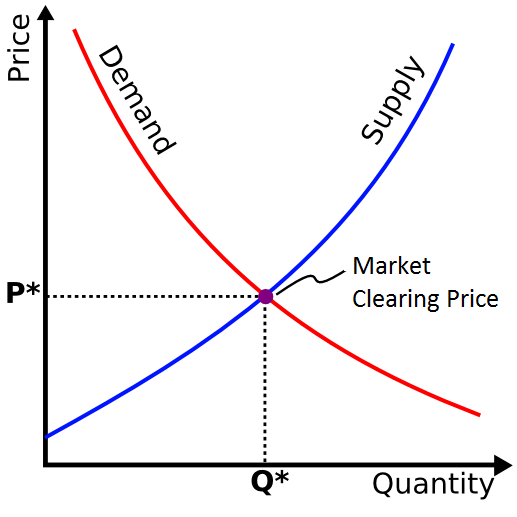
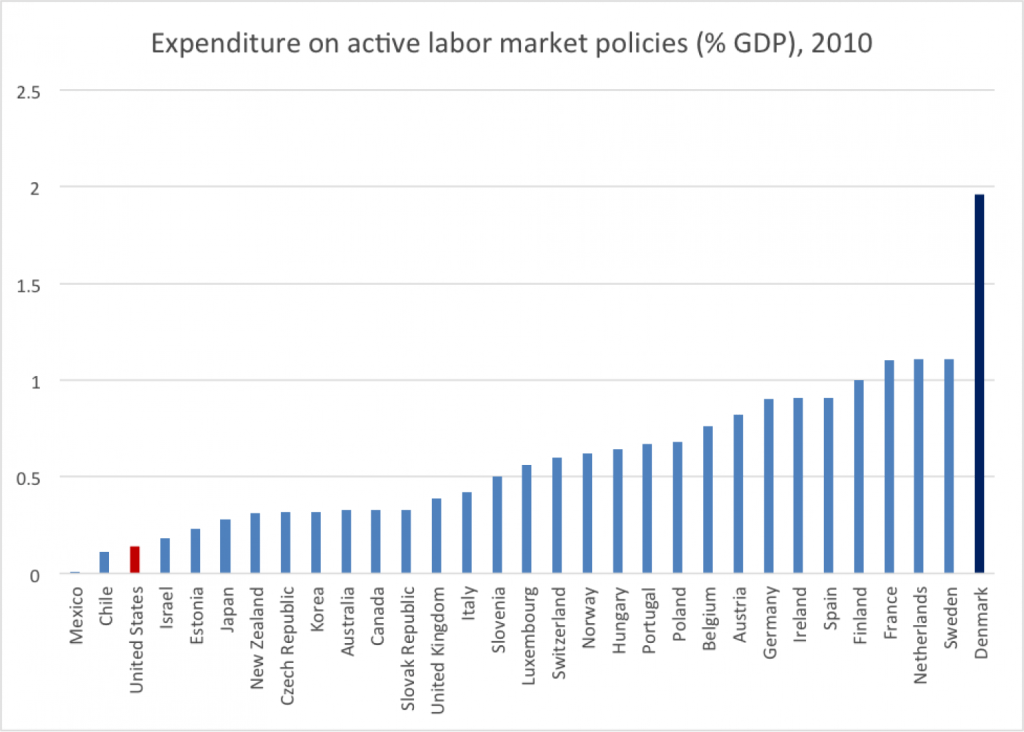
 N.W. Rains